CNG Vehicles
Explore CNG cars, running costs, mileage, ownership and buying decisions.
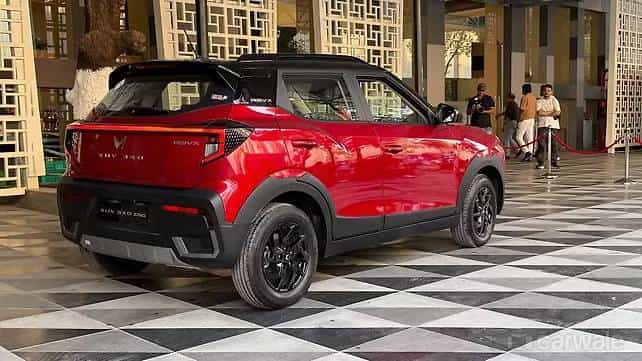
Sir, I have booked a Tata Punch CNG for around 2,500 km monthly running mostly on highways. I skipped Sonet and Nexon diesel due to DPF concerns. For long-term engine durability and highway use, is Punch CNG a good choice, or would you recommend a better option?
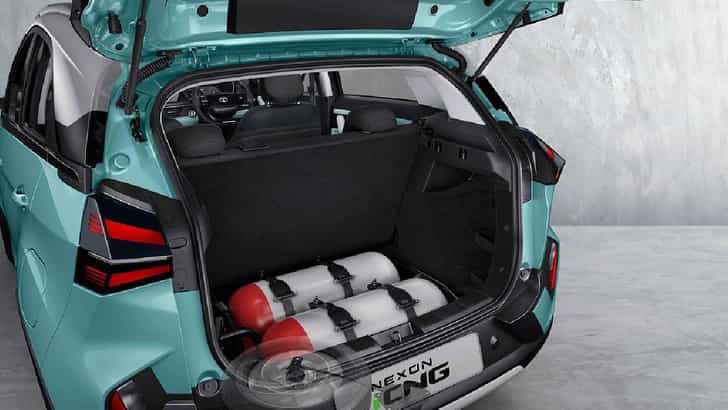
With 2,500 km a month and mostly highway driving, a diesel is actually the best fit for your usage. The DPF concern is understandable, but it is largely a city driving issue. Highway running keeps the exhaust temperatures high enough for the DPF to regenerate naturally, so you are unlikely to face problems. The Punch CNG is a sensible and economical car, but it is not the best choice for sustained highway use. The performance is adequate, but overtaking requires planning, and the boot space is compromised by the CNG tank. For your usage, the Tata Nexon diesel is the better choice. It is more powerful, more comfortable on highways, and will be more enjoyable to drive over long distances.
As a Honda Elevate ZX-MT owner, I am considering installing a CNG kit, but I am confused about whether it could cause any issues with the ADAS features.
Honda itself currently lists a government-approved CNG retrofit facility for the Elevate through its dealers, although it is offered only on selected variants.The CNG system should not interfere with the Elevate's Honda Sensing ADAS because the ADAS functions are camera-based and the CNG installation does not alter the camera or its calibration. However, the important distinction is that this applies to a Honda-approved dealer-fitted kit, not an independently installed aftermarket kit. Autocar's advice on dealer-fitted CNG conversions also notes that the Elevate is offered with an approved Lovato kit.There is one bigger issue in your case: the ZX is not among the variants Honda currently lists for its CNG retrofit programme. Honda's current information says the retrofit is available with V and VX trims. So before proceeding, check with your Honda dealer whether your particular ZX MT is officially eligible.If Honda approves the installation for your car, there should be no specific reason to worry about ADAS. Avoid a third-party kit simply to get around variant restrictions, particularly on a ZX equipped with Honda Sensing.
I currently own a 2021 Maruti Suzuki Ertiga petrol, which has covered around 85,000 km and delivers approximately 7-8 km/l in city driving. Due to rising fuel costs, I am considering switching to a CNG car. I plan to sell my Ertiga before buying the new car. Since my children are now in college, I no longer need a 7-seater. I am specifically looking for a CNG + AMT combination, as I am 48 years old and feel an automatic transmission would make frequent city driving less tiring. The cars I am considering are: Tata Punch Adventure S CNG AMT, Tata Altroz Creative S CNG AMT, Maruti Suzuki Brezza ZXi CNG, and Maruti Suzuki Baleno Zeta CNG The Tata Punch is currently my preferred choice. I also considered the Brezza, but its lack of a proper spare wheel concerns me, as I have experienced several tyre punctures in the past. My maximum budget is Rs. 14 lakh. I am also unsure whether an EV would suit me within this budget, as I do not want to deal with range anxiety at this stage. Based on your road tests, which car would you recommend? Is the Tata Punch Adventure S CNG AMT the best choice for my requirements, or should I consider another option?
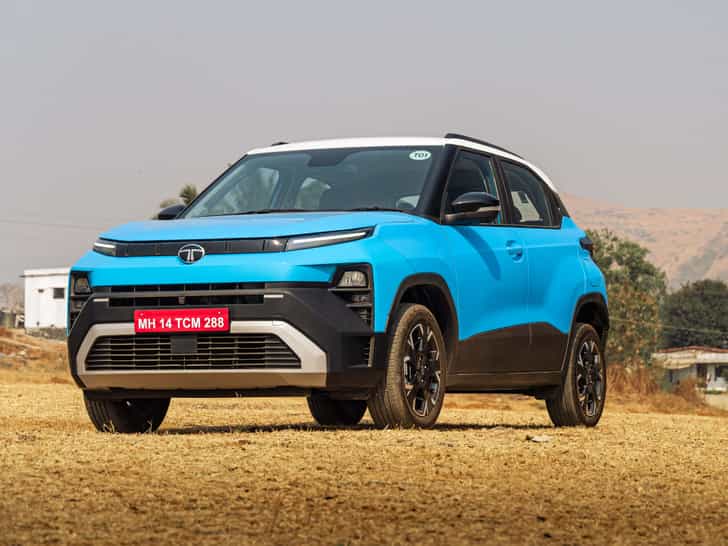
Given your requirements, the Tata Punch Adventure S CNG AMT is a sensible choice. The Punch is a well-packaged city car with a rugged stance and a practical CNG installation. Its AMT gets you the convenience of an automatic, especially for city use. Sure, outright performance isn't very strong, and you will have to carefully plan fast overtakes on the highway. However, if you're a sedate driver and generally drive at speeds below 90kph, the Punch CNG AMT will serve your needs well.If you can arrange for home charging, the Tata Punch EV is also an excellent option that'll easily fall into your budget. The electric car’sperformance will be stronger and more seamless. Your running costs will be lower than the CNG version, and it should easily give you a real-world range of 280- 300 km, which should be more than adequate for your daily commuting.
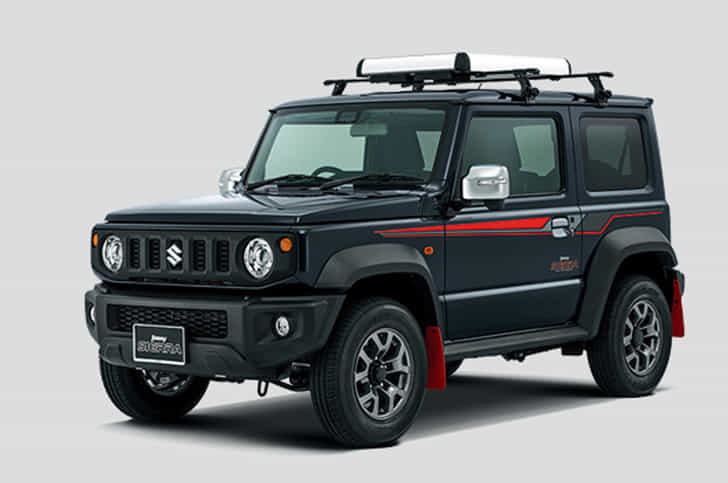
I need your expert opinion for my Maruti Suzuki Jimny 4x4 AT with 25,000km on odometer that I want to convert to CNG. Is it a good idea for such a vehicle with AT and 4x4? While using 4x4, I will ensure that the car runs on petrol. Secondly, what will be the impact on its resale value after 5 year or 7 years of usage compared to stock or with aftermarket CNG kit installed? Lastly, who is your most trusted authorized CNG fitment and service dealer in Bangalore?
We would strongly advise against fitting an aftermarket CNG kit to your Jimny 4x4 AT. The Jimny’s 1.5-litre petrol engine is already modest in power, and adding CNG will further reduce performance, which will be particularly noticeable in a 4x4 automatic where power delivery is crucial. Even if you plan to switch to petrol when using 4x4, the overall ownership experience will be compromised. The Jimny is designed as a lifestyle off-roader, and modifying it with CNG goes against its intended use.From a resale perspective, an aftermarket CNG kit will almost certainly reduce the car’s value after 5-7 years. Buyers of the Jimny typically value its originality and off-road capability, and a CNG conversion is likely to be viewed as a negative modification. The resale impact will be greater than any fuel savings you might achieve over the ownership period.If your primary concern is running costs, it may be worth considering a more fuel-efficient vehicle rather than modifying the Jimny. If you are set on CNG, a factory-fitted CNG car is always the better option. As for trusted CNG fitment centres in Bangalore, we would not recommend any for this particular application, as we do not believe it is the right decision for this vehicle.

I want to purchase a 7-seater SUV. My options are the Tata Safari, Mahindra XUV 7XO, and Scorpio N, and I am considering installing an aftermarket CNG kit for better fuel economy. Could you please suggest which one would be better suited for CNG?
We would strongly advise against installing aftermarket CNG on any of these SUVs. All three – the Tata Safari, Mahindra XUV 7XO and Scorpio N - are large, heavy vehicles with powerful turbocharged petrol engines. Fitting CNG to such engines is not recommended, as it can lead to drivability issues, increased wear and potential reliability concerns over time. More importantly, these SUVs are not designed with CNG in mind, and the installation can compromise safety and performance.If fuel economy is a top priority, opt for their diesel versions instead. The Mahindra and Tata offer strong torque, excellent highway efficiency and are well-suited to long-distance touring. If you are set on CNG, it is better to look at smaller, naturally aspirated petrol cars that are either factory-fitted or specifically designed for CNG use.Between the three, the XUV 7XO diesel would be our recommendation. It offers a more modern package, better ride comfort and a more premium cabin than the Scorpio N, while the Safari diesel is also a strong contender if you prefer Tata's design and feature set. But CNG should not be the deciding factor here.
I wish to buy a CNG car with a budget of Rs. 8-9 lakh. Please suggest the best option among the Baleno, Fronx, Grand i10 Nios, Exter, and Dzire.
Go for the Maruti Suzuki Dzire CNG. It is the most well-rounded option in your budget, offering a spacious cabin, a large boot and a proven, reliable CNG powertrain. The Dzire is also one of the most comfortable and most efficient cars in this price range, with a compliant ride and a well-sorted suspension setup that makes it easy to live with on a daily basis. Maruti's service network and low maintenance costs further strengthen its case as a long-term ownership proposition.The Hyundai Exter CNG is a good value alternative, but it does not offer the same level of space or comfort as the Dzire. On the positive side, due to its twin-cylinder setup, you still get a reasonable boot with the Exter.Overall, the Dzire CNG strikes the best balance between price, space, comfort, efficiency and long-term ownership peace of mind.
Which one is better in terms of durability, overall expenses, and maintenance: a CNG engine or a turbo-petrol engine?
If you are choosing between a CNG engine and a turbo petrol engine, the decision should be based on your running and usage pattern rather than durability alone. CNG engines are generally more cost-effective for high-mileage users because the fuel cost per kilometre is significantly lower, and modern factory-fitted CNG systems are well integrated and reliable. However, CNG cars do come with compromises such as reduced boot space, slightly lower performance and the inconvenience of refuelling at CNG stations.Turbo petrol engines, on the other hand, offer better performance and driving enjoyment, especially on highways and during overtaking. Fuel efficiency however will be far lower, especially in stop-go conditions. As far as maintenance goes, both routine service costs should be similar. The key point is that CNG only makes financial sense if your annual running is high enough to offset the performance deficit (compared to a comparable petrol engine). If your running is moderate or you value performance and convenience, a turbo petrol engine is the better choice.
I want to buy an SUV-type CNG car in a budget of Rs 12-13 lakh. It would be ideal if I could get a CNG model with an automatic transmission. What are the good options for me?
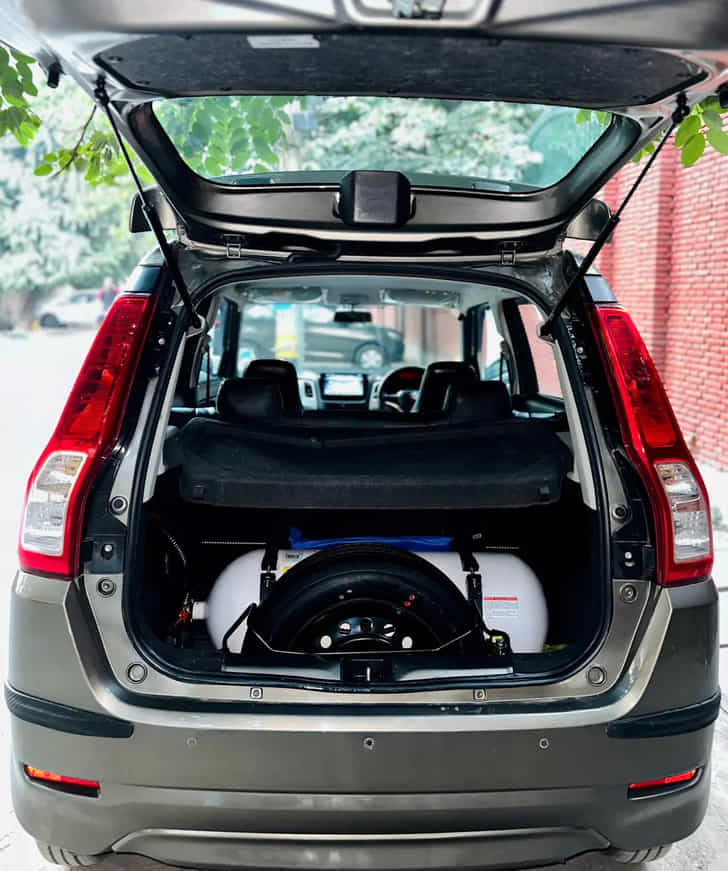
If you want a CNG SUV with an automatic gearbox, the options are limited. In your budget of Rs 12-13 lakh, the Tata Punch CNG AMT is the best option. It is a well-rounded sub-compact SUV with a dual-tank CNG system, good ride comfort and the AMT you want. The drawback is that the powertrain isn't the most refined, and the AMT has a noticeable pause between shifts.If you are open to a manual, then the Maruti Suzuki Brezza CNG is a better bet. Its engine is more refined; it is a larger car, so it feels roomier inside, and it has an underfloor CNG tank, so boot space is not affected.

The AMT version, while convenient in traffic, can feel slightly laggy during gear shifts, something that most users notice in stop-and-go conditions. What exactly does this mean for the Tata Punch iCNG AMT version?
What this means in the context of the Tata Punch iCNG AMT is that the gearbox is not as smooth or as quick as a conventional automatic. In stop-and-go traffic, when you lift off the accelerator and then get back on it, there is a noticeable pause as the gearbox decides to shift and then actually changes gear. This can make the car feel a bit hesitant or jerky, especially at low speeds. The iCNG version adds another layer to this because the engine is already slightly down on power compared to the petrol, so the pauses feel a bit more pronounced. It is not a deal-breaker, but it is something you will notice in daily city driving. The trade-off is that you get the convenience of an automatic and the cost savings of CNG, but you have to accept that the driving experience is not as seamless as a torque converter or CVT automatic.
I have a budget of around Rs. 10 lakh and want to buy a good-looking SUV with a CNG option, good features and strong fuel efficiency. Which one would you recommend?
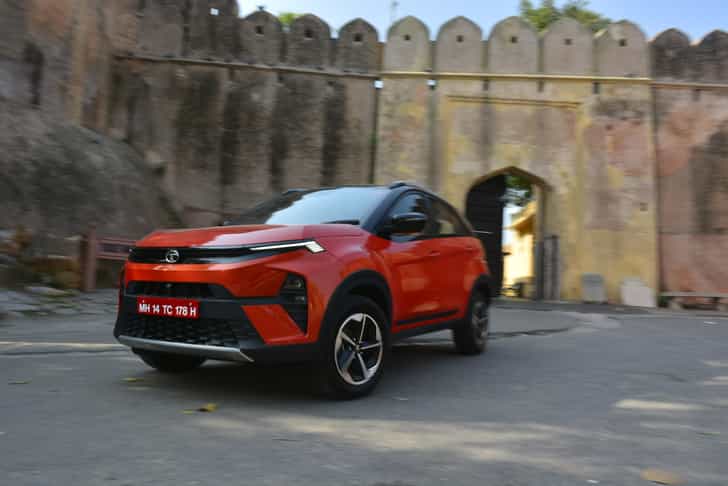
Get the Tata Punch iCNG. It fits in your under Rs. 10 lakh budget, looks like a proper small SUV, and the factory CNG keeps running costs very low. Tata’s twin-cylinder CNG tanks free up more boot space than other CNG SUVs, so your luggage will still fit. It rides well over bad roads, and the higher seat makes city driving easy. Pick a mid variant, and you still get the basics you want, like touchscreen with Android Auto, steering controls, rear camera, and decent safety kit.Do note that the CNG version feels slow, especially with a full load or on highways. But for your use case, the Punch iCNG is the most balanced choice.
Need expert advice?
Ask the Autocar community and experts.