Latest questions answered by experts
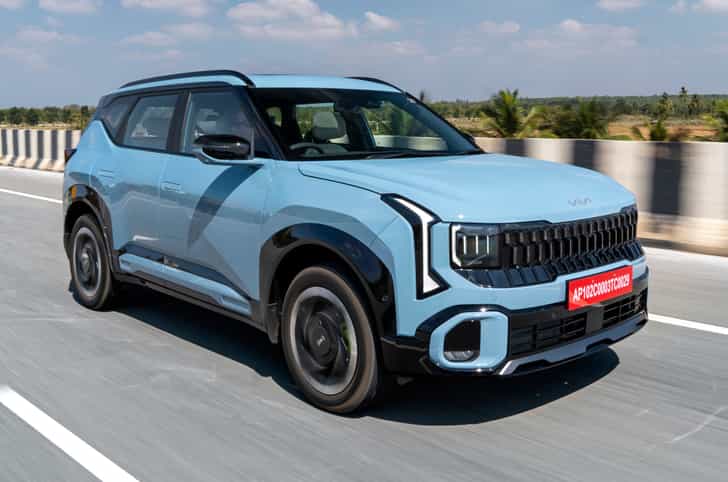
Hi Autocar Team, I am planning to buy a midsize SUV and can wait for about six months. My main confusion is between the upcoming Renault Duster, specifically the strong-hybrid variant, and the Kia Seltos. We are leaning towards the new Duster because of its rugged design, impressive 212 mm ground clearance, interior colour theme, and expected hybrid fuel efficiency. However, the Kia Seltos remains a compelling choice due to its generous rear-seat space and feature-packed cabin. Given that we are a family of three, our priorities are design, ride quality on bad roads, and fuel economy, while also considering rear-seat passenger comfort. Is it worth waiting six months for the Duster Strong Hybrid instead of buying the Seltos now? How does the Duster's rear-seat legroom and overall highway comfort compare with the Seltos? Looking forward to your advice!
We would suggest that you go for the Kia Seltos now. The Renault Duster hybrid is an interesting proposition, but the Seltos suits your needs better. For a family of three, the Seltos offers a more spacious rear seat, a wider cabin and a more premium overall experience, which will matter more on long drives and daily use. The Duster hybrid will likely offer better fuel efficiency and a tougher suspension setup, but the rear seat is not as spacious as the Seltos, and the expected hybrid premium will take time to recover. The Seltos is a proven product with a strong ownership track record, and you can buy it today without waiting for an unknown price and availability. If you are leaning towards the Duster for its design and hybrid tech, it is worth waiting only if fuel efficiency is your absolute top priority. Otherwise, the Seltos is the better all-rounder for your needs. It's also worth noting that there will be a hybrid version of the Seltos too, but that's only coming in 2027.
Hello, I have been riding a 125cc bike for quite a long time now, and I’m looking to upgrade to a better-looking bike with good performance. I’m quite emotionally attached to my vehicles and take very good care of them, so I’m looking for something that I can enjoy and keep for a long time. Most of my riding is within Pune city traffic, but I would also like to start exploring longer rides and weekend trips, which I haven’t really done so far. I’m not very familiar with all the good options currently available in the market. I have looked at the Harley-Davidson X440 and a couple of options from Triumph, but I’m still not sure what would suit me best. One more thing I’m confused about is whether I should go for a petrol bike or consider an EV two-wheeler. With the increasing concerns around E20 fuel and its long-term impact on some higher-capacity bikes, I’m wondering if an EV would make more sense for my usage, especially considering that most of my riding is in city traffic. I would really appreciate your guidance in selecting the right bike based on my riding requirements, preferences and long-term ownership perspective.
Electric motorcycles do make sense for daily predictable city commutes with a fixed distance and secure charging. There's no hassle of changing gears and modulating the clutch, and your running costs are also pleasingly low. However, it seems like you want to venture out farther from your home in Pune, in which case a petrol motorcycle is the more enjoyable choice. The Harley-Davidson X440 is a wonderful machine because it is one of the last authentic, air-cooled, long-stroke, single-cylinder experiences available today, and since you are looking to buy a machine that you can build a cherished bond with over time, it has the right ingredients to make that happen. Stepping up from a 125cc machine, you will also appreciate the step up in performance and comfort it has to offer you. From the Triumph stable, we'd recommend you take a good, long look at the 350cc Scrambler 400 models because they are great city machines that can also prove to be good fun on the highway and when the road turns squiggly. If you want a properly sporty riding experience, then the 350cc KTM 390 Duke and Royal Enfield Guerrilla 450 are good options to consider, and these will be - by far - the fastest and sharpest machines from the ones listed here.Make sure to take exhaustive test rides of all machines before you make your decision.

I currently own a 2016 Mercedes E250 CDI Edition E. The car is soon to complete 10 years, and we are looking for an upgrade. We are interested in buying the GLS. The car will run in a city and on a highway mix. We are not interested in the petrol engine, considering the low mileage. So the 450D becomes the natural option for us. But does it make sense to spend 1.6 crore on a diesel engine car in 2026, considering future conditions and also the possibility of a significant decrease in resale value if govt brings out some stringent policies on diesel cars?
The Mercedes-Benz GLS 450d is a superb upgrade from your E250 CDI, offering a significant step up in space, comfort and luxury. Given your city and highway mix, the diesel engine is actually the right choice – it delivers strong torque, effortless cruising and better efficiency than the petrol, especially in a large SUV like the GLS.The bigger question is the long-term outlook for diesel. The 10-year rule applies only to Delhi-NCR, and there is currently no nationwide policy restricting diesel ownership or resale. The GLS 450d uses Mercedes’ latest diesel technology, which is Euro 6 compliant and among the cleanest diesel engines available. It is unlikely that the government will suddenly ban or heavily penalise such modern, clean diesels.That said, diesel is not completely risk-free. Policy direction can change, and diesel cars generally depreciate faster than petrol or hybrid equivalents. At Rs 1.6 crore, that is a significant consideration.If you are planning to keep the car for 7-10 years, the GLS 450d still makes sense. You will get the full benefit of the car’s capabilities, and depreciation becomes less of a concern over a longer ownership period. If you typically change cars every 3-5 years, the potential for faster depreciation is a bigger factor.The GLS 450d is the right car for your usage, but be realistic about depreciation and ownership period.
I am confused between two cars: Mahindra XUV7XO AX7 Petrol Automatic and Mahindra Scorpio N Z8S Petrol Automatic. I am from Bangalore, and I would use the car on weekends and drive up to 20 km; hence, a monthly usage of 100 km and occasional long trips in a year. So I might have a yearly usage of 3000 km. We are a family of 5, but occasionally we would include our extended family of 7, which is why I wish to buy a 7-seater. I am confused between these two cars. I love the Scorpio for its look and legacy, while I also like the XUV 7XO for its tech features. Which one should I go for?
Go for the Mahindra XUV 7XO AX7 petrol automatic. With your low annual running of around 3,000km, petrol is the right choice, despite the powerful 2.0-litre turbo-petrol's heavy thirst. Of the two Mahindras, the XUV 7XO is the more sensible and family-friendly option. This Mahindra car offers a more comfortable ride, a more spacious and usable third row, and a more modern cabin with better tech and features. The Scorpio N is a great SUV with a strong legacy and a rugged appeal, but it is more of an enthusiast's SUV with a tougher ride and a cramped third row. For a family of five with occasional trips with seven people, the XUV 7XO is the better all-rounder and will be the more comfortable and enjoyable car to own over the long term.
Hi, I want to buy a Thar, but I’m confused about whether I should buy a new RWD 3-door Thar or a used 4x4 Thar, probably a 2022-2023 model. I live in Pune, Maharashtra, and my main purpose will be camping a few times a month, along with some off-roading nearby. Highway travel would account for at least 80% of my usage, but I also don’t want to get stuck while off-roading. Please suggest which would be the better option.
Go for a used 2022-2023 Thar 4x4. Your usage is 80% highway, but you also plan camping trips and some off-road trails near Pune. The RWD Thar is a good lifestyle SUV, and while it can handle most slippery situations, the added security of the 4x4 system is always a boon, especially for a vehicle like the Thar. On loose surfaces, steep inclines or wet trails, the RWD can get stuck far more easily than a 4x4. The 4x4 Thar offers low-range capability and proper off-road capability so that you can explore confidently. On the highway, the 4x4 Thar is not significantly different from the RWD in terms of comfort or cruising ability. A well-maintained 2022-2023 Thar 4x4 will still have warranty coverage, and Mahindra's diesel and petrol engines are proven. The Thar is a rugged, simple SUV, so buying used is a sensible way to get the full capability without paying the new car premium. The RWD Thar is only worth considering if your usage is strictly urban and highway. For your mix of highway, camping and off-road, the 4x4 is the right tool.
I am a bit confused about my car selection. I have booked the Seltos IVT with ADAS. The majority of my driving is in the city. My main concerns are fuel economy and maintenance costs. Is there a better option I should consider? I rejected an EV because I cannot have a charger installed at home.
Given your priorities of city driving, fuel economy and maintenance cost, the Kia Seltos IVT with ADAS is a solid choice. The IVT is smooth and well-suited to city driving; the SUV is manoeuvrable, and the powertrain is reasonably efficient. And you're right to reject an EV without a home-charging option, because that is essential. That said, given your usage, a better fit would be the Maruti Suzuki Victoris Hybrid or the Toyota Urban Cruiser Hyryder Hybrid. Both use the same strong hybrid system, which delivers excellent fuel efficiency in city conditions by running on electric power at low speeds and reducing fuel consumption significantly. The Victoris is slightly better equipped, including a larger touchscreen and ADAS. Maintenance costs are also lower over the long term, and both Maruti and Toyota have strong service networks and proven reliability. However, they're not as spacious as the Seltos.

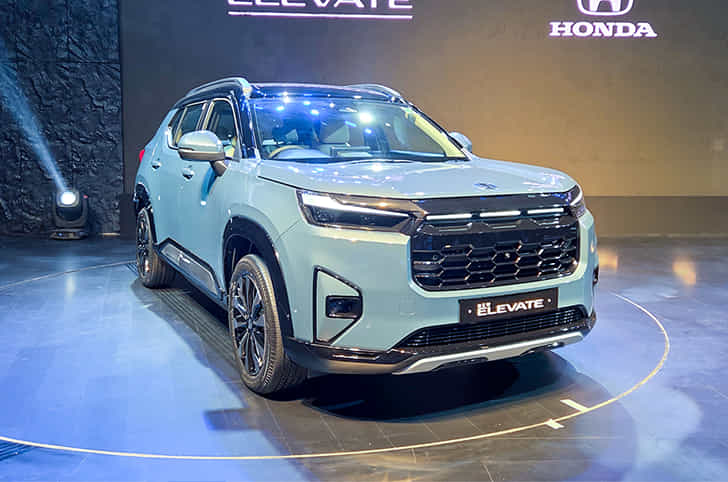
I'm planning to buy a Honda Elevate and have received an on-road quote of Rs. 18.7 lakh in Hyderabad for the ZX CVT. However, I've been reading reports that an Elevate facelift may be launched soon. My top priorities are: ADAS (Honda Sensing), LaneWatch camera Nice-to-have features: 360-degree camera, ventilated seats Given the current discounts, would it be better to buy the Elevate now or wait for the facelift? If the facelift does add features such as a 360° camera, ventilated seats, or expanded ADAS availability across more variants, do you expect Honda to increase prices significantly? Honda has already expanded ADAS availability in some City variants. Is it likely that Honda could make ADAS available in more Elevate variants as part of the facelift? I usually keep my cars for 8-10 years, so I'm trying to understand whether the current discounts on the existing model outweigh the potential benefits of waiting for the facelift. Thank you
The facelift is expected soon, but Honda is unlikely to make major changes to the mechanical package. The Elevate is a simple, reliable SUV with a proven naturally aspirated petrol engine and a smooth CVT. It is not a feature-rich car, and Honda has positioned it as a straightforward, dependable family SUV rather than a tech-heavy product.That said, Honda Sensing (ADAS) is already available on the ZX variant, and like the City, Honda may expand ADAS availability to lower variants in the facelift. A 360-degree camera and ventilated seats are possible additions, as they were in the City, but Honda is not known for aggressive feature updates, and any meaningful additions would likely be accompanied by a price increase.If you keep cars for 8-10 years, the Elevate is a good choice nonetheless. While the current discount is quite significant, if these features mean a lot to you, it's just a matter of waiting a few months more. There's a chance that stocks of the outgoing model will still be available and going at even higher discounts as the updated model is launched, so in case the price hike is too much, you could even take a call then.
For ladies, which car is best for 35 km of daily running? EV, petrol, or CNG with automatic transmission? Please suggest which car to buy.
For a daily run of 35km, the decision between petrol, CNG and EV comes down to ownership priorities, irrespective of the driver's gender. A CNG car is the most cost-effective option, but it comes with compromises on boot space, convenience and refuelling time. A petrol car is the simplest and most hassle-free option, but running costs will be higher over time. An electric car makes the most sense if you have access to home charging, as it offers the lowest running costs and a smooth, quiet driving experience, but it is the most expensive to buy.If your budget is Rs 5-10 lakh, it rules out most EVs, and you will essentially have to choose between the MG Comet and the Tata Tiago EV. If you're okay with these options, the Tiago EV is the better all-rounder, offering more space, comfort, range and features, while the more affordable, ultra-compact Comet has the advantage of being easier to park. The Comet's small battery will require you to charge more often, even with a limited usage of 35km per day. EVs are smoother than petrol or CNG cars, and the running costs are the lowest, so if either of these two cars meets your needs, you should go down the EV route.
I am planning to buy a 125cc scooter. I already own the new Suzuki Access. Should I go with the Honda Activa 125? What other scooters would you recommend? It will mostly be used within the city.
Since you already have a steadfast family scooter in the Suzuki Access 125, opting for another one of its ilk in the Honda Activa 125, which will give you more or less a very similar, if not identical, ownership experience, would be like going into a huge candy store and still opting to buy two of the same toffees when there's so much variety to be had.We'd recommend you change things up a little and opt for the TVS Ntorq 125. It is a fun, engaging, and sporty-feeling scooter, yet it does not compromise on practicality, comfort, or everyday convenience.

I’m looking to buy a 7-seater SUV and currently have two options shortlisted: the Mahindra XUV 7XO AX Petrol and the Tata Safari Pure Plus Petrol. I’m not very concerned about features, bells and whistles, or premium interiors. My main priorities are engine performance, long-term engine reliability, reliability with low usage, mechanical durability, ownership experience, highway stability, and comfort. My running is extremely low, but I occasionally do a ~1,500 km continuous highway trip. Between the XUV 7XO 2.0-litre turbo-petrol and the Safari 1.5-litre turbo-petrol, which one would you choose specifically for performance and long-term reliability? Also, are there any other SUVs I should consider in a similar price range?
Go for the XUV 7XO AX petrol. It is the better fit for your priorities. The 2.0-litre turbo-petrol is a proven engine with a strong ownership track record, and delivers significantly better performance than the Safari’s 1.5-litre turbo-petrol. The Mahindra XUV 7XO feels more effortless on the highway, especially with a full load, and overtaking is easier thanks to its stronger mid-range.It is also the more mechanically sorted package overall, with a better-calibrated gearbox and a more mature ownership experience.The Tata Safari’s 1.5-litre turbo-petrol is adequate for city driving, but it can feel strained on the highway with a full load and does not offer the same level of performance, refinement, or long-distance ease as the engine in the Mahindra car.For your usage pattern, low running with occasional long highway trips, petrol is the right choice, and the XUV 7XO’s engine is better suited to this kind of usage. It is a robust, reliable powertrain that can handle high mileage over the long term, and it does not suffer from the same concerns around DPF or diesel-related issues that can arise with low usage.If you are open to alternatives, the Toyota Innova HyCross is worth considering. It is not an SUV, but it is the benchmark for long-term reliability and ownership experience. The hybrid powertrain is extremely well suited to your usage pattern. It is also a genuinely comfortable long-distance car with a proven track record.
My monthly running is around 800km, of which 60-70% is city driving. I do 3-4 long drives a year. We are a family of two with an average Indian build. I am confused between the Skoda Kylaq Prestige AT, Renault Duster 1.3 DCT Iconic, and Skoda Kushaq 1.5 DSG. My priorities are driving dynamics, suspension, long-distance comfort, and ownership experience. I plan to keep the car for more than six years. I am wondering whether I should go for the Kylaq, which would be easier in city traffic, or one of the other shortlisted options. ADAS is not a criterion.
Go for the Skoda Kylaq Prestige AT. With your usage pattern of 800km a month, mostly city driving with a few long trips a year, the Kylaq is the most sensible and enjoyable choice. The 1.0 TSI engine paired with the 6-speed torque converter automatic is well-suited to city traffic, offering smooth and predictable shifts, while being punchy enough for highway runs. This Skoda car also delivers a good balance of ride comfort and driving dynamics, making it comfortable for long drives without sacrificing the fun-to-drive element you are looking for.The Renault Duster 1.3 DCT is the enthusiast's choice with its stronger performance and excellent ride quality. You will have to spend a bit more for the added performance, and fuel efficiency will be on the lower side. The Skoda Kushaq 1.5 DSG is a fair bit pricier; hence it might not justify the stretch.Overall, the Kylaq is the sensible pick for a family of two.
Hi Autocar India, I’m planning to buy a new car under Rs 16 lakh for my family of five. My monthly usage is around 500km, mostly on highways. I’m currently considering: Hyundai i20 N Line, Hyundai Verna 1.5 MPI, Kia Seltos, Volkswagen Virtus, and Skoda Slavia. I personally prefer low-slung cars over SUVs. My priorities are long-term reliability, family comfort, highway stability, good safety, reasonable maintenance costs, and overall ownership experience. Which one would you recommend for my requirements, especially for long-term ownership? Also, which engine and variant would be the best choice within my Rs 16 lakh budget? Thanks! I’d love to hear your expert recommendation.
You can get the HX6+ variant of the Verna with the 1.5-litre naturally aspirated petrol-manual powertrain, which is pleasant to drive, stable on highways, and paired with a comfortable, soft suspension setup. Being a Hyundai car, it also has reasonable maintenance costs.The Hyundai Verna has also scored a perfect 5-star rating in the Global NCAP crash tests, so you can rest assured about safety. The Skoda Slavia is due for an update very soon, but in this budget you will have to settle for entry-level variants that don't offer much equipment. The Verna, on the other hand, will get you LED headlamps, front ventilated seats, a single-pane sunroof and others. All things considered, the Hyundai Verna is the best choice for your requirements.

I want to buy a car with a torque-converter automatic transmission. My maximum budget is Rs 12 lakh, and I am a first-time car buyer. Please suggest some car models. I live in a rural area, and my office commute is around 40km daily.
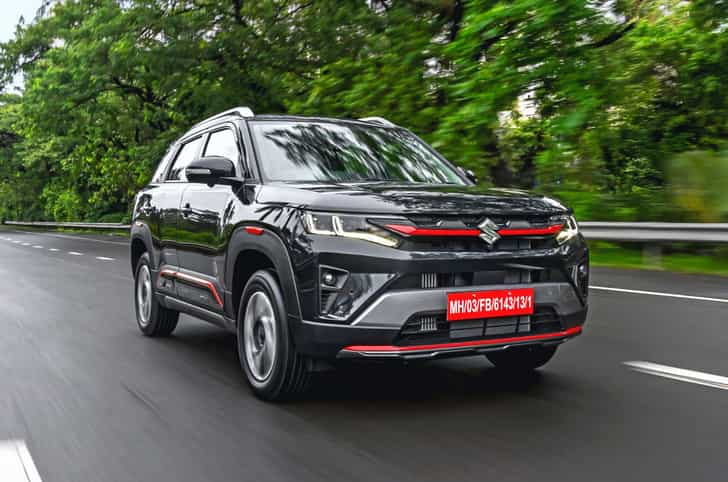
Go for the Maruti Suzuki Brezza automatic. It uses a 6-speed torque converter automatic, which is exactly what you are looking for, and it is one of the most reliable and easy-to-live-with cars in this price range. Your 40km daily commute and rural roads make reliability, comfort and low running costs far more important than outright performance or features, and the Brezza delivers on all three.Maruti’s service network is a big advantage in rural areas, and the car is known for its durability and low maintenance costs. The 1.5-litre petrol engine is smooth and efficient, and the torque converter automatic is well-suited to mixed driving conditions. This Maruti Suzuki car also has good ground clearance, which helps on rougher rural roads.If you want something a bit more premium and are willing to stretch your budget slightly, the Mahindra XUV 3XO automatic is also worth considering. It also uses a 6-speed torque converter automatic and offers a more powerful turbo petrol engine and a more feature-rich cabin. However, the Brezza remains the safer long-term ownership choice, especially for a first-time buyer in a rural area.
Need expert advice?
Ask the Autocar community and experts.