Autocar India
•12w

For a daily city commute of around 50 km, would you recommend an EV or a petrol car?

Verified
•12w

We'd recommend an electric car for a daily city commute of around 50 km, as your usage perfectly suits an electric vehicle's strengths and you'll benefit from significantly lower running costs. City traffic is where EVs shine, instant go, smooth crawl, and they recover energy when you slow down, so you waste less in jams. With most EVs now giving real 250-400 km between charges, you’d plug in at home or office roughly twice a week, and routine upkeep is lighter than a petrol.


The catch is charging. If you don’t have a dependable parking spot with a socket or wallbox, living with an EV can get annoying. In that case, a simple petrol automatic is easier and cheaper to buy upfront, and it’s also better if you often do long highway trips.

More posts on similar cars

•1d

I am looking for a car with a budget below Rs 10 lakh. My usage will be mostly on highways, with a 500-600 km trip to my native place and back from Bangalore approximately once every two months. I don’t need the car much for daily city commuting, as my office is nearby. I have shortlisted the Maruti Swift, Maruti Baleno, Toyota Glanza, and Hyundai i20. Considering my usage, I would like to know which car would be the best overall, especially in terms of: Highway comfort and stability Low body roll Low driver/passenger fatigue on long journeys Comfortable suspension and seats Highway performance and overtaking ability Safety and build quality Fuel efficiency Ease of driving for a beginner If there are any other cars under Rs 10 lakh that you think would suit my requirements better, please suggest those as well. I would like to keep them in consideration.

Verified
•1d

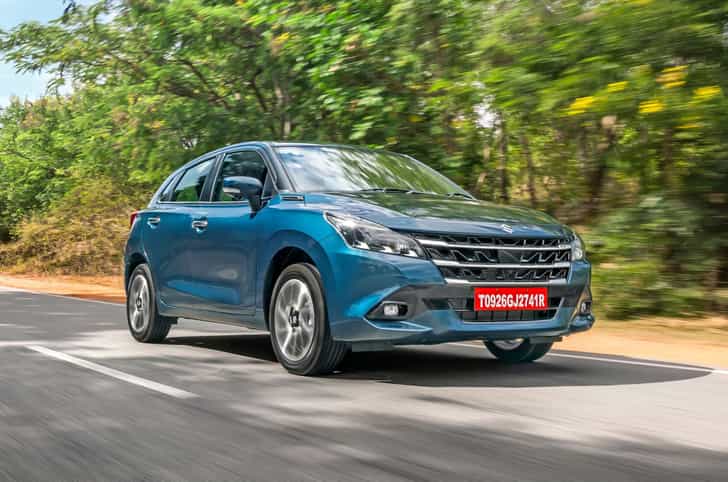
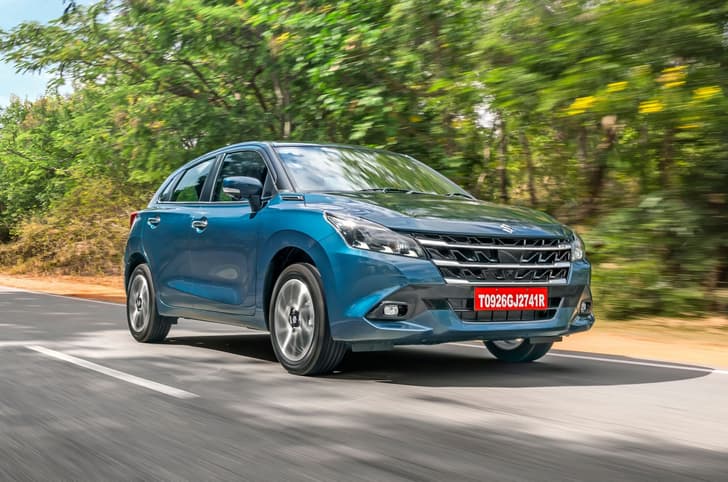
For your usage pattern, the Maruti Baleno or Toyota Glanza would be the most sensible choices. Both cars are essentially the same underneath, so the decision comes down to dealership experience and after-sales support in your area. The Baleno/Glanza offer a more spacious cabin than the Maruti Suzuki Swift, making them better suited to long-distance highway runs, and now get the same 3-cylinder engine too - the Toyota Glanza facelift is soon to launch. The suspension is well-tuned for Indian roads, and the seats are comfortable enough for extended journeys, which will help reduce fatigue on your 500-600 km trips.The Hyundai i20 is also a strong contender, with a more premium interior and a slightly more planted feel at higher speeds. However, the Baleno/Glanza has a more spacious rear seat and better fuel efficiency, which makes it a more practical choice for your requirements. In terms of safety, all three cars offer similar levels of equipment, but this Hyundai Car feels slightly more solidly built.If you are open to considering other options, the Tata Altroz is worth a look. It has a 5-star Global NCAP safety rating, a solid build, and good highway stability. And if you stretch your budget slightly, you can get the diesel engine, which will be hugely beneficial on the highway in terms of performance and mileage, and is also better than the Altroz's own petrol engine.It's worth noting that all the hatchbacks you've shortlisted use naturally aspirated 1.2-litre petrol engines, which, though adequate, might feel lacking out on the highway, where you will do most of your driving. Thus, we would also recommend checking out some turbo-petrol options that fall in your price range, such as the Nissan Magnite, Renault Kiger, Renault Triber, Hyundai i20 N-Line and Tata Punch, which all meet your needs well.

VehicleMaruti Suzuki Baleno
VehicleToyota Glanza
VehicleMaruti Suzuki Swift
VehicleHyundai i20
VehicleTata Altroz
VehicleNissan Magnite
VehicleRenault Kiger
VehicleRenault Triber
VehicleTata Punch
•1d

I am 56 years old and am thinking of upgrading to an SUV. I currently own Maruti Suzuki Baleno that I had purchased in June 2016. The car is in good running condition and has completed 88,000 km till date. Should I upgrade my car now or wait for another 2 years to get a new vehicle? Should I dispose off the old one and go for new one now? Please suggest accordingly.

Verified
•1d

At 56, you are at a stage where comfort, ease of use and long-term reliability become more important than chasing the latest technology. Your Baleno has completed 88,000 km and is still running well, which suggests you are a careful owner and the car has plenty of life left. If it is mechanically sound and you are comfortable with it, there is no pressing need to upgrade purely for the sake of a new model. Cars today are not changing radically every two years, and waiting does not guarantee a significantly better product.The decision should be driven by your needs. If you are finding the Baleno low to get in and out of, or if you want a more comfortable ride and better visibility, then an SUV upgrade makes sense now. If you are happy with the car and it is not giving you any trouble, you can easily keep it for another couple of years.As for the upgrade, the Maruti Suzuki Brezza is a sensible choice. It offers a higher seating position, good ride comfort and Maruti's proven reliability and service reach. If you want something a bit more premium, the Kia Seltos is a good step up, but only if it fits comfortably within your budget.

VehicleMaruti Suzuki Baleno
VehicleMaruti Suzuki Brezza
VehicleKia Seltos

Popular discussions right now

•6d

Hi, I want to buy my last car as I am 66 years old. I have been driving a Honda City for the last 12 years without any major hiccup. The Honda City engine and its reliability is excellent although its ground clearance is an issue. I have looked at Elevate and given its ground clearance as an SUV, I am impressed although the issues on E20 and abrupt blending issues are surely technical issues. Windsor EV was a great test drive but all controls on screen could be a bottleneck for me at my age and am planning to move to an automatic. Please recommend as experts. My monthly running will not be more than 500 km. Should I also look at Seltos. I will appreciate a feedback from experts. I want a reliable, easy to drive car with low maintenance cost and good family value with. There won't be any great pick ups or many highway drives will not be there.

Verified
•5d

Given your 12 years of trouble free City ownership, the Elevate is the most natural replacement. It retains Honda’s simple 1.5-litre naturally aspirated petrol engine, adds substantially better ground clearance and gives you the easier ingress and SUV driving position you liked. The CVT is also very well suited to your low speed, low running usage and should make the transition to an automatic easy.On your E20 concern, we would not treat it as a reason to avoid the Elevate. Honda says all its cars manufactured in India since January 2009 are E20 material compatible, and the current Elevate is officially certified for E20. Honda also says E20 should not cause durability concerns or require any component changes. There can be a marginal reduction in fuel economy because ethanol contains less energy than petrol, but with your 500km monthly running, that is unlikely to be significant.The Seltos is worth a look, particularly if you want a more feature rich and premium cabin, but given your priorities of reliability, easy driving, low maintenance and long term ownership, the Elevate fits your requirements more naturally. The Windsor EV is also an interesting option, but at just 500km a month, there is little financial reason to move to an EV, especially when you have concerns about its touchscreen heavy interface.

VehicleHonda City
VehicleHonda Elevate
VehicleMG Windsor
VehicleKia Seltos

Upcoming launch buzz

Community discussions on upcoming launches
Posted on: 3 Jul 2026