autocar-logo
Mumbai
SA

Sajil

21h

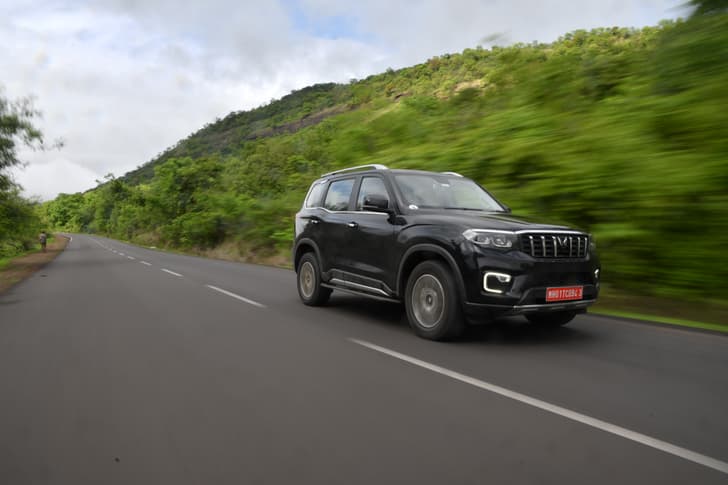
I want to buy the Scorpio N, mostly the Z8L, given the luxury and ADAS. But I am confused about which one to get, petrol or diesel. YouTube is filled with reviews, and people say to get diesel if you have higher running. Now, my driving will be office commutes, maybe 20km round trips in cities like Bangalore, and of course, long trips like 800km round trips every two months or so, along with weekend getaways twice a month. Does diesel make sense? If it does, what is the general care for it if I don’t drive for a week or so? And why should I get petrol, if not diesel?

Autocar India team

Autocar India

Verified
29m
If you are after a Mahindra Scorpio N, we feel you should go for the diesel version. This is less to do with the outright difference in running costs, and more that Mahindra's 2.2-litre mHawk diesel engine, in its latest avatar, is the more accomplished powertrain overall. The truth is, neither engine is very fuel-efficient as Mahindra prioritises performance over all else with its engines, and in everyday driving, the difference will be negligible.
In our real-world tests, the petrol AT returned 7.9kpl in the city and 9.4kpl on the highway, while the diesel AT returned 8.6kpl in the city and 11.7kpl on the highway. Thus, the difference in fuel economy will be felt more on your 800km round-trip journey or your weekend getaways, and for this, yes, the diesel is a better bet.
No, leaving it without driving for a week should not be an issue as long as it isn't done too often, but it's recommended to give it one brisk drive at least once a month to clean out the DPF, which should be taken care of during your regular outstation trips.
The advantage of the petrol would be stronger outright performance, but the diesel isn't far behind, and in fact, its more relaxed nature may be preferable. The two are even closely matched on refinement.
Mahindra Scorpio N

Mahindra Scorpio N

Got a suggestion for Sajil?

Add a Comment

Recommended questions for you

HG

Harshvardhan Gupta

2d

My daily running is 170km on busy highways and around 4000km per month. Right now, I have an Elite i20 petrol with an aftermarket CNG kit, and I spend ₹600 daily. Now I want to upgrade my car to something over 4 metres. Kindly suggest a car with high mileage, good safety, and features. I have looked at the CNG variants of Grand Vitara, Hyryder, Victoris, and Brezza.

Autocar India team

Autocar India

Verified
2h

The Maruti Suzuki Victoris CNG is a solid choice for your needs. It is economical and suitable for longer trips, has underbody-mounted CNG tanks that do not hamper boot space, and the higher variants are very well equipped.While the Grand Vitara, Hyryder, Brezza and Victoris all use the same 1.5-litre naturally aspirated engine with factory-fitted CNG, the Victoris is the only one with dual underbody-mounted tanks, which means it offers better boot space than the others. One drawback is that it does not come with a spare wheel as standard, which is instead offered as an accessory. The Victoris is also more feature-rich than other Maruti models. Compared to the Grand Vitara, it gets a larger touchscreen, a fully digital instrument cluster and Level 2 ADAS. It has also scored five stars in the Bharat NCAP crash tests.If you are on a budget, then consider the Tata Punch CNG, which uses dual tanks and has a more usable boot than the Brezza.On the test drive, drive at steady highway speeds and attempt an overtake to see if you are satisfied with the performance.

VehicleMaruti Suzuki Victoris
VehicleMaruti Suzuki Grand Vitara
VehicleToyota Urban Cruiser Hyryder
VehicleTata Punch
NI

Nipen

1w

Please share your views on the best car for city driving between the Kia Seltos HTK(O) CVT and the new Kushaq facelift automatic. My average daily drive is around 40km in the city.

Autocar India team

Autocar India

Verified
16h

Go for the Kia Seltos HTK(O) IVT (CVT) for city duty. With 40 km of daily driving, it’s the smoother choice that keeps stop‑go fatigue low.Given 40 km a day (about 1,200 km/month) in traffic, the IVT’s step‑less delivery feels calmer at 10-25kph, avoiding the small 1–2-3 shifts the new 8-speed AT makes. That means fewer throttle corrections, fewer head nods, and easier gaps. The naturally aspirated engine’s linear response makes speed‑breakers and U‑turns smoother.The one thing you give up is mid‑range punch. The Kushaq’s turbo feels stronger for quick gaps above 40kph and feels livelier if you enjoy brisk 60-100kph bursts.If you prioritise a smaller footprint and a stronger mid‑range for quick overtakes, consider the Skoda Kushaq 1.0 TSI Ambition AT.On test drives, do a 0-20 kph crawl and a basement-ramp start. Compare creep, throttle-tip-in, hill‑hold smoothness, and steering effort at parking speeds in both cars.

VehicleKia Seltos
VehicleSkoda Kushaq
RC

Rajendra Chitara

1w

I had selected the Kia Seltos IVT to buy, but now the Duster DCT turbo 1.3 has been launched. Is the Duster a good choice? I have heard that it comes with a wet-clutch DCT that does not heat up. Is this gearbox good and suitable for all types of driving conditions? Please guide me on overall performance in traffic, highway, hills, mileage, etc. My driving conditions are mixed.

Autocar India team

Autocar India

Verified
17h

Go for the Renault Duster 1.3 Turbo DCT. For your mix of city, highway, hills and bad roads, it combines strong punch, planted suspension and a heat‑resistant wet‑clutch gearbox.Your concern about DCT heating is valid in dry‑clutch units. The Renault Duster’s wet‑clutch design is oil‑cooled, so it tolerates prolonged crawling and hill starts better. The turbo motor helps on steep climbs with passengers, and overtakes at 80–100 kph feel effortless. The Duster’s long‑travel suspension shrugs off broken roads that unsettle softer crossovers.The one thing you give up is the Kia Seltos IVT’s ultra‑smooth low‑speed creep. Below 10kph, the DCT can feel a touch jerky and needs gentler throttle modulation while parking.

VehicleRenault Duster
VehicleKia Seltos

Posted on: 31 Mar 2026