Autocar India
NA

Naveen

13h

I am buying the Mahindra XUV 7XO AX7T Diesel Automatic. My annual usage is approximately 12,000-13,000km with this pattern: Highway (guaranteed): approximately 6,000km annually. City: Weekend drives of minimum 15-20km, one 150km City exploration monthly. No daily office commute by car — public transport for that. The car will sit idle Monday to Friday. The authorised Mahindra workshop is 3km from home. My questions: 1. Is my pattern low-risk or high-risk for DPF issues? 2. Does the car sitting idle on weekdays followed by 15-20km weekend drives create cumulative soot risk? 3. Diesel AT or Petrol AT for my profile - which do you recommend? I am leaning toward Diesel AT, but want expert validation before booking

Autocar India team

Autocar India

Verified
5m

Go for the Mahindra XUV 7XO diesel automatic. Your guaranteed highway running every year is exactly what a DPF likes, and the diesel will be cheaper to run and nicer to cruise with its strong torque. With your usage, the diesel should return clearly better highway economy than the petrol and feel more relaxed on long trips.

Your pattern is low-risk for DPF trouble. Those steady highway stretches will keep the filter clean via passive regen, and Mahindra’s active regen will step in if needed. A workshop 3 km away also means any rare forced regen is easy to sort.

The car sitting Monday to Friday does not create soot. Soot builds only when driving, especially on repeated cold starts with short, crawling trips. Your weekend 15-20 km runs are long enough to get the exhaust hot unless they are pure bumper-to-bumper. The monthly 150 km city loop adds a good safety margin.

Between diesel AT and petrol AT for you, diesel wins. Expect lower fuel costs on highways and stronger pull when loaded.
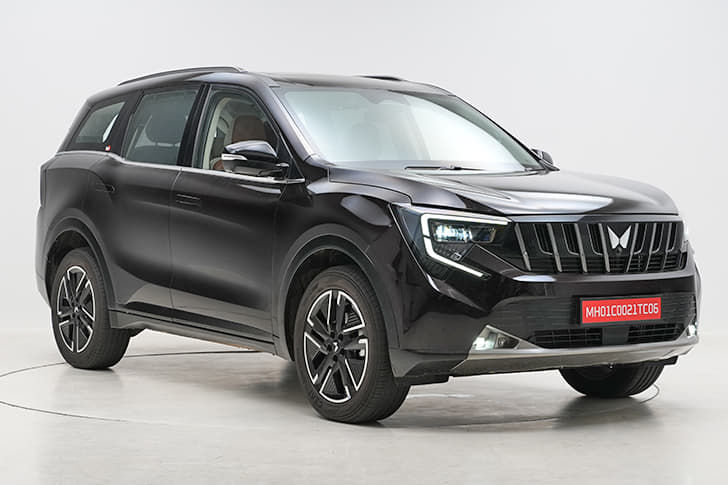
Mahindra XUV 7XO

Mahindra XUV 7XO

Explore cars mentioned
Expert reviews worth reading
More questions on similar cars

ZP

Zameer Patel

2d

Hi, I have booked the Mahindra XUV 7XO AX7T Diesel. This will be my second car and will be used primarily for highway travel, serving as an alternative vehicle with occasional family trips. My annual running will be around 5,000 km, and I plan to sell the car after about two years. Given this usage pattern, would it be better to opt for the diesel variant despite potential DPF-related concerns, or should I consider the petrol variant instead? I am also somewhat concerned about the resale value of the petrol version.

Autocar India team

Autocar India

Verified
1d

In your case, we would actually stick with the diesel. The reason is that this is not going to be your primary city car. You have clearly stated that it will be used mainly for highway travel, occasional family trips and as a second vehicle. Those are exactly the conditions under which a modern diesel is happiest. With regular highway runs, the DPF gets the opportunity to regenerate properly, so we would not be overly concerned about DPF issues.The bigger factor is your planned two-year ownership period. In the used market, the diesel XUV 7XO is likely to be more desirable and easier to sell than the petrol, especially because buyers looking at a large SUV often prefer the stronger torque delivery and superior fuel efficiency of the diesel. That should help residual values as well.If you were doing 5,000 km a year entirely in city traffic, we would steer you towards the petrol. But your usage pattern is different. The car will spend most of its time doing exactly the kind of driving that suits the diesel powertrain.

VehicleMahindra XUV 7XO
TH

Thao

4d

I want to upgrade from my current car to an SUV, but I am confused between the Mahindra Scorpio N, Tata Harrier, and Mahindra XUV 7XO. During the rainy season, I occasionally have to drive on a slippery uphill stretch that my current Hyundai i10 is unable to handle. My budget is around Rs. 23 lakh. Which would be the most suitable choice for my requirements?

Autocar India team

Autocar India

Verified
1d

For your requirement, the Mahindra Scorpio N would be our first recommendation. The key reason is that you have specifically mentioned a slippery hill climb during the rainy season. The Scorpio N's rear wheel drive architecture, higher ground clearance and more rugged SUV underpinnings give it an advantage in low grip situations compared to the Harrier and XUV 7XO. If your budget allows, even a 4WD variant would be worth considering.The XUV 7XO would be our second choice. As an overall product, it is the most modern of the three, with a better interior, more technology and a more premium feel. It is also more comfortable and easier to drive every day than the Scorpio N. However, if that slippery hill climb is a recurring part of your ownership experience, the Scorpio N's more rugged nature gives it the edge.The Tata Harrier is a good highway SUV with a comfortable ride, but for your specific requirement it would be our third choice. It is front wheel drive only and, apart from offering a more comfortable third row, the XUV 7XO is the stronger product in most other areas, including performance, technology, interior quality and overall ownership experience.

VehicleTata Harrier
VehicleMahindra XUV 7XO
VehicleMahindra Scorpio N

Popular discussions right now

AD

Abhishek Das

2d

I am planning to purchase a new automatic car and am confused between the Honda Amaze ZX CVT and the Skoda Kylaq Signature Plus AT. My usage will be around 90% city driving, primarily for office commuting between Dwarka, Delhi and my office near IFFCO Chowk, Gurugram (approximately 25 km one way). However, I will not be driving daily, as I often use the Metro as well. The car will also be driven by my 69-year-old father, so ease of driving, comfort, visibility, ingress/egress, and reliability are important considerations. Our previous car was an Alto K10 Manual, so this will be our first automatic car and a significant upgrade. Considering my usage pattern, family profile and the fact that we intend to keep the car for a long period for around 10 years, which of these two would you recommend?

Autocar India team

Autocar India

Verified
1d

Based on your requirement, we would recommend the Honda Amaze ZX CVT over the Skoda Kylaq Signature+ AT. The reason is that your priorities are not outright performance or driving excitement. You are looking for a car that will spend 90% of its life in city traffic, will also be driven by your 69-year-old father, and is expected to stay with the family for around 10 years. In that context, Amaze's strengths line up perfectly with your requirements. The CVT is smoother than the Kylaq's torque converter automatic in stop-and-go traffic, visibility is excellent, the car is easy to place on the road, ingress and egress are straightforward, and Honda's long-term reliability record is hard to fault. Coming from an Alto K10, it will already feel like a substantial upgrade in comfort, refinement and features.The Kylaq Signature Plus AT is the more desirable car from an enthusiast's perspective. The 1.0 TSI turbo petrol has more punch, the higher seating position is nice, and the overall package feels more substantial. However, it is also a larger vehicle to manoeuvre, and while the automatic is good, it is not quite as seamless in everyday traffic as Honda's CVT.Another point in Amaze's favour is that the ZX variant gets Honda Sensing ADAS, which adds useful safety features without making the car complicated to operate. Since your father will also be driving it, that extra layer of safety is a nice bonus.

VehicleHonda Amaze
VehicleSkoda Kylaq

Posted on: 7 Jun 2026