Autocar India
12h

I’m getting a Seltos DCT delivered soon. If the turbo-petrol engine were available with a manual transmission, I would have bought that. I’ve heard all the stories and do’s and don’ts regarding dry-clutch DCTs. Living in India, however, one cannot completely avoid city traffic. My question is a bit technical. From a standstill, with the gear in D mode and Auto Hold off, on a flat surface, if I take my foot off the brake completely without giving any throttle input, the car rolls at 6-7 kmph. In this scenario, will the clutch keep slipping continuously, similar to half-clutching in a manual, or will it fully engage after a couple of seconds?

Verified
3m

No, you should not assume that the clutch fully locks after a couple of seconds. In the Seltos 7-speed dry-clutch DCT, when you release the brake in D on a flat road without applying the accelerator, the car’s creep function can involve some clutch slip to allow the engine to idle while moving the car at a very low road speed. However, it is not accurate to describe this as the equivalent of continuously holding a manual car at half-clutch. The transmission control unit constantly varies clutch pressure and engine torque, so the amount of slip changes with speed and conditions. 

The important point is that 6-7kmph does not necessarily mean the clutch is fully locked, and there is no documented Kia threshold, such as 10kmph at which it definitely locks. This normal idle creep is something the DCT is designed to handle and is not something you need to worry about during ordinary driving. What you should avoid is prolonged bumper-to-bumper crawling, repeatedly inching forward on the clutch, or using the accelerator to hold the car on an incline, as these conditions increase clutch slip and heat. In slow traffic, it is better to leave a little more gap, allow the car to move when there is sufficient space, accelerate smoothly when required, and come to a proper stop when traffic stops. The bigger enemy of a dry DCT is sustained low-speed clutch slipping and heat, not the occasional creep that occurs automatically when you release the brake.
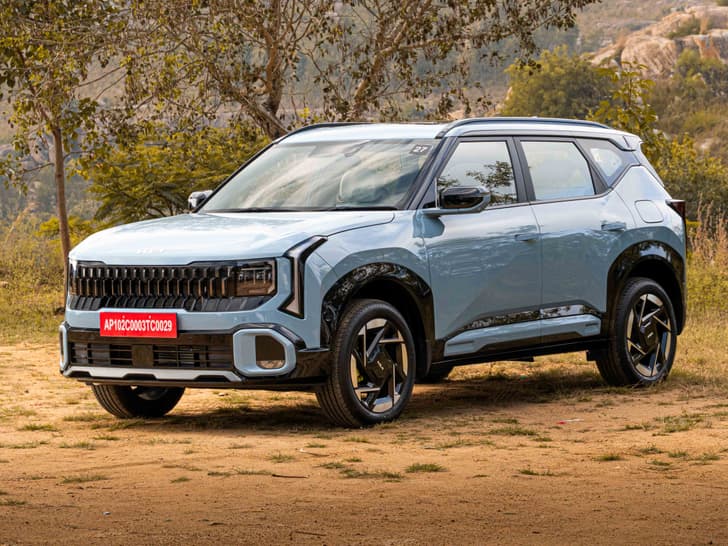
Kia Seltos

Kia Seltos

Explore cars mentioned

Was this helpful? Ask a follow-up

Help rahul with similar question

More posts on similar cars

1d

I'm getting a Seltos DCT delivered soon. If the turbo petrol were available with MT I would have bought that. I've heard all the stories and the do's and don'ts for dry clutch DCT. While living in India, one cannot fully avoid city traffic. My question is a bit technical. From a standstill, with the gear in D mode and autohold off, if I take my foot off the brake completely without giving any throttle input, the car rolls at 6-7kmph. In this scenario, will the clutch be slipping continuously like half clutching a manual or will it engage fully after a couple of seconds?

Verified
7h

The Seltos DCT is a dry clutch DCT, so it does behave differently from a torque converter automatic. When you take your foot off the brake in D with auto hold off, Seltos will creep forward at low speed, but this is not the same as a torque converter automatic. At very low speeds, the clutch is partially engaged and there is some slip, similar to a manual car being feathered at low speed. Once you build a little speed and the ECU senses steady movement, the clutch will fully engage and slip will stop. So the clutch is not slipping continuously at 6-7 km/h, but it is slipping at the initial creep phase until the car is moving steadily. This is why DCTs do not like prolonged crawling in bumper-to-bumper traffic, because repeated clutch slip and heat build-up can eventually cause wear. The key is to avoid feathering the throttle at very low speeds and to let the car move in short bursts rather than holding it on the clutch. In normal city driving with sensible use, the clutch will engage fully and you will not be slipping continuously. The Seltos DCT is a good gearbox but a touch snappy from a start, but it does require a slightly different driving style compared to a torque converter automatic.

VehicleKia Seltos
8h

I’m planning to buy a new car in a budget of Rs. 22-24 lakh. I currently own a Ciaz petrol that I am planning to retain. My shortlisted cars include Tata Sierra (EV/petrol), Kia Seltos, and am also considering whether I should wait for the next-gen Creta. My daily running is around 18-30 km, mostly within the city, with occasional long trips. Since I’ll be keeping the Ciaz, I’m also considering an EV. What would make more sense in my situation amongst Sierra EV, Sierra petrol, Seltos, or waiting for the new Creta?

Verified
4h

Given your usage and the fact that you are retaining the Ciaz, the Tata Sierra EV is a sensible choice. Your daily running is well within the comfort zone of an EV and the Sierra EV offers a genuinely premium cabin, excellent ride comfort and a spacious, lounge-like rear seat, making it a very different ownership proposition from the Ciaz.The Seltos is a strong all-rounder, but it does not offer a fundamentally different experience from the Ciaz, and you are essentially buying another petrol car for city use. Waiting for the next-generation Creta is a valid option, and if you can comfortably wait, go ahead and do so as the Creta is also expected to offer a hybrid, but it is still some time away. The Sierra EV, on the other hand, gives you a clear use-case advantage today. The only caveat with the Sierra EV is Tata's long-term reliability track record, which is still evolving. If that is a concern, the Seltos remains the safer ownership bet. But given your usage pattern and the fact that you are keeping the Ciaz, the Sierra EV is a logical and differentiated choice.

VehicleTata Sierra EV
VehicleKia Seltos
VehicleHyundai Creta

Popular discussions right now

Want to sell your car?

Sell your car at the right price, without the stress.

Posted on: 25 Aug 2026