Autocar India
1w

Hi Autocar India Team, I currently own a 2020 Maruti Suzuki Baleno Alpha and am planning to upgrade to a mid-size SUV (not a compact SUV). My usage is predominantly city driving, averaging 15-20 km per day, with occasional highway trips every 2-3 months, typically covering 500-800 km. I'm looking for a reliable, fun-to-drive petrol or strong hybrid SUV with low running costs and dependable after-sales support, as I live in a tier-2 city in Karnataka where the service network is an important consideration. In terms of features, I expect the new car to offer everything my Baleno Alpha already has, along with a few practical additions such as: TPMS, 360-degree camera, rear AC vents, spacious boot Overall good fit and finish with no gimmicky features My priorities, in order, are: Reliability, Driving experience, After-sales service, Practical features, Value for money My budget is around 16-18 lakhs. Could you please recommend the best SUV and the most value-for-money variant for my requirements?

Verified
6d

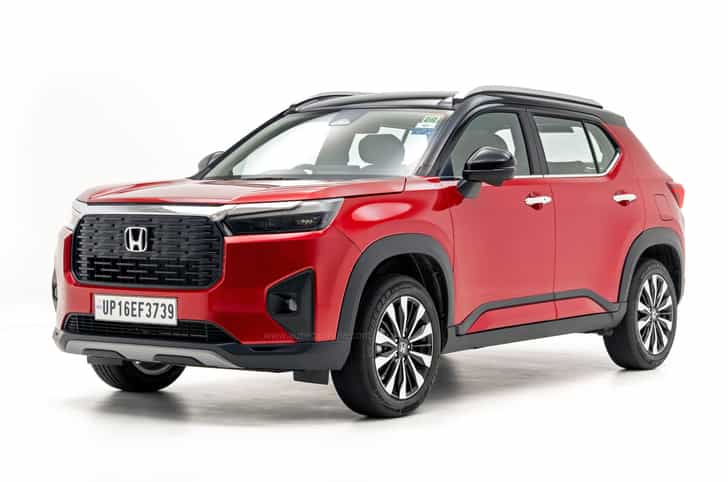
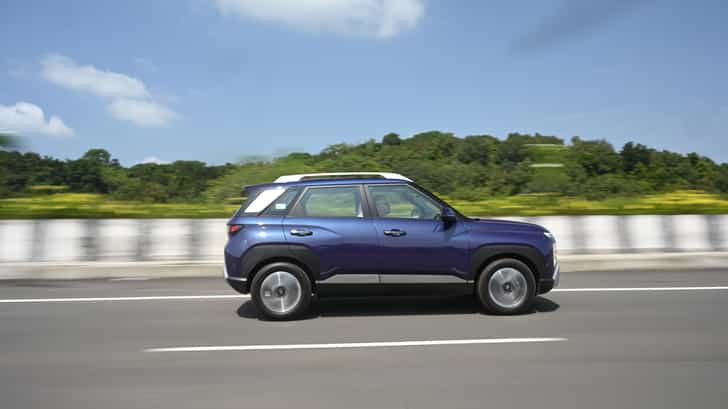
With a budget of Rs 16-18 lakh, predominantly city driving and a focus on reliability, hassle-free ownership and a good service network, the Elevate is the best fit. Its naturally aspirated 1.5-litre petrol engine and CVT gearbox are smooth, proven and well suited to daily commuting, while Honda's reputation for reliability makes it an easy car to own over the long term. The ZX variant also gets the practical features you're looking for, including a 360-degree camera, TPMS, rear AC vents and a well-finished cabin without relying on gimmicks.If fuel efficiency is your highest priority, the Maruti Suzuki Grand Vitara Delta Smart Hybrid AT is another strong option. It won't match the economy of the Strong Hybrid, but it still delivers impressive real-world efficiency, benefits from Maruti Suzuki's extensive service network and comfortably fits within your budget.If you're willing to stretch your budget by a couple of lakh rupees, the Toyota Urban Cruiser Hyryder Strong Hybrid is worth considering. Its hybrid powertrain is exceptionally efficient in city traffic and offers very low running costs, but at current prices, it sits outside your stated budget.

VehicleHonda Elevate
VehicleMaruti Suzuki Grand Vitara
VehicleToyota Urban Cruiser Hyryder
Honda Elevate
Honda Elevate
1w

I want to buy the Tata Nexon Diesel Smart Plus S due to its torque and mileage, but my driving pattern is as follows: I do a 150 km weekend drive (85% on the expressway) once a month, and during the other three weekends, I drive around 70 km, of which 12 km is in the city and the rest is on an expressway with an 80 km/h speed limit. I also take 3-4 short trips of 400-500 km a year (70-75% on highways or expressways) and one cross-country trip of at least 3,000-4,000 km. I am quite particular about my car's maintenance, as I get it serviced every 8 months without fail. Please suggest whether this is the right choice.

Verified
6d

Based on your usage, the Tata Nexon diesel Smart Plus S is a sensible choice. Your driving pattern is predominantly highway and expressway, with regular long-distance trips and a disciplined maintenance approach. This is exactly the kind of usage where a diesel engine makes sense - the Nexon diesel has good torque or pulling power, which is vital for effortless overtaking and in the hills, and its fuel efficiency on highways will help keep running costs in check over the long term.The Nexon itself is a well-rounded package with a comfortable ride, good safety credentials and a robust build, which makes it well-suited for long-distance touring. This Tata car strikes a good balance between essential features and value, so you are not paying for unnecessary extras.The only thing to keep in mind is that the Nexon is not the most spacious car in the segment. If you regularly travel with a full family, you may want to consider something like the Mahindra XUV 3XO diesel, which offers more cabin space and a similarly strong diesel engine but has less luggage space. Overall, the Nexon is the better fit.

VehicleTata Nexon
VehicleMahindra XUV 3XO
1w

Hi Autocar India team, I would really appreciate your expert guidance, as I'm confused between three Mahindra options: the XUV 7XO AX5 Diesel Automatic, the XUV 7XO AX5 Petrol Automatic, and the XEV 9S. My driving pattern consists mainly of 30-40 km per day, almost entirely within Chandigarh city. I do take occasional highway trips, but the majority of my driving is in city traffic. My biggest priorities are low running costs over the long term, reliability and hassle-free ownership, good drivability in city traffic, and choosing a vehicle that I can comfortably keep for the next 7-10 years. I have a few questions. First, is a modern diesel automatic a sensible choice for someone who drives only 30-40 km a day in the city? I've heard concerns about DPF regeneration and whether diesel vehicles are suitable for predominantly urban driving. Would my daily usage be enough to avoid such issues? Second, if my driving pattern remains the same, would you recommend the XUV 7XO Diesel Automatic over the Petrol Automatic, or would the petrol variant be the better long-term choice? I've also been reading discussions suggesting that diesel fuel could gradually see higher blends of isobutanol or other biofuels in the future, similar to how ethanol blending has increased in petrol. Is this something buyers should genuinely be concerned about over the next 7-10 years, or is it unlikely to affect the reliability and longevity of modern diesel engines? From this perspective, would you still consider a diesel vehicle a safe long-term investment? I also really like the Mahindra XEV 9S because of its low running costs, smooth driving experience, and the convenience of home charging. My only concern is the availability of charging infrastructure during outstation trips. Although most of my driving is within the city, I do take occasional long-distance journeys and wouldn't want to feel restricted by charging availability. Considering my usage and priorities, which of these three would you recommend: the XUV 7XO AX5 Petrol Automatic, the XUV 7XO AX5 Diesel Automatic, or the Mahindra XEV 9S? If you were buying a vehicle for yourself with the same driving pattern and planned to keep it for the next 7-10 years, which one would you choose, and why? Looking forward to your expert advice. Thank you!

Verified
6d

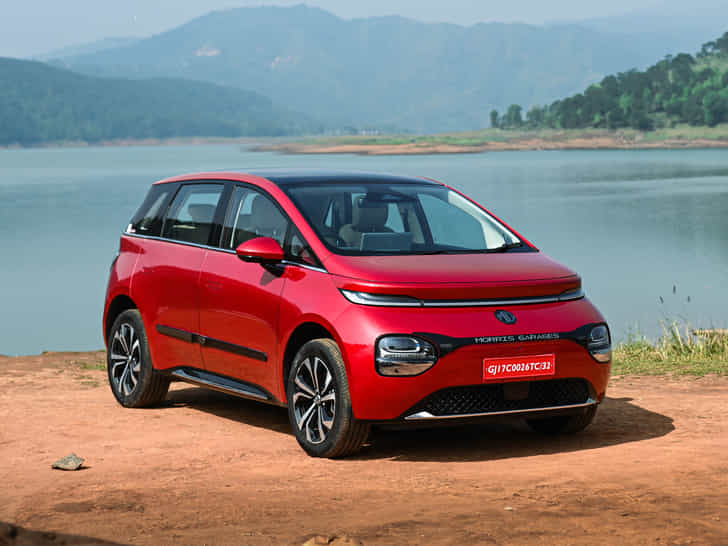
We'd recommend the Mahindra XEV 9S. With a daily commute of 30-40 km, almost entirely in city traffic, and access to home charging, an EV simply suits your usage better than either a petrol or diesel vehicle. It offers the lowest running costs, the smoothest driving experience in stop-start traffic, and significantly lower maintenance than an ICE SUV. Since you intend to keep the vehicle for 7-10 years, you'll benefit from these lower operating costs over a long ownership period.Between the two XUV 7XO variants, we'd choose the Mahindra XUV 7XO AX5 Petrol Automatic over the XUV 7XO AX5 Diesel Automatic. Although your daily driving distance is enough for the engine to reach its operating temperature, DPF-equipped diesel engines perform best when they are driven on regular highway runs at sustained speeds. With predominantly urban use, the petrol variant is the safer and more hassle-free option. We also wouldn't be concerned about E20 petrol or speculate about future diesel biofuel blends. Modern engines are designed to run on the fuels currently mandated, and there is no official roadmap that should influence your buying decision today.Your concern about charging infrastructure on long trips is valid, but it's becoming less of an issue with each passing year. The charging network on major highways continues to expand rapidly, and for the occasional outstation drive, a little route planning is usually all that's required. Since the vast majority of your driving is within Chandigarh, you'll spend most of your time charging conveniently at home rather than visiting fuel stations.

VehicleMahindra XEV 9S
VehicleMahindra XUV 7XO
1w

My monthly driving is around 3,000 km, so I'm planning to buy an EV. I'm looking for a car that can handle both city driving and highway trips comfortably. Please suggest the best EV options.

Verified
6d

Did you mean 3,000 km a month? If it is 30,000 km a month, that means you are doing over 1,000 km a day, which is an exceptionally high usage pattern.In that case, even an EV is not the right solution. The best EVs currently on sale would require multiple charging stops every day, and the time spent charging would quickly outweigh any fuel savings. For this level of usage, a diesel car is still the most practical and cost-effective option.If you're looking for a multipurpose vehicle for both city and highway driving, a Kia Seltos diesel would be a much better fit. It is comfortable, spacious, and an efficient long-distance cruiser. Its refined diesel engine is well suited to covering high mileages without the charging constraints of an EV.EVs make the most sense for drivers with high annual running but predictable daily distances, where overnight or scheduled charging is practical. They are less suitable for extremely high daily usage, where charging time becomes a significant limitation.If you still prefer an EV, you could consider the upcoming Kia Syros EV, with a 51.4kWh battery and a claimed range of up to 526 km on a single charge. It is likely to be priced within your Rs 15-20 lakh budget. Despite its compact footprint, it offers a spacious cabin, with an extremely efficient powertrain, given that it is shared with the Kia Carens Clavis EV and Hyundai Creta Electric.

VehicleKia Seltos
VehicleKia Syros EV
VehicleKia Carens Clavis EV
VehicleHyundai Creta Electric
1w

I own a 2016 Maruti Suzuki Baleno Zeta AT that has covered only 56,000km, and I'm now looking to upgrade. I would like my next car to be under 4 metres in length, or at most 4.2 metres. My priorities are safety, comfort, and decent mileage, with nothing below 10 kmpl, as I live in a city with narrow roads. Should I get the new Baleno Zeta AT be the right choice, or are there better alternatives? The car will mostly be used for city driving, with occasional highway trips, around thrice a year.

Verified
6d

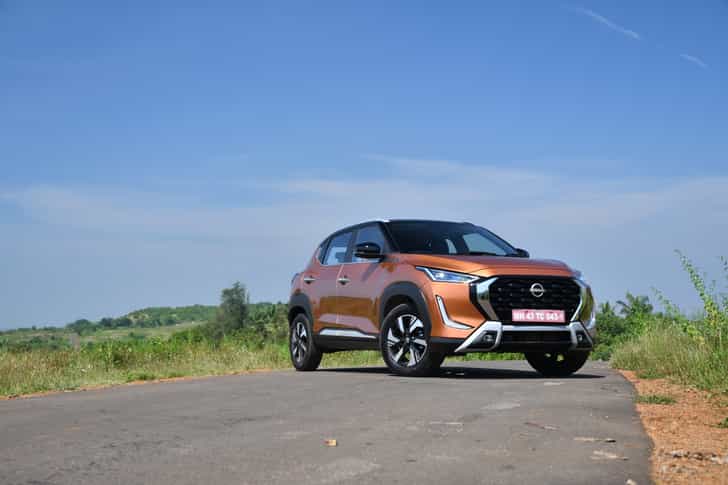
Given your priorities of safety, comfort, decent mileage and city-friendly dimensions, the new Maruti Suzuki Baleno Zeta AMT is a sensible upgrade from your current car. It remains easy to drive, efficient and well-suited to narrow city roads, while adding more modern features and improved refinement. However, one important difference is that your current car uses a smooth CVT auto gearbox, whereas the new Baleno comes with an AMT. While the AMT is more fuel-efficient, it is not as seamless or refined in everyday driving.If your budget is between Rs 10-15 lakh, there are several alternatives worth considering. You could opt for the higher-spec Maruti Suzuki Baleno Alpha AMT for additional features. The Maruti Suzuki Fronx is another strong option. It is based on the Baleno but offers higher ground clearance and a rugged crossover design. It is also available with a 1.0-litre turbo-petrol engine paired with a 6-speed torque converter automatic, although mileage is lower than the 1.2-litre AMT.Another option is the Nissan Magnite. It is compact enough for city driving, has a 5-star Global NCAP safety rating, and has a spacious, comfortable cabin. Both the 1.0-litre naturally aspirated petrol and the 1.0-litre turbo-petrol engines are reasonably fuel-efficient and are available with auto gearbox options. Overall, this Nissan car may actually be the strongest all-round choice based on your requirements.

VehicleNissan Magnite
VehicleMaruti Suzuki Fronx
VehicleMaruti Suzuki Baleno
Nissan Magnite
Nissan Magnite
1w

Hi Autocar Expert Team, I am 43 years old and commute around 60 km every day. Approximately 90% of my journey is on highways, with the remaining 10% on city roads. During my highway commute, I have to cross three bridges with expansion joints, which make the ride quite uncomfortable. I also suffer from sciatica-related back pain, so ride comfort and good suspension are my top priorities. I currently commute by car, but frequent traffic congestion significantly increases my travel time. As a result, I am planning to switch to a motorcycle for my daily commute. My budget is between Rs 2-4 lakh. Engine capacity is not a major concern, and I am open to motorcycles ranging from 150 cc to 450 cc. Based on my daily riding conditions, comfort requirements, and back condition, could you please recommend the most suitable motorcycle? I am particularly looking for a bike with the best suspension and ride comfort over bridge joints and uneven roads, a comfortable seat and relaxed riding ergonomics that are suitable for someone with sciatica, remains stable and composed at highway cruising speeds, and is reliable, easy to maintain, and offers a good long-term ownership experience.

Verified
6d

Since your commute is quite long and comfort is your top priority, the Hero MotoCorp Xpulse 210 and the Royal Enfield Himalayan 450 are both worth considering. The choice between the two depends largely on your typical highway cruising speeds.Both bikes offer an upright, neutral riding position that is well-suited to long hours in the saddle. They also have comfortable seats (the Himalayan 450 has the upper hand here).The Himalayan 450 offers stronger highway performance. However, it is noticeably heavier. If you want a lighter motorcycle that is easier to manage in daily use, the Xpulse 210 is the more approachable option.Take a test ride of both motorcycles before making a decision, as that will give the clearest indication of which one feels more comfortable for your riding needs.

Hero MotoCorp Xpulse 210
Royal Enfield Himalayan
3w

Hi, I live in Bangalore and am looking to buy a new motorcycle under 3 lakh (on-road) and would really appreciate your suggestions. I am planning to primarily use this bike for daily commuting, weekend rides, and occasional long-distance touring or adventure trips. My wife and I are both around 5'10" tall, and pillion comfort is a high priority. Since I occasionally experience back pain, a comfortable riding posture and good suspension are very important. Also, good mileage is another major deciding factor. I'm looking for a bike that offers a good balance of comfort (for both rider and pillion), reliability, fuel economy, touring capability and ability to handle occasional bad roads or light adventure riding. I'm open to any brand and would love to hear your recommendations based on personal experience. If you've owned or ridden any bike that fits these requirements, please share your thoughts, along with any pros and cons. Thanks in advance!

Verified
1w

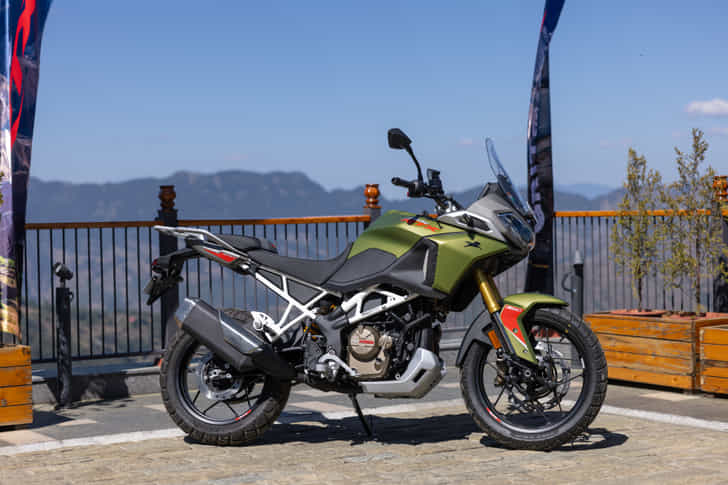
From what you've described, it seems like the TVS Apache RTX 300 would be a good fit for your needs. The RTX is spacious, comfortable, loaded with features and has decent performance and fuel economy too. The downside here is that RTX waiting periods are on the higher side and since this is still a fairly new product, you may experience teething issues. Fully loaded with luggage and a pillion, its performance will also be quite modest. If you are open to extending your budget to account for the Royal Enfield Himalayan 450, we would strongly suggest you go down that route. The Himalayan has excellent suspension, gutsy performance and is a proven commodity today. The only real downside is it's heft and size but since you and your partner both are on the taller side, chances are, you should be able to make your peace with it or even welcome the added space on offer. Take rest rides of both machines and see which one you guys lean towards more.

TVS Apache RTX
Royal Enfield Himalayan
TVS Apache RTX
TVS Apache RTX