
Autocar India
24w

I want to buy a new SUV. Which is better, the Brezza or the Grand Vitara? Also, which transmission is better: manual or automatic?

Verified
23w
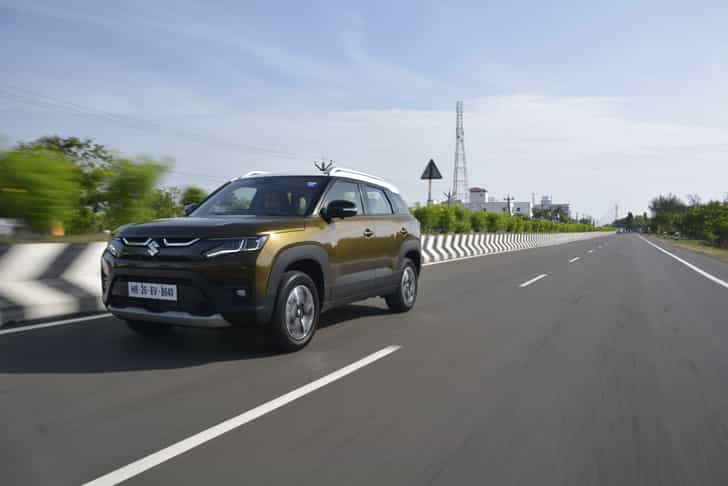
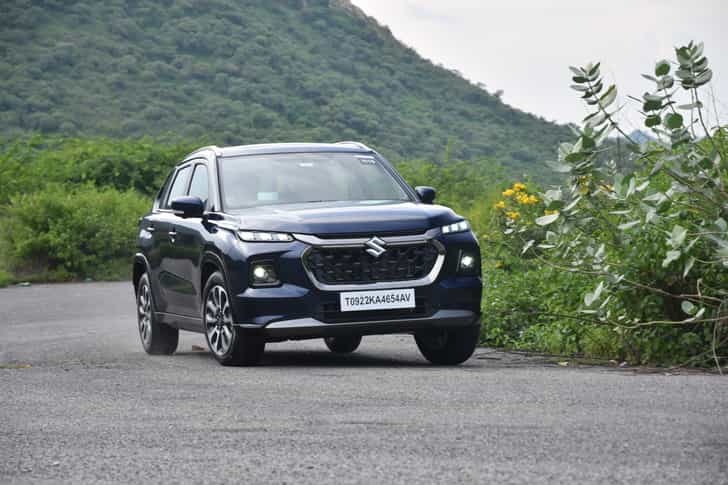
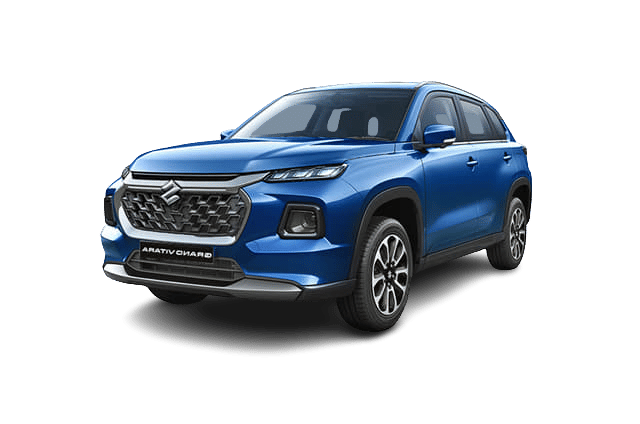
While the Maruti Suzuki Brezza and Grand Vitara essentially belong to different segments, there is a price overlap. Without more details, we assume you are considering like-priced models of the duo. From the Grand Vitara line-up, that means the standard 1.5-litre petrol engine, which, incidentally, is shared with the Brezza.  
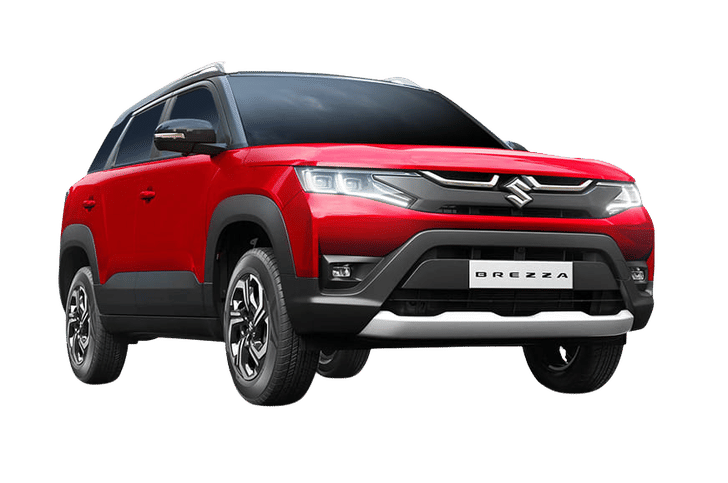
While the larger Maruti Suzuki Grand Vitara does have a more upmarket air about it, we'd feel that opting for a better-equipped version of the Brezza would be a better use of your money. For reference, for the same money that you could get a fully-loaded Brezza ZXI Plus, you'll get a mid-spec Grand Vitara. The added features on the Brezza do count for a lot and your experience with the car. 
What also strengthens the Brezza's case is that, despite being a smaller vehicle, it feels airier than the Grand Vitara at the back. In terms of performance, there is little real-world difference, since both models use the same engine.
If you live in a city and drive often on congested roads, an automatic would be the one we'd recommend. That said, manual gearbox versions of the Brezza and Grand Vitara are easy to live with too, thanks to their light clutches and smooth gearshifts.
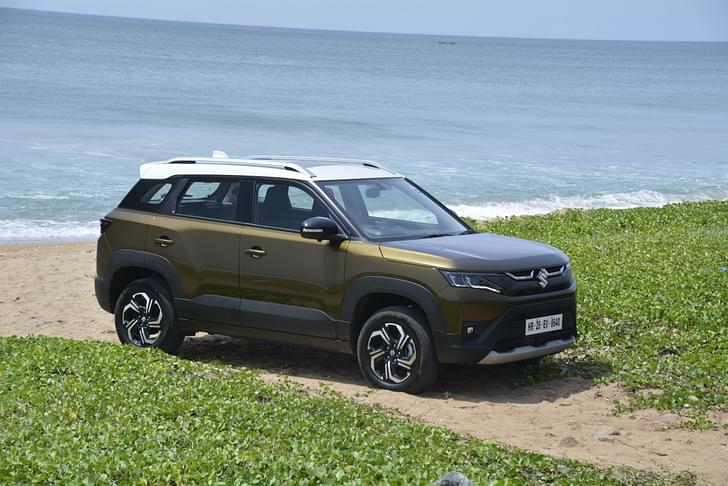
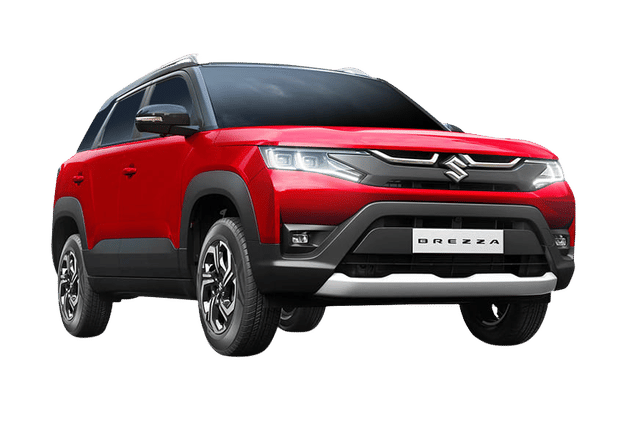
Maruti Suzuki Brezza

Maruti Suzuki Brezza

More questions on similar cars

8h

I am planning to buy a new car with a budget of around Rs. 12 lakh. I am confused between the Tata Punch EV (40 kWh), Kia Sonet, Maruti Suzuki Brezza, Skoda Kylaq, and Mahindra XUV 3XO. Could you please suggest the best option for my daily usage? At present, I own a Maruti Suzuki Ertiga, and my monthly running is approximately 3,100 km. My primary concern is reducing my monthly running costs. Considering my usage pattern and priorities, which car would you recommend?

Verified
5h

For your relatively high running and goal of reducing running costs, a diesel is probably your best pick. At 3,100 km a month, diesel will cut your per-km cost far more than petrol, and you can get a well equipped manual within Rs. 12 lakh within your shortlist. The Mahindra XUV 3XO diesel and Kia Sonet diesel are booth good options. Bear in mind, however, that you will have to take a few extra steps for diesel engine maintenance, such as occasional Adblue top-ups and high-speed runs to regenerate the DPF.The XUV 3XO has the stronger engine, more spacious cabin and comfier suspension, whereas the Kia Sonet offers better mileage, interior quality and refinement. Another good option is the Hyundai Venue diesel, which is the best all rounder, and offers a fair mix between the XUV 3XO and Sonet. However, it is more expensive, and you will have to stretch your budget slightly to get some features.The Brezza is a good option too, but there is no diesel, and while you can opt for CNG, you will experience a power deficit in the process. Downsides of CNG include long waits at the pump, and a CNG tank that compromises boot space. If you are fine with this, it's a good alternative, but bear in mind, there is a facelift of the Brezza coming out soon, so it might be worthwhile waiting for that.The Punch EV 40kWh would be the absolute cheapest to run, but will push the limits of your budget and only makes sense if you have home charging. All considered, the XUV 3XO or Sonet diesel are your best options.

VehicleMahindra XUV 3XO
VehicleKia Sonet
VehicleMaruti Suzuki Brezza
VehicleTata Punch EV
VehicleHyundai Venue
5h

I want to purchase an SUV, and my budget is 15 lakhs maximum. My daily drive is around 10-15 kms in the city, and occasionally I go out of the city, like once in a quarter, and that too, maximum up to 300 kms. The vehicle should give decent mileage. It should be safe as well. Kindly suggest a few options.

Verified
33m

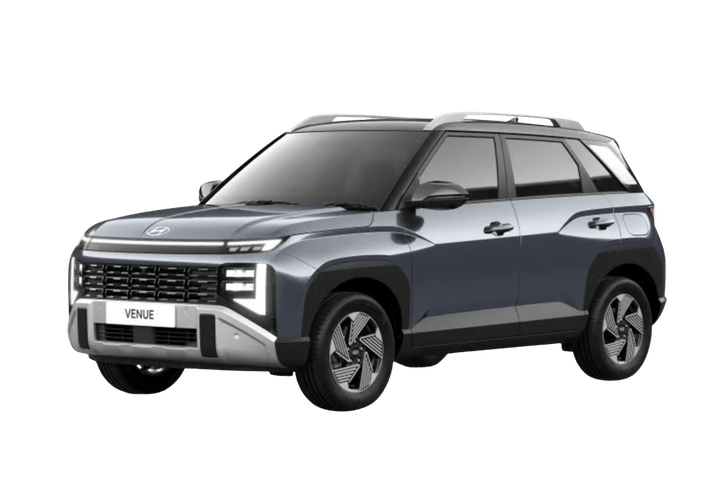
Go for the Hyundai Venue. Given your limited usage, there's no need to spend extra for the diesel engine, and either of the petrol engines should be sufficient. The 1.2-litre engine is perfect for your largely city use, with sufficient power and a light clutch and gear shift. However, for your highway trips, it might feel underpowered, and in that case, the 1.0-litre turbo-petrol is a better bet, and even comes with a DCT automatic option. However, this engine isn't as fuel-efficient as the 1.2.Being one of the newest SUVs in the compact segment, the Venue comes with the latest tech, high-quality interiors, good space and good comfort too. With your budget of Rs 15 lakh, you can go up to the HX8 variant, which has a lot of features and tech. This includes safety features, and you'll be reassured by the fact that it has scored 5 stars in Bharat NCAP's crash tests. The only downside is that it's not particularly exciting to drive compared to some rivals.Speaking of which, alternatives include the Tata Nexon and Mahindra XUV 3XO, which have also scored 5-star NCAP ratings, but aren't as fuel-efficient as the Venue. Or conversely, the Maruti Suzuki Brezza and Fronx, which are more fuel efficient, but haven't yet been tested by Bharat NCAP or Global NCAP. Overall, we think the Venue is the best bet for you.

VehicleHyundai Venue
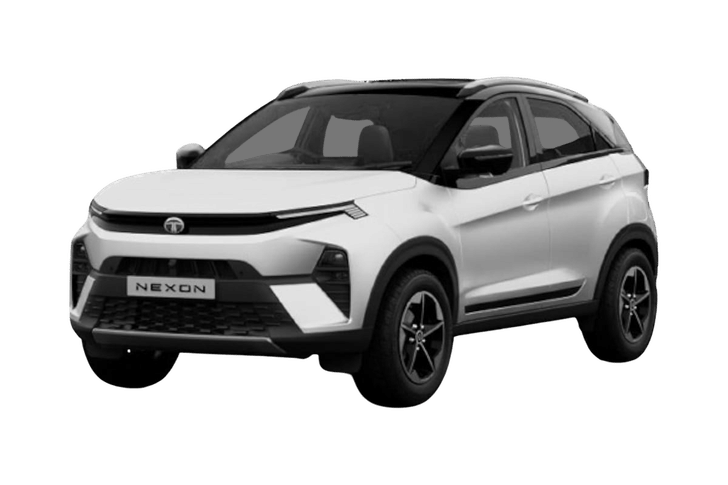
VehicleTata Nexon
VehicleMahindra XUV 3XO
VehicleMaruti Suzuki Brezza
1d

I am planning to purchase a new automatic car for my daughter. She recently obtained her driving license and is currently driving an automatic Tata Nano. Now that she is comfortable and confident with it, I am considering upgrading her to a larger vehicle. I am evaluating options such as the Kylaq and the Kia Sonet. However, my wife is insisting on an electric car. I am a bit sceptical about EVs, as they are not yet fully proven to be trouble‑free, and her weekly commute is around 150 km. I am also waiting for the launch of the updated Brezza, and my preference is for a torque‑converter automatic rather than a DCT. I would appreciate your opinion on electric cars, the Kia Sonet diesel, the Brezza, and which one I should go for. This car will be mostly used for city drives since I have an Ertiga manual for long trips.

Verified
22h

Of your shortlisted cars, go for the Skoda Kylaq automatic. For mostly city use and just 150km a week, its punchy turbo petrol engine with a smooth torque converter is a great mix of fun and ease of use. Its light yet sharp steering, upright seating and compact size feel like a natural step up from a Nano, and the interior feels fresh and upmarket too.The Kia Sonet diesel automatic is quick and efficient, but a diesel engine is overkill for your daughter's limited usage. Not only is it pound-for-pound more expensive than an equivalent petrol to buy, but it also requires extra care, such as regenerating the DPF (diesel particulate filter) every so often via a high-speed run, as well as top-ups of the ad-blue tank. The Brezza is a good option thanks to its simple, naturally aspirated engine, which should deliver better fuel economy than the Kylaq. But in its current form, it's just a bit uninteresting and unenthusiastic an offering, and it's best to wait for the facelift, which is right around the corner, before making that decision.For 150 km a week, an electric car is actually ideal if you have a private parking spot with a 15A socket or a home charger. The powertrains these days are much smoother, batteries carry long warranties, and city running is silent and cheap. Upfront cost, charging access and resale value are the only real hurdles, so if you are interested, a compact EV like the Tata Punch EV is a great option.

VehicleSkoda Kylaq
VehicleKia Sonet
VehicleMaruti Suzuki Brezza
VehicleTata Punch EV

Popular discussions right now

1w

I own a Hyundai Venue Turbo Petrol, which is driven around 4,000 km per year and is occasionally used by my parents. I have been considering to upgrade it, as I am tired of spending money on maintenance. The car has been problematic since its second year of ownership. I am currently considering the Kia Syros HTK (EX) manual and HTK+ (DCT). However, some automobile enthusiasts have advised me against buying a DCT if I am looking for a hassle-free ownership experience, especially since the car will mostly be driven in Delhi’s office-hour traffic and the overall running is quite low. Could you please suggest whether I should opt for the DCT, stick with a manual, or consider a diesel automatic instead? Alternatively, if there are better options within a budget of Rs. 15 lakh, I would be open to considering them. I can also wait if there are any promising new launches expected this year within my budget. I am not interested in an EV at the moment. Thanks in advance.

Verified
6d

Given your low annual running and predominantly city use in Delhi, a diesel does not make sense. Modern diesels are happiest when regularly driven on longer runs, and with just 4,000km a year, the higher purchase cost and potential emission system issues are difficult to justify.As for DCTs, they have become far more reliable than early examples, but if the priority is a smooth, stress-free ownership experience in heavy urban traffic, a torque-converter automatic is still the safer bet. It is generally smoother at low speeds and better suited to constant stop-start driving.Rather than moving to a Syros DCT, it would be worth considering the Skoda Kylaq automatic or the Mahindra XUV 3XO automatic. Both use torque-converter gearboxes and offer a more relaxed driving experience in city conditions. The Kylaq feels particularly polished to drive, while the 3XO counters with a richer feature list and a more spacious cabin.If you like the Syros, the manual remains a sensible choice given your limited annual usage, but if an automatic is preferred, a torque-converter-equipped rival would be a better fit than a DCT.

VehicleKia Syros
VehicleSkoda Kylaq
VehicleMahindra XUV 3XO

Posted on: 2 Jan 2026