Latest questions answered by experts
I’m a 21-year-old college student, and my family already owns a 2020 Fortuner. I’m looking for a second car for college use and outings. Should I go with the Thar, as per my father's choice, or the new-generation 2026 Hilux, which I like? Or is there any other good option? It must be a diesel SUV.
Why not consider the Mahindra Thar Roxx instead? The Thar is a good secondary car, however the absence of rear doors hampers practicality. Also, while the Thar is excellent off-road, it can feel a bit bumpy on the road. In comparison, the Thar Roxx feels a lot more practical, usable and comfortable for daily use and long drives. The Hilux is simply too large for daily driving, especially in the city. However, if you're looking to get a vehicle purely for butch looks and stand-out road presence, then nothing will come close to the new Hilux. Be prepared to spend a lot more for it (compared to a Mahindra Thar Roxx).
I’m planning to buy an electric SUV in Delhi with an on-road budget of Rs. 20-21 lakh. My usage will mainly involve a 30-40 km daily office commute, along with occasional weekend highway trips. The VinFast VF6 Wind Infinity has caught my attention because of its design, features, and range, but I’m hesitant about its after-sales support, service network, resale value, and long-term reliability. Given my requirements, would you recommend the VF6, or is there a better EV in this price range that offers a more dependable ownership experience?
Given your usage pattern of a 30-40 km daily commute with occasional highway trips, the VinFast VF6 Wind Infinity is a tempting option with its strong range and feature set. However, your concerns about after-sales support, service network and long-term reliability are valid. VinFast is still a relatively new player in India, and while the company is making efforts to establish a service network, it does not yet have reach of more established brands. So it really boils down to the support you have in your area. If there is a dealer close to you and in the areas you drive to, you could go ahead with the car. As for the company itself, Vinfast is investing in expanding their network and has also massive plans for India for their auto business as well as other businesses like the GSM app based taxi service. From that point of view you need not worry as they are not a fly-by-night operator. If you would however you would prefer an electric car from an established brand, the Mahindra BE6 would be a good option as it too has a striking coupe like design, as this seems to be what you prefer. As an all rounder the Hyundai Creta EV would be a good option.
I am confused between Taigun 1.5 Sport and Seltos Diesel X-Line top model. I have owned the Polo AT and Vento AT in the past, so my love for Volkswagen is making this decision difficult.
Go for the Volkswagen Taigun 1.5 TSI Sport. Coming from a Polo and Vento automatic, you already appreciate Volkswagen’s driving DNA, and the Taigun 1.5 TSI is a natural progression. The engine is punchy, the DSG gearbox is quick and engaging, and the overall driving experience is far more involving than the Seltos. The Taigun also feels more compact and agile in the city, while still being comfortable on the highway.The Kia Seltos diesel X-Line is a strong all-rounder with better space, a more premium cabin and a more relaxed long-distance character, but it does not offer the same level of driver engagement. The diesel engine is efficient and torquey, but it lacks the excitement of the 1.5 TSI. Given your history with Volkswagen cars, the Taigun will simply feel more familiar and more enjoyable to drive every day.
Hi, I had planned to buy the Brezza Facelift 1.5 VXI MT and install the necessary accessories after delivery, with a budget of Rs. 12 lakh. However, I am now also considering the Creta 1.5 MT base model or the Kia Seltos base model. The on-road price of the Creta is Rs. 13.61 lakh, while the Seltos costs Rs. 13.72 lakh. Since there is a price difference of about Rs. 1.60 lakh between the Brezza and these two models, I am weighing my options. Would upgrading be a good idea? If so, which one should I choose between the Creta base model or the Seltos base model? Thanks.
If Rs. 1.6-1.7 lakh price difference isn't too much of a stretch for you, then get the entry-level Kia Seltos 1.5 Petrol. It feels far more modern, and more premium than the Maruti Suzuki Brezza, and besides being more spacious, even in its base-spec packs most of the essential features you'd expect at this price.
I am from Delhi, and my daily commute is around 80 km. I am looking for an EV with a budget of around Rs. 17 lakh. I have shortlisted the e Vitara Zeta 61 kWh and the Syros ER HTX 51 kWh. I want a niggle-free ownership experience, at least a 400 km range, a smooth and comfortable ride, and good interior space. I also plan to keep the car for at least 8-10 years. Please suggest which one is the better choice.
The Kia Syros ER HTX 51kWh is the better fit for your requirements. With an 80km daily commute, an electric car makes perfect sense, and the Syros' 51kWh battery is more than capable of comfortably covering your daily usage while delivering a smooth, refined and comfortable driving experience. It also offers a spacious cabin, premium interiors and should feel more modern and sophisticated to live with over the long term.The Maruti Suzuki e Vitara Zeta 61kWh is also a strong option. Its larger battery gives it an advantage on range and provides more flexibility for longer highway trips. Maruti's extensive service network is another plus if long term ownership is a priority. However, unless you frequently undertake long distance journeys, the additional range isn't something you'll use every day.

We are first-time car buyers from Warangal, Telangana. Both my parents, who are above 50 years of age, will be driving the car regularly, and nobody in our family has owned a car before. Around 60% of our usage will be on highways. We plan to keep the car for a minimum of 6-8 years. We also expect decent mileage, although we understand that both are turbo-petrol cars, so we are not expecting very high fuel efficiency. Between the Kylaq's torque converter and the Venue's DCT, which one is genuinely easier and less stressful to drive for a 50 years+ first-time driver in daily city traffic? For Kylaq Signature Plus AT owners, how is the automatic transmission performing in real-world city driving? Are there any complaints after a few months of ownership? We do have a Skoda dealership in our city, but we would like to know how smooth the actual service experience has been for owners in similar Tier-2 cities. Given that we previously cancelled our Venue HX8 DCT booking due to concerns about ethanol blending, which was priced at Rs. 16.1 lakh on-road, does going back to the Venue HX6 make practical sense, or are we just going in circles? I'm personally interested in the Kylaq, but the car will mostly be used by my parents. If any issue occurs, I want the service centre to be able to resolve it easily without troubling them too much or having the car remain at the workshop for weeks.
In your case, the Hyundai Venue HX6 Turbo DCT is the better choice. While the Kylaq is the more enjoyable SUV to drive and its torque converter automatic is smoother than the Venue's DCT in slow moving traffic, your priorities are different. This will be your family's first car, both your parents (50+) will be driving it regularly, and you plan to keep it for 6-8 years. In that context, Hyundai's larger service network, more established ownership experience and easier support in a tier-2 city like Warangal give it the edge.The Kylaq's 6-speed torque converter is an excellent automatic and is likely to feel more natural than the Venue's DCT in bumper to bumper traffic. However, the Venue's DCT has matured over the years and is perfectly manageable with normal driving. On the highway, both cars perform well, but the Kylaq has the better ride and handling balance, making it the more rewarding car to drive.As for going back to the Venue after cancelling the HX8, it doesn't mean you're going in circles. The HX6 sits at a much better price point and represents stronger value for money than the HX8 did. Also, concerns around future ethanol blending shouldn't be the deciding factor today. E20 petrol will continue to remain the standard fuel for the foreseeable future, and manufacturers design their latest turbo petrol engines to run on it.
I own a 2017 Hyundai i20 Asta (O) with around 60,000km on the odometer. I am planning to upgrade with a budget of Rs 20 lakh. My priorities are an automatic transmission, ADAS, a sunroof, and a powered tailgate. I have shortlisted the Hyundai Creta, Kia Seltos, and Tata Sierra. Which of these would be the best long-term choice, and why?
Based on your priorities, the Kia Seltos would be our recommendation. It offers a well-rounded package with a strong feature set, including ADAS, a sunroof and a powered tailgate, while also delivering a comfortable ownership experience. The Seltos is a proven product with a good reliability record, and Kia’s service network is strong enough to inspire long-term confidence.The Hyundai Creta is mechanically very similar, but the Seltos feels more premium inside and offers a slightly better feature-to-price ratio.The Tata Sierra is a compelling option with a spacious cabin and a premium feel, but it is still a relatively new product and does not have the same long-term ownership track record as the Seltos. Given your budget and priorities, the Kia car mentioned above strikes the best balance between features, reliability and long-term peace of mind.

Hi Autocar team! I’m a first-time driver looking for a small car for my little family. My budget is under Rs 8 lakh. I’ve currently shortlisted the Maruti Suzuki Celerio, Hyundai Exter, and Hyundai Grand i10 Nios. Which of these would be the best choice for me, or is there another car you would suggest?
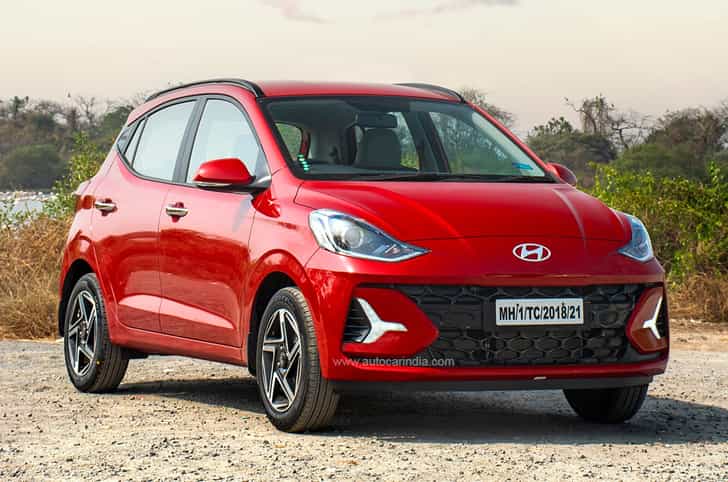
The Hyundai Grand i10 Nios would be the best choice for your requirements. As a first-time driver, you'll appreciate its smooth four cylinder petrol engine, light steering, excellent visibility and easy driving manners. It also feels more refined than the Celerio and offers a more premium cabin, making it a car you'll be happy to live with for many years.If your budget stretches closer to Rs 8 lakh, the Hyundai Exter is worth considering. It gives you SUV styling, higher ground clearance and a higher seating position, which many first-time drivers find more confidence inspiring. It is also better suited if you regularly encounter bad roads or large speed breakers.The Maruti Suzuki Celerio remains an excellent option if fuel efficiency is your biggest priority. It is inexpensive to own and extremely frugal, but it doesn't feel as premium or as comfortable as the Hyundai pair.
I am looking to buy an SUV / compact SUV with a budget of around Rs 25 lakh. I have been using a 2014 Honda City i-VTEC CVT VX for the last 12 years with zero issues and have been really happy with it. The car has run just under 40,000km till date, as my monthly driving is only around 300km, mostly in the city. My spouse and I are not big car enthusiasts, so we do not know much about technical aspects, including engines and the like. Also, I am not a very big fan of too many digital controls on the dashboard. I need a good, spacious car with good exterior and interior quality and decent features.
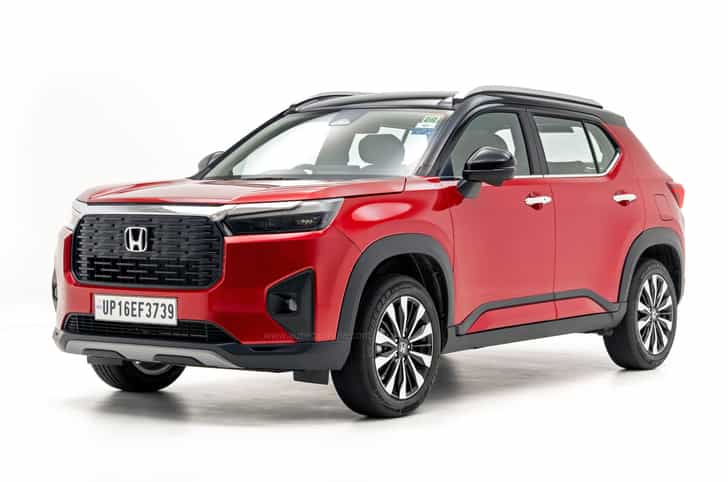
The Hyundai Creta would be the best fit for your requirements. Coming from a Honda City that has served you reliably for 12 years, it sounds like you value hassle-free ownership, comfort and practicality over outright performance or flashy technology. This Hyundai car offers a spacious cabin, comfortable ride, refined petrol automatic, and a proven ownership experience, making it one of the easiest SUVs to recommend. The SX variant strikes the best balance between features and value, while the SX(O) is worth considering if you want a few additional convenience and safety features.If you prefer something familiar and your running remains 300km a month, the Honda Elevate ZX CVT is another excellent choice. It retains the Honda refinement and simplicity you're already used to, has physical controls for most functions and doesn't overwhelm you with digital interfaces.
I am interested in buying the Ola S1 X 3 kWh electric scooter. Could you please advise?
We at Autocar do not recommend purchasing any two-wheeler from Ola Electric. Our past experiences with the company's products have found them wanting in multiple aspects, and it is advisable to go with a proven model of a similar spec and budget from reputed, established brands like TVS, Bajaj, Hero (Vida) and Ather.
Dear Autocar, I’m looking for some advice on a dilemma that I haven’t been able to resolve. I’m replacing my 2015 Audi Q3 Diesel, which has been an excellent long-distance tourer for us. I haven’t test-driven the Alcazar yet, but I plan to do so shortly. My annual running is relatively low, so this isn’t a petrol vs diesel question from a fuel-cost perspective. Our typical usage is very long road trips (Mumbai-Goa and similar), often 8-10 hours at a stretch, with two adults (my wife and me), our Beagle, and lots of luggage. We also drive through highways, ghats, villages and city traffic, so the car needs to feel effortless and confidence-inspiring in every situation, especially while climbing steep ghats with a full load. I’m considering the Hyundai Alcazar, but I’m confused between: 1. 1.5 Turbo Petrol DCT 2. 1.5 Diesel AT (Torque Converter) If the petrol had a conventional torque-converter automatic, I would probably choose it without a second thought. My dilemma exists only because the petrol comes with a DCT, whereas the diesel gets a torque-converter automatic, which is generally considered smoother and more refined at low speeds. My priorities are, in order: - Overall refinement and cabin quietness - Smoothness of the transmission in city traffic - Effortless performance while climbing ghats with a full load - Long-distance comfort and relaxed cruising - Long-term ownership experience and reliability I am not looking for maximum fuel economy or the lowest running costs. I also have another dilemma regarding the seating configuration. Should I choose the 6-seater with captain seats or the 7-seater with the bench seat? My wife almost always travels in the second row during our road trips. She normally likes sitting in the middle seat because she enjoys the forward view. However, from the videos I’ve watched, the captain seats in the 6-seater appear significantly more comfortable and supportive for long journeys. Based on my usage, which powertrain and seating configuration would you recommend, and why? Thank you.
Between the 1.5 turbo petrol and 1.5 diesel Hyundai Alcazar, the diesel is the better fit for your usage. It offers strong low-end torque and a more relaxed, effortless character on long drives. Just as importantly, the 6-speed torque converter automatic is smoother and more intuitive in city traffic. In contrast, Hyundai-Kia DCTs tend to have a sharper engagement, which can feel slightly jerky at low speeds and in stop-go conditions.Do note that while the 1.5 diesel pulls well from low revs, its top-end performance is not particularly strong. With a full load, highway overtakes will require a bit more planning compared to the turbo petrol. That said, for your kind of driving, which prioritises ease, consistency and long-distance comfort, the diesel’s overall delivery and gearbox pairing work better.On seating, the 6-seater with captain seats is the more comfortable choice. The individual seats are better contoured, offer superior support, and the addition of armrests makes a noticeable difference on long journeys. Your wife will likely appreciate the enhanced comfort over extended hours on the road. The trade-off, of course, is the loss of the exact central seating position she prefers, but in the Alcazar, the front seats are not overly bulky, so forward visibility remains reasonably good.One alternative worth considering is the Mahindra XUV 7X0 diesel. It offers stronger performance, better refinement, and feels more effortless on highways, especially when fully loaded. The ride quality is also well suited to mixed road conditions. However, it is a larger vehicle than the Alcazar and can feel more cumbersome in tight urban environments.Overall, for your priorities, the Alcazar diesel with captain seats strikes the best balance of comfort, smoothness and ease of driving
Need expert advice?
Ask the Autocar community and experts.