
Latest questions answered by experts
Abdul Moez
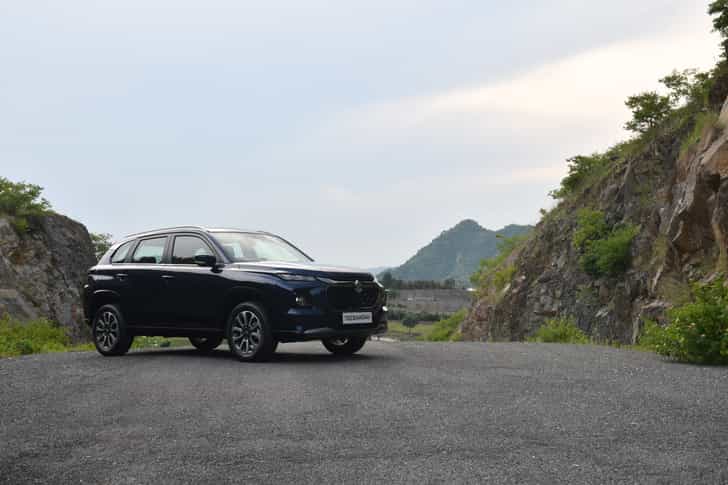
•4dI am confused between the Kia Seltos HTK IVT and the Maruti Suzuki Grand Vitara Delta AT. While I am leaning towards the Seltos due to its premium design and feature-rich cabin, I am concerned about service, maintenance costs, and spare parts availability. I am from Kannur, Kerala, and there is only one service centre nearby.

Autocar India
The Maruti Suzuki Grand Vitara is the more sensible choice for your situation because it gives you better peace of mind on service, lower maintenance costs and a wider, more accessible service network. It becomes important in a place like Kannur with limited support. The Kia Seltos, in comparison, is a more premium and better-looking car with a nicer interior and smoother petrol engine, and it is also a well-proven product, so you are unlikely to face issues with the IVT transmission in regular use. The only drawback with the Grand Vitara is that it feels less rich and not as feature-loaded as the Seltos, but overall, it is the easier, more stress-free ownership choice, making it the one to go for.
Nikhil kumar sharma
•5dI am confused between the petrol versions of the Mahindra XUV 3XO (RevX variant) and the Tata Nexon (Smart Plus variant).

Autocar India
The Mahindra XUV 3XO is the better buy here because it feels more modern and complete, with a stronger petrol engine, quicker performance and a smoother automatic. It makes a noticeable difference in daily driving, along with a more feature-rich and tech-forward cabin for the money. The Tata Nexon, in comparison, is starting to show its age, with a petrol engine that is not as smooth and a DCA automatic that is not as seamless or quick shifting as the 3XO’s torque converter unit. The only drawback with the 3XO is that its boot is smaller, and overall space management is not as practical as the Nexon. But overall it offers a more rounded, enjoyable and up-to-date package, making it the clear choice.
Rakesh Dutt Chamoli
•4dI am looking to buy a car for my family of six. My daily city driving is around 20 km, and I take trips to the hills twice a year. I currently drive a Maruti Suzuki Wagon R (2015 model) and am planning to upgrade within a budget of ₹10-12 lakh. I have shortlisted the Maruti Suzuki XL6, Kia Carens Clavis, and Mahindra Bolero Neo. Please suggest which would be the best option for my needs.

Autocar India
The Maruti Suzuki XL6 suits your needs best because it is the easiest upgrade from a WagonR with a comfortable ride, light controls and low maintenance, making it ideal for your daily city use while still being practical enough for a family of six on occasional highway and hill trips. The Kia Carens Clavis, in comparison, is the better people mover with more space and a genuinely usable third row, along with stronger long-distance comfort, making it the better choice if you prioritise family travel and space over everything else, though it will feel slightly larger and less effortless in everyday driving. The Mahindra Bolero Neo, on the other hand, is tougher and better suited to rough terrain and hills, but it feels basic, less comfortable and not as family-friendly for regular use, and overall lacks the refinement of the other two . Do keep in mind that both the XL6 and the Clavis will stretch slightly beyond your budget on the road, depending on the variant you choose .
Rohan
•4dI am planning to buy a car with a budget of around ₹12–13 lakh. Do any manufacturers currently offer a CNG car with an automatic transmission option?

Autocar India
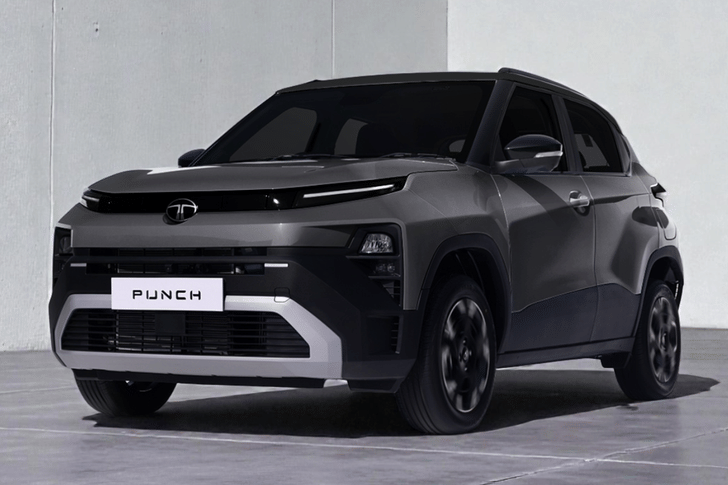
Go for the Tata Punch iCNG AMT if you want an automatic with low running costs in your budget. It is one of the very few options that combine factory-fitted CNG with an automatic gearbox. The Punch works well for daily city use thanks to its compact size, comfortable ride over bad roads and strong safety credentials, making it a practical long-term choice. The AMT gearbox gives you the convenience of clutch-free driving in traffic, which is a big advantage in everyday conditions, even if it is not as smooth as more expensive automatics. The only drawback is that you will notice slight pauses during gear shifts, but overall it offers the best balance of efficiency, ease of use and safety, making it the most sensible choice right now.

Jem
•1wThe Nissan Magnite CVT looks very promising on paper, almost too good to be true. I am looking for a compact SUV within a budget of ₹12 lakh (on-road). I have ruled out the Maruti Suzuki Brezza as I found it uncomfortable. My usage is mostly in the city, with a monthly running of around 500-1000 km. Please suggest.

Autocar India
If you like the Nissan Magnite, there’s no real reason to hold back. We’re not entirely sure what you mean by “too good to be true,” but on the whole, the Magnite has proven itself to be a solid, reliable compact SUV. It’s spacious for its size, well-equipped for the price, and the 1.0-litre turbo-petrol with the CVT feels adequately peppy for typical city use and occasional highway runs, which is very much in line with your monthly usage.Owner feedback has also been largely positive, especially when it comes to value for money and everyday drivability. The main caveat, as always with Nissan, is the dealer and service network, which isn’t as extensive or as consistent as Maruti Suzuki’s. That said, the Magnite itself is a fairly straightforward and proven product, so maintenance hasn’t been a major concern for most users.Given your budget and usage pattern, the Magnite CVT is a sensible and well-rounded choice.
Kaustubh
•5dHello Autocar Team, I would like to ask about UV and heat protection for car glass. Is there any legal way to achieve this? As per my understanding, following a Supreme Court tinted glass ban India judgment, any kind of film is not allowed.

Autocar India
You are right about the Supreme Court order. Any film stuck on the glass is not allowed, even if it is clear or claims 70 percent light. So the legal way to cut heat and UV is to use glass that comes from the car company itself with UV or infrared protection built in, and to use simple parking aids. If you are buying a new car, pick trims that offer UV-cut or solar-control glass, or at least an IR-cut front windscreen. Many brands sell this from the factory on higher trims. If you already own the car, ask the authorised dealer if the same model has an optional UV/IR windscreen or green-tinted windows as a genuine spare part. You can legally replace your current glass with that, as long as it meets the law on light passing through the glass. The rule is minimum 70 percent for the front and rear windscreens and 50 percent for the side windows. This route costs more than normal glass and may not be in stock for every door or model, but it is the clean, legal fix. Everything else stuck on the glass, including “transparent” or “nano-ceramic” films or sprays, can still get you fined. Removable sunshades and curtains are okay only when parked; do not use them while driving. To cut heat further without breaking rules, use a good folding sunshade on the windscreen when parked, keep the sunroof shade shut, and choose lighter seat and floor colours. In short, skip films. Go for company UV/IR glass where available, and use parking shades. That keeps you legal and still helps with heat.
Need expert advice?
Ask the Autocar community and experts.