
Latest questions answered by experts
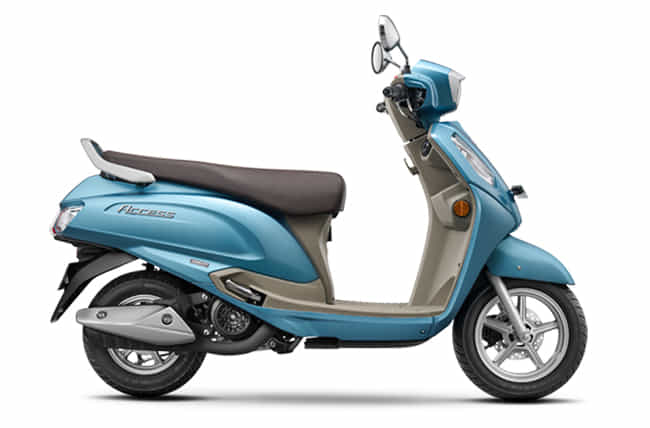
Hi, I was planning to buy Suzuki access. I was interested in one with ABS until I noticed that those variants do not have kick start. I usually leave my scooter unused for a month or so whenever I am out of town. How long can a scooter battery remain charged to start if left unused? My current Ray doesn't have this problem because it has a kick start. My usage is less than 2000kms per year so I am not interested in EV's. Also, is there any chance of e85 variants of Access to launch in next couple of months?

Autocar India
If you leave your scooter idle for many weeks at a time, then the safest option to preserve charge in your battery would be to disconnect it, remove it and keep it in storage. Another option if you don't want to go through that hassle, is to give scooter keys to a trusted friend or family member and ask them to start it once in 10 days or a fortnight and let it idle for 10-15 minutes. You should also ask your nearest authorised Suzuki dealership if they will retrofit the kick starter on your ABS-equipped Access and most likely it should be doable for a small amount. Other scooters which also don't have kick starters on the top variants have the option of fitting the kick back for a small amount. Coming to the query of an E85-compatible Access, there's no news on the horizon of a flex fuel variant of the popular scooter launching anytime soon.

I am planning to buy MG ZS EV, especially now that it is being offered at a reduced price. My daily commute is around 50 km, which makes an EV seem like a suitable option for my needs. However, I am confused by reports suggesting that the ZS EV may be discontinued and replaced by a new-generation model. Given this uncertainty, would it still be a good decision to buy the MG ZS EV now, or would it be better to wait for the upcoming replacement? Could you please advise?

Autocar India
The MG ZS EV is still worth buying today, especially at the heavily reduced prices being offered currently. Yes, MG is working on a replacement for both the Astor and ZS EV, but that car is not around the corner. The replacement is expected only around 2027 and will be based on an all-new modular platform with newer technology and powertrain options.For your use case, that shouldn't be a deal breaker. Your daily commute is only 50km, which the ZS EV can handle effortlessly. More importantly, the current discounts significantly improve the value proposition. The money you're saving today will likely offset a large part of the depreciation hit associated with buying a model that is approaching the end of its lifecycle.The ZS EV also remains a very competent EV. It has a proven powertrain, a comfortable ride, good performance and a feature-rich cabin.
I want to buy an automatic petrol car with a budget of around Rs. 20 lakh. My usage will be quite limited. Can I consider the MG Hector for my requirements, or would you recommend a better alternative? Please advise.

Autocar India
Yes, you can pick the MG Hector petrol automatic, especially with your limited usage. It is very easy to drive, the automatic is smooth, and the cabin is wide and comfortable for family trips. For short, infrequent drives, petrol makes more sense than diesel and the Hector’s soft ride takes bad roads well.Be ready for two things. The petrol automatic Hector usually sits a bit above Rs. 20 lakh on-road in most cities, so keep a small buffer. And in city traffic, you will likely see around 8-11kpl, but it will be fine for your low running. Also remember it is a big SUV, so parking in tight spots can feel bulky.If you go ahead, the lower automatic variant is enough for your usage and budget; no need to pay extra for fancy tech you will barely use. MG’s service is decent in major cities, but resale is weaker than the usual best-sellers, so plan to keep it longer. Also if you can wait until the festive season, there's likely to be some news about a updated Hector and that would be worth the wait.
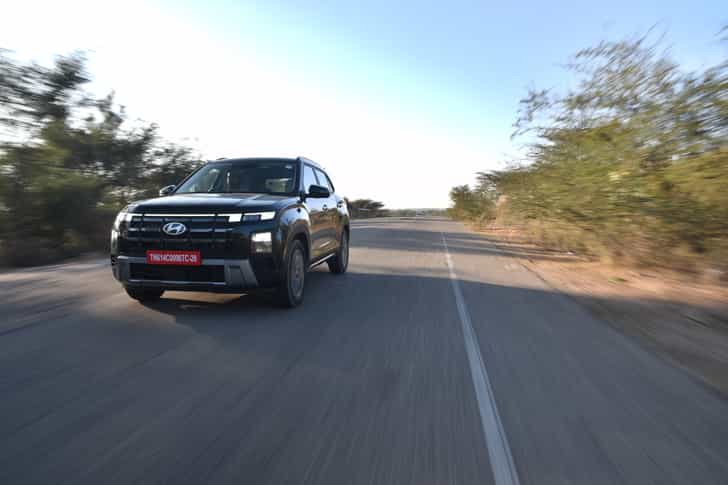
I am planning to buy a Hyundai Creta Automatic in 2026. I am not interested in the upcoming version, as I do not like its design. However, I am confused between the petrol and diesel variants because of the government's future fuel-blending policies, such as E30, and the uncertain long-term future of diesel vehicles. At the same time, I feel diesel is unlikely to disappear completely, given its widespread use in commercial vehicles and trucks. I live in a Tier-2 city and occasionally travel to Bengaluru and Pune. I am also concerned about whether E30 fuel could cause any issues for vehicles that are only E20-compliant. Ideally, I feel the government should continue offering E20 as a standard fuel option. Considering these factors, would you recommend the petrol or diesel Creta Automatic? Kindly guide me.

Autocar India
About E30, using it in an E20‑compliant car is not advised but the harm will be a drop in mileage rather than major material compliance issues. Most manufacturers have material compliance for blends in the higher 20's now mainly due to the fact that this is the case in international markets (like Brazil e27) and it makes little sense to develop a separate material standard for India. Thus, pick the Creta petrol automatic, because your life is mostly tier 2 city runs with only occasional Bangalore or Pune trips, and petrol avoids the DPF fuss that modern diesels can throw up in short, stop‑go use. It is already E20 compatible, so you’re aligned with current fuel, and the petrol is quieter and smoother in traffic.Go diesel only if you drive a lot every month and do long drives of about 20 to 30 minutes and with speeds above 50 to 60kph at least once in two weeks, where the DPF will get a chance to heat up and burn off the soot.
I am planning to buy an automatic SUV for my daily commute. However, I am confused about which variant would be the better choice, especially in terms of long-term service and maintenance costs. I have test-driven the Hyundai Venue DCT and the Nissan Magnite CVT. Could you please guide me on which would be the better option for my usage and whether a CVT or a DCT would be more suitable in the long run? Thank you.

Autocar India
Pick the Magnite CVT if your life is mostly in city traffic and you want the easier, cheaper long-term option. A CVT suits stop-go better than a DCT, so you get smoother crawling, fewer jerks, and no clutch heat or wear to worry about. Over years, that usually means fewer big bills. Nissan’s 1.0 turbo with the CVT is calm in traffic and, driven gently, can sip less fuel than a DCT in the city. Routine service costs on the Magnite are also quite reasonable, and parts aren’t pricey.The Venue DCT is the quicker, nicer-feeling one when you push it, and Hyundai’s network is wider, but a DCT in heavy traffic can feel a bit snatchy, can run hot, and is simply more complex. Out-of-warranty clutch or mechatronics work will hurt your wallet more than anything you’re likely to face on the CVT.One honest catch with the Magnite CVT: when you floor it, the engine drones and it isn’t as quick for sudden highway overtakes as the Venue DCT. Also check how close your nearest Nissan workshop is. If your use is 90 percent city and you’re watching long-term costs, the Magnite CVT is the safer bet.
I am planning to buy a new car with a budget of around Rs. 12 lakh. I am confused between the Tata Punch EV (40 kWh), Kia Sonet, Maruti Suzuki Brezza, Skoda Kylaq, and Mahindra XUV 3XO. Could you please suggest the best option for my daily usage? At present, I own a Maruti Suzuki Ertiga, and my monthly running is approximately 3,100 km. My primary concern is reducing my monthly running costs. Considering my usage pattern and priorities, which car would you recommend?

Autocar India
For your relatively high running and goal of reducing running costs, a diesel is probably your best pick. At 3,100 km a month, diesel will cut your per-km cost far more than petrol, and you can get a well equipped manual within Rs. 12 lakh within your shortlist. The Mahindra XUV 3XO diesel and Kia Sonet diesel are booth good options. Bear in mind, however, that you will have to take a few extra steps for diesel engine maintenance, such as occasional Adblue top-ups and high-speed runs to regenerate the DPF.The XUV 3XO has the stronger engine, more spacious cabin and comfier suspension, whereas the Kia Sonet offers better mileage, interior quality and refinement. Another good option is the Hyundai Venue diesel, which is the best all rounder, and offers a fair mix between the XUV 3XO and Sonet. However, it is more expensive, and you will have to stretch your budget slightly to get some features.The Brezza is a good option too, but there is no diesel, and while you can opt for CNG, you will experience a power deficit in the process. Downsides of CNG include long waits at the pump, and a CNG tank that compromises boot space. If you are fine with this, it's a good alternative, but bear in mind, there is a facelift of the Brezza coming out soon, so it might be worthwhile waiting for that.The Punch EV 40kWh would be the absolute cheapest to run, but will push the limits of your budget and only makes sense if you have home charging. All considered, the XUV 3XO or Sonet diesel are your best options.
Need expert advice?
Ask the Autocar community and experts.