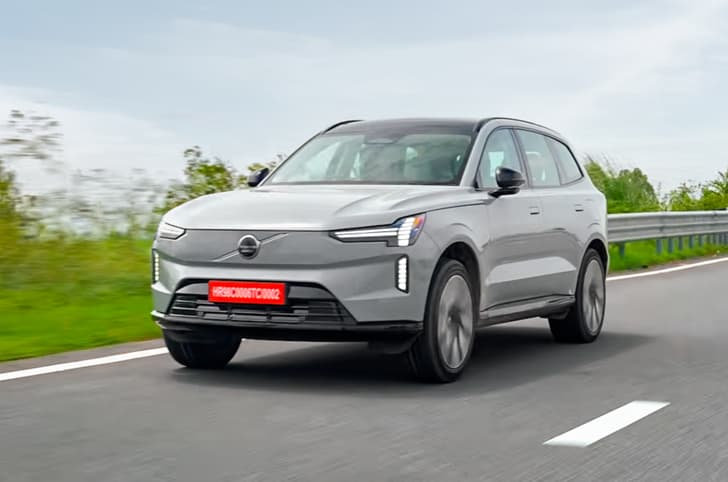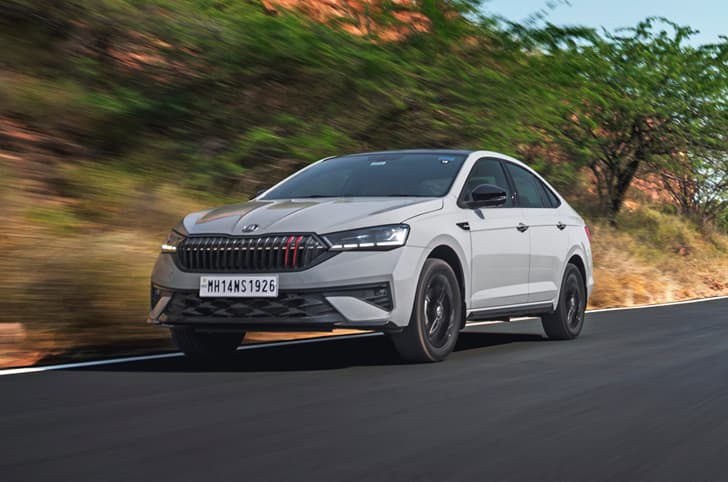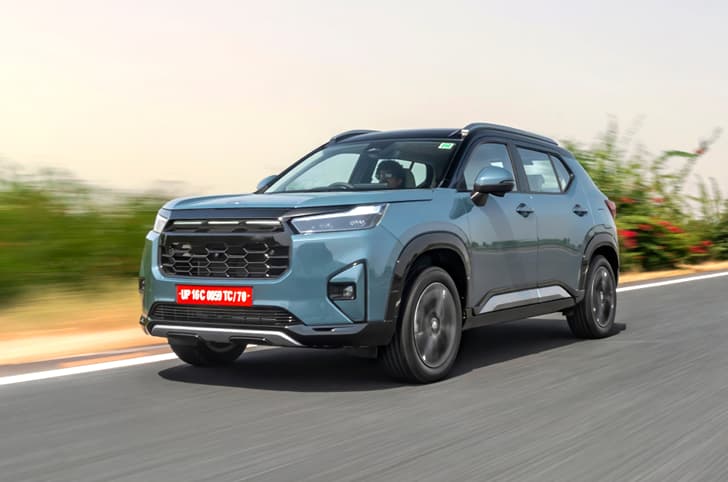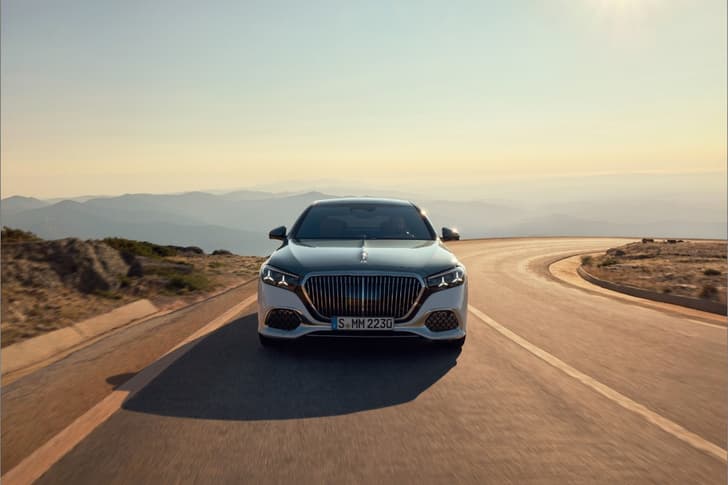
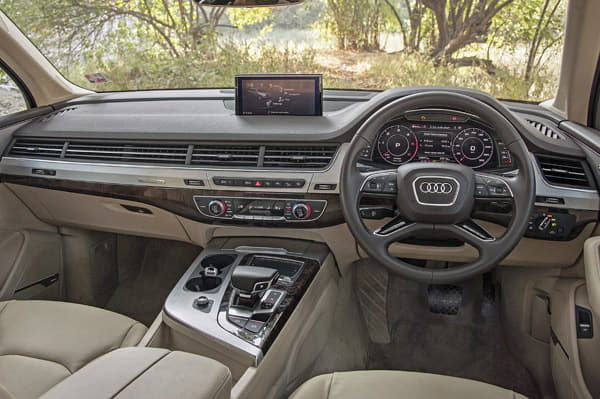
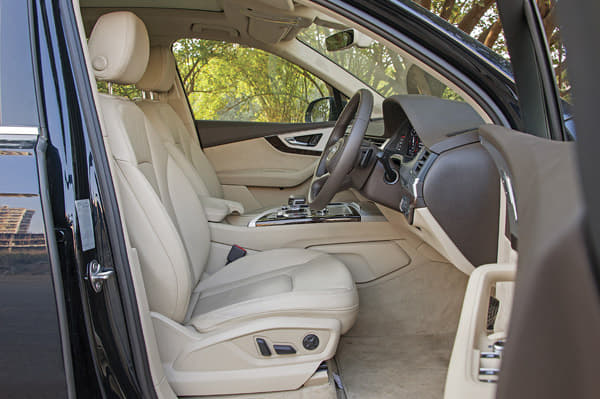
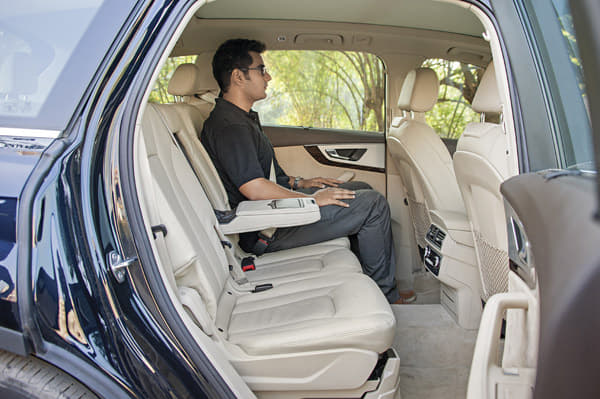
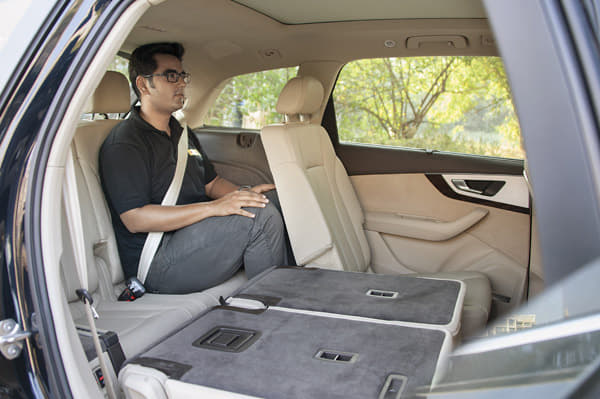
For most carmakers, seven years is about the outer limit they can continue with the same product without bringing out a replacement. Not so for Audi and Volvo. The first-gen Q7 was available for nearly a decade and the XC90 marched on for an incredible thirteen years. However, the reasons were different. With Q7 sales showing no signs of slowing down, Audi was in no real hurry to replace it. The honest-to-goodness XC90 had its own fan following too but Volvo and new owner Geely’s ambitious plans to develop grounds-up new platforms and engines is really what pushed back the launch of a successor.
The SUVs here are the said replacements and both boast greater comfort, luxury and performance than before. In line with the times, there’s also more focus on connectivity and efficiency. But which one offers more of everything is what we’re interested to find out.
Design & engineering
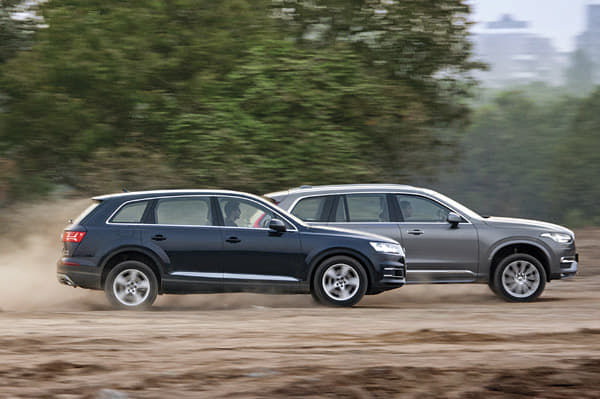
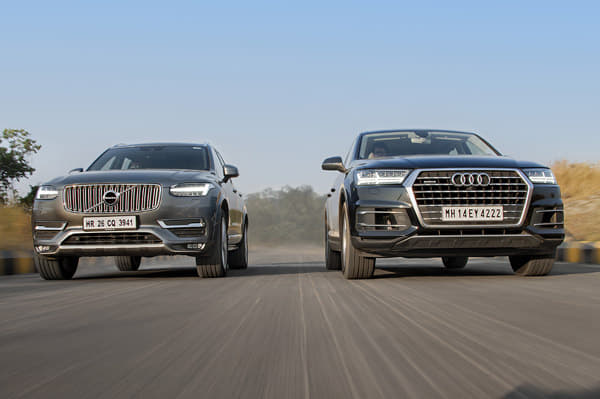
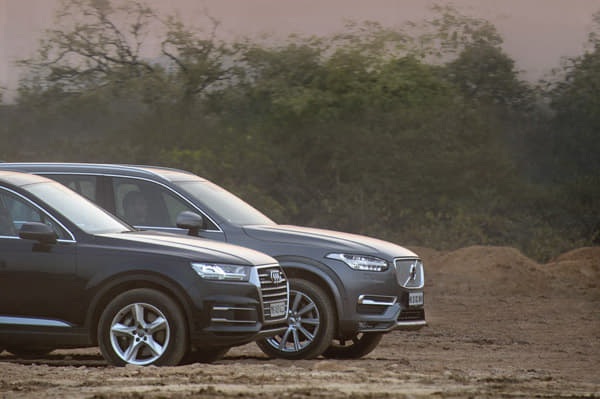
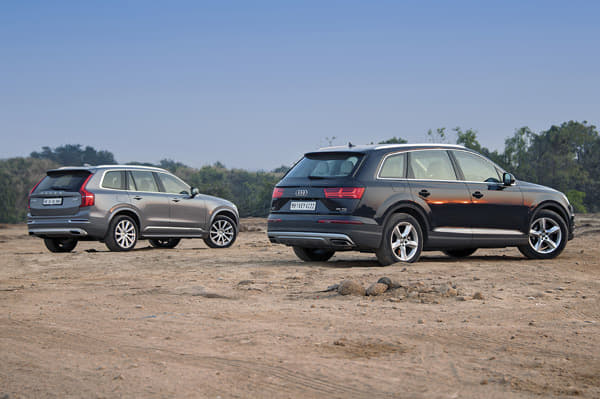
Last generation to current generation, the Audi Q7 has shrunk 37mm in overall length while the Volvo XC90 has grown a substantial 143mm to a sizeable 4950mm. The 5-metre-plus Q7 is still the longer (and wider) SUV here but see it in isolation and you’d probably think otherwise. You see, where the old Q7’s bloated surfacing made it look larger than it was, the latest Q7’s tight skinning actually has the opposite effect. The new Q7 looks lean and athletic but SUV traditionalists may miss the fuller form of the old Q7. Be in no doubt though, this is an attractive SUV, from the front especially. The beautifully detailed Matrix LED headlights, single-frame grille and flat bonnet give it a modern face, and features like the well-defined wheel arches and distinct belt line add a degree of sharpness to the look. Styling at the rear is attractive too but the rake of the windscreen is more stationwagon than SUV and this does rob the Q7 of some of its road presence.
The relatively upright XC90 has the more traditional SUV look in that sense. It looks solid, has loads of visual mass and features some really interesting details. Elements like the intricately detailed grille and the new headlights with the ‘Thor’s hammer’ daytime-running LEDs ensure you won’t confuse the XC90 for anything else. What also look nice are the Volvo-typical wide hips that end in distinctive inverted question mark-like tail-lamps.
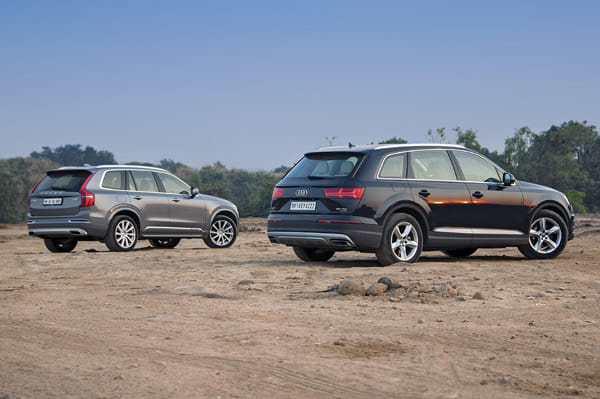
At their very core, both these monocoque SUVs are entirely new and are, in fact, the first models to be built on their parent company’s respective new modular platforms. The Q7’s building block is the Volkswagen Group’s latest MLB 2 platform (for longitudinally-placed engine applications) which is claimed to be significantly lighter than the older Q7’s chassis. The quest for lightness also drove Audi engineers to trim the flab from the Q7’s front and rear axles, engine, exhaust, doors, seats and even smaller parts like the brake pads. True to Audi tradition, aluminium has also been generously used to pare weight – as much as 41 percent of the body structure is made of the metal. The net effect is that the Q7, with the 3.0-litre turbo-diesel engine, weighs in at 2255kg.
At 2,011kg, the XC90 is lighter still. The Volvo’s readout on the scale is all the more impressive when you consider it uses steel in its construction with only few parts made of aluminium. Forming the basis of the XC90 is Volvo’s brand new Scalable Platform Architecture that positions the four-cylinder engines it’s designed to host transversally. Correspondingly, the XC90 uses a front axle-biased Haldex all-wheel-drive system where the Audi’s quattro system is rear axle-biased in normal driving conditions. Both SUVs feature electric power steerings, all independent suspensions and air springs that give the option to adjust ride height. The duo also feature drive modes to alter powertrain, ride and handling characteristics.
Both SUVs get a full complement of airbags but radar-based safety systems have been disabled for India, if not left out completely. Still, there’s a sense of security in knowing both SUVs have been rated with 5 stars in Euro NCAP crash tests.
 Dipan Sur
 Viraaj Bhatnagar