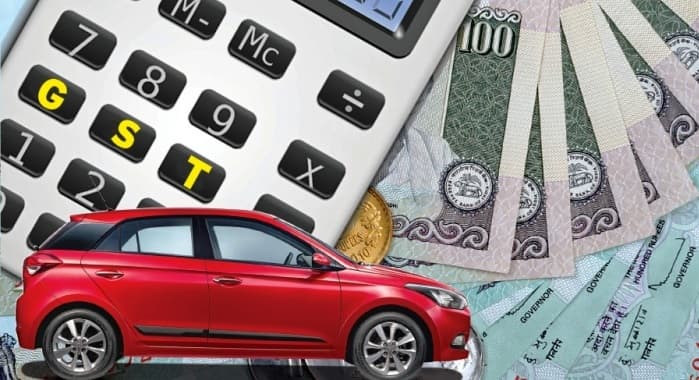
The Society of Indian Automobile Manufacturers (SIAM) has made rate recommendations to the government as regards the upcoming Goods & Services Tax (GST).
The industry body has recommended a standard tax rate for small cars and multi-utility vehicles and an additional 8 percent for other cars. Moreover, it also suggested that for electric, hybrid and other alternative fuel vehicles, the rate should be at least 8 percent less than the standard rate.
SIAM says that while earlier there were only two rates of excise duties on passenger cars, in recent years the excise duties on bigger cars have fragmented. Currently, the industry sees four rates for passenger cars excluding electric vehicles and hybrid electrics for which lower rates are applicable. Therefore, SIAM argues, there is a need to take a closer look at the GST rate for automobiles.
The Indian auto industry has four different slabs of excise duty based on dimensions and engine capacity ranging from 12.5 percent for small cars, CVs, two- and three-wheelers to 30 percent for luxury cars and SUVs. In addition, the government imposed an infrastructure cess ranging from 1-4 percent. Under the GST regime, SIAM expects these rates to be converged to a maximum of two rates, thereby making the tax structure on automotive industry more simple and structured.
The industry body says it has studied the draft GST law in detail and given detailed feedback to the government for its consideration. It adds that while some of the transition issues may have serious short-term implications for the economy, if not addressed swiftly, in the longer run the GST framework currently contemplated will be best for the economy.
Indian automakers have been awaiting GST for long, since in its present manufacturing process, the industry accumulates a lot of embedded taxes and duties which make manufacturing in India less competitive. A GST regime will help bring in transparency and predictability, and also help streamline sourcing and logistics operations.
Many SIAM members, who have made huge investments in locations falling under the Area Based Exemption scheme in places like Uttarakhand and Himachal Pradesh, say that the duration of the scheme is still not over and there is a need to protect the benefits to those units under the GST regime till the end of the scheme.
SIAM also says that road tax and registration tax, which add to overall vehicle costs, still remain outside the GST framework. Therefore, road taxes need to be subsumed in GST.

 Viraaj Bhatnagar
 Dipan Sur
 Dhruv Dhaka




.jpg?w=728&q=75&fm=auto)