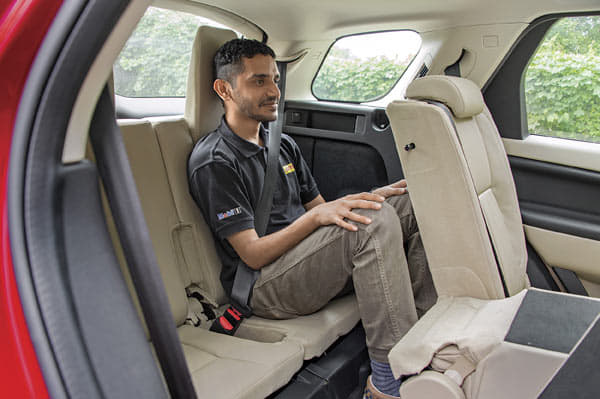
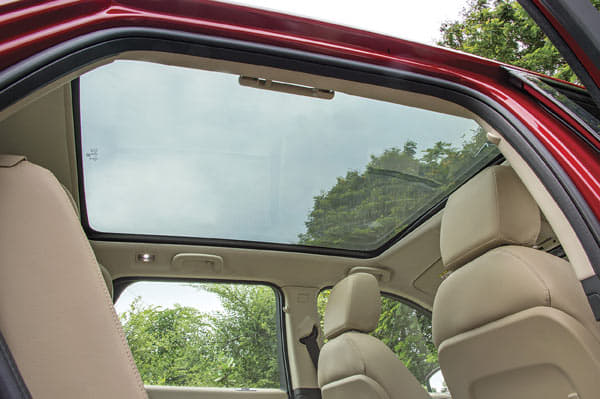
By now, it’s pretty clear that petrol cars are coming back into fashion, and it’s especially apparent in the luxury segments. We’ve seen the introduction – and reintroduction – of a lot of petrol luxury sedans lately, but you know things are getting serious when luxury SUVs are launched with petrol engines. There are two good reasons why SUVs in general tend to have diesel engines. One, if you care at all about fuel economy and running costs, you’ll know that filling expensive Unleaded into a heavy, four-wheel-drive SUV is like hara-kiri for your wallet. And two, the torque surplus that diesel motors inherently possess is ideal for moving a bulky, fully laden SUV in effortless comfort; not to mention yanking you out of a tight spot should you actually go off-roading.
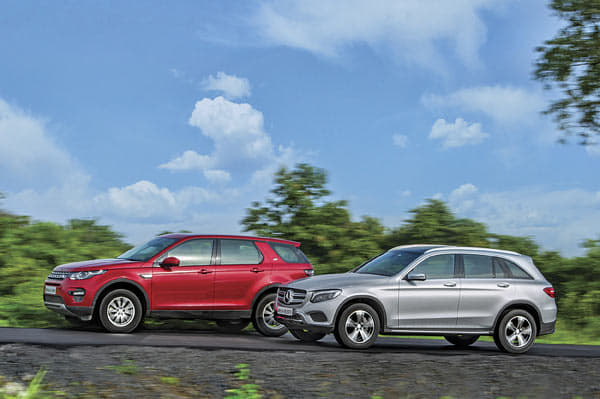
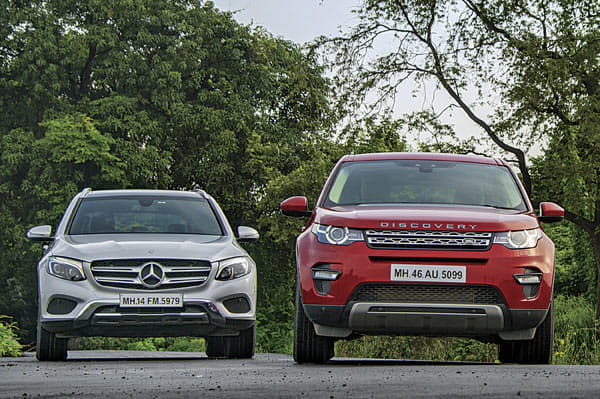
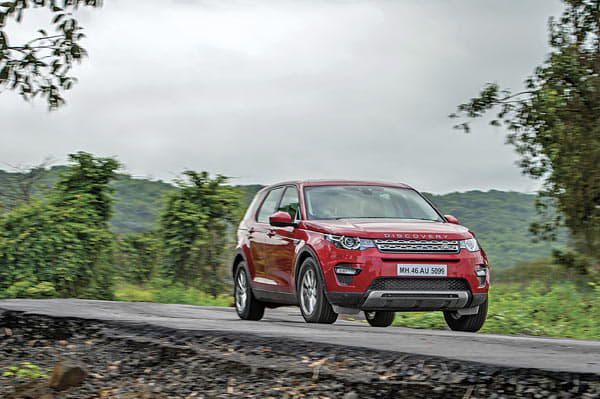
But, thanks to the formidable forces of Demand and Supply, we have here the Land Rover Discovery Sport 2.0 Si4 and the Mercedes-Benz GLC 300 4Matic (phew, what a mouthful). Land Rover has taken the 240hp 2.0-litre petrol motor we’ve seen in Jaguar’s sedans and plopped it under the hood of the Discovery Sport, while Mercedes launched the long-overdue GLC in this ‘300’ guise, also with a 2.0-litre petrol motor, but with 5hp more than the Disco.
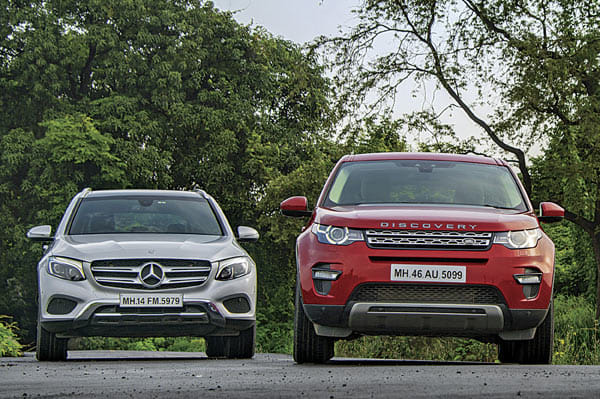
The good news is that these are both modern, direct injection turbocharged four-cylinder motors, rather than the thirsty V6s you might have had in such a big SUV a decade ago, and both are paired with high-tech nine-speed automatic gearboxes, so the running costs might not be as bad as you feared. Plus, the Discovery has 340Nm of torque and the Mercedes 370Nm, both of which sound sufficient to pull roughly 1.9 tonnes of SUV along swiftly. Ultimately, though, these are both luxury SUVs that cost more than Rs 50 lakh, so they have to make you feel special too, and because they’re petrol powered, some driving pleasure and extra refinement would be nice too.
FORK IN THE ROAD
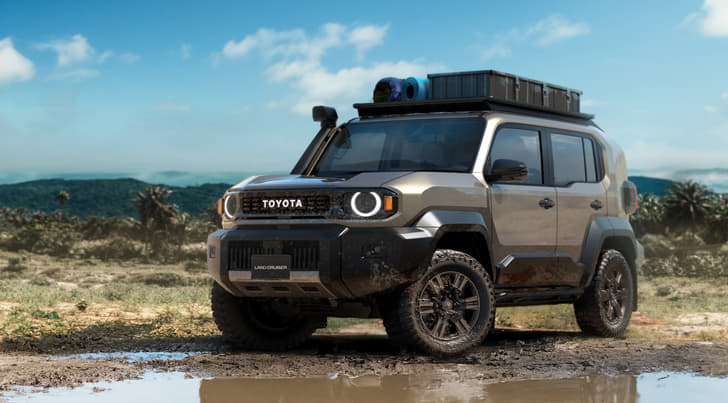
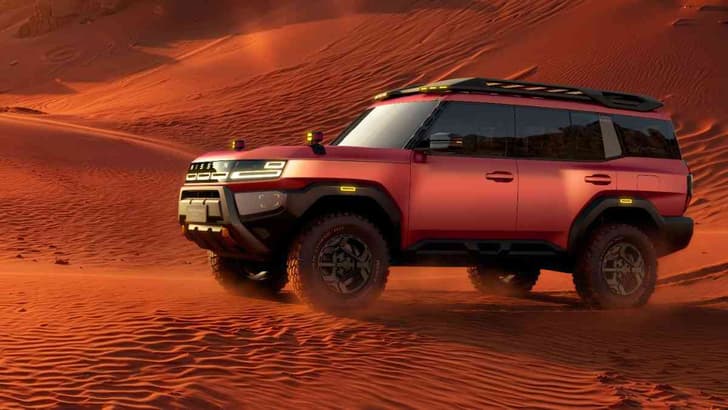
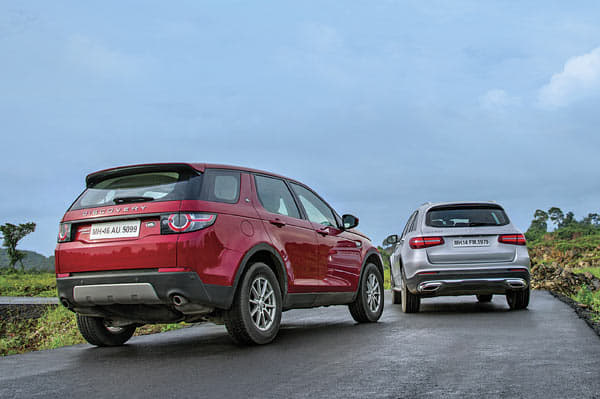
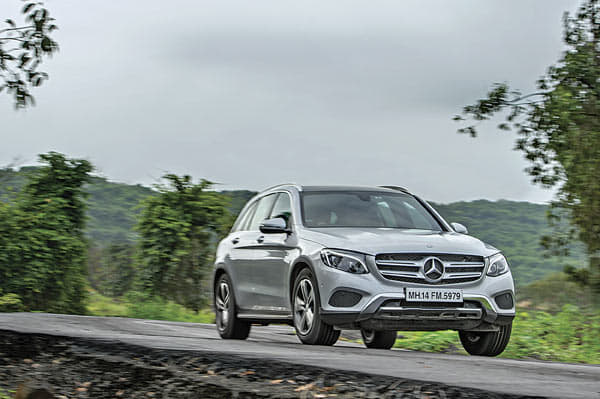
Just looking at these two, you can tell they are going to be very different vehicles. The Discovery Sport is just so typically Land Rover. Even though it’s a lot softer-looking and ‘Evoque-like’ than its predecessor, the Freelander, every inch of its bodywork screams rugged off-roader. There are pronounced scuff plates, front and rear, minimal overhangs for better approach and departure angles, blacked-out pillars, a grisly grille and neat straight lines. The GLC, on the other hand, is very much a modern Mercedes in its look. Soft, curvy, flowing lines are the order of the day, and though it certainly has an SUV shape, the treatment is a lot more elegant and urbane. However, there’s a fair bit of sport thrown into the mix too, with that big star on the nose and sharp-looking 18-inch alloy wheels.
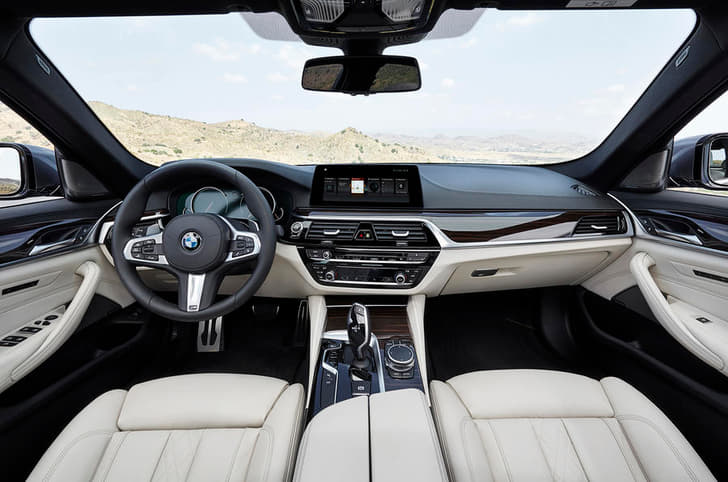
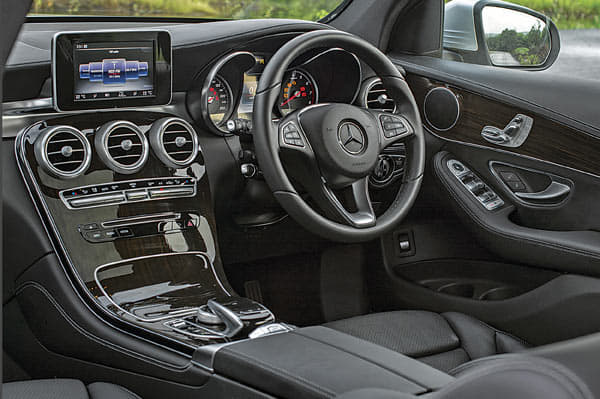
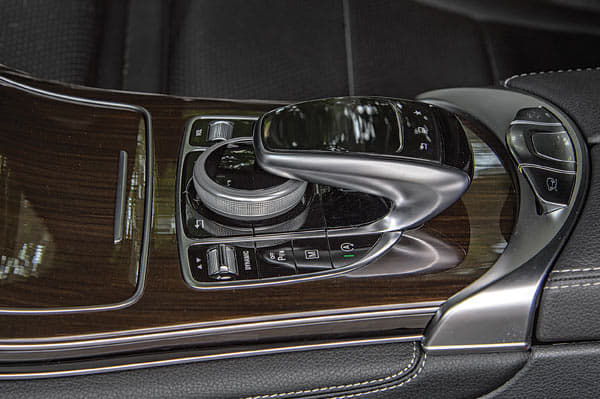
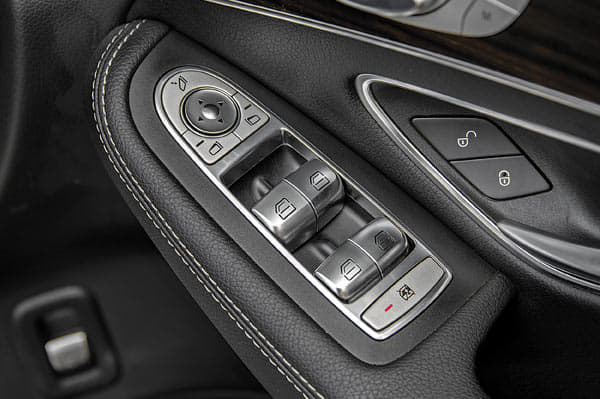
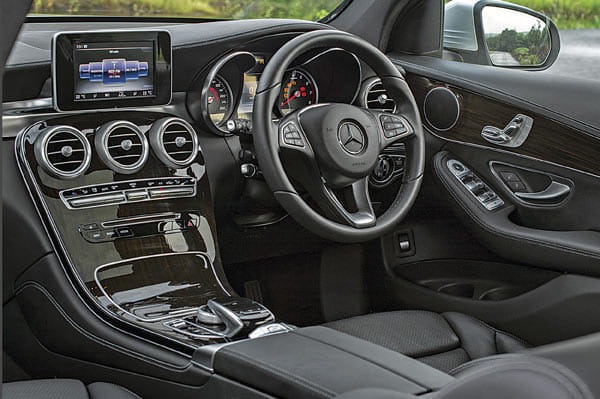
The differences are just as stark on the inside. The GLC has an interior almost identical to the C-class’, and like its sedan sibling, it is easily the most luxurious one in the segment. A thick slab of glossy wood makes up the centre console, with rich, knurled metal buttons making up the switchgear. The dashboard flows outward from there, bisected by a strip of metal, and the instruments are housed in a large cowled binnacle. As ever, Merc’s free-standing COMAND screen is a sore point on an otherwise beautiful dash. One point of note, though – the generous glossy wood veneer is very prone to scuffs and scratches, as our seasoned test car showed.
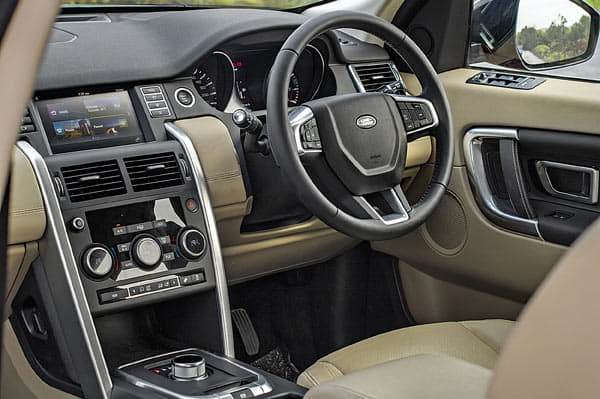
And that’s where the Discovery Sport is different. Every surface in here looks hardy, and like it can stand the test of time. The plastics look tough, and what’s interesting is that even some of the sturdier-looking bits like the dash top and door sills are actually made of high-quality textured material, and not rough plastic; just run your hand over them to see for yourself. The design, however, is nowhere near as inviting as the Merc’s, with a more straightforward and functional look, true to Land Rover’s style. Even the switchgear is mostly simple black plastic that just doesn’t feel as special as something in a car of this price should.
 Viraaj Bhatnagar
 Dipan Sur
 Dhruv Dhaka
 Saptarshi Mondal