When self-driving cars will become the norm, we will no longer be chained to the steering wheel with our eyes locked on the road ahead. This is brilliant news as we’ll have more time to read, work and play driving games on our phones instead. But it could have one downside: Motion sickness.
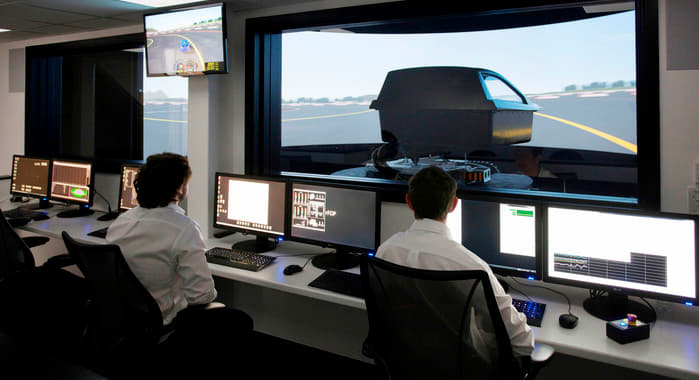
Motion sickness is already a problem for many passengers. In fact, experts are already predicting that between six percent and 12 percent of Americans can expect to get sick travelling in an autonomous vehicle. But there is some good news: Car manufacturers today are already working on designing vehicles that will mitigate motion sickness. They are using driving simulator technology from a UK company called Ansible Motion to do it.
The simulator is different to the sort that powers driving games or trains pilots. According to Ansible Motion’s technical liaison, Phil Morse, this type of simulator, called ‘Driver in the Loop’, is “dynamics-class”. This means that it isn’t just for measuring human reactions, like other types of automotive driving simulators or how a flight simulator for training pilots might be – but thanks to some sophisticated engineering, it can be used to virtually prototype vehicles and different on-car components. This is particularly important for modern cars – and indeed, autonomous cars – because they involve a complex array of different sensors and on-board systems, which need to play nicely with each other.
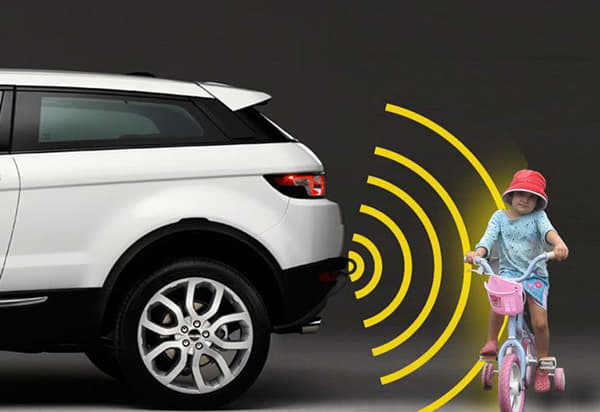
For example, there’s an entire array of collision sensors and detection algorithms which are mission critical, so it is important to develop these systems with care and consideration, and also to give them the ‘computational authority’ to execute in real time – as it is no good if an object is detected ahead if you’re already wrapped around it and waiting for an ambulance. And rather than have these test scenarios play out for the first time in the real world, it is much safer to figure them out in the lab setting. The value of a driving simulator in the design process then is this: Being able to switch out and test individual components in thousands of different scenarios, with real people behind the wheel, without needing to actually build a car to start with. In fact, without the simulator it may soon be impossible to design a modern car without its enormous expenses involved.
 Viraaj Bhatnagar
 Dipan Sur
 Glenn Noronha
 Dhruv Dhaka