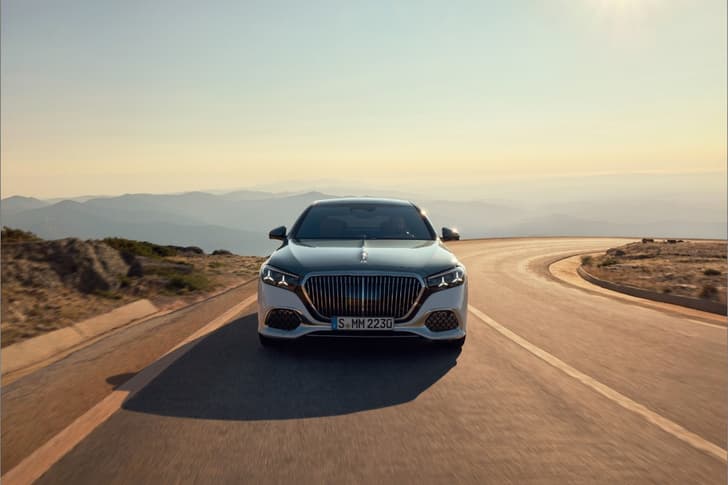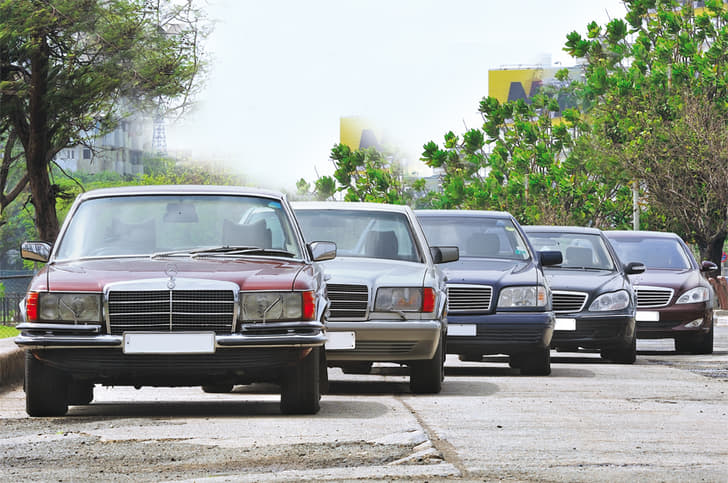
The story of the best car in the world is not an easy one to tell. Where do you start? How much ground can you cover? How much detail is too much? How do you convey the essence of these cars built with a single-minded obsession to be the best the world has ever seen? How do you transmit the special feeling these cars give you, how do you explain the magic? Simple, we thought we would gather all the S-classes together and sit in them, drive them, revel in their special qualities and try and convey the essence of all that to you. We also got some friends along. People who had worked on these fantastic cars as well as others who are Merc enthusiasts and owners.
A sort of unwritten mission statement is that the S-class is meant to be the most comfortable car in the world as well as the most technically advanced. While most of the designs here adhere to the minimalist and safe school of design where the car is shaped through an elimination of the superfluous, looking at this bunch together gives me goose bumps. This is the evolution of the motor car at its finest, the changing shapes and forms pre-dating design trends you can see in other cars for a decade.
Enough musing, now it’s time to jump in.
W116 1972-1980
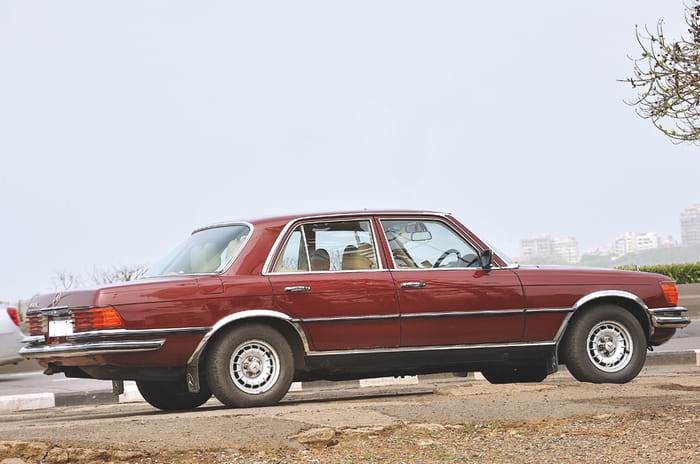
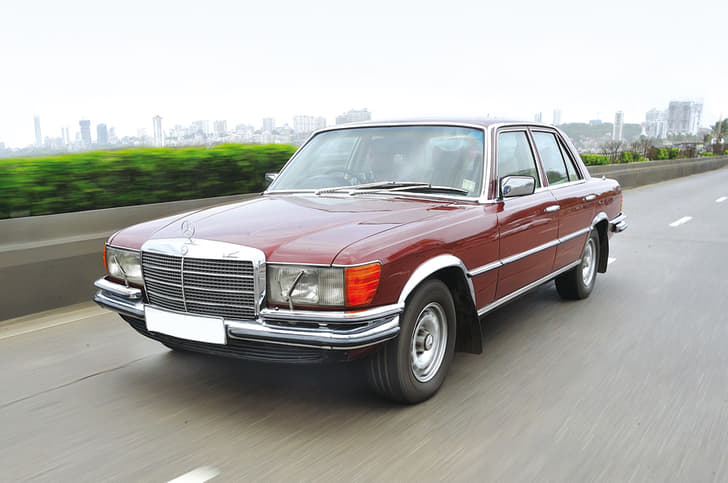
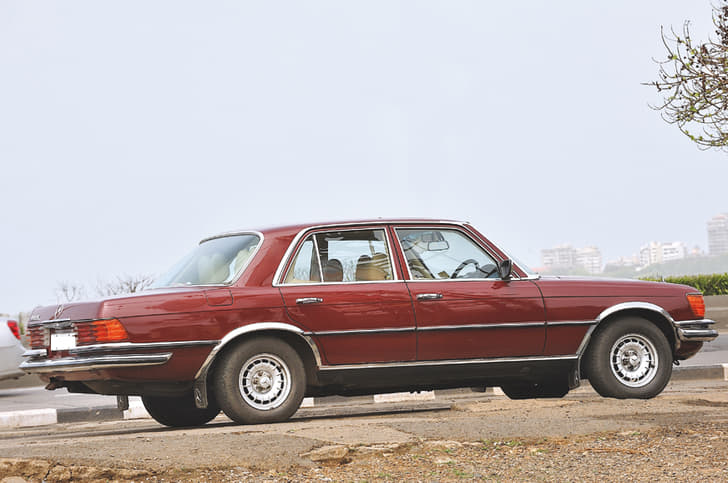
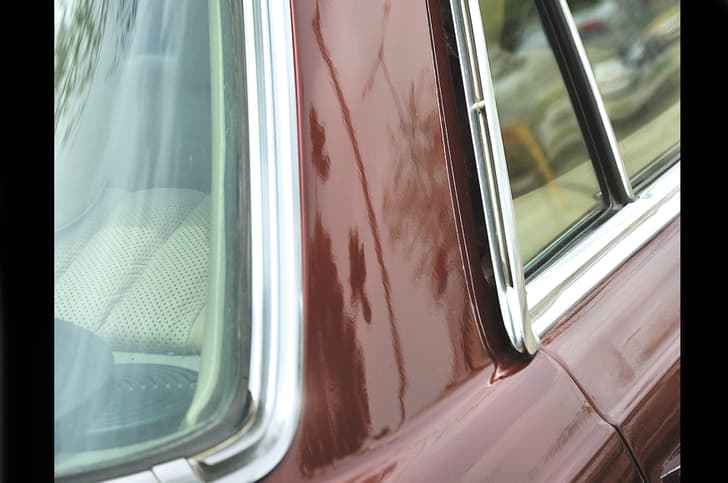
With its cherry red paint and wide tyres, the first official S-class looks a little sportier than normal. The beam-straight body and boot, strong shoulder line and rectangular grille and lights however leave you in no doubt. This car with its wide stance and imposing presence shouts out luxury. It’s the only one of the series to have chrome bumpers and the thick frames of chrome around the rear windscreen have to be seen to be believed.
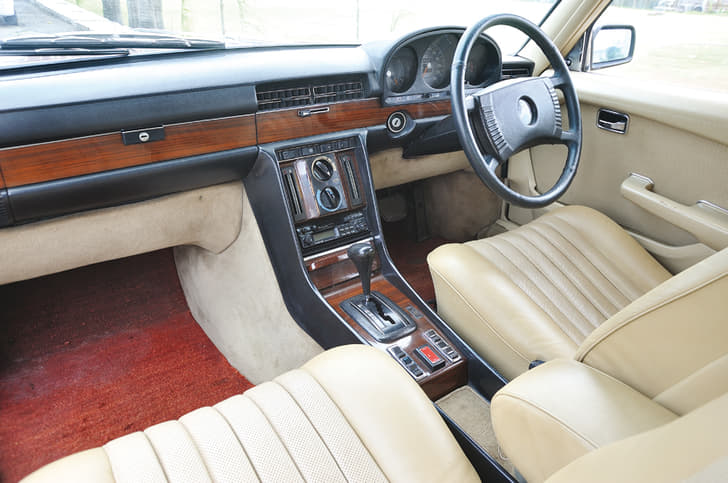
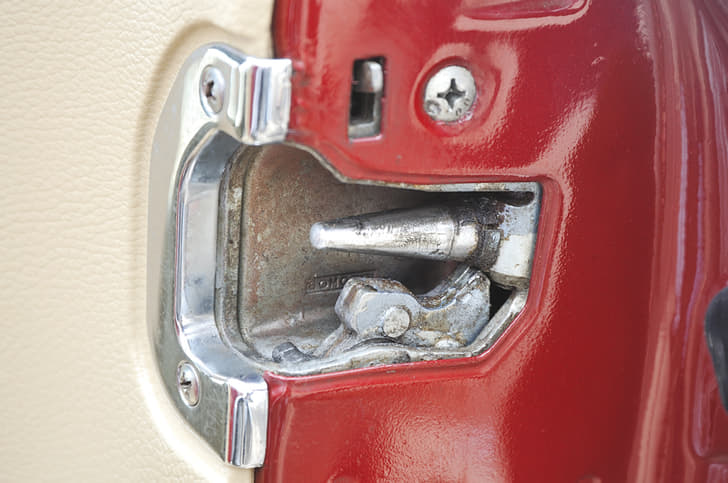
Opening and closing the rear doors also reveals a mechanical clack clack along with the regular Mercedes door ‘thunk’. The door lock works fabulously and even after all these years the spring loading is perfect. But the biggest surprise is the manner in which this car drives. It feels like a modern car and it’s 37 years old! The ride is very pliant but without extra dive, the steering feels direct and though the motor wasn’t in its finest state of tune, it had a lusty tug. I also love the fox- ear headrests and the parallel wiper arrangement. It was one of the first cars with ABS and fuel injection. It even had a hydro-pneumatic suspension, a 6.9-litre V8 and a five-cylinder turbo-diesel version. What a car!
W126 1979-1991
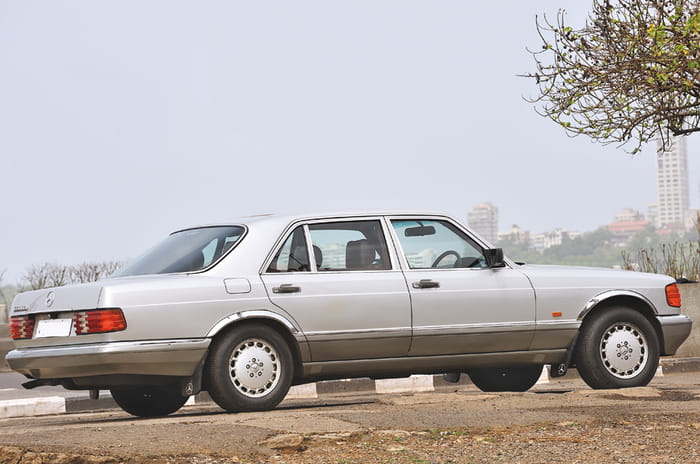
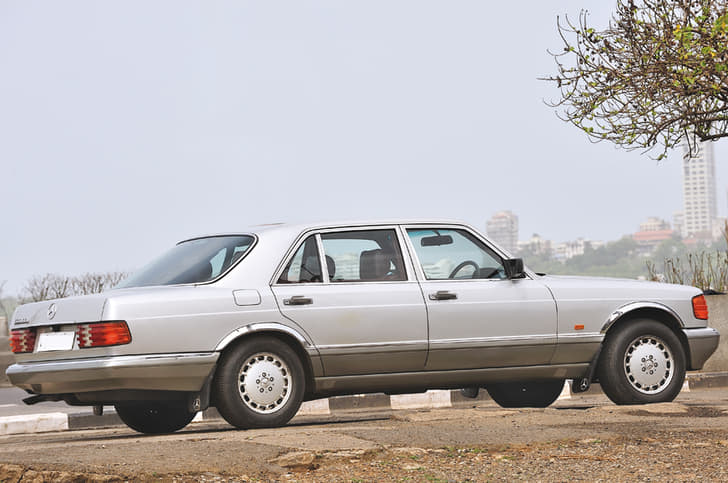
I always think of the W126 as being grey as the colour matches the car’s character, simple lines and form but with masses of technical sophistication. The first 280S I drove as a teen left an indelible impression on me and even now the lines of the car with its ever-so-slightly narrowing nose and slightly widening tail have me gawking. This particular car also has the 5.6 or 560 V8 with 272bhp, so everything feels effortless and no trouble. The car feels big on the road, especially in Mumbai traffic, but every fair-sized gap is an invitation to let the big V8 do the talking. Incredible performance. What it must have felt like in the early ’80s is anyone’s guess. It had the power to outperform sports cars. Like the W116 before it, you can touch and feel the ‘no budget’ approach to many of its parts, especially the robust construction. Still amazing
is rear seat comfort, the chiropractor-designed stiff but perfectly shaped back seats and the incredible sense of space. This is still the largest-selling S-class as well as the one that was around for the longest time, almost 12 years, which is partly why you see a lot of them in India.
W140 1991-1998
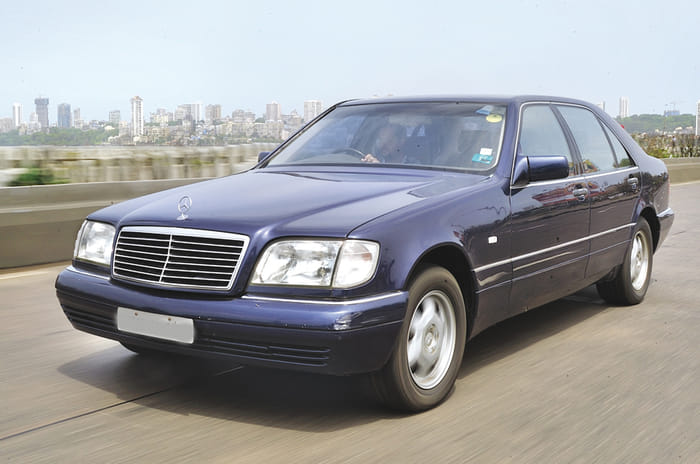
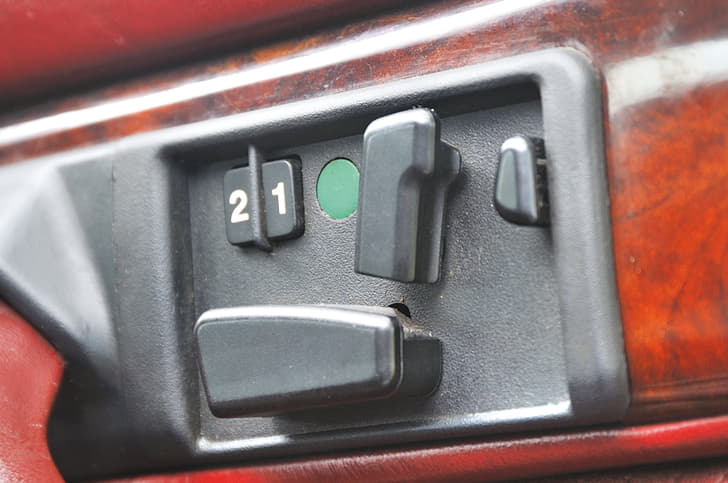
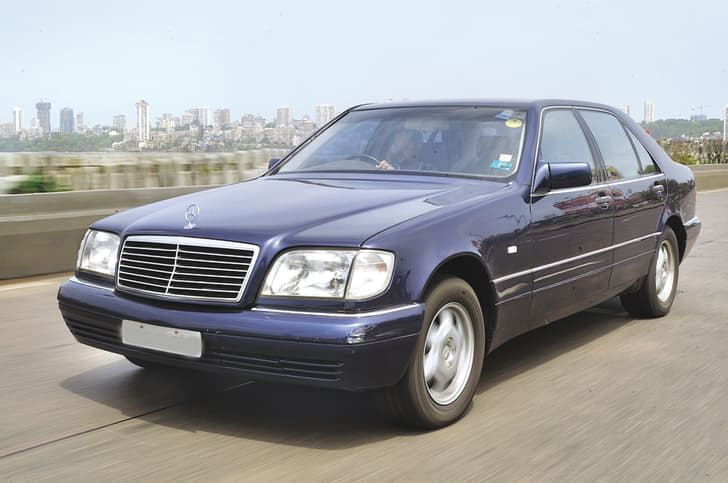
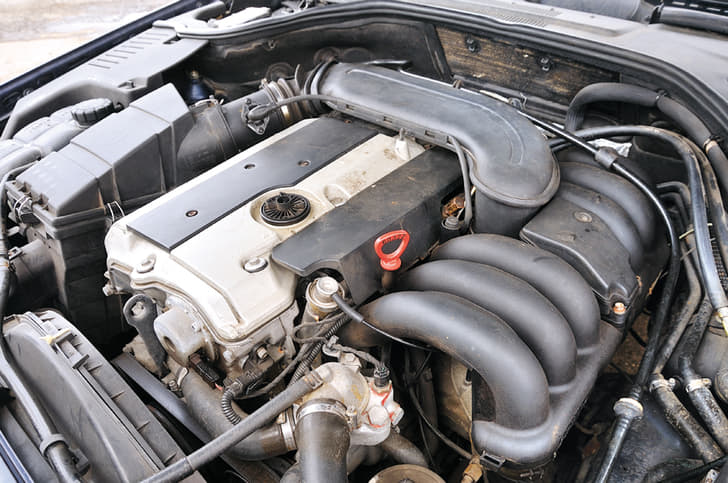
Even Merc went overboard with the build strength of this car. It’s evident as soon as you sit in it, close the door and start the car. Massively overengineered, it seems to blot out the outside world. It would. It has double-pane glass windows and rides over poor roads like it wants to beat them into submission. I love it! This particular car has one of the last twin-cam straight six motors to grace an S-class, and what an engine it is. The variable inlet cam motor pulls from everywhere in the powerband and the tall gearing allows the motor to wind long and hard. And that’s even though the motor displaces only 3.5 litres. The 5.1-metre-long W140 was also feature-rich. Powered door closing, air suspension, traction control, ESP, rain-sensing wipers and six-litre V12, if you want one. This car is also infamous as it is the Merc in which Lady Diana forgot to wear her seatbelt and was killed.
W220 1998-2005
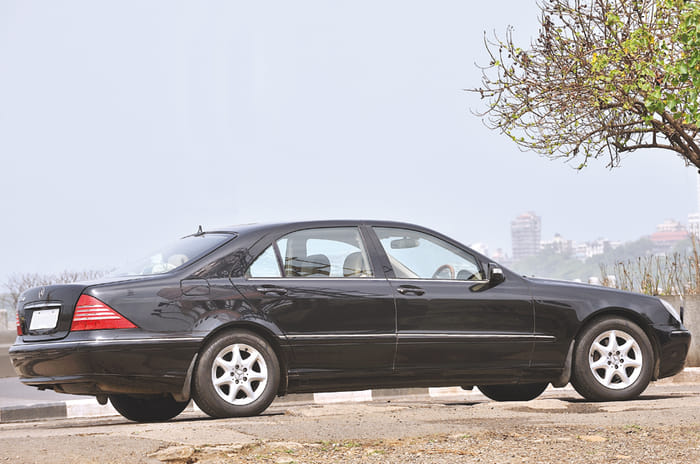
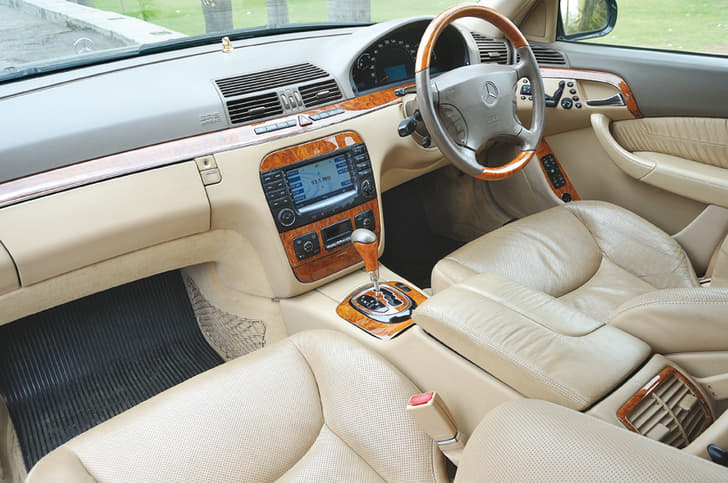
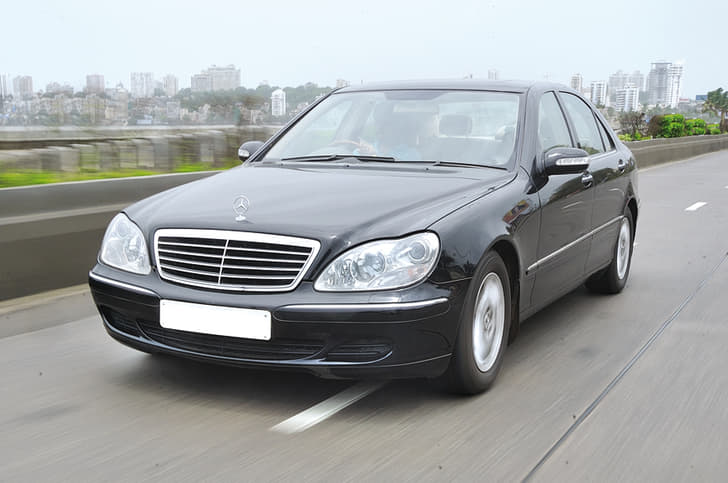
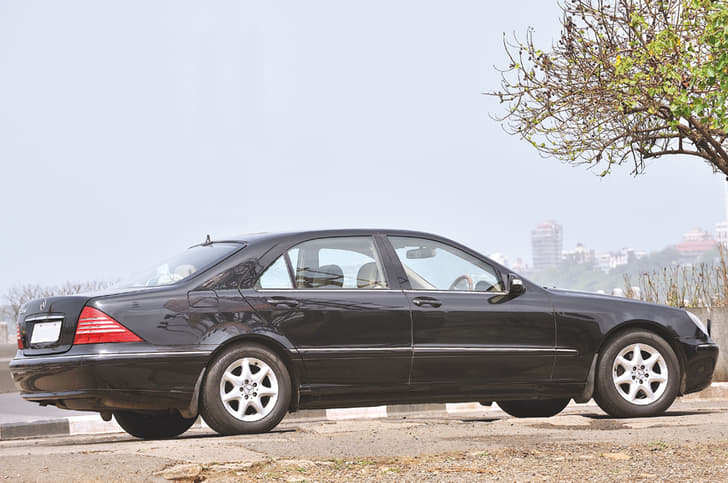
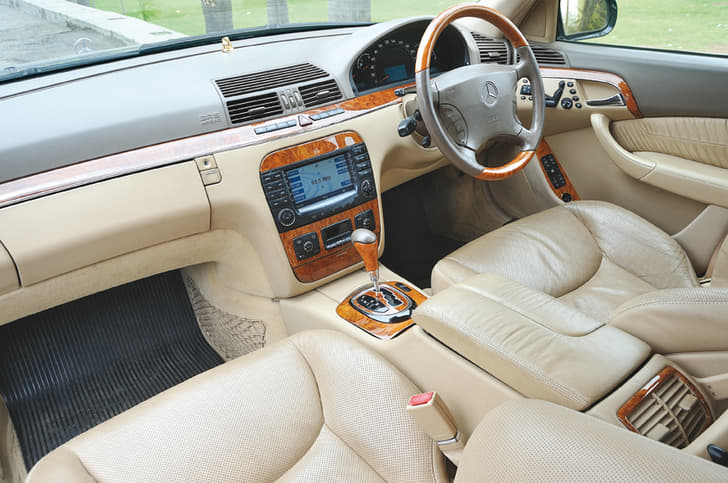
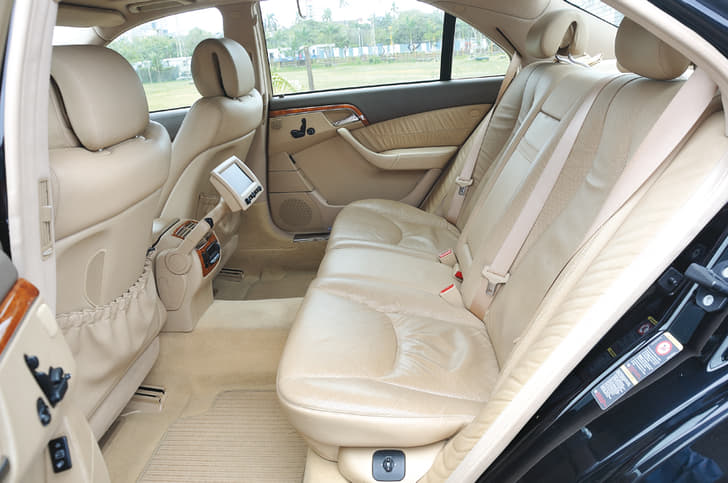
When the first S-class was launched in India, we at Autocar India were the first to drive it. The S320 just blew us away with its sophistication, refinement and thoroughbred driving manners. Supremely comfortable, both at the rear and behind the wheel, we thought this car had it all. Exactly nine years down the line, things have changed very little. The W220 feels totally modern, providing occupants a level of comfort on its air suspension most cars just can’t muster. Only the steering today feels a bit vague and some of the interior bits seem worn and cheaply built.
The W220 was smaller and lighter than the W140 but better packaged, so the only thing you lost was some boot space. Strangely, it’s the styling that seems to have aged the most. The best bit is that there are plenty of S320s and later S350s available in the second-hand market. Prices start at Rs 18 lakh, but don’t forget service and spares.
W221 2005-2013
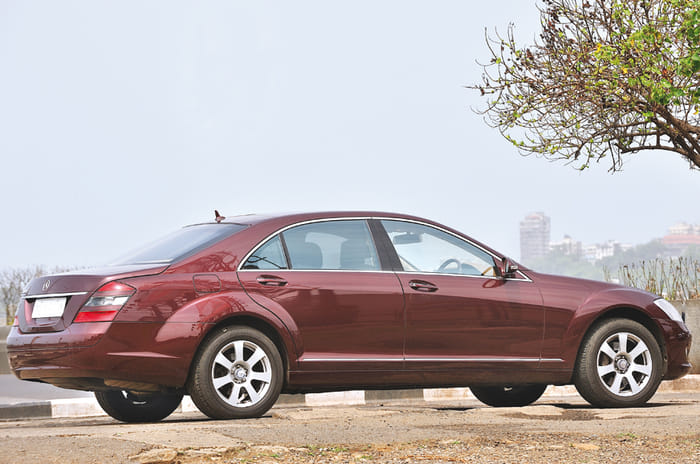
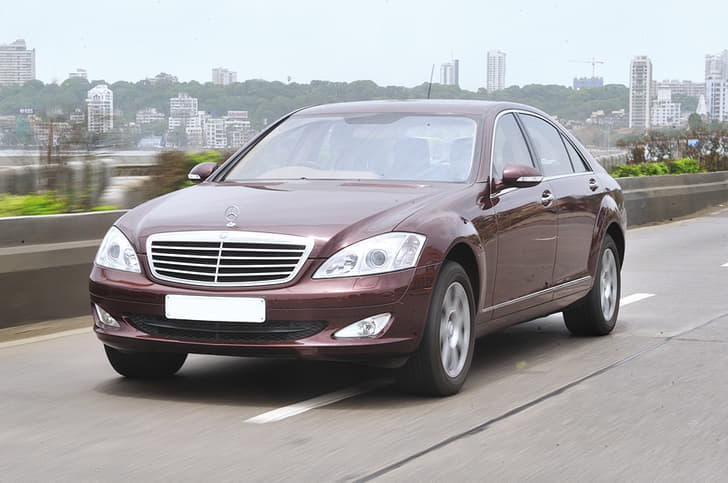
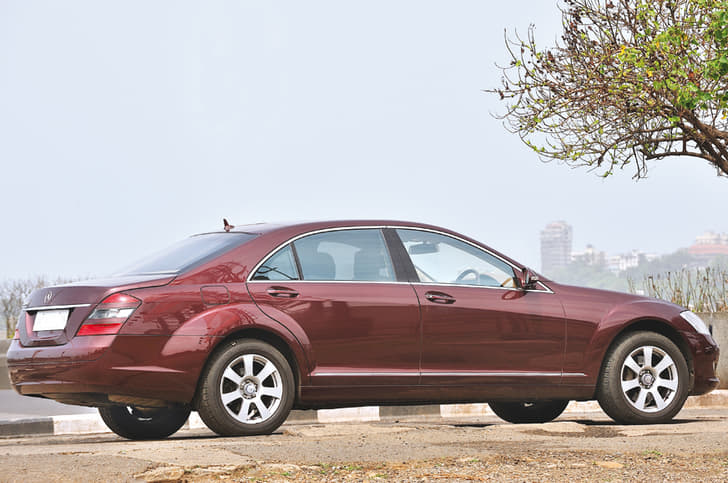
Class-leading style, class-leading quality and class-leading comfort. The W221 S-class had them all. The car’s styling was fresh even a couple of years after its launch, the quality in the cabin was back to being first-class and the car displayed an agility that was frankly ridiculous.
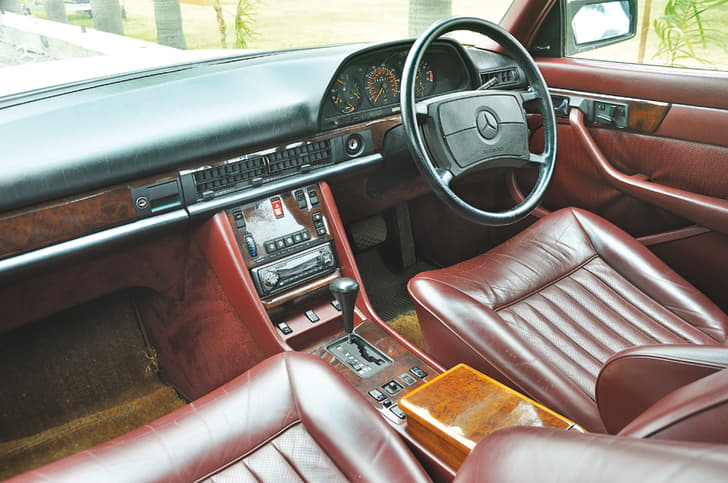
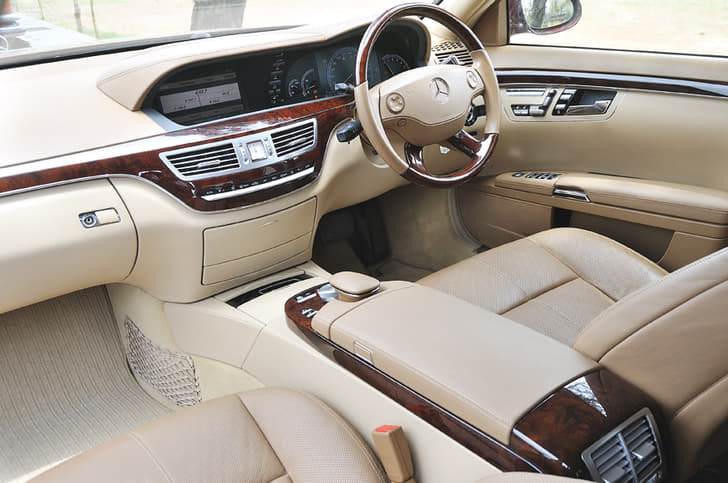
Mercedes had upped the refinement quotient on this car. Shutting the door blotted out Mumbai’s Marine Drive traffic completely; while sharp edges are heard and sometimes felt, the car simply glidesd over patches that the monsoon had roughed up. You soon get used to the gear selector stalk, actually pioneered by BMW, and everything you touch — the solidly built chrome bits, the wood and the leather — feel extra special.
Little touches impress the most. How the armrest has that little bit of extra padding under the leather, the perfect seam of the wood, chrome and leather on the doors, that little sigh of relief you let out when you place your rear on the back seat . . . the list is endless. The central screen, however, did look a bit oversized and out of place. What next? A 14-inch screen?
The speedo is already a screen rather than a dial. Then there is the way the motor sounds like it is situated two decks below the cabin, the world shrinks around you when you drive it harder and, as ever, everything is effortless.
This is still the best car in the world. It still feels extra special, is engineered to the finest standards and holds dear the values that have made the star famous.
This article first appeared in the September 2009 issue of Autocar India.

 Uday Singh
 Dipan Sur
 Glenn Noronha