Autocar India
•4h

I’m planning to buy my first car, and my primary goal is daily office commuting. The distance from home to office is 30 km one way in Mumbai, which is roughly 1,000 km a month. My requirement is an automatic car. Which fuel type should I choose - petrol or diesel? My budget is Rs. 10-15 lakh.

Verified
•5m

At around 1,000km a month, with a 30 km each-way commute in Mumbai traffic, petrol is the better choice. The running is not high enough to make a diesel automatic's higher purchase price and more complex emissions system worthwhile, particularly when much of the driving will be in stop-start traffic.

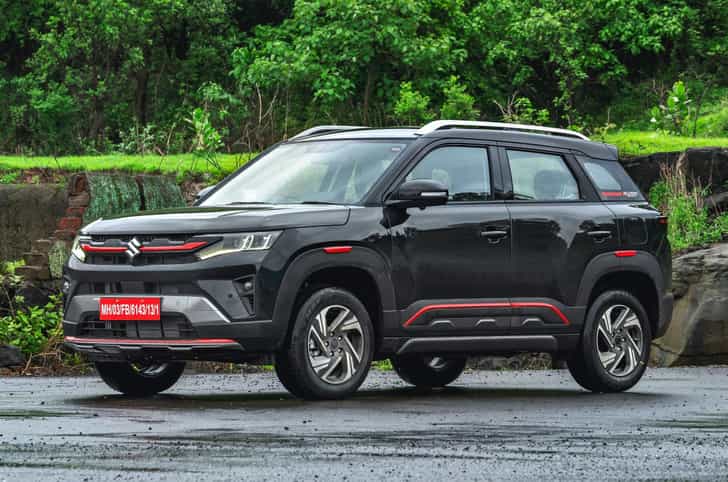
For a first car under Rs 15 lakh, the Maruti Suzuki Brezza 1.5 AT would be a sensible choice. Its naturally aspirated petrol engine and torque converter automatic are smooth and well suited to Mumbai traffic, while Maruti's service network and generally low maintenance costs make it an easy car to live with. The automatic's certified efficiency is also a respectable 20.17kpl.

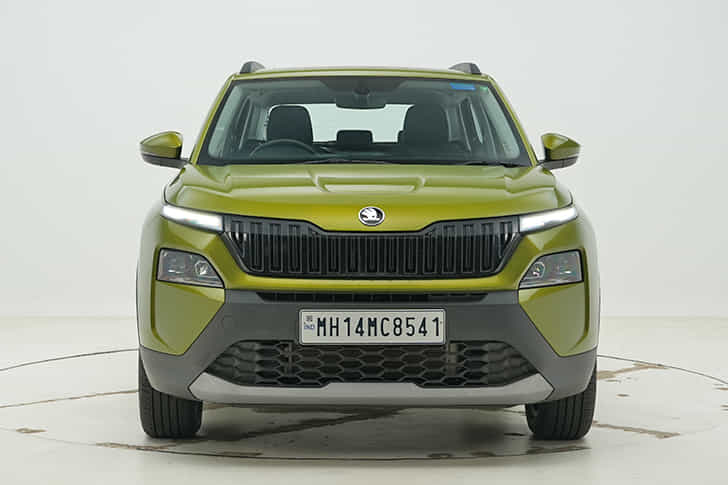
If you want something more fun to drive, the Kylaq 1.0 TSI AT and XUV 3XO 1.2 turbo AT are worth considering, although their turbo petrol engines and overall ownership proposition are different from the Brezza.
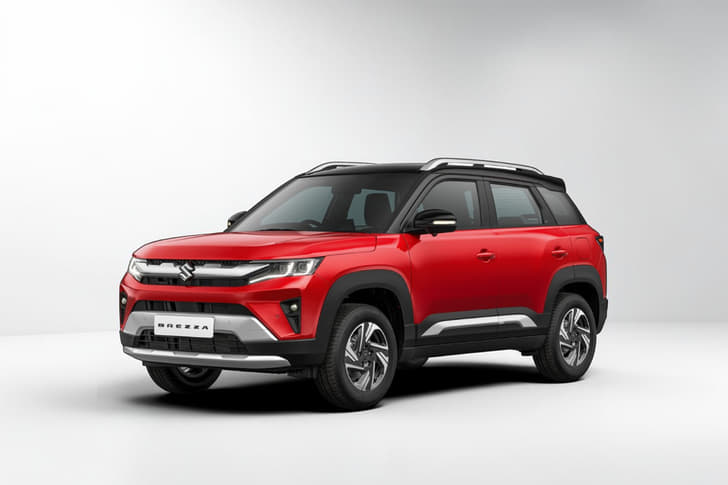
Maruti Suzuki Brezza

Maruti Suzuki Brezza

More posts on similar cars

•3d

How exactly is the Hyundai Bayon different from Hyundai Creta?

Verified
•2d

While both are midsize SUVs, the Bayon and Creta are quite different from each other in their size, platform and positioning, and the distinction will become even clearer once the next-gen Creta is launched in early 2027. While currently both use versions of Hyundai's Global K2 platform, the Bayon's is a newer more updated version with some tech advancements. The next-gen Creta, meanwhile will move to the even-newer K3 platform used by the new Kia Seltos, and this means it will grow larger and more spacious too. In terms of powertrains, while the Creta uses naturally aspirated petrol, turbo petrol, turbo diesel and electric powertrains, it's understood that the Bayon will use only the 1.5-litre naturally aspirated engine (with MT and CVT gearboxes), and will also incorporate CNG as its alternate powertrain, but that remains to be confirmed at this stage. The Bayon is also a lower-slung design with a falling roofline for a sportier look, while the next-gen Creta is expected to get more boxy and taller. Think of the approach Maruti Suzuki took with its Fronx and Brezza in the sub-4m space. With the Venue restricted by the sub-4m length requirement, and the next-gen Creta expected to grow even larger to nearly 4.5 metres, Hyundai plans to fill the gap between the two with the Bayon, which will measure in at around 4.2 metres.

VehicleHyundai Bayon
VehicleHyundai Creta
VehicleMaruti Suzuki Fronx
VehicleMaruti Suzuki Brezza
VehicleKia Seltos
VehicleHyundai Venue

Popular discussions right now

•5d

I currently drive a Hyundai i10 CNG, with daily running of around 6 km in Gurgaon city traffic and a monthly highway drive of around 200 km. I am now planning to upgrade my car, with an on-road budget of Rs. 12 lakh for a petrol sub-4-metre SUV, up to Rs. 14 lakh for a petrol midsize SUV, and Rs. 15 lakh for an EV. I live in a rented apartment on the second floor, so I am apprehensive about getting an EV. I prefer an EV, but installing a charger could be complicated due to the sanctioned load. My running could increase to nearly 800 km per month in the future. My key priorities are: - Good suspension and ride comfort, as I have a back problem - Decent fuel efficiency in heavy city traffic - Low to medium maintenance costs - Auto hold and ventilated seats would be good to have I sometimes consider buying a manual, but I mostly prefer an automatic. I am currently considering the Maruti Brezza, Baleno AMT, Fronx AMT/AT, Sonet iMT, Exter AMT, and even the upcoming Inster, VF3, and Bayon. I am open to other suggestions as well. Note: I had a bad driving experience with the Punch AMT, as it caused back fatigue.

Verified
•4d

Given your priorities of ride comfort, fuel efficiency and low maintenance, the Maruti Brezza automatic is the most sensible upgrade. It offers a comfortable ride, a proven naturally aspirated petrol engine and Maruti's strong service network, which keeps long-term ownership costs in check. The torque converter automatic is smooth in city traffic, and the Brezza's higher seating position will help with your back issues. The Sonet iMT is not the right choice here. While it is a good car, the iMT is not a true automatic and will not offer the same ease of use in Gurgaon traffic. The Baleno AMT and Exter AMT are also not ideal given your back issues and the fact that AMT gearboxes are not as smooth as torque converter automatics in stop-start conditions.On the EV front, your apprehension about charging is valid. Without a straightforward home charging solution, an EV will add unnecessary complexity to your ownership experience. The upcoming Bayon is interesting and if you can wait a few weeks you would have a better picture before making a decision. For now, the Brezza automatic strikes the best balance between comfort, efficiency and hassle-free ownership.

VehicleMaruti Suzuki Brezza
VehicleKia Sonet
VehicleMaruti Suzuki Baleno
VehicleHyundai Exter
VehicleHyundai Bayon
•3d

Hi, I want to buy my last car as I am 66 years old. I have been driving a Honda City for the last 12 years without any major hiccup. The Honda City engine and its reliability is excellent although its ground clearance is an issue. I have looked at Elevate and given its ground clearance as an SUV, I am impressed although the issues on E20 and abrupt blending issues are surely technical issues. Windsor EV was a great test drive but all controls on screen could be a bottleneck for me at my age and am planning to move to an automatic. Please recommend as experts. My monthly running will not be more than 500 km. Should I also look at Seltos. I will appreciate a feedback from experts. I want a reliable, easy to drive car with low maintenance cost and good family value with. There won't be any great pick ups or many highway drives will not be there.

Verified
•2d

Given your 12 years of trouble free City ownership, the Elevate is the most natural replacement. It retains Honda’s simple 1.5-litre naturally aspirated petrol engine, adds substantially better ground clearance and gives you the easier ingress and SUV driving position you liked. The CVT is also very well suited to your low speed, low running usage and should make the transition to an automatic easy.On your E20 concern, we would not treat it as a reason to avoid the Elevate. Honda says all its cars manufactured in India since January 2009 are E20 material compatible, and the current Elevate is officially certified for E20. Honda also says E20 should not cause durability concerns or require any component changes. There can be a marginal reduction in fuel economy because ethanol contains less energy than petrol, but with your 500km monthly running, that is unlikely to be significant.The Seltos is worth a look, particularly if you want a more feature rich and premium cabin, but given your priorities of reliability, easy driving, low maintenance and long term ownership, the Elevate fits your requirements more naturally. The Windsor EV is also an interesting option, but at just 500km a month, there is little financial reason to move to an EV, especially when you have concerns about its touchscreen heavy interface.

VehicleHonda City
VehicleHonda Elevate
VehicleMG Windsor
VehicleKia Seltos

Upcoming launch buzz

Community discussions on upcoming launches
Posted on: 27 Sept 2026