Latest questions answered by experts
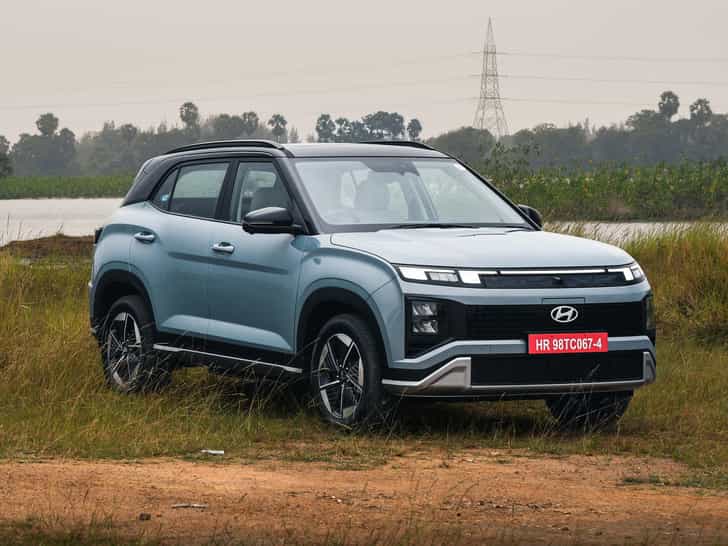
I am buying a Creta EV, and the Hyundai dealership is offering an extended warranty covering the fourth and fifth years for Rs 50,000. This is significantly more expensive than the extended warranty for the ICE counterpart. I plan to keep the car for five years. It comes with a standard three-year warranty and an eight-year battery warranty. Should I go for the extended warranty, or should I skip it considering Hyundai's reliability?
Yes, you should buy the extended warranty for your Creta Electric. The primary misconception is that the standard 8-year battery warranty covers the entire electric powertrain, but it strictly applies to the high-voltage battery pack itself. It excludes critical, low-volume power electronics such as the Integrated Charging Control Unit (ICCU), power inverter, onboard charger, thermal management system, and digital displays.A single out-of-warranty failure in an ICCU or inverter module during year four or five can easily result in heavy repair bills, making the Rs 50,000 upfront cost a sensible risk-management expense. Furthermore, since you plan to sell the car at the 5-year mark, offering a vehicle with an active, bumper-to-bumper factory warranty significantly increases second-hand buyer confidence and helps you command a higher resale price.You do not need to purchase it on delivery day; Hyundai offers its lowest extended warranty pricing within the first 90 days of ownership, giving you a 3-month window before securing the coverage.

I have a 2024 XUV700 AT petrol. I want to upgrade it. I want an SUV with a turbocharger and, if possible, a hybrid, with a budget of max Rs 37 lakh. Pls suggest one.
Wait for the upcoming JSW Jetour T2-based SUV. If your priority is specifically a turbo-petrol hybrid, this is the most interesting option to wait for. JSW is expected to bring the Jetour T2 to India as a locally assembled plug-in hybrid, using a 1.5-litre turbo-petrol engine with electric motors. It is expected around late 2026/early 2027, and we expect JSW to price it at around Rs 35-40 lakh ex-showroom price bracket.If you want to buy right now, the choices become more limited because most hybrids in this price range use naturally aspirated petrol engines. The Toyota Innova HyCross is the obvious option if you want a proven hybrid and maximum practicality, although it won't give you the turbo-petrol character you're looking for.The newly launched MG Hector Tomahawk PHEV is another interesting option. It uses a plug-in hybrid system with a 20.5kWh battery and offers over 115km of claimed electric range.
I have owned my Skoda Rapid 1.5 TDI DSG for 6.5 years, and it has crossed 1 lakh km. It still runs like a dream and has been extremely reliable, with no major mechanical issues apart from regular servicing. My only concern now is the possibility of expensive repairs as the mileage increases, especially related to the DSG or injectors. Another issue is that the Rapid feels quite bare-bones compared to newer cars. I am considering upgrading to something under Rs. 25 lakh, mainly looking at the Duster 1.3 DCT and Taigun 1.5 TSI. My question is: should I keep the Rapid for a couple more years, or would the Duster/Taigun be a worthwhile upgrade? Or is there anything else under Rs. 25 lakh that would make a good replacement? Please suggest.
Given your ownership experience with the Rapid 1.5 TDI DSG, it is understandable that you are weighing the decision carefully. The car has served you well, and the 1.5 TDI is a robust engine, but at over 1 lakh km, the potential for expensive repairs - particularly with the DSG and injectors - becomes a valid concern. The Rapid also feels dated compared to newer cars in terms of features and overall cabin experience, so all things considered, this is where we would recommend parting ways with it.Between your shortlisted options, the Renault Duster 1.3 DCT will feel like the more meaningful upgrade. The 1.3 turbo petrol is a strong, characterful engine, and the DCT gearbox is quick and engaging. The Duster also offers a more rugged, SUV-like feel and a better ride over rough roads, which makes it a genuinely different ownership experience from the Rapid. The Volkswagen Taigun 1.5 TSI is a very good car, but it is mechanically similar to what you already have, and the upgrade will not feel as substantial. That said, the Taigun is a proven product that's been around for a few years, whereas the Duster is brand new and yet to prove its mettle over the long term. If you've been happy with Skoda's aftersales performance, Volkswagen is quite similar in that regard. If you want a good but familiar experience, go with the Taigun, but otherwise, it's the Duster we'd recommend.
Could anyone please confirm whether BH (Bharat Series) vehicle registration is currently available in Chennai, Tamil Nadu, particularly for eligible PSU employees?
Yes, BH (Bharat Series) registration is available in Chennai, Tamil Nadu, and eligible PSU employees can apply for it. The BH series is a central government initiative, and Tamil Nadu is one of the states that has implemented it. The scheme is available to employees of the central government, state governments, PSUs and private sector employees whose companies have offices in more than four states or union territories. The application process is handled through the Vahan portal, and the vehicle dealer can assist with the paperwork at the time of purchase.
I am confused between the Victoris ZXi and the Kia Seltos HTK(O) petrol automatic. One offers better reliability, while the other provides more features at a similar price point. Personally, I prefer the Seltos’ cabin and interior design, as I find the Victoris’ interior quite average. For long-term ownership, which one should I go for?
Go for the Kia Seltos HTK+ petrol automatic. The Seltos is a more premium product overall, and the cabin quality and design are clearly something you value. The HTK+ is a well-equipped variant, and the 1.5-litre naturally aspirated petrol engine paired with the IVT automatic is a smooth and reliable combination. The Seltos also offers a more spacious and premium-feeling cabin, which will make a difference over a long ownership period.The Maruti Suzuki Victoris is a good car, and Maruti's reliability and service network are strong points, but the Seltos is the more complete product. Kia's reliability record in India is also strong, so there is no major long-term ownership concern with the Seltos.

I want to buy a car under Rs 20 lakh. My monthly running will be around 1,500km, mostly on weekends, with 70% highway and 30% city driving. Which car and fuel type would you suggest? I prefer a manual transmission.
With a monthly running of 1,500 km and 70% highway usage, a diesel car makes the most sense. The higher torque and better fuel efficiency on long runs will pay off over time, and your usage pattern justifies the premium over petrol. Since you prefer a manual car, you will also avoid the complexity and cost of automatic gearboxes, which is a plus for long-term ownership.The Mahindra XUV 7XO diesel manual in a lower trim would be our first recommendation. It is a genuinely strong highway car with a punchy diesel engine, good stability at speed and a comfortable ride over long distances.If you want something a bit more compact and easier to live with in the city, the Kia Seltos diesel manual is also a very good option. It is more affordable, feels premium on the inside and is still very capable on the highway.Overall, the XUV 7XO diesel manual is the best fit for your usage and budget.
Hello, I’m a new rider considering the Suzuki V-Strom SX for my daily commute, which is around 25 km each way. My route is a mix of highways and city roads, with some uneven, bumpy and pothole-ridden stretches. I’m looking for a bike that inspires confidence, offers good highway stability and comfort, and provides a good level of safety for a relatively inexperienced rider. Would the V-Strom SX be a suitable choice for these requirements, particularly in terms of comfort, stability and safety on a mixed daily commute?
The Suzuki V-Strom SX is surely a good option for your needs. It is light, has a peppy engine and comfortable ergonomics - factors that will give you confidence over mixed road conditions. You should also consider the Hero Motocorp Xpulse 210 because it will be vastly better at tackling bad roads than the V-Strom without sacrificing on-road behaviour too much. Take a test ride of both to help make an informed decision.
I am 52 years old and have been driving since my 20s. I need to drive around 2,500km a month, with 55% of the driving on highways, 30% on rugged rural roads and 155 in the city. My commute includes travelling to and from my farms, so I also need to occasionally transport 200-250 kg of fertiliser or farm produce. My budget is around Rs 10-12 lakh. Please advise which vehicle I should buy.
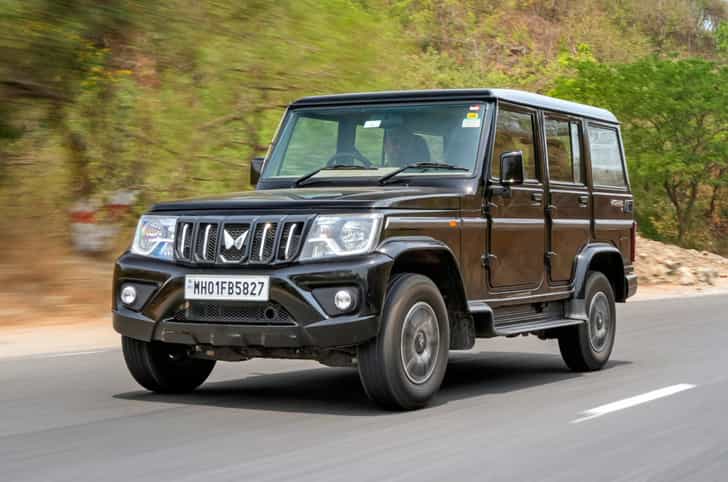
Given your usage pattern, the Mahindra Bolero is the most sensible recommendation. Your monthly running is high, with a significant highway component, but the key factor is the 30% rugged rural roads and the need to occasionally carry 200-250 kg of farm produce. The Bolero is built exactly for this kind of use case. It has a tough ladder-frame chassis, simple mechanicals and a reputation for durability on rough roads. The diesel engine is robust and well suited to long-distance running, and the suspension is designed to handle poor road conditions and heavy loads without complaint. It is not the most refined or feature-rich vehicle, but it is reliable, easy to maintain and has excellent service reach in rural areas. At your budget of Rs 10-12 lakh, it is also one of the few vehicles that genuinely meets your requirements without compromise.If you want something more comfortable and modern, the Mahindra XUV 3XO diesel is worth considering, but it will not be as rugged or as load-friendly as the Bolero. For your specific needs, the Bolero remains the most practical and dependable choice.

Hello Autocar team, I am from Pune, and my father is looking for a bike for his daily office commute of around 50km (25km one way). His requirements are a comfortable seating position, decent fuel efficiency, good after-sales service and long-term reliability, and a low seat height, as he is 5 ft 5 in tall. He was initially considering the TVS Ronin base variant, but after reading about some after-sales issues, he is looking at other options as well. Since we already have a Hunter 350, he is considering the Royal Enfield Meteor 350 and Honda CB350RS. However, he is confused between the two, as the Meteor 350 is around 10kg heavier than the Hunter 350, while the CB350RS has a taller seat height. Could you please suggest which would be the better choice considering his usage and requirements? He is also considering an EV scooter, so suggestions for suitable options in that category would be helpful as well.
While the Royal Enfield Meteor 350's low seat height is surely welcoming, owing to its feet-forward riding position, you will feel more of the road imperfections you encounter. We'd recommend you instead look at the Bullet / Classic from RE's stable, as these bikes have more upright, natural riding triangles which will be useful over the long daily commute your father faces. The Honda CB350s offer a similar riding experience but are lighter and easier to manage. Given that your daily commute is quite long and likely to involve bad patches too, a motorcycle would be the more comfortable alternative to a scooter. However, if you must have an electric scooter, choose from proven options like the TVS iQube, Bajaj Chetak, Ather Rizta / Konarc and Vida VX2.
I recently bought a Toyota Urban Cruiser Hyryder Strong Hybrid and intend to use Jio-BP petrol because of its claimed advantages. However, a Toyota service adviser has advised me against it, saying that Jio-BP petrol has been causing engine damage. Is there any technical or expert opinion on this?
There is no technical evidence to suggest that Jio-BP petrol is harmful to your Toyota Urban Cruiser Hyryder Strong Hybrid. All major fuel brands in India, including Jio-BP, must meet the same BIS and BS6 fuel quality standards, and Toyota engineers its engines to run reliably on fuel from any compliant pump. The Hyryder’s hybrid system is not unusually sensitive to fuel quality. It is designed for Indian conditions and fuel variability.The only caveat is to avoid pumps with visibly poor maintenance or questionable fuel storage practices, regardless of brand. If you are concerned, stick to busy, well-maintained pumps where fuel turnover is high. Otherwise, there is no reason to avoid Jio BP petrol specifically. The car will run just as reliably on it as on fuel from any other major brand.
I am currently using a 2015 Grand i10 Asta petrol and am planning to buy the Tata Punch EV 40kWh. My monthly running is around 800km. Should I go for the Punch EV or continue with my Grand i10?
With a monthly running of 800km, the financial case for an electric car is not particularly strong. The savings on fuel are real, but at this usage level it will take a long time to offset the higher upfront cost of the Punch EV 40kWh. Your Grand i10 Asta petrol is a reliable, well-maintained car and still has plenty of life left in it, so from a purely financial perspective it makes sense to continue with it for a few more years.The decision to switch to the Punch EV should be driven more by your desire for a modern, feature-rich car and the EV ownership experience rather than running cost savings alone. The Punch EV 40kWh is a well-rounded product with a usable real-world range of over 300km, good ride comfort and a strong feature set.If you are happy with the Grand i10 and it is serving your needs well, the sensible decision is to continue with it. If you are keen on the EV experience and want a new car, the Punch EV 40kWh is a good choice, but do it for the ownership experience rather than the savings.

I want a suggestion between the Mahindra XUV 3XO REVXM and Maruti Suzuki Brezza VXi Turbo. Since this will be my first car, the priorities are easy maintenance, good mileage, low running costs and long-term ownership. The XUV 3XO REVXM offers good comfort and some useful features, although the infotainment system is not Android-based and it misses features such as a rear defogger. With the Brezza, the 1.0-litre turbo engine and the long-term maintenance of its Smart Hybrid components are my main concerns. Are there any other options worth considering, or is there a better recommendation that would suit these requirements?
Go for the Maruti Suzuki Brezza VXi Turbo. For a first car, it is a sensible choice. Maruti’s service network is the best in the country, parts are widely available, and maintenance costs are among the lowest. The Brezza is also a proven product with a strong ownership track record, and Maruti’s mild hybrid system is very simple and reliable – it is not something you need to worry about from a maintenance perspective. The 1.0-litre turbo petrol is not the most exciting engine in the segment, but it is likely to be efficient and well suited to city driving.The Mahindra XUV 3XO ReVXM is a good car with a more powerful engine and a more comfortable ride, but Mahindra’s service network is not as extensive as Maruti’s and long-term ownership is not as predictable.
I am an enthusiastic driver and do a lot of road trips. My family is of 4 adults and a 4-month old kid (we use car seat). I am looking for an SUV that offers great driving experience along with good comfort and reliability. Boot space is also crucial with space for a stroller and at least couple more suitcases. I don’t mind spending the money required for the right SUV that can be my companion for a really long time.
Go for the Skoda Kodiaq or Volkswagen Tayron, which are sister models from different brands. They are among the best driver’s SUVs in the segment, with strong performance, excellent handling and a genuinely premium feel. The ride is well judged, the cabin is spacious enough for four adults plus a child seat, and the boot is large enough to comfortably accommodate a stroller and a couple of suitcases. If you stretch your budget, you can get the 7-seat versions with greater space flexibility and more features, but the five-seat versions are closer to your budget with the same performance and handling. Bear in mind, however, that they are still on the expensive side and fuel economy will not be great.A bit easier on the pocket will be the Jeep Compass, which is more affordable and comes with a diesel engine. It's also quite a lot of fun to drive, but doesn't score as well on the reliability stakes. Finally, another option is the outgoing Audi Q3, remaining stocks of which should be available with some good discounts given the launch of the new model is right around the corner. It's a bit smaller than the VW and Skoda, but even more fun to drive, with the same 2.0 TFSI engine. And though it's the outgoing generation, it remains a premium and luxurious SUV that feels worth the money.For your needs, though, the Skoda Kodiaq and VW Tayron are the best bet. Choosing between them is down to preference, but the Tayron has a sportier design for the exterior and interior, while the Kodiaq has more of a luxurious vibe.
I am planning to buy a bike by the end of this year for a daily 25-40 km commute in Hyderabad. I’m currently considering the Honda CB350RS, Royal Enfield Meteor 350, and the upcoming Triumph Bonneville 350. Which one would you recommend, and are there any other bikes I should check out? Also, when is Bonneville 350 expected to launch?
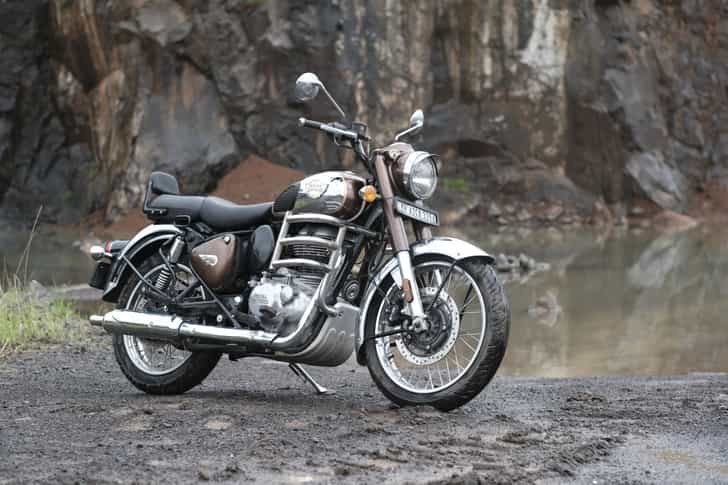
The Honda CB350 models and Royal Enfield Hunter / Bullet / Classic 350 should be on your radar for the sort of usage you're going to put the machine through. The Meteor's feet-forward seating position places more load on your tailbone and also transfers the shock from road imperfections directly to your spine which is why we wouldn't recommend it for a long daily commute. The CB350s and the three RE 350s listed above have more natural, upright seating positions which will make them more suited to your usage. The Hondas are lighter on their feet than the RE Bullet and Classic and feel more manageable inside tight city traffic. The REs claw back some ground with their characterful and torquey J-series motor. Picking between them will boil down to what sort of experience you prefer and a test ride should help you determine which is the right one for you.
Hi Autocar Team, I'm planning to buy an electric scooter. My daily commute is around 50 km, and I often do 100+ km rides on weekends, including some highway usage. My shortlisted options include TVS iQube ST, Yamaha EC-06, and River Indie. Which would be the best choice considering real-world range, reliability, comfort, and long-term ownership?
We'd advise you to choose between the TVS iQube and River Indie because both are trustworthy, practical and comfortable EVs. While both will feel quite adept at tackling city roads, on the highway, the Indie will offer better stability owing to its larger 14-in wheels and fatter tyres. There's not much wrong with the Yamaha EC-06 (unsurprisingly, since it is effectively a dressed-up and pricier River Indie) but it costs quite a bit more than the River. You also have a substantially smaller boot and a very slow 450W charger on the Yamaha, both of which will make their presence felt in day-to-day scenarios. Take a test ride of the iQube and Indie and depending on which one you like more, make your decision.
I’m 32, married, and based in Bengaluru. I currently own a 5-year-old Yamaha FZ25 that has completed only around 14,000 km. The bike has been extremely reliable overall, but it now needs some work which includes mainly new tyres, ABS repair and proper service. I am estimating around Rs. 20 -30,000 to bring it back to a really good condition. I am in a dilemma as I’ve wanted a Royal Enfield Himalayan for almost 10 years. I actually rode a Himalayan 411 for over 1,000 km on a trip and absolutely loved its riding position, suspension, engine character and the way it handled bad roads. It was one of those bikes I didn't want to return. The new Himalayan 440 has now been launched, and I’m getting a Bangalore on-road quote of around Rs. 2.98 lakh. I could put around Rs. 1 lakh down and finance roughly Rs. 2 lakh. The practical side says: keep the FZ25 by spending Rs. 20,000 to 30,000 on it and continue using it. I don't ride very much at the moment, and my wife isn't particularly interested in motorcycle trips. My options are either repair and keep the FZ25. Second option is to buy the Himalayan 440 and keep it for long term and last, wait another 1-2 years and decide later. I would love some brutally practical advice, especially considering the Rs. 3 lakh price and relatively low riding usage.

The very fact that you still want a RE Himalayan, despite not having ridden one in many years would suggest you have a deep yearning for the bike. More so, since your very words are,"It was one of those bikes I didn't want to return." Even though you don't ride a lot currently, the Himalayan 440 may well change that. From our experience with the Scram 440, we believe the Himalayan 440 will offer a step up in terms of refinement, reliability and features compared to the erstwhile 411. Take a test ride and if you like how the bike rides, go ahead and make your purchase.
Need expert advice?
Ask the Autocar community and experts.