Autocar India

Safety & ADAS

0Followers•83Visitors

Conversations about safety ratings, ADAS features, crash tests and accident protection.

•1w

I keep fixating on achieving a 5-star safety rating for both adult and child occupants. My family consists of four adults and one child. I currently drive a Tata Altroz MT and want to upgrade to an automatic car. My requirements are as follows: I cannot buy an SUV because an elderly family member finds it difficult to get in and out. I cannot buy another Tata or Mahindra. My budget is a maximum of Rs 20 lakh, which I plan to pay off over three years. I need a 7-seater. I need good ground clearance, but the car must also be easy for elderly people to get in and out of. A 5-star safety rating for both adult and child occupants is non-negotiable. Given these requirements, does a 5-star safety rating actually mean anything in real-world conditions, or is it just a marketing gimmick? Thanks!

Verified
•4d

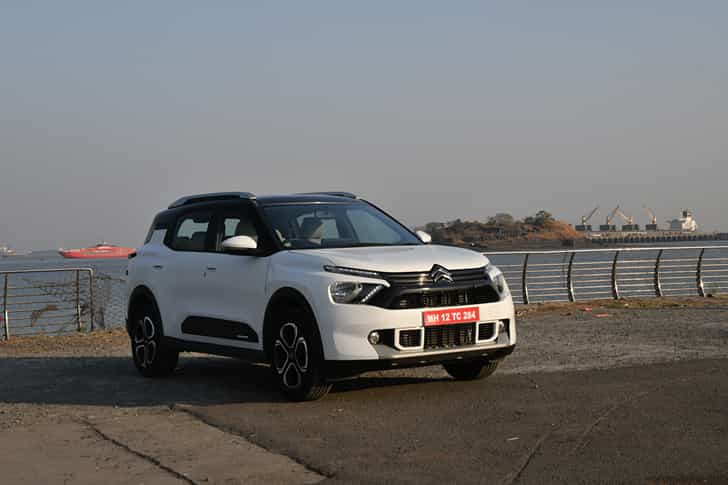
Given your requirements, of an automatic seven-seater with a solid crash safety rating that's not a Tata or Mahindra under Rs 20 lakh, and with good ground clearance, you're only option is the Citroen Aircross. But do keep in mind that only its 5-seater version has been crash tested with a 5-star score for adult protection and 4-star score for child protection. While the three-row version of the Citroen is largely mechanically identical, this score is only applicable to the two-row version.With the Citroen Aircross, you get a very premium interior, a strong turbo-petrol engine, smooth 6-speed automatic and excellent ride comfort. It has ample ground clearance, and is the only SUV of its kind to have a three-row seating configuration, however its third row is best left for kids. Also, given Citroen's limited dealer network, servicing could be a challenge. If you need a genuinely practical and spacious seven-seater with all the safety features, consider the Kia Carens Clavis Turbo-petrol automatic. It will be easy for your family members to get in and out. The only catch being, it hasn't been crash tested. The 5-star safety rating is not a marketing gimmick, it is a meaningful indicator of a car's crashworthiness and the effectiveness of its safety systems. However, it is important to understand that a 5-star rating is not an absolute guarantee of safety. It means the car has performed very well in standardised crash tests and meets high safety standards, but real-world outcomes can still vary depending on the nature of an accident.

VehicleCitroen Aircross
VehicleKia Carens Clavis
Citroen Aircross
Citroen Aircross
•2w

Every new car review emphasises the ADAS suite, justifying the hefty price tag of top-tier variants by highlighting how these features revolutionise safety. However, real-world driving conditions, especially on chaotic, high-density Indian city roads, often tell a different story. In bumper-to-bumper city traffic, features like Blind Spot Monitoring can become a constant audio-visual nuisance, leading to driver desensitisation. Even on highways, using Adaptive Cruise Control or Lane Keep Assist requires a massive leap of faith, while Autonomous Emergency Braking (AEB) risks triggering a rear-end collision if it misinterprets a tight gap and brakes abruptly. Given this friction between global tech and local infrastructure, I want to explore two perspectives: 1. The Consumer Choice Argument: Should carmakers force ADAS into expensive top-spec bundles, or should they offer these safety suites as a modular, standalone option so buyers don't pay for tech they immediately turn off? 2. The Systematic Evolution Argument: Is forcing this technology onto the market the right catalyst to eventually push Indian drivers, road infrastructure, and government regulations to mature into a safer, more standardised ecosystem?
Verified
•1w

This is a genuinely important question, and the answer is not as simple as “ADAS is good” or “ADAS is annoying.” The reality is that ADAS systems are designed for highly standardised road environments, and India is anything but that. In dense city traffic, features like blind spot monitoring and lane keep assist can become a constant source of alerts, leading to exactly the kind of desensitisation you mention. On highways, adaptive cruise control and lane keep assist can work well, but only when lane markings are clear and traffic behaviour is predictable, which is not always the case here. Autonomous emergency braking is a double-edged sword: it can save lives, but in a country where drivers are used to tight gaps and sudden manoeuvres, it can also create new risks.On the consumer choice argument, the current approach of bundling ADAS into top-spec variants is not ideal. Safety should not be a luxury add-on, and buyers should not have to pay for a suite of features they may not use. A modular approach, where ADAS can be added as a standalone package, would be far more sensible. It would allow buyers to make an informed decision based on their driving environment and comfort level with the technology.On the systematic evolution argument, there is some merit to the idea that pushing this technology into the market can drive broader change. As more cars are equipped with ADAS, there is pressure on infrastructure and regulations to catch up. But that only works if the systems are calibrated for local conditions and drivers are properly educated on how to use them. Otherwise, you risk creating frustration rather than progress.The bottom line is that ADAS is not a silver bullet. It is a tool that can enhance safety, but only when it is implemented thoughtfully and used in the right context. Carmakers should give buyers the choice, and regulators should focus on creating the conditions where these systems can actually deliver on their promise.

•3w

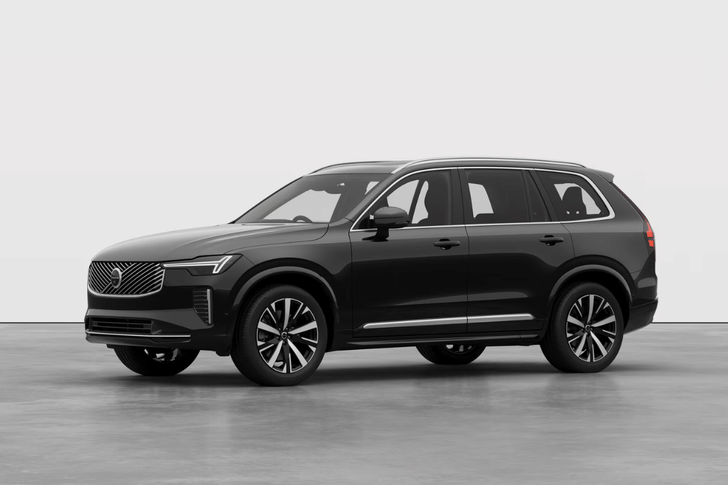
Recently, a Volvo XC90, often regarded as one of the safest cars, was reportedly involved in an accident and caught fire within a matter of seconds, resulting in the tragic death of a renowned neurosurgeon. What could be the possible reason for such a rapid and intense fire? While accidents can understandably cause injuries and trauma, a vehicle catching fire so quickly after what appears to be a relatively minor impact raises serious questions about fire safety and occupant protection. When a car costs around Rs 1.23 crore, buyers naturally expect a very high level of safety, including protection against such secondary hazards. If a relatively minor accident can result in a vehicle being engulfed in flames and a person being trapped inside, it is fair to question how such risks can be prevented. This is also not the first reported case of a luxury vehicle catching fire after an accident. I have come across similar reports in the past. What do you think could be the possible cause, and what safety measures should manufacturers consider to prevent such incidents?

Verified
•3w

Firstly, our deepest condolences to the family involved. This is a tragic incident and understandably raises serious concerns.The Volvo XC90 is one of the safest cars on the road, with a strong safety record and a five-star Euro NCAP rating. However, no car is immune to fire in the event of a severe accident. Modern vehicles, regardless of price, carry significant amounts of fuel and electrical systems, and under certain conditions, such as a high-energy impact, ruptured fuel lines, electrical shorts, or a fire starting in the engine bay, a fire can develop rapidly.The key point is that fire risk is not directly linked to the cost of the car. Even the most expensive and safest vehicles can catch fire if the conditions are met. Safety systems are designed to protect occupants in a crash, but they cannot always prevent a fire from starting, especially if the impact is severe or the fire source is difficult to contain.It is also important to note that details of this specific incident are still emerging, and without a full investigation, it is impossible to say exactly what caused the fire. Factors such as the nature of the impact, the location of the fire, the speed of emergency response and the ability to exit the vehicle all play a role.The takeaway is that while modern cars are safer than ever, fire remains a rare but real risk in high-energy accidents. The focus should be on understanding the cause through a proper investigation rather than assuming that a premium car is immune to such outcomes.

VehicleVolvo XC90
Volvo XC90
Volvo XC90