Latest questions answered by experts
I am planning to buy a car for my sister. She currently drives a 2016 Volkswagen Polo diesel manual. The budget is around Rs. 20-22 lakh. Her priorities are a premium-looking interior, a feature-rich cabin, low maintenance costs, and good performance. A diesel engine is strongly preferred. She was initially interested in the Hyundai Creta, but someone advised her to wait because the Creta is expected to receive a facelift in March 2027. Please suggest some good options.
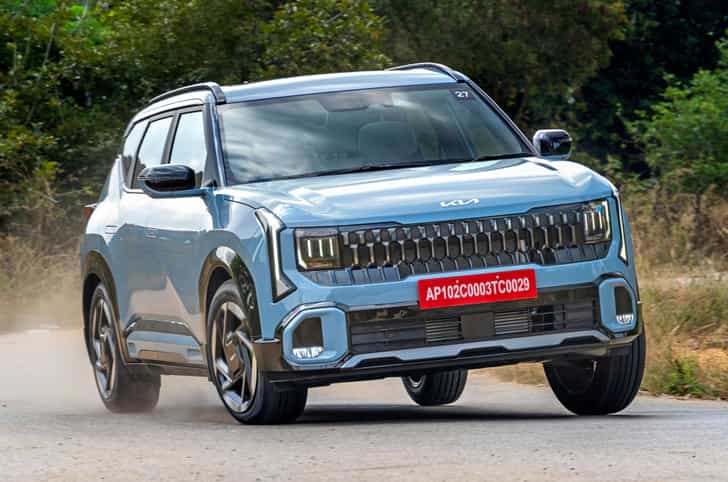
Go for the Kia Seltos diesel automatic. It is the best fit for your sister's requirements. Coming from a Polo diesel, she will appreciate the strong diesel punch, and the Seltos diesel automatic delivers that same effortless surge while being far more refined and relaxed on the highway. The cabin is among the most premium in its segment, with a rich feature list and a high-quality interior. Kia cars also have a widespread service network, and the 1.5-litre diesel engine has a proven reliability record, so maintenance costs are unlikely to be a concern.If she prefers something that is more engaging to drive and wants to stay with Volkswagen cars, the Taigun 1.0 TSI with the new 8-speed automatic is also worth considering. While it does not have the same diesel-like punch, the turbo petrol engine is strong, and the new 8-speed Aisin automatic is smooth with an improvement in terms of efficiency. That said, the Seltos diesel automatic remains the more natural and well-rounded upgrade for someone moving from a Polo diesel.

I’m planning to buy a new car for casual use with a budget of under Rs. 11 lakh. It will primarily be used for city driving, including daily office commutes and occasional weekend trips, with an expected monthly running of around 300 to 400km. My priorities are reliability, low maintenance costs, good fuel efficiency, and a car that is hassle-free to own over the long term. I’m currently confused between the Maruti Suzuki Dzire, Swift, Honda Amaze, New Brezza, and Fronx. I don’t specifically need a turbo-petrol engine, although I’m open to considering one if it offers good features. I would prefer a manual gearbox, but I’m also willing to consider an automatic or AMT if it delivers good mileage in city driving. The Dzire has caught my attention, but I’m slightly hesitant because of its three-cylinder engine. Please clear my confusion.
For your usage, the Maruti Suzuki Dzire is actually the most sensible choice. Your running is low, your usage is mostly city with occasional weekend trips, and you want reliability, low maintenance and fuel efficiency. The Dzire is built exactly for this brief. The 1.2-litre 3-cylinder petrol engine is smooth enough in everyday use, and the car is light, easy to drive and very efficient in the city. Concerns about the three-cylinder engine are largely overstated. Modern 3-cylinder engines are well balanced and refined at city speeds, and the Dzire is tuned for efficiency and reliability rather than outright performance. In our real-world testing, the Dzire has managed 14.5kpl in the city and 20kpl on the highway. The Maruti Suzuki Swift is essentially the same mechanical package in a hatchback body, so the decision there is simply whether a hatchback or a sedan better suits your needs. The Honda Amaze is a good alternative if you specifically want an automatic. It gets a CVT, which is much smoother compared to the AMT on Dzire, but it's not as fuel efficient. In our standard test cycle, the CVT Amaze mileage is 9.94kpl in the city cycle and 16.62kpl on the highway loop. The Maruti Suzuki Brezza and Fronx are both good cars, but they will not be as efficient in the city as the Dzire.Go for the Dzire manual and do not worry about the 3-cylinder engine – it is a well-proven, efficient and reliable package.
Hi Autocar, I currently drive a 2015 Honda City petrol and am planning to replace it with a 7-seater that I intend to keep for the next 10 years. My annual running is around 10,000km, with approximately 8,000km in the city and 2,000km on highways. My budget is Rs. 25-30 lakh. I also have rooftop solar and a dedicated home charging setup, so an EV is an option. Since I am a business owner, I can also claim depreciation benefits on an EV. Please suggest a car.
Given your annual running of around 10,000km, with 8,000km in the city and only 2,000km on the highway, the Kia Carens Clavis EV makes the most sense. Since you have solar and can set up charging at home, running costs will be very low. Also, Since most of your driving is in the city, the Clavis EV suits your usage well. It also offers a modern, comfortable cabin, a usable third row for adults, and well-established aftersales network of Kia cars should make it a dependable choice for long-term ownership.The drawback of an Electric car is your highway trips will need more planning for charging stops. If you regularly travel to destinations where charging infrastructure is limited, the Toyota Innova Hycross would be the better alternative.
I currently ride a Suzuki Gixxer SF 250 and have been very happy with it. However, I now feel it's time to upgrade to something that offers more performance while also being more comfortable for everyday use. I'm not a fan of highly committed sportbikes like the Yamaha R15, which has an aggressive riding stance. Most of my riding is within the city, including daily office commutes, with the occasional weekend ride. My average monthly running is around 1,000 km. My budget is Rs 5 lakh (on-road). I've shortlisted a few motorcycles. The KTM Adventure S appeals to me even though I don't ride off-road, mainly because an adventure tourer is versatile and comfortable. The Triumph Speed 400 is another option I'm considering. I was also looking forward to buying a Royal Enfield 650, but the absence of tubeless tyres is making me reconsider. Can you suggest which one I should pick, or is there a better option as well?
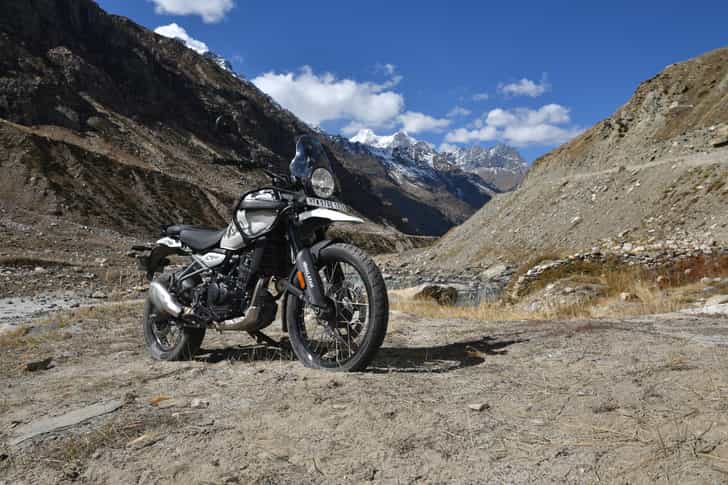
Since most of the riding will be in the city with occasional weekend trips, you are already leaning towards the adventure-touring segment; the Royal Enfield Himalayan 450 is one of the best all-rounders in this price range, if you can manage its size and weight.The KTM 390 Adventure range is quick, engaging to ride and packed with useful features such as cruise control, cornering ABS, traction control and a quickshifter. It also handles exceptionally well on highways and twisty roads. That said, the engine is not as refined as some rivals, and the large windscreen can make slow-moving city traffic feel warmer.If off-road capability is not a priority, the Triumph Scrambler 400 models deserve serious consideration. It combines the commanding riding position of an ADV with the styling of a scrambler. The engine is refined, the handling is neutral and predictable and comfort over bad roads is good too.Among these, the Triumph Bike is the most affordable, while the KTM 390 Adventure S is the most expensive. The Himalayan 450 falls comfortably in between. One advantage of the Royal Enfield bikes is the strong riding community and touring culture that comes with the brand, which may appeal if you enjoy long-distance travel and group rides.Take a test ride and see which one suits you best before making your decision.
Hi Autocar India Team, I currently own a 2020 Ford EcoSport Titanium Diesel Manual, which has covered nearly 1,00,000 km. It continues to return around 16.5–18.5 km/l in mixed city and highway driving, and I plan to keep it for several more years. I'm now looking to buy a second vehicle and would appreciate your advice. My monthly driving is around 1,000–1,500 km, split between city and highway use. In addition, my family and I undertake a long road trip of approximately 1,500 km (round trip) or more once every three months. I live in Hyderabad, where EVs currently benefit from zero road tax, making them similarly priced to comparable diesel automatic vehicles. My priorities are value for money, comfortable long-distance touring, enough space for a family and luggage (preferably in a large SUV or MPV), reliability over the next 8–10 years, low running and maintenance costs, and strong safety, ride comfort, and resale value. Since I already own a dependable diesel manual that is well suited for long-distance travel, would you recommend buying an EV or another diesel automatic as my second vehicle? If you were making this purchase today, which large SUV or MPV would you consider the best value-for-money option, and why? I'd also appreciate recommendations across different budget ranges, if possible. Thank you!
Given your usage pattern and priorities, we would recommend going for a diesel automatic SUV or MPV rather than an EV. Since you regularly undertake long road trips with your family, a diesel eliminates the need for range planning and charging stops that electric cars require. While the Ford EcoSport can continue to handle long-distance journeys, it is now six years old and has already covered nearly 1,00,000 km. If something were to go wrong far from home, sourcing parts or repairs could be more challenging. It would therefore make more sense to use the new vehicle for family road trips, as it will be more comfortable and reliable.The Kia Carens Clavis diesel automatic is one of the strongest options for your requirements. It offers a spacious cabin with a genuinely usable third row, a refined diesel engine, and a smooth automatic gearbox. Kia cars also have a well-established aftersales network, which adds to their appeal as a long-term ownership proposition.Another excellent option is the Mahindra XUV 7XO diesel automatic. It offers a spacious cabin, a strong diesel engine, a comfortable ride, and a good balance of features and safety. The drawback is that the third row is not as roomy as the Clavis.Overall, a diesel automatic SUV or MPV is the more practical and value-for-money choice for your usage pattern, especially considering your regular long-distance travel and plans to keep the vehicle for several years.
Hi AAA, My name is Richu, and I'm from Kerala. I'm keen on buying a lifestyle pickup truck. I don't really have a practical use case for it. It's purely a passion purchase, and I want something that stands out from ordinary vehicles. It will be my secondary car, mainly used for occasional family trips and some mild off-roading. I recently test-drove both the Isuzu V-Cross and the Toyota Hilux. I loved the Hilux for its strong performance and, the availability of a locking rear differential. However, I wasn't impressed with its ride quality. It felt quite stiff, and there was noticeable pitching from the back. When I drove the V-Cross on the same stretch of road, the ride felt much more comfortable. I also preferred the V-Cross for its looks and overall ride comfort. Now I'm confused about which one to buy. The Hilux is based on Toyota's current-generation platform, whereas the V-Cross is based on a much older platform. Toyota also has a stronger service network than Isuzu. So, it's a classic heart vs mind dilemma, and I'd really appreciate your help in choosing between these two vehicles.
The Isuzu D-Max V-Cross certainly scores with its more comfortable ride and attractive pricing, but it is built on a platform that now feels dated. The Toyota Hilux, on the other hand, offers a more powerful engine, a more premium cabin, better equipment, and the added confidence of a locking rear differential. It also benefits from an extensive service network of Toyota cars and its well-earned reputation for long-term reliability.That said, if the purchase isn't urgent, it would be worth waiting a little longer. The next-generation Hilux is expected to arrive in India soon, bringing improvements in comfort, interior space, features, and overall refinement. There's also a good chance it will address some of the ride quality concerns you experienced with the current model. So, while the Isuzu car might be the safer bet at the moment, we would advise test-driving the new-gen Toyota Hilux before making your decision.
Hello Autocar Team, My wife is 51 and I am 55. We are planning to buy an automatic car for my wife, with an expected monthly running of under 500 km. We are both first-time drivers and will be graduating from riding a scooter. Please suggest an automatic car with the smoothest transmission (no jerks), high reliability, low ownership costs, and that can negotiate bumper-to-bumper traffic. A small turning radius is also important because the lane opposite our stilt parking is quite narrow, with cars often parked in front of the building. The car needs to be reversed and turned into the parking space, so easy manoeuvrability is essential. Our budget was initially under Rs 10 lakh, but it is flexible if there is a significantly better option. We are looking for a car that will last at least 15 years. My wife will be the primary driver.
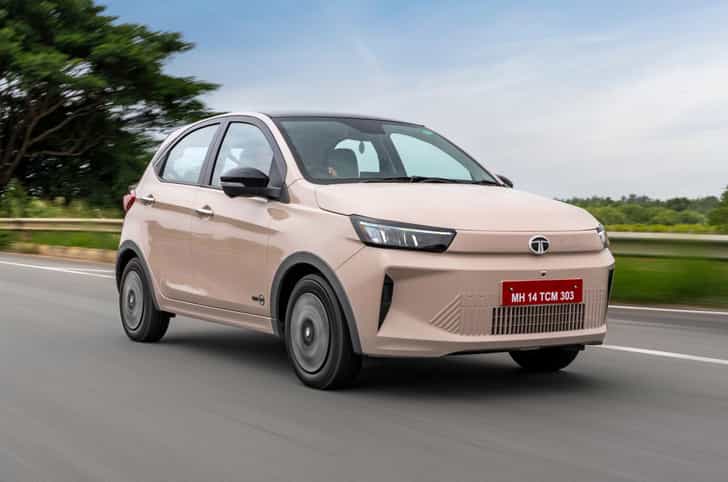
If home charging can be arranged, the Tata Tiago EV is the strongest fit for these requirements. The electric powertrain delivers seamless, jerk-free acceleration, making it especially easy for first-time drivers. Its compact dimensions and tight turning circle also make it far easier to manoeuvre in narrow lanes and into tight parking spaces. With monthly running of less than 500km, running costs will be extremely low, and the Tiago EV remains one of the most sensible city cars on sale.Another option worth considering is the MG Comet. While its unconventional two-door layout won't suit every family, it is exceptionally easy to drive in congested city traffic. For a car that will spend almost all of its time in the city, this MG car has plenty of merit.If you cannot arrange for home charging, then we'll recommend the Hyundai i20 IVT. The engine is smooth, and the transmission is seamless, resulting in a jerk-free drive experience that's better than all other cars equipped with an automated manual transmission (AMT). Do keep in mind that the i20 is a relatively large car, so maneuvering it might not be as easy as the Tata Tiago EV or MG Comet.

I am confused between buying the Tata Harrier Pure X Dark Edition Diesel AT and the Tata Harrier EV Fearless+ 75 kWh. I have charging facilities available both at my apartment and at my office, and I live in Hyderabad. Since I plan to keep the car for the next 10 to 12 years, would it be better to buy the Tata Harrier Pure X Dark Edition Diesel AT, which is based on an older platform, or should I go with the Tata Harrier EV Fearless+ 75 kWh, which is built on a new platform and features an all-new architecture? Alternatively, would it be wiser to wait for Tata to launch the next-generation Harrier ICE? By then, there may also be more clarity on the future of iso-butanol as an automotive fuel.
Go for the Tata Harrier EV Fearless+ 75 kWh. With charging available at both home and the office, the ownership experience is well suited to an EV. The Harrier EV also offers a long driving range, a spacious cabin, and a premium feel.The Tata Harrier Pure X Dark Edition Diesel AT remains a capable SUV, and its Land Rover-derived platform is not an issue. However, considering the relatively low running requirements and the long-term savings on fuel and maintenance, the electric car makes more sense in this case.That said, since the plan is to keep the vehicle for 10 to 12 years, it is worth considering that the battery will gradually lose capacity over time. This can reduce both driving range and performance. In addition, the resale value of diesel SUVs is likely to remain stronger than that of EVs over such a long ownership period.As for iso-butanol, there is currently no official policy or implementation timeline as there was for the E20 petrol. Modern diesel engines are engineered with a degree of tolerance for future fuel changes, and if iso-butanol-blended diesel is introduced, manufacturers are expected to develop engines that are compatible with it. At present, however, there is no reason to delay the purchase solely because of uncertainty around iso-butanol.
Hi, I own a 2017 Baleno RS and am currently looking to replace it with another car that offers one of the best turbo/Boosterjet engines available in the market. The reason I am considering replacing my Baleno RS: Since E20 fuel has become the norm, the 2017 Baleno RS is not officially compatible with it. I have already noticed a significant mileage drop. More importantly, I am concerned that continued use of E20 fuel over the coming years, it might hamper the parts of my car. It has been almost 10 years since I bought this car. I feel it is the right time to upgrade to a newer vehicle that offers better technology, improved refinement, and modern safety features. Now that I have explained the reasons behind the upgrade, I have my eyes on the newly launched Brezza 2026 facelift, especially the ZXi+ variant with the 1.0-litre Boosterjet engine. It seems to offer the turbocharged performance I enjoy, while still delivering the fuel efficiency Maruti Suzuki is known for. Since I am upgrading from one Maruti Suzuki to another, I also expect to receive a better exchange value and a more attractive overall deal. What are your thoughts?
The new Maruti Suzuki Brezza 1.0 Boosterjet appears to be a logical upgrade from the Baleno RS. It retains the familiar Boosterjet character while offering a more modern, E20-compliant package with improved safety, better features and the added practicality of an SUV. If paired with a six-speed manual gearbox, the Brezza ZXi+ variant could also prove to be a more relaxed highway cruiser than the Baleno RS. The Brezza 1.0 Boosterjet is a good choice if you value the service network of Maruti Suzuki cars, reliability, and ownership experience.You could surely consider exchanging the Baleno RS for the Brezza at the Maruti dealership if you're getting a great deal. However, we recommend first getting the car evaluated by a few reputed used car dealers or independent buyers to understand its true market value. Comparing multiple offers will help ensure the best possible resale price before finalising the exchange with the dealership.
I used to own a Karizma R, and I currently ride a Honda Shine. I'm confused between the TVS Ronin and the Honda Rebel 300. My priorities are a lightweight motorcycle that's easy to commute on daily, while also being capable of occasional highway rides. If there's another motorcycle that suits my requirements better, kindly suggest. My budget is within Rs 2.5 lakh. Also, if I buy a petrol motorcycle instead of an EV, could that become a problem in the future?

Since you're considering the TVS Ronin and the upcoming Honda Rebel 300, we advise you to consider the Honda CB350 range and the Royal Enfield Hunter 350. The Ronin and the air-cooled 350cc motorcycles offer a similar character, with laidback performance and relaxed handling. The Rebel 300, on the other hand, is expected to feel more refined and deliver stronger performance.It would be sensible to wait a few months for the Honda Rebel 300 to launch officially. Take a test ride and compare it with the other options before you go ahead with your purchase.
Need expert advice?
Ask the Autocar community and experts.