Autocar India
SR

Sree

1d

I am considering buying a used Mini Clubman Cooper S (second owner), which has been driven around 21,000 km. However, I am unsure if there are any inherent issues with this model, especially since it has been discontinued by Mini. I have come across a few low-mileage examples in the used car market and am quite impressed with the design and build quality of the vehicle. Could you please advise whether it is a sensible purchase in terms of reliability, maintenance costs, and long-term ownership? Additionally, I would appreciate insights into the Mini ownership experience, as I do not personally know anyone who owns one.

Autocar India team

Autocar India

Verified
25m

You’re eyeing it for the looks and a fun daily with some weekend drives. In that case, a clean Mini Clubman Cooper S automatic can work for you. But proceed if it has an ideally full Mini/BMW service history and clears a paid pre-purchase inspection at a Mini workshop or a trusted BMW/Mini specialist.

Why it fits your brief: it feels quicker and lighter on its feet in the city than the Countryman SUV, and the longer body gives more rear space and a bigger boot than the Mini hatch, so it’s easier to live with. If the 21,000 km is genuine and backed by records, the car should have a lot of life left. The Clubman being discontinued in India was more about low demand due to its unconventional body style and Mini’s range shuffle that meant it wasn't around for long, not any flaw. Mini will still support it, though some parts can take time to arrive.

Know the trade-offs. Upkeep is far higher than that of a mass-market car, and unique body parts can be pricey. On our roads, the ride is firm, low-profile tyres can get damaged, and the front bumper or underbody can scrape on tall speed breakers. As a second-owner car, future resale will be slower, so buy it at a price that reflects that. It also prefers higher-octane petrol.

Three must-dos before you say yes: verify service history at a dealer, get a full inspection (look for oil leaks, suspension noise, brake wear, tyre and wheel damage, water leaks around the sunroof and boot), and check that all electronics work. If these pass and the price leaves a buffer for upkeep, go ahead.
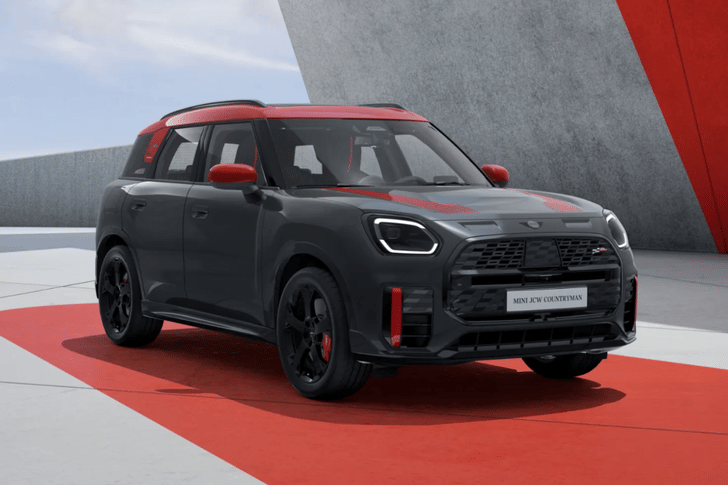
 

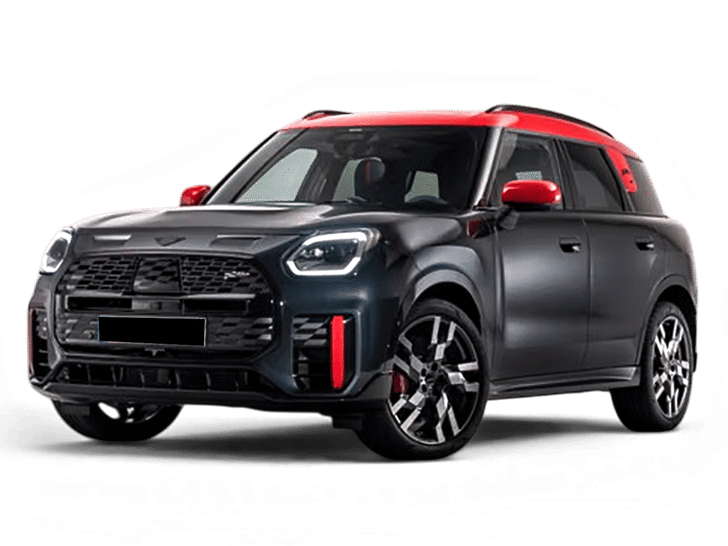
Mini Countryman

Mini Countryman

Explore cars mentioned
More questions on similar cars

PJ

Pk jain

5d

If I purchase a car now and plan to keep it for the next 10–12 years, will it support higher ethanol-blended petrol like E27 or E30 in the future? If I use an E20-compliant car with E27 or E30 petrol, what could be the possible adverse effects on mileage and maintenance costs? If technical modifications are required to use E30 petrol, will Tata Motors provide the necessary support (even as a paid service)?

Autocar India team

Autocar India

Verified
4d

There’s understandable concern about higher ethanol blends like E27 or E30 being introduced into our fuel supply. The government is clearly pushing hard to raise ethanol content in petrol to reduce the steep oil import bill, which has worsened with ongoing global tensions. Industry sources suggest that E22 could be introduced this year, with E27 or even E30 likely within the next few years.Carmakers anticipated this move early on. When they upgraded engines for E20 compliance, most also upgraded fuel system materials like the seals, hoses and valves to handle up to E30, so the investment was made in one go. In fact, Tata Motors has informally confirmed that its current E20-compliant petrol engines are already material-compatible with E30.However, while the hardware may be ready, calibration is another matter. Running an E20-calibrated engine on E27 or E30 petrol will cause a mild drop in fuel efficiency because the engine mapping isn’t tuned for the higher ethanol content. But there shouldn’t be any major maintenance or reliability concerns. Basically, you’ll see some loss in mileage, but not accelerated wear.As for flex-fuel variants, Tata Motors and several others are indeed preparing them. The challenge is that there’s no clear policy or pricing framework yet to make flex-fuel cars commercially viable. The expectation is that once those policies fall into place, potentially within the next year, we’ll start seeing flex-fuel models on sale, including possibly the Punch.

GN

Gandikota Naveen

1w

Regarding the JSW Jetour T2 PHEV (380 hp variant), when the battery charge level drops to around 20%, how much power and torque does the vehicle deliver in real-world conditions? Please clarify.

Autocar India team

Autocar India

Verified
4d

There isn’t an official power or torque figure published for the JSW Jetour T2 PHEV (380 hp) at 20% battery, and this model is not officially on sale in India right now, so data here is limited.What you can expect in the real world is this: The headline 380 hp is the combined output when the engine and the electric motor work together with a healthy battery. At around 20% charge, most plug-in hybrids keep a small reserve so the motor can still help with quick starts and short bursts. But the car will not hold peak power for long. In steady driving or repeated hard pulls, output will feel much closer to the engine’s own power, and torque will drop as the motor’s boost is reduced. So, for a ballpark, look up the engine-only power and torque in the brochure - that is roughly what you’ll get once the battery is low, with a brief extra shove from the motor when you press hard.

VehicleJSW Motors Jetour T2
PA

Partha

1d

Hi Autocar Team, I have a budget of ₹10 lakh (on-road) and am confused between the Tata Punch Adventure AMT (facelift) and the Tata Nexon Smart Plus AMT.

Autocar India team

Autocar India

Verified
1h

With a hard cap of Rs 10 lakh on-road and the need for an easy automatic for daily city use, the Tata Punch Adventure AMT is the safer pick for you. It fits your budget cleanly, it is small enough to park anywhere, and the high seat and good ground clearance make bad roads and speed breakers simple. For stop-start traffic, the Punch AMT is smooth enough if you drive with a light foot, and it will feel easier to handle than a bigger car.The Nexon is the bigger car, but two points go against it for your plan. First, at Rs 10 lakh on-road, the Nexon Smart Plus AMT will get you fewer features. Second, if most of your driving is inside the city, the Nexon’s extra size does not give you a day-to-day benefit, while the Punch will simply feel less stressful.Know the trade-offs with the Punch: the AMT can feel a bit slow to change gears if you press hard, though this is true in the Nexon too. Also, with five people and luggage on a highway, the 1.2 petrol might feel overwhelmed. If you do frequent long trips with family, the Nexon with its 1.2 turbo engine would be nicer, but that needs a bigger budget for the automatic.Overall, for a Rs 10 lakh on-road limit and city-focused use, go for the Punch Adventure AMT. It lines up best with what you need right now.

VehicleTata Punch
VehicleTata Nexon

Posted on: 17 Apr 2026