
Autocar India
BH

Bhargav

1d

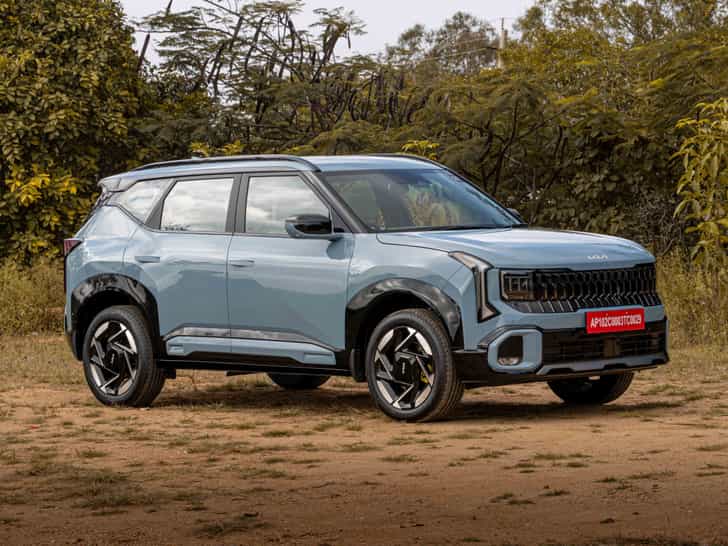
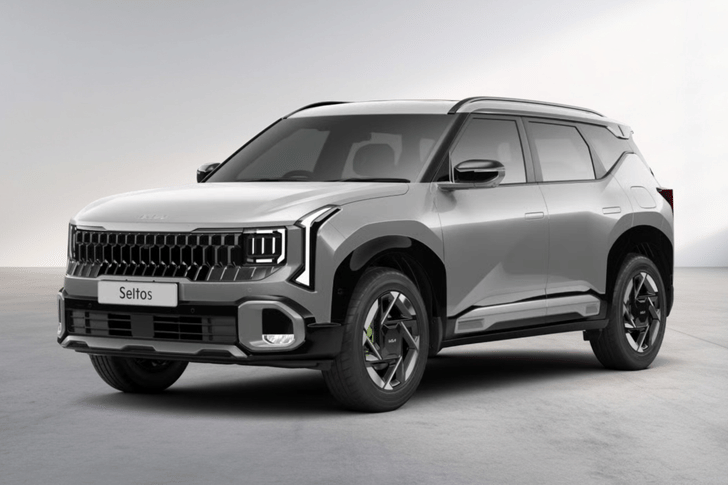
I’m planning to buy my first car and am considering the Kia Seltos 1.5 diesel top-end automatic with a torque converter. My main priority is the gearbox. Since I mostly drive in bumper-to-bumper traffic, I’ve read that DCTs can heat up over time, while torque converters are smoother and more reliable in city conditions. Even though I prefer petrol for refinement, the lack of a torque converter in petrol is a concern. I love the Seltos overall and want the top-end variant for its features. I drive around 500–700 km/month in the city, with occasional highway trips, taking my total monthly usage to ~900–1200 km. I understand diesel engines need periodic long drives to avoid issues like filter clogging, and I’m fine to take it on long high speed drives once or twice a month. I didn’t like the CVT/IVT petrol variant as it lacked the power and driving feel I want. Given this, is the top-end diesel a good choice for me as a first car? Also: 1. What are the maintenance costs like? 2. Is choosing diesel mainly for the torque converter a sensible decision? Because I am preferring the torque converter over the DCT, is this the right way to think? 3. Any key tips for maintaining a diesel engine?

Autocar India team

Autocar India

Verified
11m

Mostly bumper-to-bumper city use with 900-1,200 km a month, and you want a smooth, fuss-free automatic with all the features - in that situation, the Kia Seltos 1.5 diesel top-end automatic is the right pick for you. With your relatively limited running, though, you won’t recover the extra purchase price quickly. Since you are choosing the diesel largely for the gearbox, you will have to make your peace with the higher upfront cost.

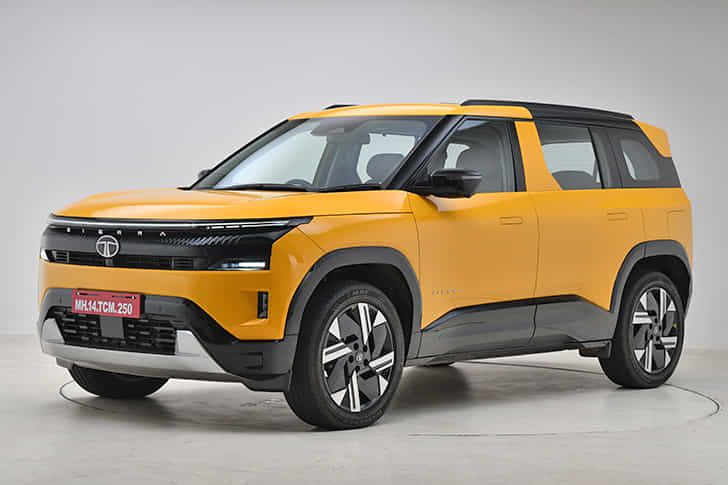
A DCT can feel a bit jerky and can warm up when you are moving very slowly for long periods, but Kia's newest gearboxes have improved this significantly. A torque converter, though, is smoother at walking speeds, so it feels calmer in stop-go traffic than a dual-clutch transmission (DCT). The IVT is actually the better fit for your use case, but since you didn’t enjoy it, this diesel automatic lines up best with what you want. Alternatively, consider the Tata Sierra turbo-petrol, which comes with a torque-converter automatic.

For maintenance, budget roughly Rs 8,000-12,000 a year for scheduled services, with higher bills in years that include additional items like filters. It will vary by city and dealer, so do check Kia’s prepaid service pack to lock in costs. Tyres, brake pads and fluids are normal wear items.

Key diesel care is simple: use good fuel, avoid many very short trips back-to-back, and do a 15-20 minute highway run at a steady speed every few weeks. If a filter warning shows, follow the manual to clear it. Overall, for your use, the diesel automatic Seltos fits well.
Kia Seltos

Kia Seltos

More questions on similar cars

AD

Abhijeet Desai

2d

I am planning to buy the Tata Sierra (top-end variant) and need advice on choosing between the petrol and diesel options. My usage is as follows: Daily driving: 50-60 km Long trips: around 400 km once every 2–3 months Location: Shirala, Maharashtra (mix of city, highway, and ghat roads) Considering mileage, maintenance, and long-term ownership costs, which engine would be better suited for my usage - turbo petrol or diesel? I would also appreciate insights based on real user experiences and practical ownership.

Autocar India team

Autocar India

Verified
1d

With 50-60 km every day, a 400 km trip every couple of months, and a mix of city, highway and ghat roads around Shirala, the Tata Sierra diesel in the top trim will suit you better than the turbo petrol. Your running is high, so the diesel will use less fuel day to day and, over a few years, the lower fuel bills usually make up for the higher buying price. On hilly roads, the diesel’s stronger pull at low speeds makes life easy - fewer gear changes, cleaner overtakes, and it feels more relaxed when the car is full of people or luggage.There are a couple of points to know. A modern diesel has a soot filter in the exhaust - called a Diesel Particulate Filter (DPF). It needs regular warm runs to keep itself clean. Your daily 50-60 km should be enough, but those highway runs would be ideal for this. If you do many short, cold-start drives for a week or two, you may see a warning asking for a steady drive to clear it. The advantage of Tata's diesel is that it doesn't require AdBlue, as it uses a Lean NOx trap rather than a Selective Catalytic Reduction (SCR) system to manage NOx, so that's one less thing you'll have to keep in mind.Pick the turbo petrol only if you value refinement above all else, and performance, which is much stronger than the diesel's. However, its fuel economy is nowhere near as good, and in our tests, we managed just 6.49kpl in the city and 13.7kpl on the highway.

VehicleTata Sierra
SA

Sam

2d

Could you please help me decide between the Tata Sierra Pure+ variant and the Mahindra XUV 3XO RevX A as my first car? My priorities are comfort, safety, a good power-to-weight ratio, and strong road presence.

Autocar India team

Autocar India

Verified
1d

As a first car, from your two shortlisted choices, we recommend the Mahindra XUV 3XO RevX A. While the larger Tata Sierra is certainly better on road presence, in every other aspect, the XUV is a better fit. Its more compact dimensions make it much easier to drive, which is a worthwhile consideration for your first car. It is very comfortable, including in the rear seat and being a 5-star Bharat NCAP rated car, safety is not an issue. It has a 131hp turbo-petrol engine that is the most powerful in any compact SUV. Overall, this Mahindra car has an excellent power-to-weight ratio and is fun to drive too. Moreover, its price is around Rs 3 lakh less than the Sierra Pure+. The Tata Sierra Pure+ comes with only the naturally aspirated 1.5-litre petrol engine. While it's smooth enough, thanks to the heavy Sierra kerb weight, its power-to-weight ratio is nowhere as good as the XUV 3XO's. Also, the Pure+ variant of the Sierra, aside from being more expensive, won't be as well equipped as the 3XO RevX A. Overall, for your needs, the Mahindra is the better be

VehicleMahindra XUV 3XO
VehicleTata Sierra
CH

Chintan

1d

I am confused between the Kia Seltos and the Skoda Slavia. My monthly running is under 1,000 km, with a usage split of 60% city and 40% highway. The car should comfortably accommodate five passengers and offer a practical boot space. My budget is under ₹16 lakh (on-road). Please suggest which option would be better, along with the most value-for-money and practical variant. Also, let me know if there are any other cars I should consider within this budget.

Autocar India team

Autocar India

Verified
18h

The Kia Seltos 1.5 petrol HTK (O) MT fits your brief best. In daily traffic, the Seltos will be easy to drive thanks to its smooth, naturally aspirated petrol engine and light gearshift and clutch, and the higher seat makes getting in and out easy. It also rides over bad roads and tall speed breakers without worry, which matters on mixed city-highway use. Space is good for four and fine for five for shorter trips, and the boot will take a family’s weekend bags.The HTK (O) MT is a good value for money as it offers quite a few features for the price. Just bear in mind that, on the highway, the engine will require a bit more effort to make easy overtakes. If your trips are often with four adults and lots of luggage, and you value a bigger boot and stronger pull on the highway, look at the Skoda Slavia 1.0 TSI Sportline MT. Its small turbo engine gives more punch. But it is a lower car, so entry is not as easy, and you have to be a bit more careful on rough roads. Compared to the Seltos' naturally aspirated 1.5, you'll also experience some turbo lag at city speeds, and at your budget, you won't get as many features. Overall, for your mix of city and highway and firm budget, the Seltos HTK is the most practical pick.

VehicleKia Seltos
VehicleSkoda Slavia

Popular discussions right now

YA

Yash

2w

I am confused between the 7XO and Safari. I took the test drive of both and loved the rugged suspension setup of the Safari, but I also liked the easy driving nature and dynamics of the 7XO.

Autocar India team

Autocar India

Verified
6d

Between the two, the Tata Safari does a great job of projecting toughness. It feels solid, has that reassuring heft, and its suspension setup really shines on broken roads and you can carry speed with confidence and it just shrugs off rough patches.That said, the Mahindra XUV 7XO is the more rounded package overall. Its 2.2-litre diesel is not just more modern, but also noticeably smoother and stronger than the older Fiat-sourced 2.0-litre unit in the Safari. It delivers better drivability in everyday conditions, which makes a difference in city use as well as on the highway.Mahindra car has also worked well on the suspension, and the improvements show. The 7XO feels more composed, offers better ride comfort over a wider range of surfaces, and is simply easier to drive. It has lighter controls, better balance, and a more user-friendly nature overall.Where the Safari still holds an edge is in the third row. It’s more usable and accommodating, whereas the 7XO’s last row is quite tight and best reserved for occasional use.So unless third-row space is a priority, the 7XO stands out as the better all-rounder. It’s more refined, easier to live with, and ultimately the more modern SUV.

VehicleTata Safari
VehicleMahindra XUV 7XO
MA

Mahesh

6d

Could you please help me choose the most suitable car within a ₹14 lakh on-road budget? I am currently confused between the Skoda Kushaq facelift, Tata Nexon Creative Plus, and Mahindra XUV 3XO AX5, considering my usage of around 1,000 km per month and the need for a safe, comfortable, and reliable family car for use with two young children?

Autocar India team

Autocar India

Verified
5d

With around 1,000 km a month, two young kids and a cap of ₹14 lakh on-road, the Mahindra XUV 3XO AX5 is the one that fits your brief best. It rides comfortably over broken city roads and speed breakers, and the rear seat is more than spacious enough for your kids. Safety is a strong point too, with a solid feel, good driver aids for this price, and mounts to fix child seats in the back. It also fits your budget in a well-equipped trim, so you are not forced into a bare-bones version. A trade-off to note: The boot is not the biggest in this price range, so if you often carry a full-size stroller plus luggage, do a quick fit check. If you prefer a more contemporary looking cabin, the Tata Nexon Creative Plus is your alternative from your list. It offers a slightly roomier boot and a very nice interior, and is easy to drive in the city, but the petrol engine feels a bit less smooth at low speeds and Tata service quality can vary by city. The Skoda Kushaq facelift would be a good pick, but only if you can stretch your budget, as within ₹14 lakh you’ll only get the base manual model, and Skoda’s service reach is smaller. Overall, for your family use and budget, the XUV 3XO AX5 lines up best.

VehicleMahindra XUV 3XO
VehicleTata Nexon
VehicleSkoda Kushaq

Posted on: 30 Apr 2026