
Latest questions answered by experts
Amithab
•3hHi, my budget is ₹15 lakh on-road, and I’m confused between buying an EV or a petrol car. My usage will mostly be in the city, with only occasional highway trips.

Autocar India
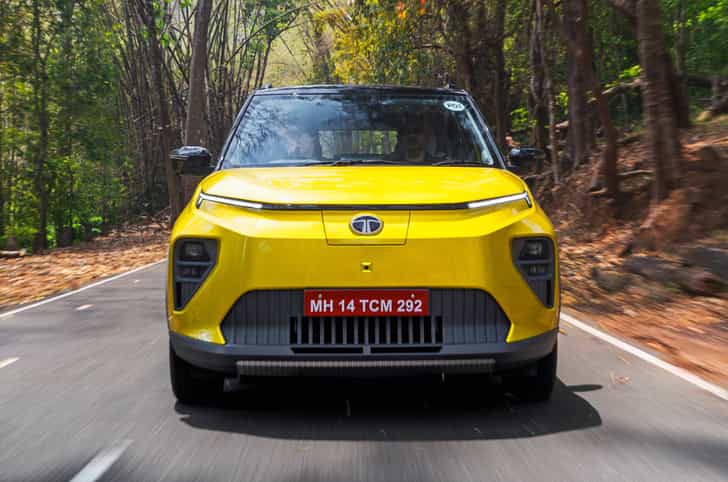
For your usage, we would lean towards the Tata Punch EV Long Range. With mostly city driving and only rare highway use, an EV makes more sense than a petrol car because you will benefit from the low running costs, quiet and effortless driving experience, and minimal maintenance. The updated Punch EV Long Range offers substantially more usable range than you are likely to need day to day, which also gives you a comfort buffer for occasional outstation trips rather than locking you into a strict city only use case. The reason to specifically pick the Long Range even if your current use does not demand it is flexibility. You may not need the extra battery every day, but if your usage changes or you decide to do the occasional road trip, having that headroom makes EV ownership much easier and less stressful.

RAJIV SHARMA
•17hWant to go for EV. Please suggest. MG Windsor or Mahindra XEV 9S or VinFast VF7?

Autocar India
The Mahindra XEV 9S is the most rounded in the range, offering the flexibility of three-row seating. Despite its size, it is very easy to drive, has a healthy real-world range, and is packed with features.However, if you could help us out with your budget and requirements, it'll be easier to recommend a car.
Apoorv Joshi
•17hWe currently use a Renault Kiger as our city commuter car and are now planning to replace it with a sub-4 metre EV. Our usage is quite limited and mostly restricted to city driving, as we already have another car for highway travel. Our budget is within ₹15 lakh.

Autocar India
For city-only use, on a Rs 15 lakh budget, the Tata Punch EV fits best. It is small enough to park anywhere, yet sits high off the ground like your Kiger, so speed breakers and bad patches are easily dealt with. The motor is smooth in traffic, and the real city range is enough for many days of short trips, so you won’t charge often. And the best part is you'll get the fully-loaded top spec Empowered +S 40kWh variant in your budget.Know the trade-offs: fast charging isn’t the quickest, and the rear seat is fine for two adults but tight for three. The boot is smaller than your Kiger's, too. If you want a more spacious back seat and boot, and a bit more real-world range, you can check out the Tata Nexon EV. However, while it can be had in your budget, you'll only get a low to mid variant, so for outright value for money, we'd still recommend the Punch EV.
Sukumar
•7hHi, I am planning to buy a new car, as my monthly running is around 3,000 km, with approximately 80% highway driving and 20% city/rural road usage. I am currently considering the following options: Volkswagen Virtus 1.0 Topline Manual Mahindra XUV 7XO AX7 Diesel Kia Seltos HTK(O) Diesel Manual Could you please suggest which of these would be the best option?

Autocar India
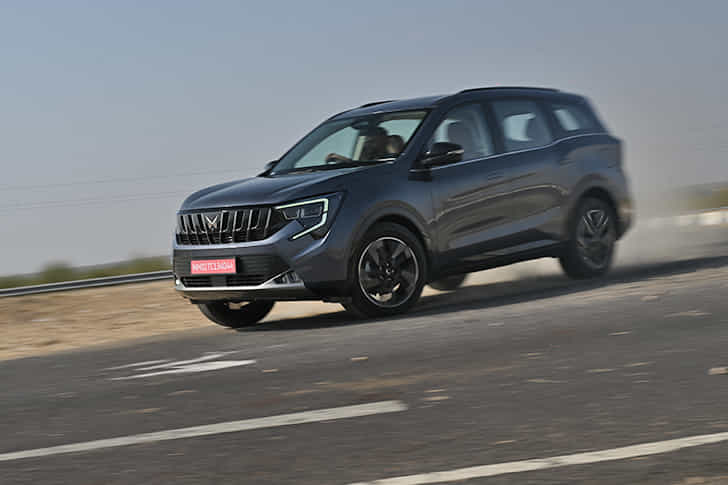
Given 3,000 km a month with 80% highway and some rough rural stretches, the Mahindra XUV 7XO AX7T diesel fits your use best. It feels steady at speed and soaks up broken patches well, which helps on long runs and village roads. The diesel has a strong pull, so overtaking needs less effort even with family and luggage. You also get more space and a higher driving position than either of the other cars, which makes it more practical and easier to drive.Two things to note: it is big in traffic and tight parking, and in the city it will use a more fuel than the smaller Kia. If you want something easier to manage daily, the Kia Seltos HTK(O) diesel MT is the smarter second choice. It’s lighter to drive and still stable on the highway, but you will feel bumps more than in the Mahindra, and rear space is smaller.The Volkswagen Virtus 1.0 Topline MT is nice to drive, but for this much highway running, the petrol will cost more to run and needs more gear changes for quick passes. Overall, pick the XUV 7XO diesel for your usage.
Kaustubh Patankar
•3wHello Team Autocar, I am planning to buy a new car and am currently confused between the Honda Amaze and the Skoda Kylaq. Although these belong to different segments, I am seriously considering both. The variants I am looking at are the Honda Amaze VX CVT and the Skoda Kylaq Signature/Signature Plus. Could you please suggest which one would be the better choice, considering reliability, driving experience, after-sales service, and long-term maintenance costs? My usage will mostly involve highway and out-of-town travel, along with occasional city commutes. I would also appreciate your recommendation on the most value-for-money variant to choose.

Autocar India
With mostly highway and outstation use in mind, we would lean toward the Skoda Kylaq 1.0 TSI automatic, rather than the Honda Amaze VX CVT. The Kylaq will simply feel stronger and more relaxed at highway speeds, rides over bad patches better. It is also very safe and feels solid, which matters on long trips.That pick suits your brief for three reasons. First, the 1.0 turbo engine has enough pull for quick overtakes even with family and bags on board, so highway driving feels easy. Second, the 1.0 automatic uses a proven, reliable, and simple-to-live-with automatic gearbox. Third, the Kylaq’s higher-seating-position suspension makes long hours less tiring than the Amaze's.A few trade-offs to note. The Kylaq’s upfront price and routine service costs will be higher than the Amaze, and Skoda’s service network is not as good as Honda’s, though it has improved. If your use shifts to mostly city and you want the lowest running costs and the widest service reach, the Amaze VX CVT is smoother and easier in traffic, but on highways, it will feel slower, and overtaking requires more effort.Overall, for frequent highway trips and a good driving experience, the Kylaq Signature 1.0 automatic is the best fit for what you want.
Anurag jalan
•6hI currently own a Toyota Fortuner, two Mahindra Thar Roxx models, and an XUV700. I also previously owned a Scorpio N. I am now planning to sell one of my Thar Roxx vehicles, as it is an early production model and has been giving me several issues. My usage involves daily driving in rough terrain and mountainous conditions, so having a capable 4x4 is essential for me. Before the Roxx, I owned a 3-door Thar, and honestly, given my current usage, the 3-door version seems to suit my needs better. I am now confused about what to buy next. Should I go back to a 3-door Thar, continue with the Roxx, or consider another capable 4x4 option better suited for rough and mountain use?

Autocar India
Since you've already owned a Mahindra Thar 3-door, and you believe that it is the best for you, we would recommend you go ahead with it. You already know what the vehicle is capable of, and as an owner, you're aware of all its pros and cons too. There are no other options in the market that can deliver what the Thar can.The Maruti Jimny is smaller, very tough, and surprisingly capable, although its engine performance is no match for the Mahindra. The Force Gurkha is capable off-road, but lacks the Thar's sophistication, and feels too crude in comparison. Other monocoque AWD options include the Toyota Hyryder, Maruti Grand Vitara, and Victoris, Mahindra XUV 7XO, and dual-motor EV options like the Vinfast VF7 and Tata Harrier EV. Do note that while all these models will get you through sticky situations and handle mild trails easily, none are as good off-road as the Thar. All things considered, go for the Thar; it seems to be the best fit for you.
Need expert advice?
Ask the Autocar community and experts.