Autocar India
23h

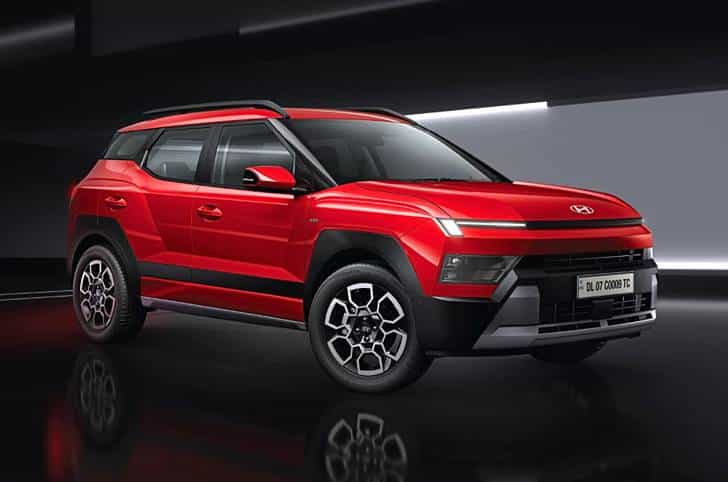
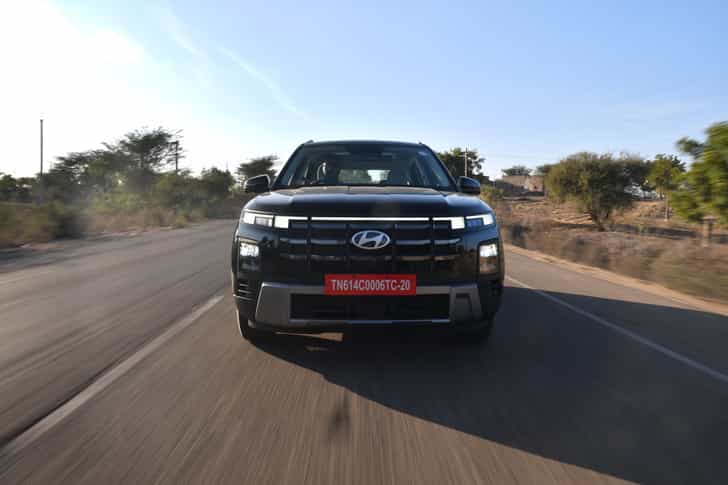
Is the Hyundai Creta getting a facelift or an all-new generation? Will the new Creta get hybrid technology, and when is it expected to launch? Will the new Creta and Seltos look similar? Should I wait for the new Creta or buy the new Seltos?

Verified
1h

Yes, the Hyundai Creta is going to be replaced by an all-new generation, rather than just receiving another facelift. The third-generation Creta is expected in India in 2027, and test cars have already been spotted. It will move to the newer K3 platform, which also underpins the new Seltos, and is expected to be larger and more sophisticated than the current car.There is also a strong possibility of a strong-hybrid powertrain for the new Creta. Hyundai is working on a hybrid based around its 1.5-litre petrol engine, although the exact launch timing and specifications haven't been confirmed yet.As for the styling, don't expect the Creta and Seltos to look identical. They will share the K3 platform and some design themes, but Hyundai and Kia will give them distinct identities. The test Creta does appear to borrow some cues from the Seltos, particularly around the grille, but the headlights and other elements are different.If you're not in a hurry, waiting for the new Creta makes sense, particularly if you're considering a strong hybrid. You'll get a newer platform, larger dimensions, more features and potentially the hybrid option.However, the new Kia Seltos is already here and is a more compelling proposition than waiting indefinitely. It has moved to the K3 platform, grown in size, gained more space and improved ride comfort, while retaining its wide choice of powertrains.

VehicleHyundai Creta
VehicleKia Seltos
4d

Hi Team, good day. I currently own a Tata Altroz petrol manual and am planning to change my car due to its poor mileage and low power. I am considering two options: the Maruti Suzuki Brezza VXi CNG and the Kia Sonet HTK(O) diesel manual, mainly for better mileage. My daily running is around 80km, with 20km in the city and 60km on the highway, about 4–5 days a week. I also travel to my hometown once every three months, covering around 800km on a round trip. Which of these two would be better suited to my usage? If CNG is the better option, can the Brezza be driven only on CNG for better mileage? Will regular CNG usage cause premature damage to the engine head or cylinder bore? I would also like to know about the service requirements and long-term reliability of both options. Additionally, will diesel-related restrictions or norms be implemented in Chennai as well? Please guide me on which car would be more suitable for my usage and whether these two are good choices.

Verified
3h

With 80km a day and a mix of city and highway driving, the Kia Sonet diesel manual is the better fit. The diesel engine will give you strong fuel efficiency on the highway, good pulling power for overtakes and a more relaxed driving experience at higher speeds. The Sonet is also a more powerful and enjoyable car to drive than the Maruti Suzuki Brezza CNG, which will feel underpowered on highways and during overtakes.CNG is best suited to city-heavy usage where fuel savings are maximised. On highways, the savings are not as significant, and refuelling with CNG also requires a bit of planning. You can run the car mostly on CNG, but it is recommended to run on petrol occasionally to keep the fuel system healthy. Modern factory-fitted CNG systems are reliable, and there are no widespread issues with head or bore damage when used as intended.Go for the Sonet diesel manual. It will give you the best balance of power, efficiency and long-term suitability for your usage.

VehicleKia Sonet
VehicleMaruti Suzuki Brezza
3d

I’m a doctor, and my daily driving is currently around 65km, with an almost 50:50 mix of city and highway use. This could increase to 80–100km a day in the future. I have booked a Maruti Victoris ZXi Strong Hybrid for Rs 20.5 lakh on-road after offers, but I am still confused about whether to consider the Tata Punch EV, Maruti e Vitara or any other option. Long-term reliability and keeping running costs manageable are important, as the car will be owned for at least 10 years. I am also concerned about ethanol blending in petrol. My first choice was the Kia Seltos diesel automatic HTK. Considering the expected usage and long-term ownership, which option would make the most financial sense?

Verified
4h

Go for the Maruti Suzuki Victoris ZXI Strong Hybrid CVT. With your daily running of 65-100km and a 50:50 city-highway split, the strong hybrid is the most sensible choice. It will deliver excellent fuel efficiency in both city and highway conditions, keeping running costs low over a long ownership period. Maruti’s service network and proven reliability also make it a safe long-term bet.The Tata Punch EV and Maruti Suzuki E Vitara are good EVs, but with your usage pattern and the possibility of increasing daily running, the hybrid offers greater flexibility without the need to plan charging stops.On ethanol blending, there is no need to worry. Modern engines are engineered to handle E20, and there is no official roadmap beyond that. The Victoris hybrid is the most financially sensible and hassle-free choice for your usage and long-term ownership plans.

VehicleMaruti Suzuki Victoris
VehicleMaruti Suzuki e Vitara
VehicleTata Punch EV
Maruti Suzuki Victoris
5d

Hi, I want to upgrade from my 9 year old Honda WR-V to an electric SUV. My driving is mostly in the city, with only occasional highway trips, and the total monthly running does not exceed 1,000km. I like the Mahindra BE 6 Sporteq, but it seems impractical from a utility perspective once the excitement of owning a new car wears off. I am therefore looking for an EV SUV in the Rs 20-22 lakh range with good second-row space, strong design appeal and plenty of features. I would prefer something new on the block, as models like the Creta have become extremely common and feel less fresh. I also like the Harrier EV, but the features I want are available only in variants priced above Rs 25 lakh. Please suggest something new and worthwhile. I can stretch the budget to Rs 24 lakh if most of these requirements are met.

Verified
4h

Based on your requirements, the Tata Sierra EV is the recommendation. It offers a genuinely fresh design, a spacious and comfortable second row, and a premium cabin experience that feels new and different from the usual options. The Sierra EV also delivers a good balance of range and practicality for your predominantly city usage with occasional highway trips. The Tata Harrier EV is a strong product, but as you rightly pointed out, the feature-rich variants start to push well beyond your budget. The Sierra EV, on the other hand, gives you a more distinctive ownership experience with added practicality. The 63kWh version should be adequate for your usage, but if you want a bit more buffer in terms of range for your highway trips, then stretch for the 75kWh version.

VehicleTata Sierra EV
VehicleTata Harrier EV
5d

I’m a first-time car buyer with very limited driving experience. I’ve only driven an SUV like the Mahindra KUV100 a few times in the past and have never driven a sedan before. I don’t really need a car for my daily commute, but I’d like to have one for long drives, convenience and occasional trips. I’m strongly considering the new Skoda Slavia or Volkswagen Virtus 1.0L MT because I really like both cars. Given my limited driving experience and the fact that I’ve never driven a sedan before, does it make sense to choose one of these as my first car? Would the Slavia or Virtus be manageable for someone with my level of experience, particularly when it comes to judging the car’s size, parking, manoeuvring in traffic and driving on highways?

Verified
5h

Yes, the Skoda Slavia or Volkswagen Virtus 1.0 TSI manual is a perfectly sensible first car, even with limited driving experience. Both cars are well-balanced sedans with good visibility, predictable handling and a forgiving nature, which makes them easy to live with. The 1.0 TSI engine is punchy enough for highway driving but not intimidating, and the manual gearbox is light and easy to operate.The main adjustment will be the lower seating position compared to an SUV like the Mahindra KUV100, which can initially make judging the car's extremities a bit trickier, especially in tight parking situations. However, both cars are not excessively large, and with practice, you will quickly get used to their dimensions. Parking sensors and a rear camera, which are available on higher variants, will also help build confidence. If you are genuinely concerned about parking and manoeuvrability, you could consider the Skoda Kylaq or Volkswagen Taigun / Skoda Kushaq 1.0 TSI instead. However, if you spend time practising, the Slavia or Virtus will not be difficult to get used to.

VehicleSkoda Slavia
VehicleSkoda Kodiaq
VehicleSkoda Kylaq
VehicleVolkswagen Virtus
VehicleVolkswagen Taigun
3d

I am currently driving an 11-year-old Honda Brio manual in Pune and am looking to upgrade to a naturally aspirated petrol automatic SUV with either a CVT or torque-converter automatic. I do not want a sunroof, and the budget is under Rs 18 lakh. My daily running is around 10-12km, with occasional weekend drives and one or two annual trips of around 500-600km. I have shortlisted the Maruti Suzuki Grand Vitara Zeta AT and Honda Elevate VX CVT, although the Elevate does come with a sunroof. Most of the driving will be in the city. Between the two, which would be more fuel-efficient, particularly with E20 petrol, offer good ride quality, and be reliable and easy to maintain over the next 10-15 years? Are there any other vehicles worth considering? I am not interested in EVs or petrol DCT/DSG powertrains. Thank you.

Verified
6h

Go for the Maruti Suzuki Grand Vitara Zeta AT. It is the better fit for your requirements. The naturally aspirated petrol engine paired with the torque converter automatic is a proven, reliable combination that will serve you well over a long ownership period. The Grand Vitara also offers a comfortable ride, good rear seat space and a spacious cabin. Maruti's service network and low maintenance costs further strengthen its case for long-term ownership.The Honda Elevate VX CVT is also a good car, but Honda's CVT is not as refined as a torque converter automatic. The Grand Vitara's automatic is smoother and more predictable in everyday driving. Fuel efficiency between the two will be broadly similar, with the Grand Vitara having a slight edge in real-world conditions.Given your preference for a non-sunroof variant, the Grand Vitara Zeta is the more suitable choice. The Honda Elevate VX comes with a sunroof, which you specifically want to avoid. Overall, the Grand Vitara Zeta AT is the more complete package for your needs.

VehicleMaruti Suzuki Grand Vitara
VehicleHonda Elevate
1d

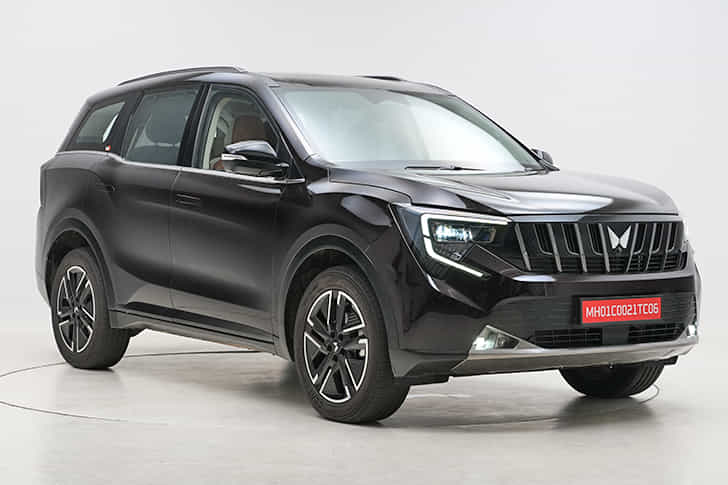
I’m 6’2” and my top priority is a comfortable driving posture, especially good thigh support and seating position. My current Grand i10 has become quite uncomfortable during longer drives. I absolutely loved the seating position and overall comfort of XUV 700 and I can say it is probably the best car that I have driven. However, I’m unsure about managing something that big in size in Bangalore traffic. I have taken the test drive of the new Tekton, but still found the seating position a bit awkward. Should I simply go for the XUV 7XO, or are there other petrol options that offer similar seating comfort while being easier to manage in the city? I want the car mostly for weekend city drives, with an outstation trip once every 2 months. My total running is around 3,000-4,000 km/year, so I am not considering a diesel car.

Verified
16h

Go for the Mahindra XUV 7XO petrol automatic. Your priority is clear: a comfortable driving position with good thigh support and a commanding seating position. The XUV 7XO delivers exactly that, and at 6’2” you will appreciate the generous seat travel, supportive cushioning and the overall sense of space.Your concern about Bangalore traffic is understandable, but the XUV 7XO is not as intimidating as it looks. The steering is light at low speeds, the visibility is good and the automatic gearbox makes stop-go traffic far less tiring. Once you get used to the dimensions, it is perfectly manageable in the city.The Tekton is a good car, but the seating position is not as commanding and the overall comfort is not at the same level as the XUV 7XO.

VehicleMahindra XUV 7XO
VehicleNissan Tekton
1d

Hi. I am looking to buy a car for myself and am confused between Kylaq 1.0 prestige plus vs Kushaq 2026 prestige. I need to travel from Hoskote to Whitefield in the morning, then return to my office at Varthur Kodi, and after work, travel back home to ITPL, Whitefield. This is my schedule from Monday to Saturday. I also have to take intermittent night duties as I am a doctor. I have a Honda Elevate in family and am concerned regarding turbo lag with Kylaq 6-speed. Is it advisable to upgrade to Kushaq 1.0 AT by spending additional 5.5 lakh. I also came across a social media post claiming that the Kylaq’s 6-speed automatic can be difficult to manoeuvre in bumper-to-bumper traffic. Please guide me on which would be the better choice for my usage.

Verified
17h

The Kylaq 1.0 TSI Prestige+ AT makes more sense for your requirements. Your daily commute involves significant city driving, so the compact dimensions and torque-converter automatic make it easier to manage Bengaluru traffic. The 1.0 TSI does have some initial turbo lag, but it isn't significant enough to be a deal-breaker. Once the turbo is on boost, the engine has good mid-range performance, while the automatic makes progress smooth and effortless.The Kushaq 1.0 AT is the more mature and comfortable car, and its new 8-speed torque-converter automatic is a considerable improvement, particularly in low-speed traffic. It also offers more space and feels more substantial. However, spending around Rs 5.5 lakh more is difficult to justify when the Kylaq already meets your requirements well. The presence of an Elevate in the family also reduces the need to pay extra for the larger SUV.

VehicleSkoda Kylaq
VehicleSkoda Kushaq
VehicleHonda Elevate
Skoda Kylaq
Skoda Kylaq
1d

Hi AutoCar team, I live in Bangalore in a family of three with 2 adults and a 5 year old. My commute will be 3 days in a week with 16-16 km on the Outer Ring Road and am planning to go on weekend trips near Bangalore on highways with family luggage. I may sometimes go on hills like Ooty and Munnar but the car is not primarily for hill drives. Will a new Seltos NA IVT feel underpowered with these requirements and load conditions? Is CVT drone too much and at what speed and RPM does it become unpleasant. Also, how is it compared to Honda City CVT drone and insulation? What are the other alternatives?

Verified
18h

The Kia Seltos naturally aspirated IVT is actually a very sensible choice for your usage. Your commute on Bangalore ORR is stop-start, and the IVT is smooth and stress-free in traffic. For weekend highway trips with family and luggage, the 1.5 naturally aspirated petrol has enough power to cruise comfortably and overtake when needed. It will not feel underpowered in normal driving, but it is not a performance engine, so overtakes require a little planning when fully loaded.CVT drone is most noticeable when you accelerate hard and hold the throttle, typically during long overtakes or on steep inclines. However, the Seltos is better insulated than the Honda City, so the engine noise is less intrusive in the cabin. In everyday driving, it is not a major issue.Alternatives worth considering are the Skoda Kushaq 1.0 TSI automatic and the Mahindra XUV 3XO automatic. The Kushaq’s turbo petrol engine offers stronger mid-range performance for highway overtakes, and the torque converter automatic is smooth. The XUV 3XO is spacious and feature-rich, but the boot is smaller than the Seltos, which matters for family trips.Overall, the Seltos IVT is a well-balanced choice for your usage. If you want a bit more performance for highway driving, the Kushaq 1.0 TSI automatic is worth a test drive.

VehicleKia Seltos
VehicleSkoda Kushaq
VehicleMahindra XUV 3XO
VehicleHonda City
2d

Hello, I have been riding a 125cc bike for quite a long time now, and I’m looking to upgrade to a better-looking bike with good performance. I’m emotionally attached to my vehicle and take very good care of them, so I’m looking for something that I can enjoy and keep for a long time. Most of my riding is within Pune city traffic, but I would also like to start exploring longer rides and weekend trips, which I haven’t really done so far. I’m not very familiar with all the good options currently available in the market. I have looked at the Harley-Davidson X440 and a couple of options from Triumph, but I’m still not sure what one would suit me the best. I would really appreciate your guidance in selecting the right bike based on my riding requirements, preferences and long-term ownership perspective.

Verified
21h

The Harley-Davidson X440 (we'd highly recommend stretching for the better looking & finished T, if you can) is a very likable machine and will offer you a big step up from your current 125cc machine. It is a relaxed roadster with a torquey single-cylinder engine and good comfort so if you want this sort of experience, it is one of the most capable options. Should you wish to opt for a sportier option, then you should look at the 350cc KTM 390 Duke and RE Guerrilla 450. The KTM is sharper and more frantic compared to the relatively tamer Guerrilla, but you could even prefer the RE for that very reason. Triumph's 350cc single-cylinder offerings are a good middle ground between the relaxed air-cooled roadsters and the sporty liquid-cooled nakeds. Of all the Triumphs, the Scrambler is the most versatile and comfortable and we'd recommend it also because if you want to start off-road riding, its a friendly machine. These are all starkly different bikes and a test ride of each will help you understand which one suits you best.

Harley Davidson X440
Triumph Scrambler 400 X
Royal Enfield Guerrilla 450
KTM 390 Duke