Autocar India
21w

Hi, My monthly driving distance is around 1,000 km, mostly on highways, and safety is a priority for me. Automatic transmission is also a must. My budget is ₹12-13 lakhs. Could you please advise me on the best car for my requirements?

Verified
20w

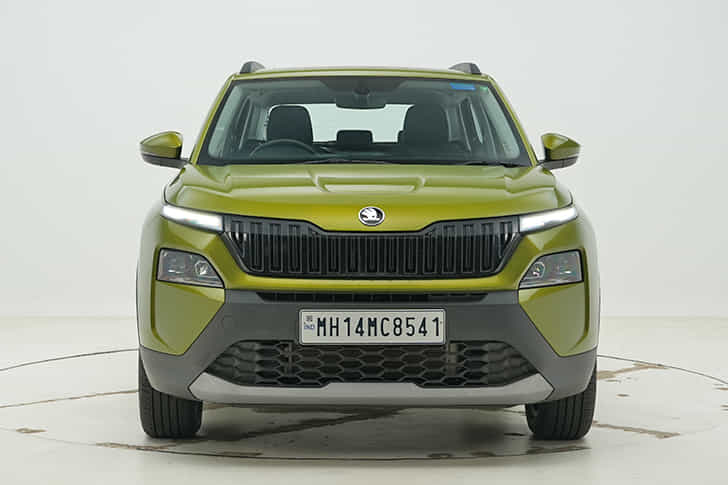
Mostly highway use, about 1,000 km a month, safety first, and an automatic in the Rs 12-13 lakh range, in that brief, we would suggest the Skoda Kylaq Signature. Its torque converter is much smoother than an AMT or DCT, so city driving feels easy, and performance from the 1.0 TSI makes highway overtakes effortless. The Kylaq has a 5-star crash score from Bharat NCAP and feels steady at highway speeds, which builds confidence. It also rides well over broken patches, so you are not tossed around.

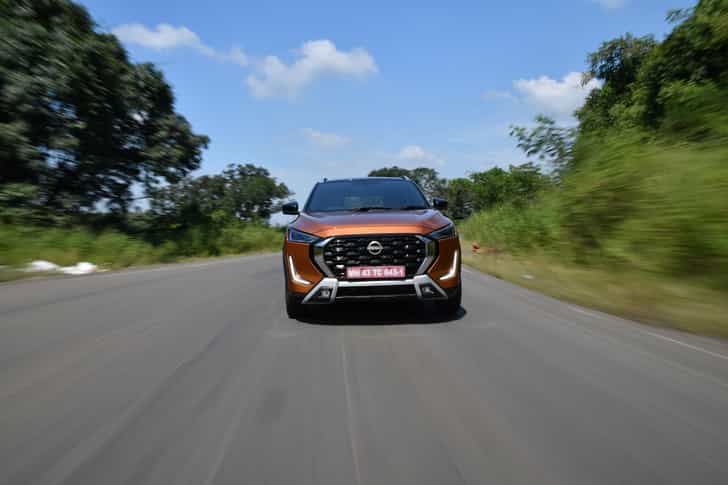
Two things to keep in mind: while the front seats are comfy and supportive, space in the back seat is a bit tight. It makes up for it with a large boot and a low loading lip. If you want more space, look at the Nissan Magnite Tekna Turbo CVT, which has a 5-star safety rating from Global NCAP.

Overall, for highway-heavy use with safety at the top, the Kylaq lines up best in your budget.
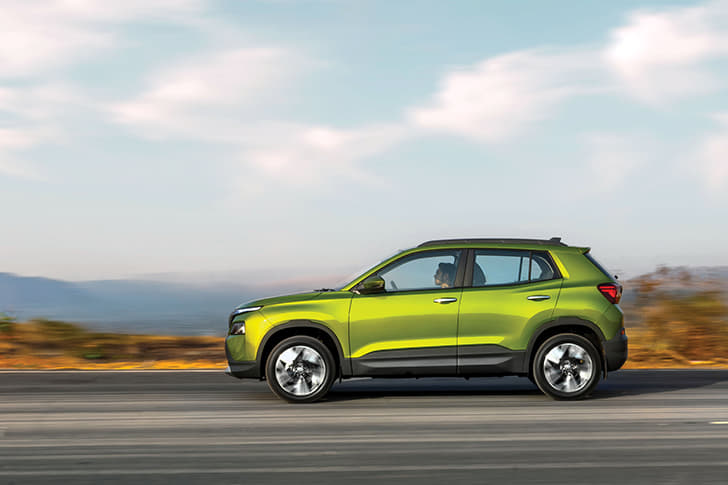
Skoda Kylaq

Skoda Kylaq

20w

Honda Elevate will also be a good choice.

20w

Petrol car for highway doesn't make a great choice. Go for Kia Sonet diesel, Nexon Diesel or Venue diesel. These three makes more sense than a petrol suv.

20w

For 13 lakhs ?

20w

Best upgrade from swift vdi 2013 model to a fuel efficient affordable maintenance suv. Use of 400 km per month (70% highway and 30% city)

20w

Hi, I would like to upgrade from 2013 swift vdi into a car with most fuel efficient, affordable and less maintenance. My usage will be around 500 km per month (70% highway and 30% city). Please suggest

20w

My monthly running is 200/300 km per month .Not far use. In daily life, but for functional and occasional times it's use is that. Which car is best for me in automatic, budget about 20L

20w
Creta owner · 19,800 km

Had issues with Skoda Kylaq

More posts on similar cars

1d

My budget is Rs 15 lakh. I will be the primary user of the car, although five people may occasionally travel in it. I have shortlisted the Skoda Kylaq and Renault Kiger, with the latter being considered with both the turbo-petrol and CVT options. My daily usage will be limited to around 8km, with occasional long-distance trips. Considering that the Kylaq’s rear-seat space is not particularly comfortable for three adults and that the Kiger’s RPM fluctuates even when driving at a constant speed, which of the two would be the better choice? Please also consider E20 compatibility while making the recommendation.

Verified
17h

Go for the Skoda Kylaq. With your low daily running and occasional long trips, the Kylaq's 1.0 TSI petrol engine paired with the 6-speed torque converter automatic is a better fit than the Renault Kiger's turbo petrol with CVT. The Kylaq's engine is more refined, more responsive and better suited to highway driving, while the torque converter automatic feels smoother and quieter than a CVT. The Kiger's CVT can feel inconsistent at times, which is likely what you are noticing as unstable RPM at constant speeds.On the rear seat, the Kylaq is not the widest car in the segment, but it is still a comfortable 5-seater for occasional use. The Kiger is slightly narrower and does not offer a significant advantage in rear seat space. Both cars are E20 compliant, so there are no concerns on that front.The Kylaq is the better all-rounder here. It offers a more enjoyable driving experience, a smoother automatic gearbox and a more refined engine, which will make a bigger difference over long-term ownership than a marginal difference in rear seat width.

VehicleSkoda Kylaq
VehicleRenault Kiger
1w

I am considering the Jimny Automatic and would like to understand how it performs on highways, particularly how stable and confidence-inspiring it feels while cruising at around 100kmph. I have heard some owners mention that it can feel a little wobbly at this speed. I am not expecting sporty performance, but highway stability and confidence are important to me. The Jimny’s narrower width is actually a positive for me because of tighter parking spaces. I currently drive an Ertiga ZXi+ Petrol Manual and cover around 6,000km a year. Jimny owners and drivers, please share your real-world experiences, especially on long drives and expressways.

Verified
8h

The Maruti Suzuki Jimny is a very different proposition from your Ertiga. It is a proper off-road SUV with a narrow body, tall stance and a short wheelbase, and that fundamentally shapes its highway behaviour. At 100 km/h it is stable enough, but it does not feel as planted or as confidence-inspiring as a wider, lower SUV like the Brezza. The Jimny is light and tall, so crosswinds and passing trucks can be felt more, and the steering is not as precise at higher speeds. What some people describe as a “wobble” is really the car’s natural tendency to feel a bit more lively on the road at speed, especially on uneven surfaces.That said, it is not unsafe or unstable – it is just a different kind of vehicle. The Jimny is happiest at a relaxed cruise, and it rewards you with its compact size, excellent visibility and genuine off-road ability. If your priority is highway stability and long-distance comfort, the Jimny is not the best choice. If you value its compact dimensions and off-road capability, and you are willing to drive at a more relaxed pace, it can be a very satisfying car to own.

VehicleMaruti Suzuki Jimny
VehicleMaruti Suzuki Ertiga
VehicleMaruti Suzuki Brezza

Popular discussions right now

2d

Help me choose the right car for my usage. Please be practical and challenge my assumptions. My situation: I am 31 and work as a software developer. I currently work from home in Balsane, Dhule, but I am moving to Mumbai around March. My wife and I are expecting a baby in February. My parents live in a village where local transport is poor. My Mumbai office is near Powai, but parking is difficult. I prefer a manual car. Usage: My current running is around 10,000 km per year, but it may increase. I travel between Mumbai and Balsane, which is around 400 km one way, around 5-7 times a year, along with Dhule/Sakri and local trips. I also drive around Mumbai on weekends. The AC is usually on, and on long trips, the car will have my wife, baby, and luggage. Budget: Rs. 6-9 lakh on-road. I am willing to spend more only if it is genuinely worth it. Shortlist: - Tiago XE Petrol - Punch Pure+/Smart Petrol - Punch Pure+/Smart CNG - Brezza LXi turbo-petrol Please tell me: 1. Which one should I buy and why? 2. Petrol vs CNG for my usage? The CNG premium is around Rs. 1 lakh, and the nearby village pump may open around Diwali, but this is not guaranteed. 3. What real-world mileage can I expect with the AC on? 4. Please consider loan interest, fuel costs, maintenance, depreciation, and resale value. 5. Is the Brezza worth the extra money? 6. Give me one final choice and tell me what I should avoid.

Verified
2d

The Brezza LXI Turbo is far superior to the Punch and Tiago as far as smoothness, performance, and cabin space are concerned. It is also backed by Maruti's widespread support network, and the ownership experience is likely to be fuss-free. The on-road cost of the Brezza LXI will fall within your Rs 9 lakh budget, and even though you might miss a few features, it still feels worth opting for. Alternatively, you could also consider the Maruti Dzire VXI MT for its large boot, comfy ride and strong fuel efficiency.

VehicleMaruti Suzuki Brezza
VehicleTata Punch
VehicleTata Tiago
VehicleMaruti Suzuki Dzire

Posted on: 27 Apr 2026