autocar-logo
Delhi

I am planning to buy my first new car with an automatic transmission and expect to drive around 20,000 km annually for the next 10 years. It will be mainly used in Mumbai’s bumper-to-bumper traffic with daily office commutes of about 80 km, weekly family outings, and occasional long trips. I am also considering the future risk of diesel restrictions like those in Delhi NCR. While I like the Victoris' strong hybrid top trim, the rear seat comfort is a concern for my family. Although I find the Syros, Kylaq, and 3XO top trims comfortable. I am unsure about their long-term cost effectiveness - which option would be the right choice for me?

Asked by: Vijay

Firstly, we don’t think you should worry about diesel restrictions on new cars in Mumbai. The current diesel engines are quite clean, and if there is a ban in the future, it will only be the older diesels that will be taken off the road. 

The Maruti Suzuki Victoris hybrid would have been a good choice. But as you said and we have pointed out too in our tests, the boot space is compromised because of the hybrid batteries, and the rear seats are not very spacious. 

The other cars you have listed are all turbo-petrol petrol, so they won’t be economical and will burn a hole in your pocket if you drive 80km every day. Since you have shortlisted some compact SUVs, we suggest you look at the Hyundai Venue diesel. It has just been launched, so it's very fresh and will age well over a 10-year lifecycle, and the diesel engine is very efficient and keeps your running costs under control.
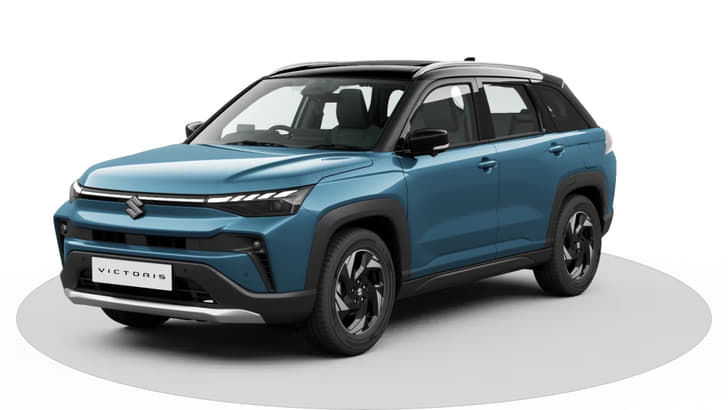
 

Maruti Suzuki Victoris

Maruti Suzuki Victoris

Answered by
AI
Autocar India team22 Dec' 25

Latest questions

Asked by: Vijay

I am planning to buy my first new car with an automatic transmission and expect to drive around 20,000 km annually for the next 10 years. It will be mainly used in Mumbai’s bumper-to-bumper traffic with daily office commutes of about 80 km, weekly family outings, and occasional long trips. I am also considering the future risk of diesel restrictions like those in Delhi NCR. While I like the Victoris' strong hybrid top trim, the rear seat comfort is a concern for my family. Although I find the Syros, Kylaq, and 3XO top trims comfortable. I am unsure about their long-term cost effectiveness - which option would be the right choice for me?

Firstly, we don’t think you should worry about diesel restrictions on new cars in Mumbai. The current diesel engines are quite clean, and if there is a ban in the future, it will only be the older diesels that will be taken off the road. The Maruti Suzuki Victoris hybrid would have been a good choice. But as you said and we have pointed out too in our tests, the boot space is compromised because of the hybrid batteries, and the rear seats are not very spacious. The other cars you have listed are all turbo-petrol petrol, so they won’t be economical and will burn a hole in your pocket if you drive 80km every day. Since you have shortlisted some compact SUVs, we suggest you look at the Hyundai Venue diesel. It has just been launched, so it's very fresh and will age well over a 10-year lifecycle, and the diesel engine is very efficient and keeps your running costs under control.
AI
Autocar India team
22 Dec' 25
Asked by: Prasad Menon

I am interested in buying a Bolero Neo, but my running is very low - only about 100 km every 2 to 3 months. Is it viable to buy it, especially since my son also likes that car?

If you and your son like the Mahindra Bolero Neo, you can go ahead and buy it. It’s a solid car and will take the potholes and bad roads in Mumbai quite easily. It’s also quite easy to drive, but lacks the features and polish of other SUVs. However, with your limited running, you will need to do a short highway drive of around 25-30 minutes every month. This will keep regenerating your DPF, making it soot-free and preventing it from clogging.
AI
Autocar India team
22 Dec' 25
Asked by: Amar Joshi

I am seeking expert advice on DPF management for the Mahindra 3XO Diesel AT, as my daily usage is 13 km each way in heavy Powai traffic in Mumbai. How often should I drive on the highway, and what are the ideal speed or RPM range, trip distance, and monthly frequency required to ensure effective soot regeneration?

Yes, you are right, your short drive in Mumbai traffic won’t allow the diesel particulate filter (DPF) of Mahindra XUV 3XO to reach the temperatures. It needs to ‘light-off or regenerate properly to burn off the soot which will accumulate in your DPF and trigger a malfunction warning. The way to raise the exhaust temperature and subsequently heat the DPF to its ‘light-off’ point is to run the engine under a steady load. You should plan a long drive at least once a month, with around half an hour of continuous driving at around 50-60kph. Use a gear that keeps the engine between 2,000 to 2,500 rpm and drive steadily without hard acceleration or braking. The aim is to drive consistently so that the exhaust temperatures can stabilise and you can complete the regeneration process without interruption. Since you live in Powai, the Eastern Expressway is not far away and can be a convenient stretch for you to clear your DPF periodically.
AI
Autocar India team
22 Dec' 25
Asked by: Rajesh

I am looking for my first EV car. My requirements are a spacious cabin, a usable 3rd row, and good storage space that can fit a folded wheelchair, along with reliable service - please suggest suitable options. Thank you.

Given your requirements, the only options that are not wildly expensive are the Mahindra XEV 9S and the Kia Carens Clavis EV. Both are three-row SUVs that are pretty spacious and practical, but they differ in what they offer.The Mahindra car comes across as the more premium of the two. It’s larger, has an imposing road presence and comes packed with technology and features. It wins the spec-sheet war and is a very comfortable, compelling option. However, once you consider how the car will be used, the Kia Carens EV could be the better everyday car.One of the most significant factors is access to the cabin. The Carens Clavis EV sits lower, making getting in and out easier. Your requirement for a wheelchair suggests that someone with limited mobility will be using the car, and this is why the step-in height becomes something you notice every single day and a very important factor.Also, the third row, too, is slightly more practical and usable in the Kia car. When the third row is folded down, the boot is spacious enough to accommodate a wheelchair. The lower floor also makes loading a wheelchair easier.On the ownership side, Mahindra’s EVs have made rapid progress and the products are far more polished than before, but some owners still report software-related hiccups. Kia’s EVs, by comparison, are better sorted, suggesting a more predictable ownership experience.Both cars are easy to drive; the XEV 9S offers a better ride and is more refined, but the Carens Clavis EV feels less cumbersome in tight spaces.
AI
Autocar India team
22 Dec' 25