Latest questions answered by experts
Gopi
•1wI am planning to buy an electric car for mixed usage, including city driving, highway trips, and occasional hill drives. I have shortlisted the Tata Punch EV, Tata Nexon EV, and MG Windsor EV, but I am confused about which one would be the best choice. My key considerations are real-world driving range, highway performance, hill driving capability, and overall value for money. Could you please suggest which EV among these would suit my needs best and which variant I should choose?

Autocar India
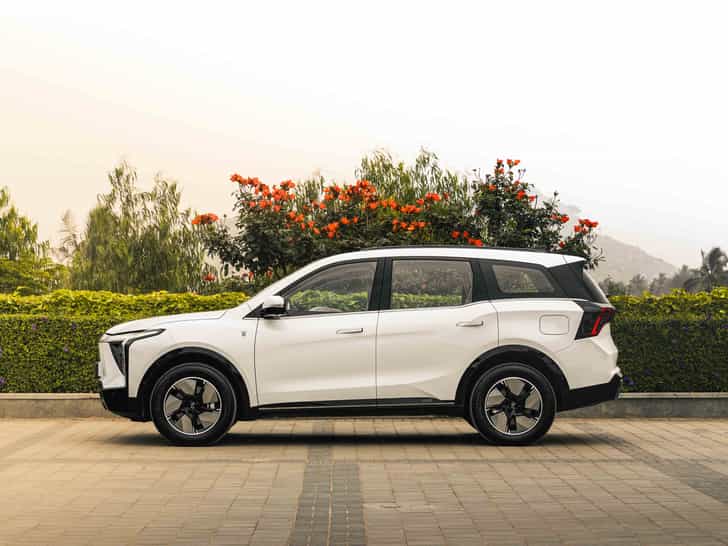
Since your usage is a mix of city and highway driving, with occasional trips to the hills, it would be advisable to opt for the largest battery pack available. Among your chosen options, the standard MG Windsor has the smallest battery at 38kWh, the updated Tata Punch EV can be had with a 40kWh battery, and the Tata Nexon EV gets a 45kWh unit. MG has also introduced the Windsor Pro with a 52.9kWh battery pack, but it comes at a premium of almost Rs 2 lakh over the standard Windsor.If you are willing to stretch your budget, the Windsor Pro will offer the longest real-world range of the three. In our testing, the standard 38kWh Windsor managed a combined real-world range of 308km, with an efficiency of 8.1km/kWh. With a significantly larger battery, the Windsor Pro should be able to deliver around 400km in real-world conditions. Naturally, the range will drop when climbing hills, but you will be able to recoup some energy on the way down using the regen modes. If you are on a tighter budget, then the Nexon EV with the 45kWh battery is a good choice too. In our testing, it delivered an efficiency of 7.79km/kWh and a real-world range of around 350km.
Shubh
•1wHi Autocar Team, I am planning to buy a compact SUV with an automatic transmission and have shortlisted the Mahindra XUV 3XO TGDi Automatic and the Skoda Kylaq Signature+ Automatic. However, I am finding it difficult to make a final decision. My usage will be mostly city driving in Delhi NCR, with occasional highway trips, and an annual running of around 14,000-15,000 km. I am looking for a comfortable, reliable, and safe car that is also enjoyable to drive. The XUV 3XO appeals to me for its performance and features, but I have concerns about long-term reliability, mileage, and refinement. The Kylaq, on the other hand, seems strong in build quality, driving dynamics, and refinement, but offers fewer features and is slightly more expensive. Could you please advise which car has the better automatic gearbox for city use, how they compare in real-world mileage, ride comfort on bad roads, and long-term reliability? Which would be the better overall ownership choice for the next 6–8 years?

Autocar India
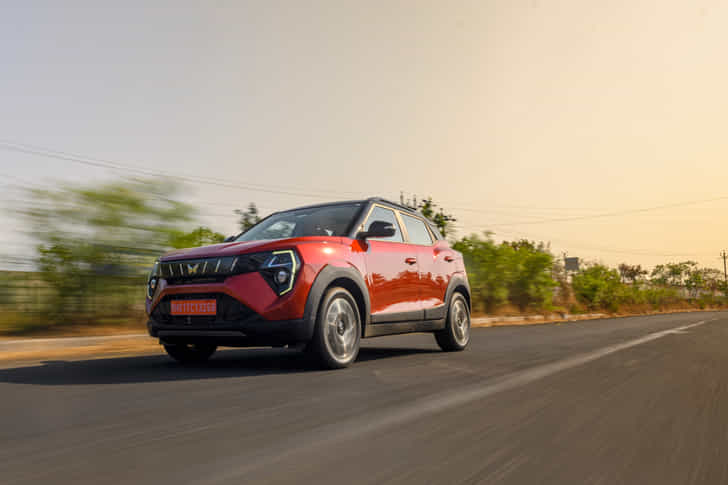
Both the Skoda Kylaq and the Mahindra XUV 3XO are great choices, and picking between them really depends on where your priorities lie. In our comparison test, we found the Kylaq to be the more engaging car to drive, while also delivering a more absorbent ride than the XUV 3XO. Where the 3XO edges ahead is in performance. It is noticeably quicker in outright and rolling acceleration, and also has a smoother engine. In terms of transmissions, both use Aisin 6-speed units and are excellent in city and highway use, though the Kylaq gets paddle shifters for added control. Therefore, if driving engagement is a priority for you, the Kylaq is the one to have.That said, the 3XO has the plusher interior and offers more room for rear passengers. There is some give and take in terms of features, but overall, the 3XO feels like a better value for money. The best way to make your final decision is to take extended test drives in both vehicles to see which you prefer.
Pradeep kukreja
•1wHello Autocar Team, I am planning to buy a new car with a budget of around ₹12-14 lakh. I am considering the Hyundai Venue HX5 DCT, Kia Sonet HTX 1.0 DCT, Maruti Suzuki Brezza ZXI AT, and Tata Nexon EV 45 Creative. My primary car is an EV (MG Windsor), which I use daily for around 60-65 km. This new car will be my second vehicle, with a daily running of around 20-25 km. I did not like the road presence of the Venue much, although I liked its cabin. The Sonet has a strong road presence but feels a bit dated inside. The Brezza feels outdated both inside and outside, although it offers Maruti’s reliability. I also liked the Nexon EV, but the variant within my budget misses some features like rear AC vents. I am quite confused between these options and am specifically looking for an automatic variant. Could you please guide me on the best choice?

Autocar India
Since you already have an electric MG Windsor, it would be advisable to get a petrol vehicle that can be used for longer journeys as well as the short commutes you mentioned. Among your choices, the Hyundai Venue is a very good pick. Although it shares its powertrain with the Kia Sonet, the Venue is based on a more modern platform. In the HX5 trim you’ve chosen, it comes equipped with most of the essential features, including a 10.25-inch infotainment screen and even a sunroof.A facelift for the Maruti Suzuki Brezza is expected, but the timeline is not yet confirmed. Sources suggest it could arrive around the festive season this year or even early next year. The exterior is not expected to get a radical makeover, but we do expect it to receive the 1.0-litre turbo-petrol engine and 6-speed torque-converter automatic that does duty in the Fronx. If you are willing to wait, it could be a good option.
Abhijit Saha
•1wHello Autocar Team, I am looking to buy a C-segment SUV within a budget of around ₹17-18 lakh. My driving is approximately 70% in the city and 30% on highways, with a monthly running of around 1,000 km. I am currently confused between the new Kia Seltos IVT, Renault Duster DCT, and Tata Sierra DCT. Could you please help me decide which would be the best option for my usage?

Autocar India
The Kia Seltos is a good choice for your needs. The combination of the 1.5-litre petrol engine and the IVT automatic works well together. The engine feels responsive to light throttle inputs in regular driving, and the IVT delivers a seamless experience with not much of the rubber-band effect you normally get with CVTs.On paper, the Renault Duster also looks like a good option, but we would wait until we have driven it before recommending it. The Tata Sierra with the 1.5-litre naturally aspirated engine feels quite sluggish, particularly when paired with the DCT, which is a bit slow to respond.Before you decide, test drive all three in the variants you are considering.

Harold Sequeira
•1wI am looking to buy a new car with an automatic transmission, suitable for a family of four. Could you please suggest the best options?

Autocar India
You should consider the Hyundai Venue. The compact SUV comes with two petrol and one diesel engine options - though the 120hp, 1.0-litre turbo-petrol is the one you want to go for. It's got good performance, and it comes mated to a 7-speed dual-clutch automatic gearbox.The cabin of the Venue is premium and spacious enough for four people, and it comes loaded with all the latest features like ventilated front seats, a sunroof, twin displays, ADAS and much more. Go for the Venue HX8 turbo-petrol DCT, which costs Rs 14.93 lakh (on-road, Delhi).
Max
•1wHello Autocar Team, I am in urgent need of a new car but am unsure whether I should buy an EV now or wait for 4-5 years for the EV market to mature. My total running would be around 80,000 km over 5 years, with approximately 60% of my driving on highways. Given my usage pattern, should I go for an EV, CNG, or petrol car? What would be the best choice for me at this point?

Autocar India
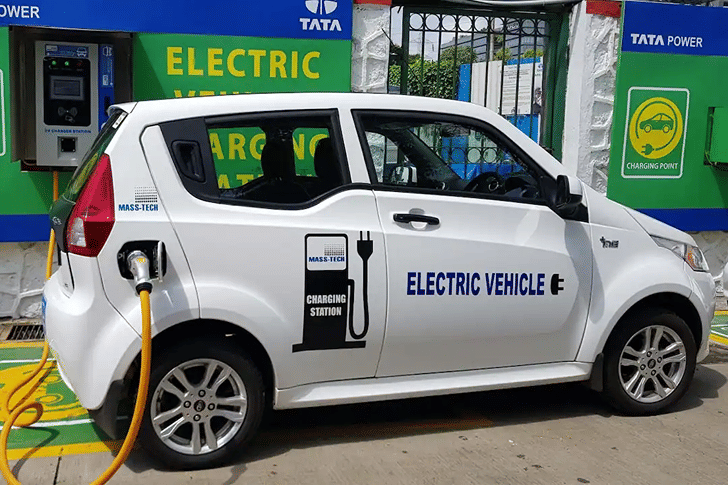
Given that the majority of your driving is on highways, we'd advise you against an EV and even a CNG. The EV charging network isn't very dense on highways, and many of the functional charging stations aren't very reliable. The long charging times will add hours to any long journey, and there's also the worst-case scenario of being stranded with no charge. EVs are ideal for city use but not as highway cars. It's a similar story with CNGs. The CNG network is centred around cities but is sparse on highways. CNGs do offer the flexibility to switch to petrol mode when you run low on gas. What also works against CNGs is the drop in performance on CNG mode, and this is most noticeable on highway drives. Further, CNG tanks eat into luggage space, making them less suitable for driving holidays. Petrol is the most sensible choice in the current scenario. A petrol will be more expensive to tank up than a CNG (or charge an EV), but there are a few other negatives. There's also the widest choice of cars as well as filling stations.
Need expert advice?
Ask the Autocar community and experts.