Mileage & Running Costs
Compare fuel costs and understand the true cost of ownership.
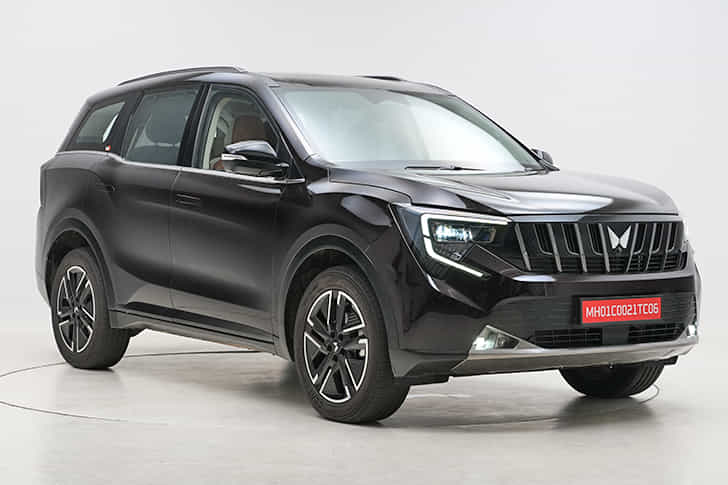
I own a Mahindra XUV 7XO petrol (6-seater) AX7T since last two months. It delivers a mileage of around 5.7 kpl in the city and got a 12.6 kpl in the highway at a speed of 100 kph. Do you think I should aspire for more?
Your fuel efficiency figures are broadly in line with what we would expect from the XUV 7XO petrol. The 5.7 kpl in the city is on the lower side, but it is not unusual for a large, heavy SUV with a turbocharged petrol engine, especially if your city driving involves heavy traffic, frequent stop-start conditions and short trips. The 12.6 kpl on the highway at 100 km/h is actually quite reasonable for this car, and suggests the engine is operating efficiently at a steady cruise.You can try a few things to improve city mileage: use the lightest possible throttle, anticipate traffic to minimise braking, and avoid idling with the air conditioning on for long periods. Also check tyre pressures regularly and keep the car well maintained. But fundamentally, this is a big, powerful petrol SUV and its fuel efficiency will never be its strongest suit. If your usage is predominantly city driving, this is simply the nature of the car rather than something to be overly concerned about.
Good Morning, I am planning to buy Toyota Innova Hycross petrol automatic. I am worried about its mileage. Is there any way to improve mileage?
The Innova HyCross petrol automatic is a very good choice if you are looking for a reliable, comfortable and spacious family MPV. The naturally aspirated petrol engine paired with the CVT is smooth, refined and well suited to city driving, but it is not the most fuel-efficient powertrain in a car of this size.There are a few things you can do to improve fuel efficiency: drive with a light right foot, avoid sudden acceleration and braking, use Eco mode, maintain steady speeds on the highway, keep tires properly inflated and avoid unnecessary idling. However, the gains from these measures will be incremental rather than transformative.
I have an i20 Sport, new 2023 model. How can I increase mileage with ethanol-mixed petrol?
E20 is the standardised petrol blend across the country now, and your i20, being a 2023 model, is compliant with the fuel. E20-compliant engines are designed to run on ethanol-blended fuel without any modifications or additives, so there is no need to use premium petrol or make any modifications. Fuel efficiency has been known to drop slightly with E20 fuel compared to E10, and the best way to improve fuel efficiency in your Hyundai i20 is to fine-tune driving and maintenance habits.The most effective ways to improve mileage are to drive smoothly, avoid sudden acceleration and heavy braking, keep tyre pressures at the recommended level, and ensure regular servicing. Using cruise control on highways, reducing unnecessary idling and keeping the car free of excess weight will also help.
I own a January 2018 Tata Nexon petrol. It is an E10 compliant car that I have to run on E20 due to the government mandate. Till date, it has clocked 1,01,200 km without any issues. I want to know your views on usage of Petrol additive Iftex System G and G+. As suggested by the manufacturer, I plan to use System G+ for one-time cleaning, followed by dosing System G with petrol thereafter. I would be grateful if you could explain their impact on the car.
You have a 2018 Tata Nexon petrol that has run over 1 lakh km without any issues, and you are now concerned about running it on E20 fuel and whether using Iftex System G and G+ additives will help. The good news is that your Nexon has already proven itself to be a reliable car, and there is no evidence to suggest that running E20 in an E10-compliant engine will cause any immediate or catastrophic problems. The main impact of E20 is a slight drop in fuel efficiency and potentially increased wear on some rubber fuel system components over a very long period.As for the additives, using System G+ as a one-time cleaning dose followed by regular System G dosing is unlikely to cause any harm, but it is also unlikely to make a dramatic difference. Modern fuels already contain detergents, and your car has been running well for over 1 lakh km without additives. If you want to use them for peace of mind, that is fine, but do not expect a night-and-day improvement. The most important thing is to continue with regular maintenance and keep an eye on fuel system components over time.Overall, your Nexon has already proven itself, and E20 is not something to be overly worried about. Additives are a personal choice, but they are not a magic solution.
Is the Toyota Innova HyCross compatible with E20 fuel?
Yes, the Toyota Innova HyCross is E20 compatible. Toyota has engineered the 2.0-litre petrol engine used in both the petrol and strong hybrid versions of the HyCross to run on E20 petrol (20% ethanol blend), in line with the latest government norms. There are no special maintenance requirements or fuel additives needed when using E20.There is also no reason to worry about resale value or long-term reliability purely because of E20. Modern E20-compatible engines are designed with appropriate materials and calibrations to handle this fuel. The main real-world effect is a marginal reduction in fuel efficiency compared to lower ethanol blends.
Need expert advice?
Ask the Autocar community and experts.