Latest questions answered by experts
I want to buy my first car in 2027, and I am yet to learn how to drive. My daily commute is around 25 km in the city, with occasional highway trips. I am considering an EV within a budget of Rs. 15-18 lakh. What are my best options?
Tap if an answer actually helped you decide.
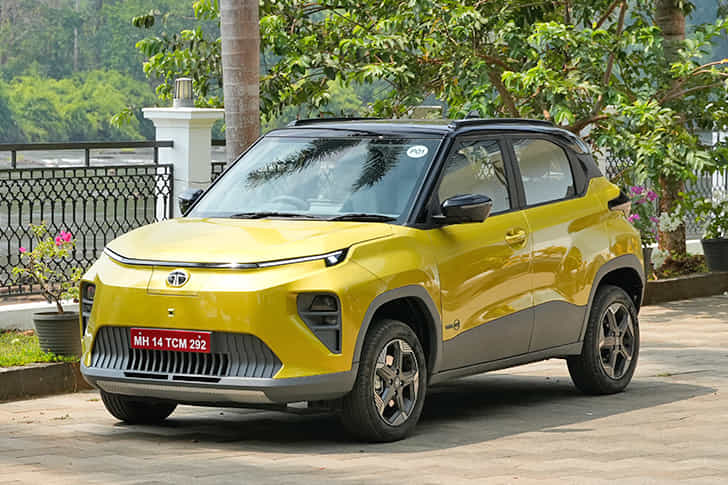
Since this will be your first car, we'd suggest you consider the Tata Punch EV for its compact size. Its high seating and SUV-like driving position will help you get a good judgment of the edges of the car, and being compact, it'll be easy to park and manoeuvre in traffic. Moreover, the Punch EV delivers respectable real-world range; it is smooth to drive; and it has all the features you'd expect in a car of this price.Alternatively, you could consider a Kia Syros EV that's compact with exceptional cabin space thanks to its excellent packaging. It will be much pricier, but it is certainly worth serious consideration.An MG Windsor is also a competent offering which is extremely spacious and has a huge boot. But do keep in mind that the Windsor is deceptively large in size, which, as a new driver, might not be as easy to drive and park.
Hi, The Kia Seltos hybrid's price has reportedly been leaked. I am wondering whether I should wait and pay a premium for the hybrid version. My monthly running is around 500 km. Earlier, I was planning to buy the GTX (A) variant at an on-road price of Rs. 23.5 lakh. Would it make sense to wait for the hybrid, considering my usage?
The hybrid will be best suited to buyers with significantly higher running, where the fuel savings are more meaningful. With a monthly running of just 500 km, the Seltos Hybrid will not make financial sense. At that usage, the fuel savings from the hybrid system will take a very long time to recover the higher upfront cost. The Seltos turbo petrol is already a very well-rounded package with strong performance and a good feature set. Hence, we'd recommend going ahead with the turbo petrol version - it is the smarter and more sensible choice for your needs.
Hi Autocar Team, I own a Maruti Suzuki Grand Vitara AT (non-hybrid) and spend around Rs. 12,000-14,000 per month on petrol. Its city mileage has dropped from around 13 kmpl to 10 kmpl. I also have solar panels at home, so EV charging would be almost free or cost a maximum of Rs. 3-4 per unit. I am confused about whether I should replace the Grand Vitara with an EV or keep it and buy a Tata Tiago EV for daily city use. Am I thinking too much about fuel savings? Should I simply keep the Grand Vitara and avoid buying a second car altogether? I would like to hear from people who have been in a similar situation. What makes more financial sense in the long run?
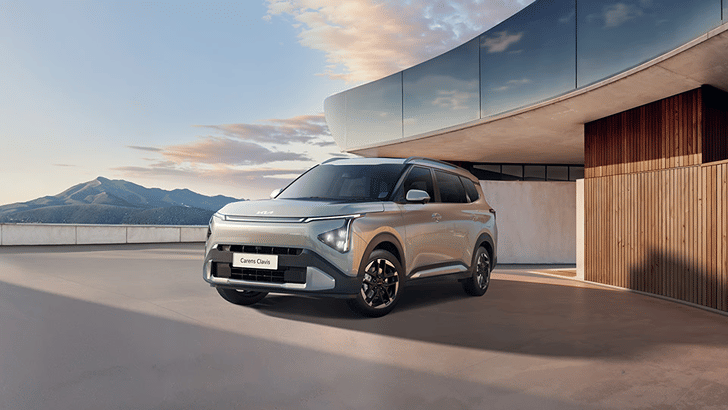
You are not overthinking it. With solar at home and a monthly fuel spend of Rs 12-14k, switching to an EV makes strong financial sense. The question is whether to replace the Grand Vitara or add a Tiago EV as a second car.If your usage is predominantly city-based, replacing the Grand Vitara with an EV is the better solution. You eliminate fuel costs almost entirely, simplify ownership and make full use of your solar setup. If you have the budget for it, EVs like the Kia Syros EV, Hyundai Creta Electric or Kia Carens Clavis EV are a good mix of price to range. Or if you can budget for it, move a step up to the Mahindra XEV 9S, Tata Sierra EV or MG Tomahawk EV.Adding a Tiago EV as a second car only makes sense if you have a genuine need for two cars. The Tiago EV is a great city runabout, but keeping the Grand Vitara just for occasional use while continuing to pay insurance, maintenance and depreciation does not make financial sense unless you regularly need a second car.If you are happy with the Grand Vitara and do not want to change cars, that is also a perfectly valid decision. But from a purely financial perspective, with your fuel spend and solar setup, switching to an electric car is the smarter long-term move.
Upcoming launch buzz
Community discussions on upcoming launches
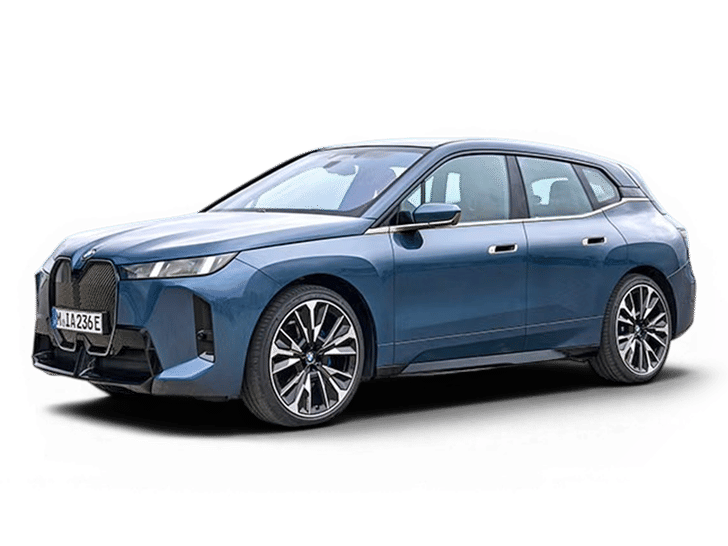
BMW
iX facelift
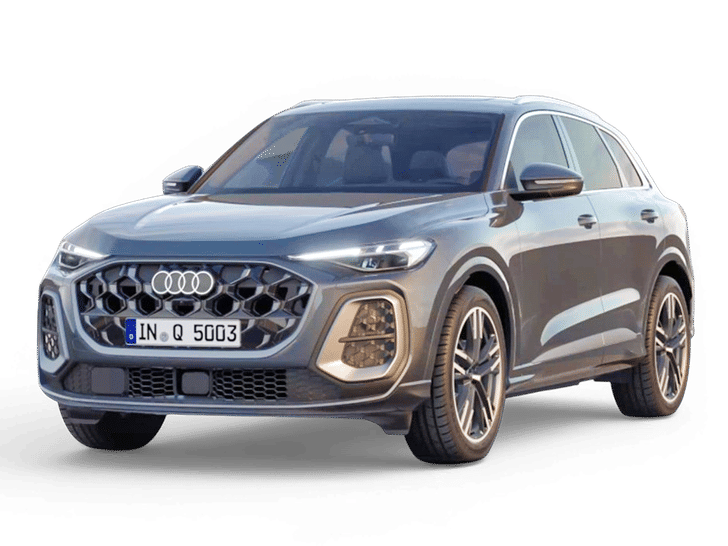
Audi
New Q5
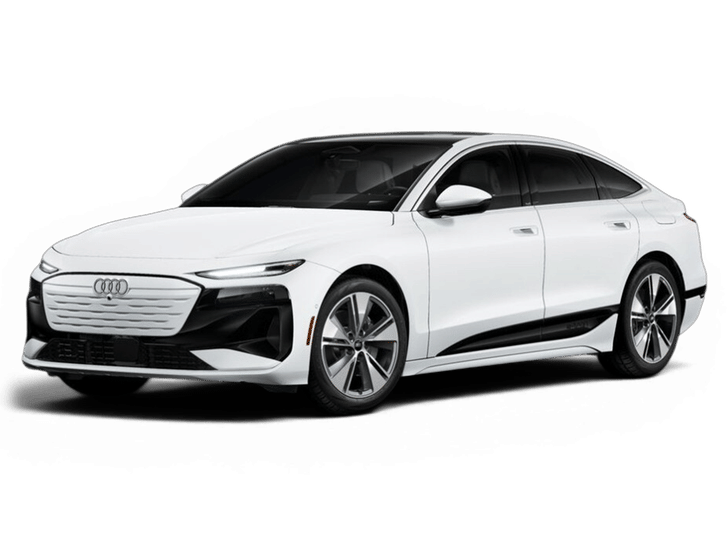
Audi
A6 e-tron

Audi
Q6 e-tron
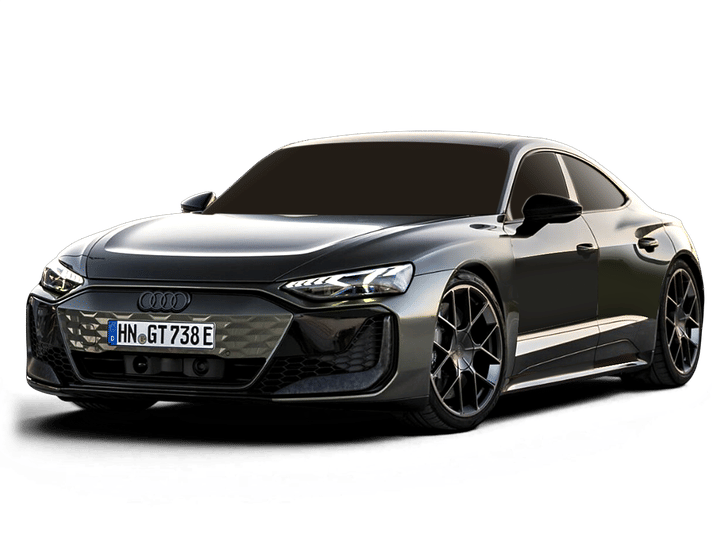
Audi
e-tron GT facelift

Volkswagen
Virtus facelift
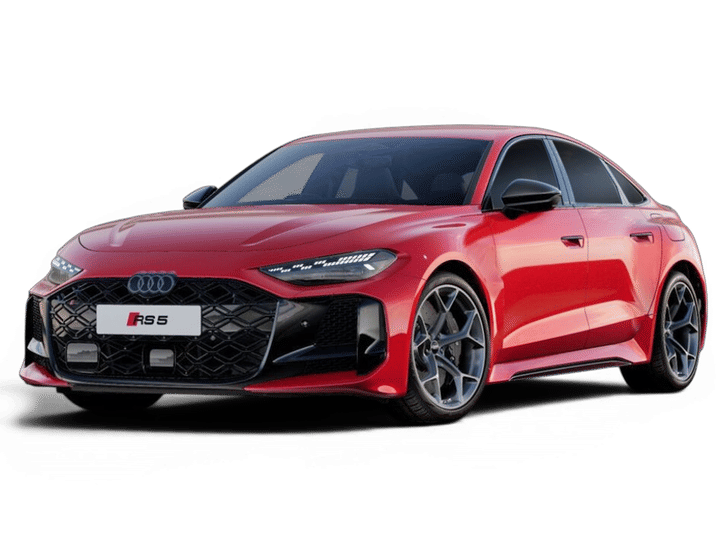
Audi
A5

Vinfast
VF5
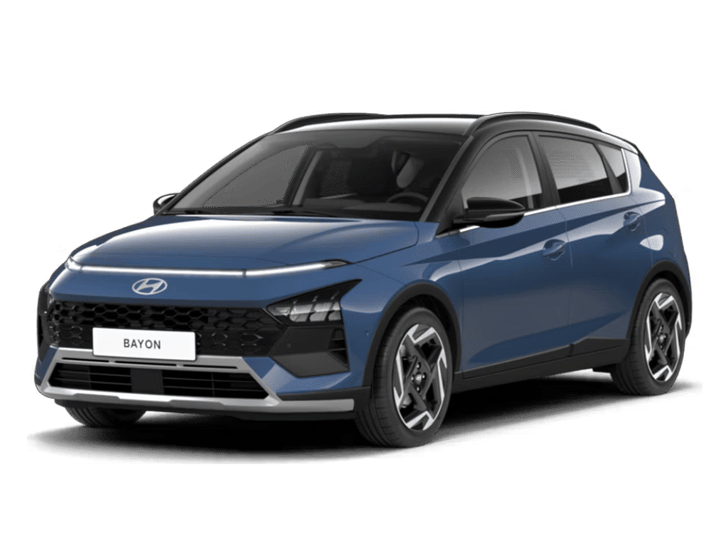
Hyundai
Bayon
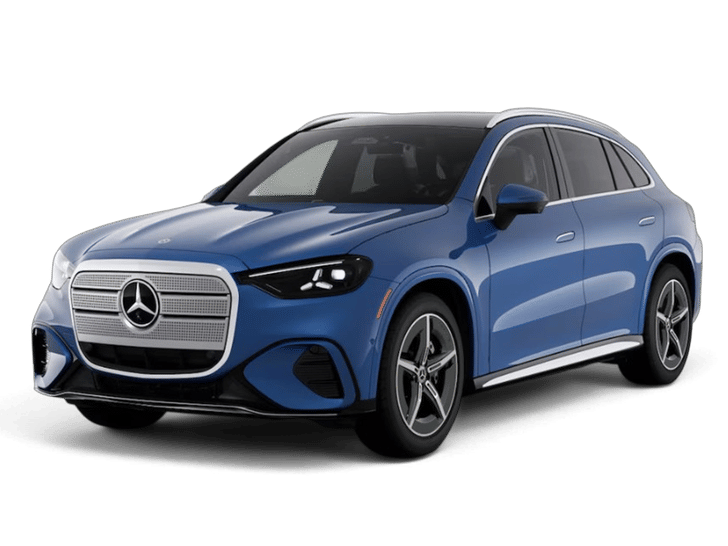
Mercedes-Benz GLC
Electric
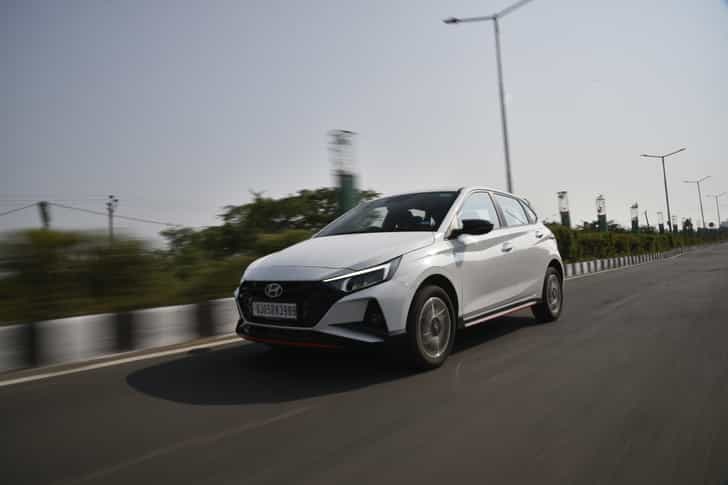
Hi Autocar Team, I am currently driving a Hyundai Elite i20 Asta petrol manual. So far, I feel it is the best-designed car in its segment, offering great comfort and mileage that varies depending on traffic conditions. I was wondering if I could give it a facelift by replacing the front section with that of the new-generation i20. My second thought is whether I should wait for the new Hyundai Bayon or if a facelifted Hyundai i20 or Hyundai Verna is expected. I find the rear design of the new-generation i20 disappointing, and I still feel that the Elite i20 I currently own is the best-looking version. What are your thoughts?
The best option is to hold on to your Elite i20 for now rather than modify its front end or replace it purely in anticipation of a new model. Since you value its design, comfort and fuel efficiency, a newer car needs to offer a meaningful improvement in those areas to justify the expense. A facelift using the next-generation i20's front end would also be a custom modification rather than a straightforward factory upgrade, with potential issues around body panels, lighting, fitment and insurance.The Hyundai Bayon is worth waiting for, particularly if you want something newer without giving up Hyundai's everyday usability. Its India launch is confirmed for 26 October 2026, with a 1.5-litre petrol engine and manual or IVT automatic options. However, Autocar India has not tested it yet, so its ride comfort, real-world mileage and driving experience remain to be assessed.There is no confirmed India launch date for the next-generation i20, while the Verna has already received a facelift in 2026. Since the Elite i20's design matters so much to you, replacing its front end with newer i20 components is unlikely to be a straightforward or cost effective modification.
Namaste Autocar Team, I am from Kolkata and am considering two cars within a budget of Rs. 15 lakh on-road: the Hyundai Venue HX7 diesel manual and the Kia Syros HTK+ (O) diesel manual. My monthly running is around 1,500-1,750 km, with a 90:10 split between city and highway driving. I mostly drive in the city, and my 2017 petrol Hyundai i20 is becoming expensive to run. Hence, I am considering a diesel car, although I am not interested in an EV at the moment. Which of these two cars would be a more practical and reliable choice for long-term ownership, considering a 10-year ownership period, service costs, comfort and mileage? I am tempted by the new Venue, but the Syros offers slightly more rear-seat and boot space, which is important for my family of four. I would appreciate your honest opinion and observations.
The Kia Syros HTK+O diesel manual is an excellent option. For your usage, a diesel car makes sense, and the Syros is the more practical long-term choice. Thanks to its boxy cabin and adjustable rear seats, it gives you the flexibility to free up more rear seat space for passengers or increase boot space. Its cabin experience also feels more premium than the Venue. The Syros and Venue share their 1.5 diesel powertrain, but do keep in mind that since your usage is mainly in the city, you will have to periodically drive the car at high engine speeds for 20-30 minutes to ensure the diesel particulate filter doesn't clog up.Hyundai has a wider service network than Kia, and its ownership costs are likely to be a bit lower, if not similar, to the Kia's. However, the cost difference is only going to be marginal. Overall, the Syros is a good family car, and if you like its design, it is a sensible choice.
Hi Autocar Team, I am planning to buy the Tata Harrier by selling my 2021 Tata Nexon petrol XZ+ (O) Dark Edition, which has covered 30,000 km. I am confused about whether to choose the Harrier petrol or diesel. With the government introducing stricter emission norms, will buying a diesel car be a viable option in the long run? If I choose diesel, should I go for the manual or automatic transmission? Which gearbox is more durable? If I choose petrol, can I expect decent mileage from such a heavy car? Please advise.
We would recommend the Harrier diesel automatic if you do substantial highway driving or cover over 15,000km annually. If your usage is mainly within the city and your annual running is low, the petrol automatic is worth considering, although its fuel bills will be considerably higher than those of your Nexon petrol.The stricter emission norms coming into effect from April 2027 are fleet average fuel efficiency targets for manufacturers, not a ban on diesel cars. The diesel therefore remains a viable option, particularly if you intend to keep the Harrier for several years and regularly undertake long journeys. Fuel efficiency is the petrol Harrier's biggest drawback. In Autocar India's test, the petrol automatic returned 6.17kpl in the city and 12.49kpl on the highway, against 9.6kpl and 14.4kpl respectively for the diesel automatic.The automatic is more convenient in traffic, while the manual diesel offers slightly better efficiency. Neither gearbox should be chosen on durability assumptions alone.
Hi Autocar India Team, I am planning to buy an EV and would appreciate your help in finalising my choice. I am confused between the Mercedes-Benz CLA EV 250+ and the Tesla Model Y RWD. Which would be the better choice? It would also be helpful if you could explain the long-term reliability of EVs in Indian conditions, along with the differences between LFP and NMC battery technologies and which is better for long-term use.
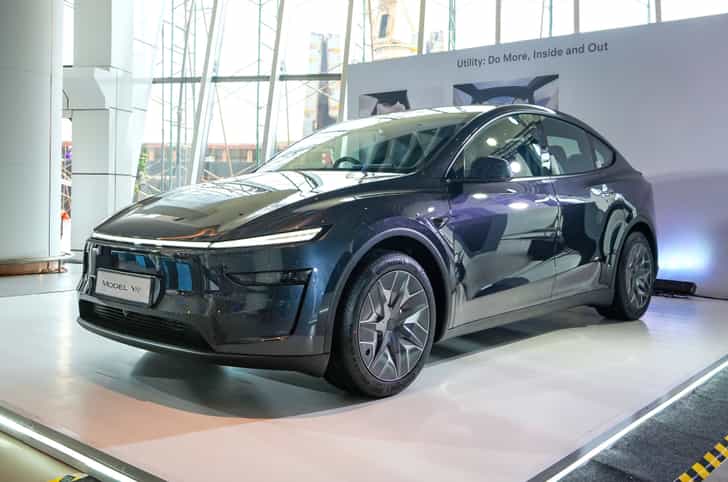
If you're after a better all-round vehicle, go for the Tesla Model Y RWD. This Tesla car is the more practical and better-rounded EV for Indian conditions. The Model Y offers a larger and more usable cabin, a bigger boot and a higher ground clearance, making it better suited to our roads and long-term family use. The Mercedes-Benz CLA EV 250+ is a stylish and premium product, and delivers a far more luxurious cabin and better badge value. It is also far more efficient and delivers far greater real-world range than the Tesla Model Y RWD. Thus, if these are greater priorities for you, the Mercedes may be the better option.On battery technology, the Model Y RWD uses an LFP battery, while the CLA 250+ uses NMC battery cells. Interestingly, the larger Model Y L uses NMC cells, and the standard-range CLA 200 uses LFP cells; thus, both brands use both technologies, depending on the battery size. LFP batteries are more tolerant of frequent charging, have a longer cycle life and are less prone to thermal runaway, making them a safer and more durable choice for long-term ownership. NMC batteries, like those used in the CLA EV, offer higher energy density and longer range in the same package, but they are more sensitive to heat and require more careful thermal management.In terms of reliability, both Tesla and Mercedes-Benz have strong EV engineering, but Mercedes' far wider sales and service ecosystem give it the edge for long-term ownership in India.

Hi, I am thinking of replacing Toyota Corolla (2006 model) with a car under the budget of Rs. 20 - 22 lakh. Which car do you suggest replacing the trustworthy Corolla with as it has served me very well. I am considering the VW Virtus/ Skoda Slavia, VW Taigun /Skoda Kushaq and Honda City Hybrid.
The Honda City Hybrid is the closest modern equivalent to your Corolla. It offers a similar ownership philosophy: reliable, comfortable, easy to live with and efficient. The hybrid system delivers excellent fuel economy in city driving, and Honda's long-term reliability record is strong. The only drawback is that the boot is smaller than the standard City due to the battery pack.The Skoda Slavia and VW Virtus are both excellent sedans with strong turbo petrol engines and good driving dynamics, but they do not offer the same ownership simplicity or efficiency as the City Hybrid. The Skoda Kushaq and VW Taigun are more practical and offer better ground clearance for Indian roads, but they are not as refined or as comfortable as the City Hybrid.However, the City Hybrid is expensive, and will fall outside of your Rs 22 lakh budget. If you're okay with that and sold on the city, you should go ahead. There is another car to consider, however, and that's the Toyota Urban Cruiser Hyryder Hybrid. Not only does it come from the same reliable house of Toyota, but it gets you the practicality of an SUV and also falls within your budget. Do note, however, that its rear seat is not as spacious as what you'll get in the City hybrid.
Should I consider the Seltos GTX A hybrid instead of the GTX A DCT, given my monthly running of 500km and concerns about mileage? The GTX A DCT costs around Rs. 23.50 lakh.
With a monthly running of just 500km, the Seltos Hybrid is unlikely to make financial sense. The hybrid system will certainly improve fuel efficiency, but the savings at your usage level will be marginal and will take a very long time to offset the higher purchase price. The GTX+ DCT you were already considering remains the better choice for your needs. It offers strong performance, a premium feature set and a genuinely enjoyable driving experience without the added complexity and cost of a hybrid system.As for pricing, while there is no official figure yet, you can reasonably expect the Seltos Hybrid to carry a premium of at least Rs 1.5-2 lakh over the equivalent petrol DCT variant. That premium is difficult to justify at your running.The only reason to wait for the hybrid would be if you are particularly keen on the technology or want the absolute best possible fuel efficiency from your Seltos. Otherwise, the GTX+ DCT is the right car for your usage.
Tesla just showed a car flying in the air! This car performs mid-air flips and even jumps over other cars. Is this the future of cars?
No, this is not the future of cars. What you saw was a marketing stunt, not a production feature. Tesla's demonstration was designed to grab attention, draw investment and showcase the car's performance potential in a dramatic way, but it does not reflect real-world driving or what owners can expect from their vehicles.Modern cars are engineered with a strong focus on safety, reliability and everyday usability. The idea of cars performing mid-air flips or jumping over other vehicles is completely at odds with how cars are designed and regulated. In fact, such behaviour would be extremely dangerous on public roads and would never be permitted under any safety standards.Tesla's cars are impressive in their own right, with strong acceleration and advanced technology, but the flying car demonstration is purely theatrical. The future of cars is far more likely to be shaped by advancements in safety, efficiency, electrification and driver assistance systems, rather than by Hollywood-style stunts.
Hi, I wanted to upgrade from Honda Jazz. I am looking for an automatic car that I could hold on for at least 10 years. My budget is Rs. 12 to 18 lakh. My monthly commute is 1200 km. Should I go for a petrol or an EV. I am considering an EV over 10 years that could be financially beneficial? But on the contrary, I'm concerned about the reliability of EV since there is no mass market which has held EV for 10 years as of now. (except for Reva or Logan EV).
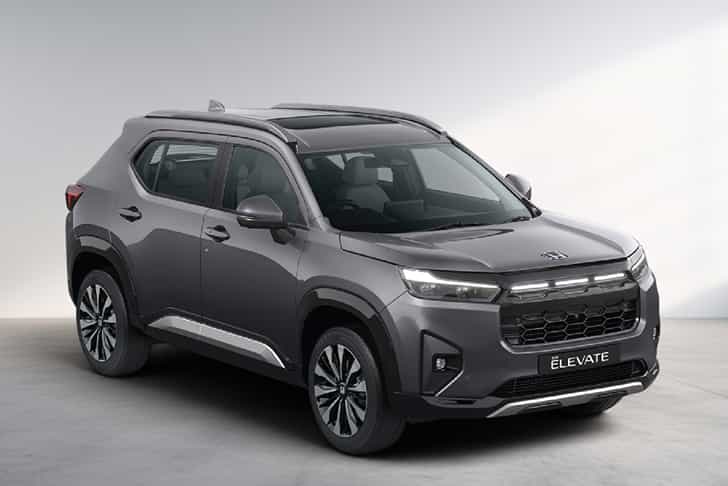
Go for the Honda Elevate CVT, ideally the VX. Coming from a Jazz, it’s the natural upgrade. You get the same easygoing Honda petrol and smooth CVT you’re used to, in a roomier, more comfortable SUV. For someone planning to keep a car for 10 years, Honda’s simple, proven mechanicals are about as worry-free as it gets.If you aren’t feeling fully sure about an EV, don’t push yourself into one. At your running an EV would save you money, but if you’ll spend the next 10 years worrying about the battery, those savings aren’t worth it. A petrol automatic lets you buy with confidence and not think twice.The Elevate’s weak spot is fuel economy. At 1,200km a month you’ll feel it at the pump. If running costs matter as much as comfort, stretch slightly for the Toyota Hyryder strong hybrid. It’s far more efficient, especially in town, and it’s just as proven over the long term.

Will there be an update for Suzuki V-Strom SX 250 in 2026?
No, Suzuki is highly unlikely to update the V-Strom SX this year. We are, however, likely to see new-generation models of the 150cc and 250cc Gixxer quartet. Once that is done, the logical next move would be for these updated to be carried forward to the V-Strom SX as well. You could see an updated V-Strom SX in 2027, although the company hasn't officially confirmed this.
Is Bajaj Pulsar 220F a good choice for daily commute of 50km?
In isolation, the Bajaj Pulsar 220F is a proven workhorse with a punchy engine, comfortable rider's traingle position and good highway stability, which makes it well-suited for longer daily runs. It is also relatively affordable to maintain and has a wide service network, which is important for a high-mileage commuter.That said, the 220F is now nearly 2 decades old and has only seen regulatory and minor feature-related updates since. It does not offer the refinement or modern features of newer-generation bikes in the segment. If your commute is mostly highway and you don't mind the old-school feel of the 220F, it can make sense for you. However, if you are looking for a more modern package with better refinement, consider Bajaj's own Pulsar N250, the TVS Apache RTR 200 4V or Honda Hornet 2.0 as similiarly-priced and comparable alternatives. Try to take a test ride of all four before you make your decision to see where your preferences lie.
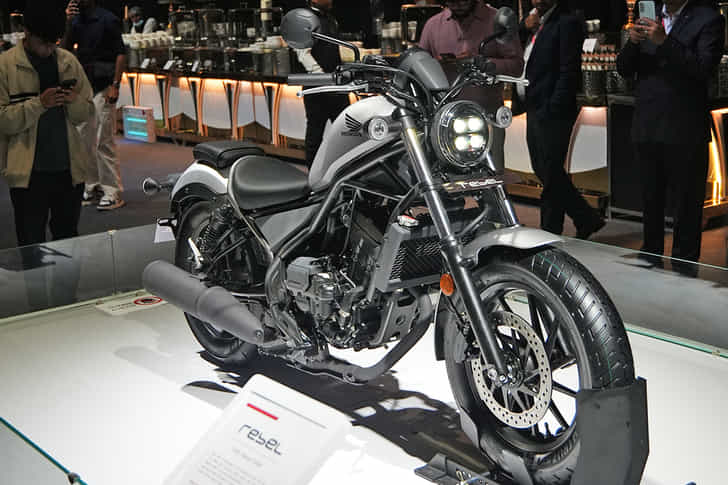
When will deliveries of the Honda Rebel 300 begin?
Deliveries of the new Honda Rebel 300 (both the standard & E-Clutch variants) are likely to begin by the end of this year or latest in the first quarter of 2027. For a more specific timeline, if you have pre-booked the motorcycle, we'd recommend reaching out to your nearest BigWing dealer.
I am looking for a diesel car priced around Rs 15-16 lakh with good fuel efficiency. I already own a Kia Sonet and a Hyundai Venue. What else should I consider?
Since you're already using the Sonet and Venue, you could consider the Mahindra XUV 3XO diesel this time around. It offers a strong diesel engine, respectable fuel efficiency, excellent ride comfort, and a more spacious cabin than the Sonet and Venue, making it a good family car.If you don't mind its looks, then the Kia Syros is an excellent car, and it's certainly worth considering. It has the same efficient, refined powertrain as the Venue and Sonet that you're using. Furthermore, cabin space is huge, and overall quality feels top-notch.
I want to upgrade from my Maruti Suzuki Celerio ZXi (O) and have a budget of around Rs 15 lakh on-road. I drive about 2,000km a month. Which car would you recommend?
Since your monthly usage is quite high, you could consider the Maruti Suzuki Victoris VXI CNG, which is available at around Rs 15 lakh on-road. It is a sensible SUV with a smooth and efficient 1.5 engine, light controls, high ground clearance and a reasonably comfortable cabin. The CNG tank is positioned beneath the body, so boot space remains usable. It should feel like a substantial upgrade over your Celerio while keeping you within the Maruti Suzuki range.If you don't want a CNG due to the long queues at the CNG stations, you could consider a diesel option like the Hyundai Venue. It is a user-friendly, feature-rich sub-4-metre SUV with a very efficient and refined 1.5 diesel engine. While you can easily get a diesel-manual variant within your budget, interestingly you could also consider the HX5 diesel-automatic variant, which gets you the convenience of a 6-speed torque converter. A Kia Sonet HTX diesel-automatic with the same (as the Venue) 1.5 engine and automatic gearbox is also available within your budget.
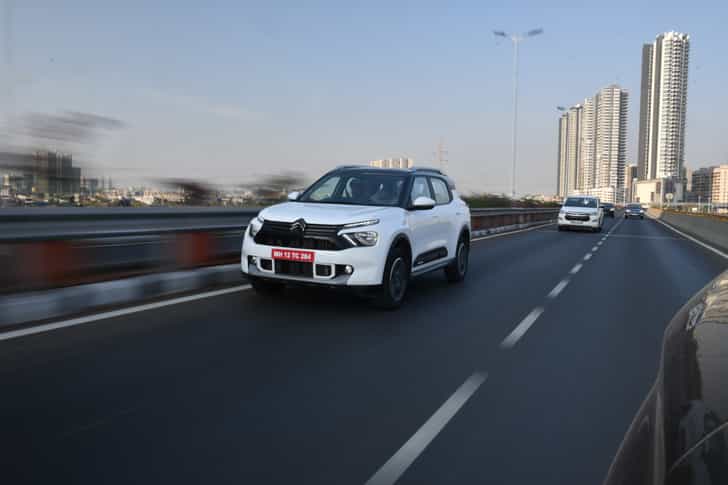
Hi Autocar Team, I am planning to buy a seven-seater car. I have test-driven the Renault Triber Turbo and Citroen Aircross X and was impressed by what both offer at their price points. However, the Aircross put a wide smile on my face. As a current Maruti Suzuki user, I did not consider the Ertiga because it feels similar to our Swift. I liked the Aircross X but am sceptical about Citroen's service network and spare parts availability. However, there are three Citroen showrooms within 45 km of my place. Please suggest which car I should choose. My budget: Rs. 15 lakh Current vehicle: Second-generation Maruti Suzuki Swift petrol (2017) Annual usage: Around 10,000 km, with a 50:30:20 split between town, highway and city driving Requirement: A seven-seater car
The Citroen's interiors feel more special, its engine is more powerful, and its ride-handling balance is outstanding; however, for seven adults, it won't be as comfortable as the Triber.In fact, the Triber's superb packaging makes it genuinely comfortable for passengers in all three rows, despite its compact sub-4-meter dimensions. The new turbo-petrol engine makes it an effortless performer, and its ride quality feels very mature too. Moreover, the Triber Turbo is also much more affordable in comparison, making it outstanding value for money. Yes, the Aircross X will appeal to your heart, but given Citroen's limited service network and cramped third row, the Triber Turbo is the more sensible choice.
I’ve almost finalised the Hyundai Venue based on its interiors, space, features, and overall looks. However, I’m confused between the 1.0 Turbo MT and 1.2 NA MT. I live in a town where bumper-to-bumper traffic is very rare. We might encounter traffic occasionally when travelling to bigger cities, but we only go on long trips a few times a year. Considering my usage, which engine would be the better choice? 1. What is the real-world mileage difference between the 1.0 Turbo and 1.2 NA? 2. Is the turbo engine significantly more expensive to maintain in the long run? 3. Is the 1.2 NA engine sufficient for a family on highways, especially during overtaking and when driving with a full load? 4. Considering long-term reliability, running costs, and occasional highway trips, is it worth choosing the turbo, or would the 1.2 NA be a more sensible option? I’m really confused between these two variants. Please share your real-world mileage and long-term ownership experience. Your suggestions would really help me make a final decision. Thanks in advance!
Go for the Hyundai Venue 1.0 Turbo MT. Your usage pattern - mostly open roads with only occasional traffic and a few long trips a year - actually plays to the turbo’s strengths. The 1.0 turbo is a genuinely punchy engine with strong mid-range performance, which makes overtaking on highways far easier and more confidence-inspiring, especially with a full load. The 1.2 naturally aspirated engine is smooth and reliable, but it can feel underpowered on highways, particularly when overtaking or climbing with passengers and luggage.In terms of real-world mileage, the difference is not huge. In mixed conditions, you can expect a mileage of 12.80kpl with the 1.2 NA, whereas the 1.0 turbo could deliver around 12.50kpl in similar conditions, so overall fuel costs are broadly similar. Similarly, the difference in their maintenance costs will be marginal, with the turbo being only slightly higher.Long-term reliability is not a concern with either engine. The 1.2 NA is the simpler option, but the 1.0 turbo is a proven unit and well suited to your usage. Given your driving pattern and the occasional highway trips, the 1.0 turbo is the more sensible and enjoyable choice.
Need expert advice?
Ask the Autocar community and experts.