autocar-logo
Delhi
KD

Kirit Das

3w

Clarification on Mahindra Thar Roxx Fuel Efficiency & Recommendation Between Manual vs Automatic Dear Autocar India Team, This email is in reference to the insights you shared regarding the expected real‑world fuel efficiency of the Mahindra Thar Roxx. Thank you for the detailed analysis based on your experience with the three‑door Thar. However, many YouTube reviews and user-reported tests indicate a fuel efficiency of around 11 km/l for both the manual and automatic variants under mixed driving conditions. This has created some confusion for me as a prospective buyer. I request your clarification on the following points: Why is there a noticeable difference in fuel efficiency between the automatic and manual transmissions, especially when some real‑world tests appear to show similar figures? Between the manual and automatic variants, which would you recommend in terms of: Maintenance cost Long-term reliability and robustness Overall ownership convenience Considering that I reside in Delhi, where diesel regulations and long-term compliance remain uncertain, which powertrain and transmission combination would be the most practical choice? Your expert guidance will be extremely helpful in making an informed decision. Thank you for your time and support.

Autocar India team

Autocar India

Verified
3w

Our detailed real-world fuel efficiency test of the three-door Mahindra Thar was conducted in Mumbai, a city known for heavy stop-start traffic. Compared to this, driving conditions in Delhi NCR generally involve more flowing traffic, which can result in slightly better efficiency figures.

As an additional reference point, we can look at the Mahindra Scorpio N, which uses the same engines as the Thar Roxx, albeit in a higher state of tune. In our real-world tests, the petrol automatic Scorpio N returned 7.9 kpl in the city and 9.4 kpl on the highway. The diesel automatic managed 8.6 kpl in the city and 11.7 kpl on the highway. 

As these figures show, the difference in fuel efficiency between petrol and diesel automatics is not significant enough to justify choosing the diesel variant, especially given your limited running and predominantly city-based usage.

As for manual versus automatic efficiency, especially in the case of the Thar Roxx, it is highly unlikely that the torque converter automatic will match the efficiency of the manual. This is due to the basic nature of the transmission. Torque converters use a fluid coupling instead of a direct mechanical link, which leads to energy losses during acceleration and low-speed driving. In contrast, a manual gearbox offers a direct mechanical connection once the clutch is engaged, resulting in lower losses.

Other automatic transmissions, such as dual clutch units and CVTs, are inherently more efficient than torque converters. DCTs use mechanical clutches for faster and more direct power transfer. CVTs are able to keep the engine operating in its most efficient rev range for most driving conditions. As a result, these transmissions can deliver fuel efficiency figures closer to manuals, something that is unlikely with a torque converter automatic. 

Finally, considering you are based in Delhi, where diesel regulations remain uncertain, the petrol variant of the Thar Roxx would be the more sensible and stress-free choice.

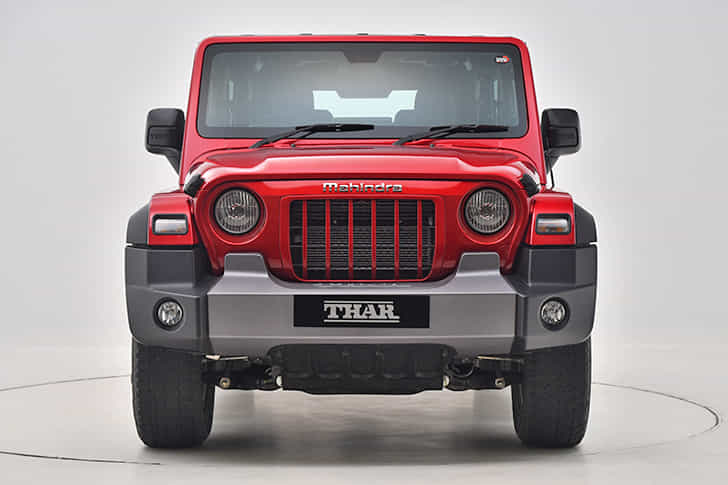
Mahindra Thar Roxx

Mahindra Thar Roxx

Was this helpful? Ask a follow-up

Got a suggestion for Kirit?

Add a Comment

Latest questions in the community

JI

Jithin

2d

I am looking to buy my first car. I am currently looking at the Kia Sonet Diesel Automatic 1.5, which comes at ₹16.25 lakh and the Skoda Slavia Sportline Auto at ₹17 lakh. My main usage would be travelling between Kochi and Bangalore and occasional city drives in and around both cities. I had a Ford Figo 1.5 TDCi earlier, which I loved and would prefer something with a similar driving punch. Which would be an apt choice?

Autocar India team

Autocar India

Verified
4h

Since a large part of your driving will be on the Kochi-Bengaluru highway and you enjoyed the performance of your old Ford Figo 1.5 TDCi, choosing a car with strong performance and relaxed cruising ability will make your drives more enjoyable.Between the two, you will likely be happier with the Skoda Slavia 1.5 TSI with the 7-speed DSG. It offers superior performance and refinement compared to the Kia Sonet diesel automatic, especially for highway usage. The Slavia’s turbo-petrol engine delivers effortless acceleration, and the DSG gearbox shifts quickly and smoothly, which makes overtaking and long-distance cruising feel easy.Another advantage is that the 1.5-litre engine features cylinder deactivation, which shuts down two cylinders under light loads such as steady cruising. This helps improve fuel efficiency when driving on the highway. The Slavia also feels more planted and stable at higher speeds, which will be noticeable on your frequent intercity drives.However, we would recommend waiting a little before making the purchase. The Slavia facelift is expected soon, and with it around the corner, it makes sense to see what updates and features the refreshed model brings before committing to the current version.

VehicleSkoda Slavia
VehicleKia Sonet
SH

Shubh

1d

Hi everyone, I’m planning to buy a compact SUV automatic for city driving in Delhi NCR with occasional highway trips. I’m confused between the Mahindra XUV 3XO TGDi AT and the Skoda Kylaq Signature+ AT. My priorities are: smooth automatic for traffic, good ride comfort for NCR roads, reliable ownership and reasonable maintenance, and decent mileage. Would love to hear feedback from owners or experts on which would be the better long-term choice.

Autocar India team

Autocar India

Verified
5h

Go for the Skoda Kylaq Signature+ AT. In Delhi traffic, it's automatic is very smooth, and the ride is mature on broken roads, and although not as supple as the Mahindra XUV 3XO, it is not a sore point. The 6-speed torque converter is known to be reliable and futureproof, as most torque converters are.For your stop‑and-go NCR commute, the Kylaq's calibration makes creeping and low‑speed shifts feel natural, reducing head‑nod in queues. You’ll also appreciate the 446‑litre boot on occasional highway trips. Ownership is predictable with 15,000 km/1‑year service intervals, and you can add an extended warranty (up to 6 years; confirm coverage in your city). Expect roughly 9kpl in Delhi traffic and 13kpl on relaxed highway runs at 90-100kph.The one thing you give up is the XUV 3XO TGDi’s stronger low‑end punch and overall power; the Kylaq AT feels calmer off the line and asks for kickdown for quick overtakes.If you prioritise a punchier engine and more rear seat space, consider the Mahindra XUV 3XO AX7 TGDi AT instead, but if that is not a high priority, the Kylaq is more enjoyable to drive.

VehicleSkoda Kylaq
VehicleMahindra XUV 3XO
SA

Sandesh

1d

Hi team, I want to buy a 7-seater car. Need advice between Toyota HyCross GX (O), Tata Safari or Mahindra 7XO.

Autocar India team

Autocar India

Verified
7h

You should go for the Toyota Innova HyCross GX (O) if you want a true 7-seater with the roomiest third row of seats. The HyCross's 2,850 mm wheelbase and flat floor make the third row friendlier for adults than the Tata Safari or the Mahindra XUV 7XO. Furthermore, it's backed up by Toyota’s proven reliability and hassle-free ownership in India.However, you will have to compromise when it comes to the powertrain. The Hycross' 2.0-litre naturally aspirated petrol engine isn't as punchy as the Tata Safari and XUV 7XO's turbocharged units, and real-world mileage is quite poor, as we managed 6.9kpl in the city and 12.4kpl on the highway. The Toyota also doesn't get a diesel engine option like the other two.If you prioritise performance and high-end features, either the Safari or the Mahindra XUV 7XO makes more sense. As for pricing, the Innova HyCross GX (O) is priced between Rs 20.43 lakh and Rs 20.56 lakh (ex-showroom).

VehicleToyota Innova HyCross
VehicleTata Safari
VehicleMahindra XUV 7XO

Posted on: 18 Feb 2026