Autocar India
13h

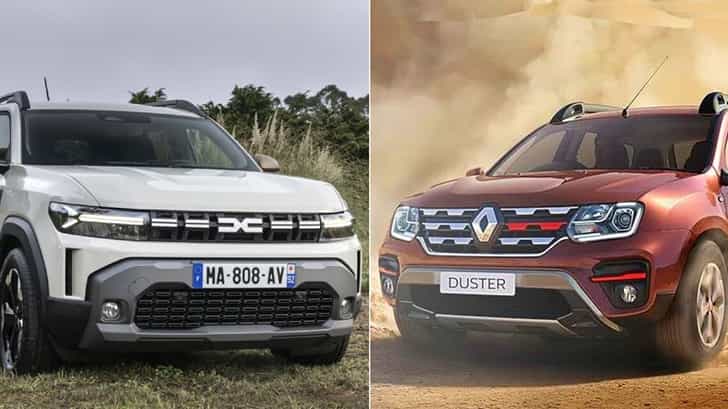
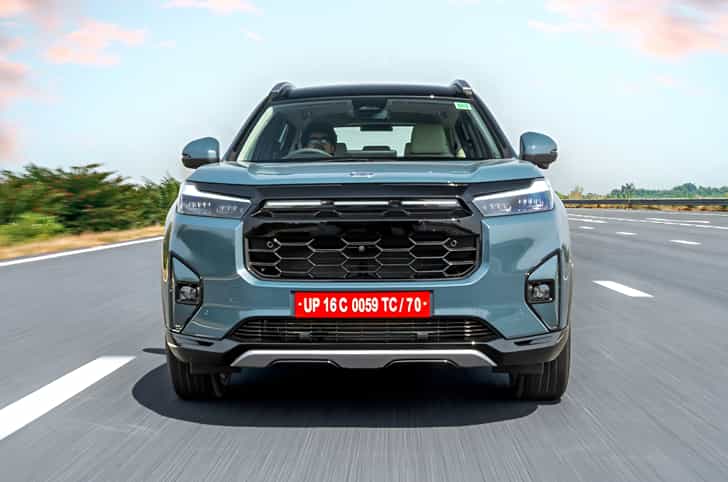
I am confused between the following cars: Renault Duster Adventure 1.3 DCT, Kia Seltos HTK(O) IVT, and Hyundai Creta S(O) IVT. We are a family of 3-4 with average builds, and we have comfortably used a Tiago for the last 6-7 years. I know I will enjoy driving the Duster, but from a practical standpoint, even the Kia and Creta seem very good at this point. Hence, the confusion. I haven't done many long trips in the Tiago, but I am planning to change that with the new car. I mainly want a car with comfortable ride quality that I can enjoy for a long time.

Verified
9h

Go for the Renault Duster 1.3 DCT. You have already identified the key point: you will enjoy driving the Duster, and that matters a lot when you are planning to do more long trips. The Duster also has an exceptionally comfortable ride, and the 1.3 turbo petrol paired with the DCT is a strong, enjoyable combination on highways. It is also a proven package, so reliability is not a major concern.The Seltos and Creta are both excellent cars, and from a purely practical standpoint, they are very strong options. The Seltos feels slightly more premium inside, while the Creta prioritises comfort and refinement. However, neither car offers the same level of driving engagement or ride comfort as the Duster.The only real drawback with the Duster is that the rear seat is not the most spacious in the segment, but for a family of 3-4 with average builds, it is perfectly adequate. Overall, the Duster strikes the best balance between comfort, driving enjoyment and long-term ownership satisfaction.

VehicleRenault Duster
VehicleKia Seltos
VehicleHyundai Creta
Renault Duster
Renault Duster
1w

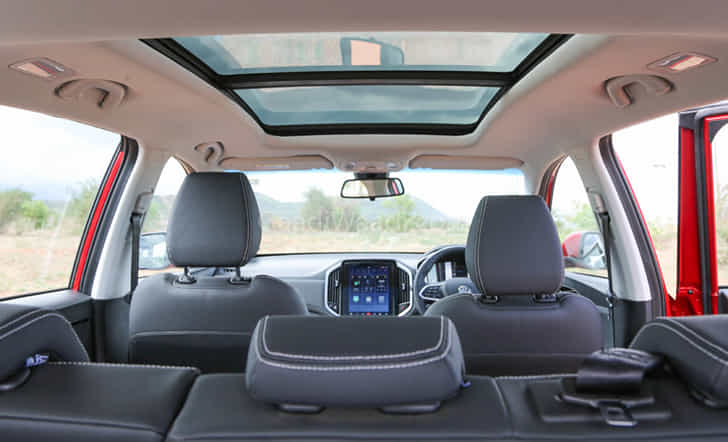
I have a pre-owned 2020 Kia Seltos GTX+ AT 1.4 Turbo as my 2nd car. One issue I see with this is poor low-end torque, and I end up revving too hard when moving uphill in back-to-back traffic. The car has about 48K on the Odo. Any advice? I had it checked at Spinny (where I bought it), and they told me the DCT is ok. Can you confirm if the low-end torque on this engine/ model is a common issue?

Verified
12h

Yes, what you are experiencing is a known characteristic of the 1.4 turbo petrol DCT combination in the Seltos. Being a turbo-petrol engine, you need to rev the engine a bit for the turbos to spool, and that combined with a DCT that's tuned for efficiency rather than aggressive low-speed response, can make it feel a bit laggy at low revs. In stop-start traffic on inclines, the gearbox could feel slow to engage and hesitant. This is not a sign of a faulty gearbox, but rather a limitation of the DCT calibration in this application.The best way to manage this is to use the manual mode on the gearbox when you are in slow-moving traffic on an incline. By holding the car in a lower gear, you can keep the engine in its torque band and avoid the hesitation you are experiencing. You can also use the hill hold function and the brakes to control the car rather than relying on the throttle alone.If this is a major concern for you, the only real solution is to switch to a car with a torque converter or CVT gearbox, which are much smoother at low speeds. But if you are otherwise happy with the car, this is something you can manage with driving technique.

VehicleKia Seltos
Kia Seltos
Kia Seltos
1d

I currently drive a 2018 Polo GT TSI. Now, I am looking for a new primary car; the Polo will continue as a secondary city car. The purpose of the primary car is a more comfortable back seat for my elderly parents, and I will have a weekly, once- or twice-a-week intercity expressway commute of about 300 km a day. So, comfort on the highway is also very important. Should I go with an EV? If so, which one? Or should I opt for the Virtus GT, as I enjoy my Polo a lot, or consider any other sedan? Budget: Up to Rs. 30 lakh OTR in Karnataka.

Verified
13h

Given your requirements, the Volkswagen Virtus GT is the most sensible choice. You already enjoy your Polo GT TSI, and the Virtus GT builds on that formula with a more powerful 1.5 TSI engine, a larger and more comfortable cabin, and a genuinely enjoyable driving experience. It is one of the best driver's cars in the segment, and it is also well suited to long expressway runs.The back seat is a significant step up from the Polo, with good legroom and a comfortable seating position for your parents. The ride is on the firmer side, but it is well controlled at highway speeds, and the car feels stable and confidence-inspiring on long journeys.On the EV question, a 300km round trip once or twice a week is right on the edge of what most mainstream EVs can comfortably manage without charging stops in the real world. While cars like the Tata Harrier EV and XEV 9S can technically do it, you would be running the battery down to low levels, and charging infrastructure is still not consistent enough to make this a stress-free experience. The Virtus GT, on the other hand, is completely hassle-free on long highway runs.Overall, the Virtus GT strikes the best balance between driving enjoyment, rear seat comfort and long-distance usability. It is the car you are most likely to still enjoy owning after five years. If you can wait a few months, however, Volkswagen is launching a facelifted version that should get a few more features.

VehicleVolkswagen Virtus
VehicleTata Harrier EV
VehicleMahindra XEV 9S
1d

I am from Kerala and looking to buy a 7-seater car to replace my old Hyundai Eon. My options are the Maruti Suzuki Ertiga, XL6, and Kia Carens Clavis. The Clavis offers many options, including naturally aspirated and turbocharged petrol engines. Which car would be the most suitable for travelling with seven people? My maximum budget is Rs 16 lakh. Also, from a mileage point-of-view, which is better: turbo or naturally aspirated with a manual transmission?

Verified
14h

Go for the Maruti Suzuki Ertiga. It is the most sensible and reliable choice for your requirement. The Ertiga is a proven 7-seater with a comfortable third row, low running costs and Maruti's strong service network, which is important coming from a Hyundai Eon.The Maruti XL6 is essentially the same car with a more premium interior and captain seats in the middle row, but that reduces seating capacity to six, which does not suit your need for seven people.The Kia Carens Clavis is a good alternative with a more premium feel, but is positioned slightly higher, and on your budget of Rs 16 lakh, you will only get a low-spec model with fewer features. Between turbo and naturally aspirated petrol engines, the naturally aspirated engine is generally more fuel-efficient in real-world conditions, especially with a manual transmission.The Maruti Ertiga also fits comfortably within your Rs 16 lakh budget, letting you get the fully-loaded variant with more features. Overall, the Ertiga is the most practical and hassle-free 7-seater for family use.

VehicleMaruti Suzuki Ertiga
VehicleMaruti Suzuki XL6
VehicleKia Carens Clavis
Maruti Suzuki Ertiga