Autocar India
3m

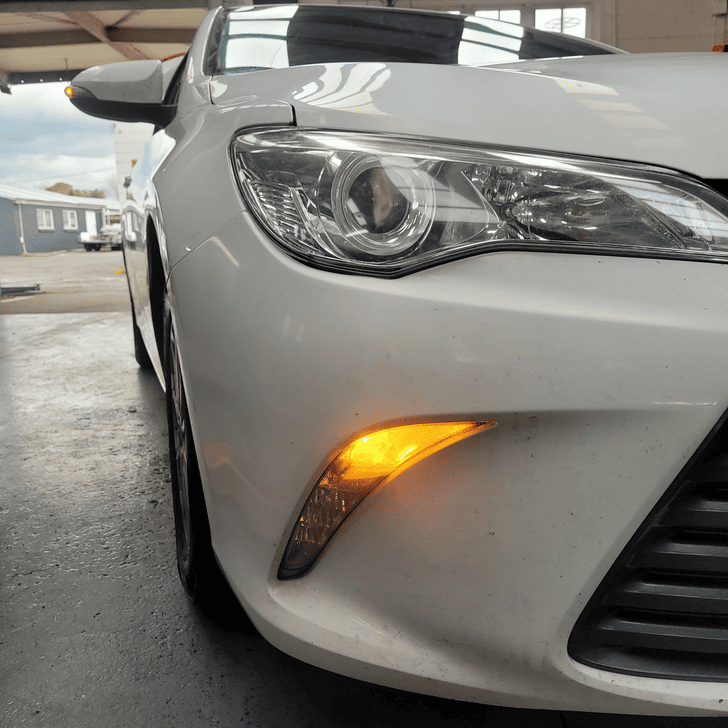
Why does nobody in this country use indicators anymore? Genuinely curious if it's a training issue or people just don't care.
No comments yet

Be the first one to start the conversation

More posts on similar cars

5d

I have a Škoda Superb L&K 2022, which comes with a front-wheel-drive (FWD) drivetrain, while in some international markets, the Superb has been offered with a rear-wheel-drive (RWD) setup. My first question is: how does FWD differ from RWD in terms of basic driving dynamics? Secondly, what does chassis weight distribution mean in a car, and what significance does it have for driving dynamics and handling? Is an ideal weight distribution necessarily associated with an RWD setup? Also, is it correct to say that RWD is always better than FWD or AWD? Finally, does a four-cylinder engine with twin turbochargers have any significant advantage over an inline-six-cylinder engine?

Verified
2d

The Skoda Superb is a front-wheel-drive car globally, including in international markets. There is no rear-wheel-drive version of the Superb. The confusion may come from the fact that some premium sedans in the same segment, such as the BMW 5 Series and Mercedes E-Class, are rear-wheel drive, but the Superb itself is not. The Superb is available in some markets with AWD (all-wheel drive), but that too is a front-biased system with the rear wheels driven only when needed.The difference between FWD and RWD is most noticeable in driving dynamics. In a front-wheel-drive car, the front wheels are responsible for both steering and putting power down, which can lead to understeer (the car does not turn as much as intended) and torque steer (the car pulls to one side on its own) when pushed hard. In a rear-wheel-drive car, the front wheels steer while the rear wheels deliver the power, which generally results in better balance and a more engaging driving experience, especially in performance driving.Weight distribution refers to how the car's mass is spread between the front and rear axles. A 50:50 weight distribution is often considered ideal because it helps the car remain balanced during cornering. This is not exclusive to rear-wheel-drive cars, but it is easier to achieve in RWD layouts because the drivetrain components are more evenly distributed along the length of the car.It is not correct to say that RWD is always better than FWD or AWD. Each layout has its own advantages. FWD is more space-efficient, cost-effective, and better in slippery conditions; RWD offers better driving dynamics; and AWD provides the best traction in all conditions.On the engine front, a 4-cylinder twin-turbo can produce impressive power and torque, and tends to be lighter, but an in-line 6 or V6 is inherently smoother and more refined. A larger-capacity engine tends to also be more effortless than a boosted low-capacity engine making the same power output. The choice between the two depends on the application: the 4-cylinder is lighter and more efficient, while the inline-6 offers a more premium and refined driving experience.

VehicleBMW 5 Series LWB
VehicleMercedes-Benz E-Class
VehicleSkoda Superb

Popular discussions right now

Posted on: 18 Aug 2026