Autocar India
2d

I’m planning to buy an electric scooter, but unfortunately, there aren’t many options that come with both ABS and traction control. Recently, I was riding my dad’s scooter when the front wheel locked up. Although I like the Ather Apex, I’m not comfortable with the fact that it doesn’t come with ABS. I have a couple of questions. Will all electric scooters eventually be mandated by law to have ABS? I also like the TVS X electric scooter, as it’s fun to ride. Is it a safe choice in terms of maintenance, considering it’s a relatively new model? I don’t use the scooter much and ride only around 1,000km a year. This is mainly a purchase for my happiness. My budget is up to Rs 5 lakh. I’m not considering a petrol scooter because of my low usage and the additional maintenance it would require. Any advice would be appreciated.

Verified
6h

We know you are inclined towards an electric scooter but today the tiny pool of e-scooters that have ABS aren't very convincing options, despite their hefty price tags. Your options are Keeway Hypevolt-R, Yamaha Aerox E and TVS X, all of which (while they do fit in your budget) are quite expensive for what they offer you. Instead, since you have super low running, we'd strongly urge you to consider a hassle-free option like the Suzuki Access 125. Not only will you save a big chunk of money, ICE scooter maintainance is fairly straightforward with your low usage and given that the Access is a very popular option, sourcing parts and spares should be a quick and inexpensive affair. If you must have an EV with ABS, you should decide between the three options suggested above based on which one has a dealership & service centre near your residence.

Suzuki Access
TVS X
Keeway Hypevolt-R
Yamaha Aerox-E
2d

Hi, I am a first-time car buyer and earn around Rs 1 lakh per month. I am planning to buy a car this year and have shortlisted the Maruti Brezza facelift, Hyundai Venue and Kia Seltos. My usage will be roughly 50% in the city and 50% on the highway. Which of these would be the better choice for a first-time buyer? In the Brezza facelift, the 1.5-litre engine costs around Rs 1 lakh more than the 1.0-litre turbo. Would it be worth spending the extra amount on the 1.5-litre naturally aspirated engine, or is the 1.0-litre turbo a better choice? What are the key differences between these two engines, especially in terms of performance, comfort and ease of driving? My main priorities are comfort and an easy, relaxed driving experience.

Verified
7h

The Maruti Suzuki Brezza 1.5 petrol automatic would be the best fit for you. As a first-time buyer with a 50:50 city-highway usage pattern and comfort and ease of driving as priorities, the Brezza's smooth, predictable power delivery, light controls and comfortable ride make it the easiest car here to live with. The 1.5-litre naturally aspirated engine is also the better choice if you want an automatic. At the same time, the 1.0-litre turbo makes sense mainly if you prefer a manual and want stronger mid-range performance. The extra Rs 1 lakh for the 1.5 is worth spending if the automatic is the preference.The new Hyundai Venue is more feature-rich and feels more modern inside, while its 1.0-litre turbo offers stronger performance than the Brezza 1.5. However, its DCT is not as effortless as a torque converter in slow city traffic, so it isn't the first choice if easy driving is the priority. The new Kia Seltos is the most premium and spacious of the three and would be the better choice if the budget comfortably allows it, but it is a significant step up in price and may not be the wisest choice on a Rs 1 lakh monthly income.

VehicleMaruti Suzuki Brezza
VehicleHyundai Venue
VehicleKia Seltos
4d

I am a new driver working in the banking sector, where frequent transfers are common. I am looking for a family car with good power and strong hill-driving ability, as I may be posted in hilly areas. My budget is around Rs 12 lakh, and my running will be moderate. I am open to petrol, diesel and electric cars and would like to know which option would be most suitable for my requirements at present.

Verified
11h

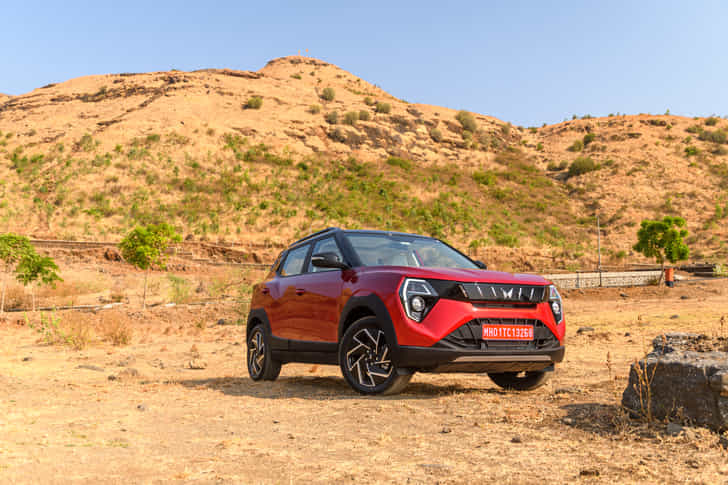
Given your banking job with frequent transfers, moderate running and a budget of Rs 12 lakh, the Maruti Suzuki Brezza petrol is the most sensible choice. It is a reliable, low-maintenance car with a strong service network across India, which is crucial when you are moving between cities. It now gets a turbo petrol engine, so it has the performance you need in the hills. Its compact SUV form factor gives you enough ground clearance and practicality for hilly terrain without being difficult to drive as a new driver.Diesel does not make sense at your running level, and EVs in this price range either compromise too much on space or practicality. The Brezza strikes the right balance between ownership experience, reliability and ease of use, making it a car you will be happy with for years regardless of where your job takes you. If you want a slightly more premium feel and an automatic option, the Mahindra XUV 3XO petrol is also worth considering, but the Brezza remains the more rounded package.

VehicleMaruti Suzuki Brezza
VehicleMahindra XUV 3XO
Maruti Suzuki Brezza
4d

Hi everyone, I’m planning to buy a Tata Nexon and would really appreciate some advice from current Nexon owners or anyone who has recently compared these variants. My current options are the Nexon Creative AMT, which is around Rs 12.46 lakh on-road, and the Creative AMT Camo, which costs around Rs 12.90 lakh on-road. The difference is roughly Rs 44,000. I’m particularly interested in the Camo for its additional features and the Munnar Mist colour, but I’m wondering whether the extra Rs 44,000 is actually worth paying over the regular Creative AMT. My priorities are good long-term ownership, genuinely useful features rather than cosmetic additions, safety and comfort, and decent resale value. I’m also planning to keep the car for several years, and my overall budget is strictly under Rs 13 lakh on-road. So, which would be the better choice: the Creative AMT to save Rs 44,000, the Creative AMT Camo by paying the extra Rs 44,000, or skipping the Nexon and considering another manufacturer or variant under Rs 13 lakh? If buying with this budget today, which one would you choose and why? I’d also be interested in hearing from anyone who has already booked or owns the Camo, particularly regarding its unique features, 360-degree camera and dashcam functionality, and whether the Camo package feels worth the premium.

Verified
14h

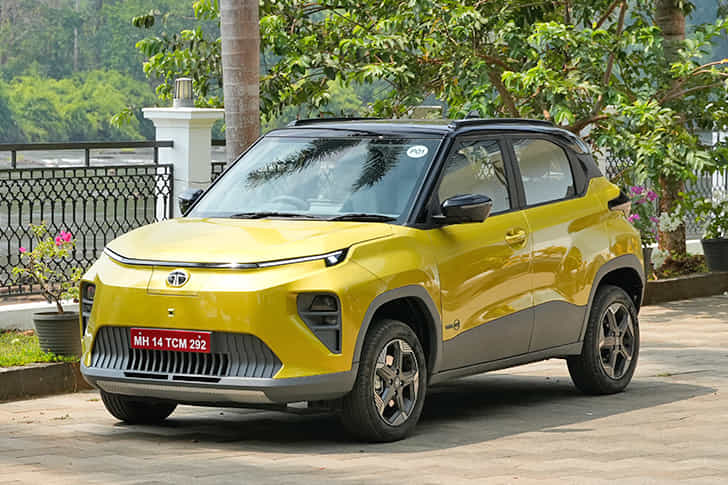
Go for the Tata Nexon Creative AMT Camo. The premium is justified by the additional features, especially the 360-degree camera with dashcam functionality, which is genuinely useful in daily driving and parking situations. Its larger 12.3-inch Harman touchscreen infotainment system is also a great addition to the feature list. The Camo package also adds a unique visual identity with the Munnar Mist colour, which helps the car stand out. The extra Rs 44,000 you are spending does get you a fair bit of useful kit and, since you are planning on keeping the car for a long time, it’s worth spending a little extra now to keep the tech feeling fresh for longer. From a long-term ownership perspective, the Nexon remains a strong choice with its solid safety credentials and comfortable ride. However, the service experience of Tata cars can be inconsistent depending on the city and dealership, so check your dealer’s reputation before you commit.The Creative AMT Camo strikes a good balance between value and features, making it a solid pick within your Rs 13 lakh budget.

VehicleTata Nexon
Tata Nexon
Tata Nexon
4d

I am looking for an automatic car under Rs 15 lakh, although the budget can be somewhat flexible. My monthly running is no more than 500km, largely within the NCR, with only occasional weekend trips to Haryana, Uttarakhand and Himachal Pradesh. I am open to petrol, EV and hybrid options, but given my low usage, a petrol car would probably make the most sense. However, the uncertainty around fuel-blending policies is what has made me consider an EV. With such low running, I am also concerned that a DCT gearbox may not be ideal, so I would prefer a car with a torque-converter automatic. A Hyundai dealer mentioned that Hyundai’s DCT and torque-converter automatics are essentially the same, but I am not convinced that is correct. I would appreciate some recommendations based on these requirements.

Verified
15h

Go for a petrol automatic with a torque converter gearbox. Your usage is low, mostly city with occasional highway trips, so petrol is the right choice and a torque converter automatic is the most reliable and stress-free option for city driving. The Hyundai dealer is incorrect – Hyundai cars use DCT gearboxes on turbo petrol engines and torque converter automatics on naturally aspirated petrol engines, and they are both completely different. DCTs can feel jerky in stop-start traffic and can throw up some issues, while torque converters are smoother and more reliable in the long run.The Maruti Suzuki Brezza automatic is the most sensible recommendation here. It uses a 6-speed torque converter automatic, is reliable, easy to drive in the city and has Maruti’s strong service network; the ride too is geared for plush low-speed city comfort, on highways though there is some float at higher speeds. On the EV side, your low running does not justify the higher upfront cost, and you do not have a clear financial case for it. On the fuel blending concern, modern petrol engines are engineered to handle E20, and there is no official roadmap beyond that, so it should not be a reason to avoid petrol. Furthermore, Maruti has said that they have built in a higher margin for material compliance to slightly higher ethanol blends, so on the material front you should be fine; mileage, though, would likely drop with higher ethanol blends, but this would be true across models. Thus, go for the Brezza automatic and you will have a hassle-free ownership experience.

VehicleMaruti Suzuki Brezza
6d

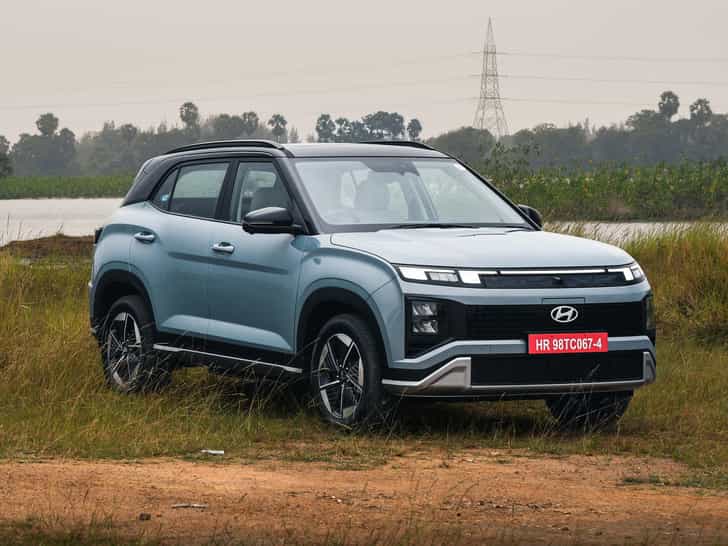
I skipped the first service for my Hyundai Creta EX (O) and am planning to get the second service done, as the car is about to hit the 10,000km mark. Is there any checklist I should go through or anything I should carry before taking the car to the service centre?

Verified
17h

For your Hyundai Creta, the first thing to do is check the owner's manual for the recommended service intervals and what is included at each service. There is typically a chart indicating which items need to be inspected and/or replaced. As for missing the first service, it is usually a basic inspection and fluid check, so missing it is not a major issue as long as the car has been running well, although the dealer could make a bit of a procedural fuss. Missing the first service should not affect the warranty as long as the recommended schedule is followed from now on, but it is worth confirming this with the service centre for peace of mind.At 10,000km, the key items include an engine oil and filter change, air filter inspection, brake inspection, fluid top-ups, and a general check of the suspension, steering and tyres. Make a note of any issues noticed, such as unusual noises, vibrations or warning lights, and mention them clearly to the service advisor. Ask for a detailed job card before the work begins and request that any additional work be approved by you first. Check that the service centre uses genuine Hyundai parts and, if possible, ask to see the old parts after they have been replaced. After the service, review the bill line by line and ensure that the service booklet is stamped and updated.Service centres also tend to recommend value-added services such as engine flushing, underbody coating and seat upholstery cleaning. It is best to stick to what is specified in the owner's manual and opt for these services only if there are specific problems that need addressing or conditions that make the car vulnerable to damage.

VehicleHyundai Creta
Hyundai Creta
Hyundai Creta
5d

I’m planning to keep my next 7-seater for 8–10 years. My annual running is around 12,000km, mostly on the highway, although the car may sometimes remain parked for 3–6 months because I work abroad. My budget is around Rs 18 lakh, with some flexibility of another Rs 1–2 lakh, and I prefer a manual. I’m currently considering the Hyundai Alcazar Executive petrol, Alcazar diesel and Mahindra XUV 7XO base/AX3 diesel. The XUV 7XO is a large and heavy car, so I’m concerned that the petrol version may not deliver good real-world fuel economy. The Tata Safari petrol is also on the list, but I have some concerns about Tata’s after-sales service. My priorities are long-term reliability, real-world mileage, maintenance costs and overall peace of mind rather than just features. I’m also considering the implications of E20 petrol and potential DPF/AdBlue-related issues with a diesel car that may sit unused for several months. The XUV 7XO’s lower variants also have a long waiting period, whereas Hyundai is currently offering a Rs 1 lakh ex-showroom discount on the Alcazar. I’m currently driving a 2008 Maruti Suzuki SX4 petrol manual. There are six adults and a toddler in the family. Considering all these factors, which one would you personally buy in this situation, and why?

Verified
18h

Go for the Hyundai Alcazar Executive Diesel Manual as it best fits your requirements. Your usage of 12,000 km/year, mostly on highways, means a diesel manual makes sense because the fuel savings will add up over time, and the Alcazar diesel is a proven, reliable package with a comfortable ride and a strong service network. The Alcazar is also a more manageable size than the Mahindra XUV 7XO, and the discount you are getting makes it even better value. The XUV 7XO diesel is a great car, but the long waiting period and larger size make it less practical for your needs. The Tata Safari petrol is not the right choice here because your usage is highway-heavy and diesel is the better fit. The Alcazar diesel will give you the best balance of efficiency, reliability and peace of mind over the long term.

VehicleHyundai Alcazar
VehicleMahindra XUV 7XO
VehicleTata Safari
5d

I’m 52 years old and have been driving a Maruti Ciaz ZXI for the last 10 years. It has covered only around 83,000km. I’m now looking for a 5 to 7-seater SUV with a budget of around Rs 20 lakh, with a 10 percent flexibility. I’m confused about whether to choose an automatic or manual, and whether petrol, diesel or a strong-hybrid powertrain would be more suitable. My priorities are good ground clearance, comfortable ride quality, well-finished interiors, a good infotainment system, strong safety features and reasonable maintenance costs. Please suggest a suitable vehicle based on these requirements.

Verified
19h

Given your usage pattern of 83,000 km over 10 years, your annual running is relatively low, so a petrol car or hybrid car makes the most sense. Diesel is best avoided as the cost premium and potential DPF-related issues are not justified at your running. Between automatic and manual, we would strongly recommend an automatic since it makes city driving far easier and modern automatics are reliable and refined.For your requirements, the Maruti Suzuki Victoris Hybrid is the most sensible recommendation. It offers good ground clearance, a comfortable ride, a spacious and practical cabin, and a strong focus on reliability and low maintenance costs. The hybrid powertrain delivers excellent fuel efficiency in city driving, and the car is easy to live with over the long term. The infotainment system is modern and user-friendly, and safety features are well covered, including a 5-star Bharat NCAP rating.If you want a 7-seater, the Kia Carens is worth considering. It offers a more flexible seating arrangement and a comfortable ride, but the Victoris Hybrid remains the more efficient and lower-maintenance option.

VehicleMaruti Suzuki Victoris
VehicleKia Carens
4d

Hi team, I live in Pune and am planning to buy a Harley-Davidson X440T from the HD 2 Rivers dealership. However, they are not allowing me to conduct a PDI of the vehicle, saying that it is not permitted by the company. They want me to make the full payment and register the motorcycle in my name first, after which they will deliver it within 10 days of payment. Can you tell me whether a company can legally deny a customer a PDI? If not, what can I do in this situation? I want to be completely sure about the product I am getting, as PDI is an important part of the vehicle-buying process nowadays. Please suggest what I should do.

Verified
1d

You are absolutely right to insist on a pre-delivery inspection (PDI) and to be cautious about the process. A PDI is a standard part of the vehicle delivery process and is meant to ensure that the vehicle you are receiving is in perfect condition before registration and final delivery. There is no company policy from Harley-Davidson that prohibits a customer from inspecting their vehicle before registration. This is more likely a dealership-level practice, possibly to streamline their own processes.Our advice would be to push back firmly. Ask the dealership to show you the specific written policy from Harley-Davidson India that prohibits customer PDI before registration. If they cannot produce one, escalate the matter to Harley-Davidson India customer care and explain the situation clearly. You can also request that the dealership allow you to inspect the vehicle in their yard or PDI area before registration, even if it is not a full formal PDI. If the dealership remains uncooperative, it is worth considering another dealership in Pune, as this is not standard industry practice.Ultimately, you are the customer, and you have every right to be completely satisfied with the product you are buying. Do not let the dealership pressure you into skipping a basic ownership safeguard.

3d

I will be booking the Atlantic Blue 390R next month. I am from Ahmedabad and recently visited the dealership for a test ride and quotation. The quotation they provided is attached in the photo. Before I book the motorcycle, I want to understand what the following charges are for: 1. Municipality Charges: I have never heard of this charge. Is it compulsory? 2. 5-Year Extended Warranty: The dealer said it covers only engine wear and tear. Is this really worth getting? Has anyone actually used this coverage, or is it just an additional way of charging consumers? 3. HYPO: I assume I won’t have to pay this since I am buying the motorcycle outright with cash. Is that correct?

Verified
1d

Congratulations on your new KTM 390 Duke R - we're sure you're in for a hair-raising journey. Let’s break down the charges:Municipality Charges: This is not a standard charge everywhere, but some cities levy a small fee at the time of registration, usually for road maintenance or local transport infrastructure. It’s typically a few hundred rupees and is collected by the RTO. If it’s a significant amount, ask the dealer for a breakup or check with your local RTO agent.5-year extended warranty: This is a genuine KTM-backed product, but it’s important to understand what it covers. It’s essentially an extension of the standard warranty, but after the initial period, it usually covers only major engine and gearbox components, not wear-and-tear items like clutch plates, brake pads or consumables. Whether it’s worth it or not depends on your ownership plans. If you plan to keep the bike long-term and keep it stock, then it's definitely worth shelling out the small amount, as it will give you peace of mind in the long run.HYPO: This is a hypothecation charge, which is only applicable if you’re taking a loan. If you’re buying the bike outright, you don’t need to pay this.A couple of additional tips: check if the insurance premium quoted is competitive – you can often get a better deal by buying it yourself online. Also, ask for a detailed breakup of the “handling” or “logistics” charges - if you don't seem convinced by these, tell the dealer to remove them.Overall, most of these charges are legitimate, and some we would even recommend you spend on (like the extended warranty), but it’s always worth asking for a detailed breakup and questioning anything that doesn’t make sense. Happy riding!

KTM 390 Duke R
KTM 390 Duke R
KTM 390 Duke R
3d

Looking to buy my first car with a petrol automatic. I have never driven before, and going forward, I will mostly use the car for city driving with occasional highway trips. My budget is around Rs. 15 lakh. I am confused between the Brezza ZXI+ AT and Victoris VXI AT. Which one should I go for? Please suggest some better options as well within a budget of around Rs. 15-17 lakh.

Verified
1d

Go for the Maruti Suzuki Brezza ZXI+ AT. As a first-time buyer with mostly city driving and occasional highway runs, the Brezza is the more confidence-inspiring choice. The naturally aspirated petrol engine is smooth and predictable, the torque converter automatic is reliable and easy to live with, and the higher seating position gives you excellent visibility in traffic. This Maruti Suzuki car is also a genuinely comfortable 5-seater with a well-sorted ride, and Maruti's service network is a big plus for long-term ownership.The Maruti Suzuki Victoris VXI AT is a good car, but if you don't need the extra space, you are better off with a higher trim of the Brezza with more features. If you are looking for alternatives, the Mahindra XUV 3XO AX5 AT is worth a look. It is one of the most spacious compact SUVs, has a wide cabin and a strong turbo petrol engine, but the boot is smaller than the Brezza's. The Skoda Kylaq AT is another option if you want a more engaging driving experience, but as a first car, the Brezza's ease of use and ownership peace of mind make it the better recommendation.

VehicleMaruti Suzuki Brezza
VehicleMaruti Suzuki Victoris
VehicleMahindra XUV 3XO
VehicleSkoda Kylaq