Latest questions answered by experts
Hi, I have been using a sedan for the past 12 years. I want to purchase a midsize SUV for a usage of around 250 to 500 km per month and a long trip once in a quarter. I have shortlisted Creta, Kushaq, Elevate and Hyryder. My budget is between Rs. 16 lakh and 18 lakh. I want to use the car for the next 10 years. I want a car with a spacious cabin that has enough leg room and offers good riding comfort. Suggest me such a car.
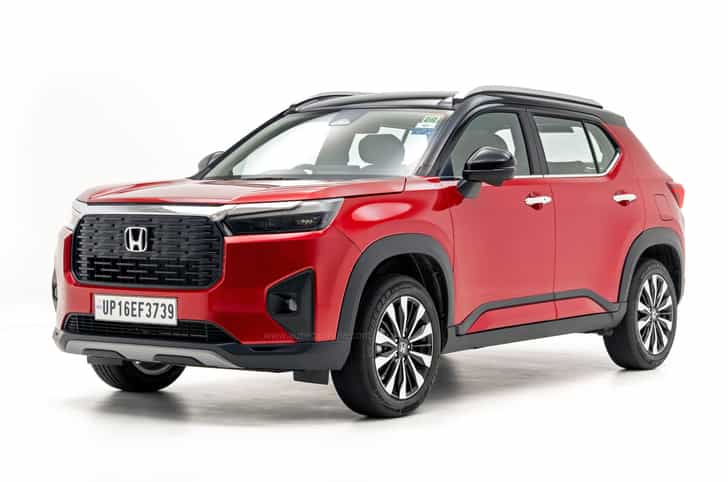
With your low monthly running and long-term ownership plan, petrol is the right choice. The Honda Elevate is the best fit here. It offers a spacious cabin with good rear legroom, a comfortable ride and Honda’s reputation for long-term reliability. The naturally aspirated petrol engine is smooth and easy to live with, and the car is well suited to both city driving and occasional long trips. The Hyundai Creta is also a strong option with a more premium cabin and a slightly more comfortable ride, but the Elevate offers a bit more performance for highway use. The Skoda Kushaq is the driver’s car of the lot, but it is not as spacious as the rest. The Toyota Urban Cruiser Hyryder hybrid is a good, no-nonsense altenative. Go for the Elevate petrol CVT if you want an automatic, or the manual if you prefer to drive. It is the car you are most likely to be happy with after 10 years.

I am first time car buyer planning to buy an SUV considering family needs. I will be driving mostly in Bangalore city traffic and plan to drive longer distances every few months, up to 500 kms including ghat roads. I would like to have good service support, automatic option (not decided), front visibility for city traffic. My budget is upto 12L. Can you suggest suitable options?
For your requirements, the Mahindra XUV 3XO is the best fit. It offers a strong balance of city-friendly dimensions, good front visibility and a comfortable ride, which is important for Bangalore traffic. This Mahindra car is also one of the most spacious compact SUVs in the segment, making it a genuinely comfortable family car. It handles highway runs and ghat sections well, with a stable and confident feel. Mahindra’s service network is strong, and the car is well-priced within your budget. The automatic option is a proper torque converter, which is smooth and reliable in city conditions.The Maruti Suzuki Brezza 1.5-litre is a good alternative, offering lower running costs and better efficiency. Its new turbo petrol will offer better highway performance, but it only comes with a manual. It is not as spacious as the 3XO, but it is comfortable, easy to drive and backed by Maruti’s extensive service network.Overall, the 3XO is the more complete package for your needs. It combines space, comfort, city usability and highway capability better than most rivals in this price range.
Hi, I am planning to buy a sub compact SUV. I have a family of 5 adults and my usage is majorly in the city with occasional driving on the highway. I prefer manual gearbox. Please suggest.
For a family of five adults with predominantly city use and occasional highway runs, the Mahindra XUV 3XO is a solid choice. It is one of the widest cars in the segment, which makes it genuinely usable as a five-seater, and the rear seat is comfortable enough for three adults on city journeys. The 1.2 turbo petrol engine is punchy and well suited to both city driving and highway overtakes, while the manual gearbox is smooth and easy to use. The 3XO also offers excellent value for money, a strong safety package and a good feature set. The only real compromise is the boot, which is on the smaller side, but for your usage pattern that is a reasonable trade-off. The Maruti Suzuki Brezza is a good alternative, but the 3XO is the better all-round package for a family of five.
Hi, I already have a Renault Triber 7-seater. Now, I want to purchase a small city commuter car within a budget of around Rs. 8-9 lakh. My daughter is learning to drive, so I would like some guidance in making the right choice, keeping her needs in mind as well. Thank you in advance.
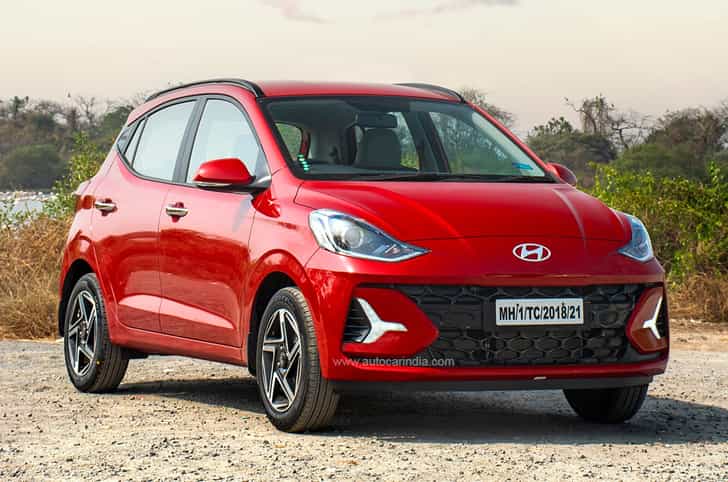
Consider the Hyundai Grand i10 Nios AMT. It is the best fit for your requirements. The Nios is compact, easy to manoeuvre and has excellent all-round visibility, which makes it ideal for a new driver learning in city conditions. The AMT automatic takes away the stress of clutch control in traffic, making the learning process smoother and more confidence-inspiring. It is also a very reliable and low-maintenance car. You can also consider a Maruti Swift AMT, although the Nios is more compact, which makes it a bit easier to drive around town.

Should I go for BMW IX1 LWB or BMW X1 LWB?
Go for the BMW IX1 if you're looking for zippy yet seamless performance as well as low running costs. If you can arrange for home charging, the IX1 is certainly the better option. Pick the X1 LWB only if home charging isn't an option or if you frequently do over 500km road trips and don't want to plan for charging stops along the way.
Hi, I am currently driving a 2018 S-Cross diesel and wish to upgrade to a new car. My daily commute is around 80+ km, with occasional long trips of 200+ km. My budget is below Rs. 15 lakh. Kindly suggest a few good options available at present. Thanks.
With an 80+ km daily commute and a budget under Rs 15 lakh, the Mahindra XUV 3XO diesel is the most sensible upgrade from your S-Cross diesel. The 3XO diesel is one of the few strong diesel options left in this price bracket, and it is well suited to your high daily running. The engine is punchy, efficient and well proven, and the car itself is spacious, comfortable and well equipped for the money. It also offers a good balance between city usability and highway stability, making it a strong all-rounder for your usage pattern.The Hyundai Venue diesel is also worth considering, especially if you're considering the automatic version. The Venue HX5 diesel-auto will fall within your budget - it is smooth, refined, and is likely to return respectable fuel efficiency.
I intend to replace my TATA Tiago NRG and am looking for a small SUV EV. My driving is around 5000 km per year with mostly highway driving for leisure trips of maximum 400 km per day. I am thinking of buying the Punch Empowered 40kw under a budget of 13 lakh but I am worried about "range anxiety".
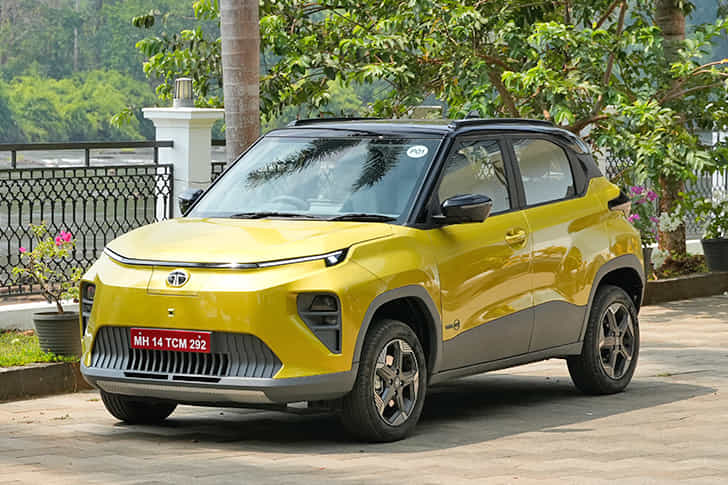
With 5,000 km a year and mostly highway leisure trips of up to 400 km a day, the Tata Punch EV Empowered 40 kWh is actually a very sensible choice. The 40 kWh battery offers a real-world range of around 300-350 km depending on driving style and conditions, which is enough for most of your trips with a top-up en route. The Punch EV is also one of the most affordable electric SUVs, and it offers a comfortable ride, good ground clearance and a compact footprint that makes it easy to live with.Range anxiety is understandable, but it is largely a planning issue. On a 400 km trip, you will need a quick charging stop, and with the growing DC fast-charging network, this is easily manageable. The key is to plan your stops around available chargers and not run the battery too low. Overall, the Punch EV Empowered 40 kWh is the right choice for your usage and budget. Plan your charging stops and you will find range anxiety is far less of an issue than it seems.
I need help choosing between the Victoris LXI MT and Brezza ZXI MT (1.5-litre petrol). I would appreciate some suggestions. We had decided to get the Brezza ZXI MT with the 1.5-litre petrol engine. The dealer quoted an on-road price of Rs. 13,32,491. When we asked for a discount, they offered us the Victoris LXI MT instead. The price quoted for the Victoris after the discount is Rs. 13,00,000 on-road, along with a free Rs. 6,000 reverse parking camera and Rs. 40,000 worth of diamond-cut alloy wheels. Now I am a bit confused about which one to get. The car is for my dad, who drives around 50 km daily. We currently have a 2014 Hyundai Grand i10.
The Victoris and Brezza are based on the same platform and share several bits, including their 1.5 petrol powertrain. The Brezza is sub-4-meters in length, whereas the Victoris is a bit longer. The Victoris has a more appealing two-tone interior, and even in LXI guise, it covers the basics well. If you're getting the Victoris at a lower price than the Brezza, it is certainly something that you must seriously consider.Alternatively, you could consider the Brezza turbo version, which is more affordable than the 1.5 version, with more performance while the controls are still light and easy. The ZXI turbo will increase the price gap with the Victoris and is better value. However, if the turbo isn't something that you want, then the Victoris is the one to go for.
I am planning to upgrade from Tiago under a budget of 14 to 15 lakh. I got a quote for the 3XO AX7 automatic around 14.5 lakh. I was earlier looking for Brezza automatic ZXI plus 15 lakh quote. Should I buy 3XO or at least check some other cars? My yearly running is between 8,000-9,000 km which involves both city and highway driving with weekend trips once in two three months.
Go for the Mahindra XUV 3XO AX7 automatic at Rs. 14.5 lakh. It is a significant upgrade from the Tiago, offering a much larger cabin, a more powerful turbo petrol engine and a genuinely premium feel for the money. The 3XO is one of the most spacious compact SUVs in the segment, with a wide rear bench that makes it a comfortable five-seater, and the AX7 variant is well-equipped without pushing you beyond your budget. The Brezza ZXi+ at Rs 15 lakh is also a strong option, but the 3XO simply offers more car for the money in terms of performance and overall value. The 3XO's turbo petrol engine will make those occasional weekend trips more enjoyable. The only drawback is that the boot is on the smaller side but unless you regularly travel with a lot of luggage, it should not be a deal-breaker.
Hi Team, I want to buy the Kia Syros EV HTK (base variant). My daily running is around 280 km.
With a daily run of 280 km, the Kia Syros EV 42kWh HTK might not be an ideal option. This Kia car is a very good family EV with a comfortable ride, spacious cabin and a premium feel, but with a real-world range of around 300- 350 km depending on driving conditions. At 280 km a day, you are using around 80-90% of the battery every single day, which means you will need to charge it daily, and you will have very little buffer for unexpected detours or highway driving at higher speeds, where range drops. For your usage, at the current price, consider diesel-automatic options of the Venue or Syros diesel-automatic, which start at around Rs 15 lakh.If you must have an electric car, opt for the extended range version of the Syros EV with a 51.4kWh battery that'll have a real-world range of around 400km, which will be a bit more reassuring given your 280km daily usage.

I need to buy a 7-seater car within next 2-3 months and my budget is between Rs. 15 and 18 lakh. My priorities are security and driving experience. I am confused between hydraulic power steering and electric power steering. Which type offers better driving feel and handling? Please suggest a suitable 7-seater car.
Within your Rs. 15-18 lakh budget, the Ertiga is the best fit, particularly if reliability, ease of ownership and practicality are your priorities. It is a genuinely spacious seven-seater, easy to drive and has good visibility, making it well suited to family use.If you want something a little more premium, the XL6 is worth considering. It offers a more upmarket cabin and six-seat layout, but is essentially the more premium alternative rather than a fundamentally different proposition. It can still be considered within your budget depending on the variant and on-road price.On the steering question, EPS is not something to avoid. Almost all modern cars in this segment use electric power steering, and it is lighter at low speeds while still providing adequate feedback at higher speeds. Hydraulic steering can feel more natural and communicative, but that alone should not determine your choice.
Hi Autocar, I am a regular viewer of your YouTube channel and enjoy watching your reviews of cars and bikes. I currently use a 2016 Honda Jazz petrol manual at home. It is reliable and spacious, but lacks power. I now live in Mumbai and am looking to buy an SUV for both city driving and long trips. I am a driving enthusiast and regularly go on long drives with my family. I typically do at least 1,000km when I come home for holidays every alternate month, while the car will remain mostly idle in the other months. My priorities are a powerful petrol engine producing at least 120hp, an automatic transmission and enough rear-seat space for three people. I don't want too many bells and whistles such as a panoramic sunroof, multiple screens, ADAS or ventilated seats. Basic features are sufficient for me. Please suggest a safe and reliable car for long-term use within a budget of Rs 20-30 lakh on-road. I am also open to considering a used car.
Coming from a Honda Jazz and considering that you enjoy driving, the Mahindra XUV 7XO petrol automatic is a strong fit for your requirements. Its 2.0-litre turbo-petrol produces 203hp and 380Nm, giving it the performance you are looking for, while the 6-speed torque converter automatic works well for both Mumbai traffic and long highway drives. It also has a spacious cabin with enough width to accommodate three adults in the second row comfortably, making it a practical family car.This Mahindra car also offers a good balance of safety, ride comfort and highway stability, which will be particularly useful given your regular 1,000km road trips. Despite its size, it is reasonably easy to drive, and the large boot is useful for carrying luggage.The main drawback is fuel economy, particularly in Mumbai traffic, but your relatively low average annual running means this shouldn't be a major concern. A well-equipped AX5 or AX7 petrol AT would fit the brief without paying extra for features you don't particularly need.
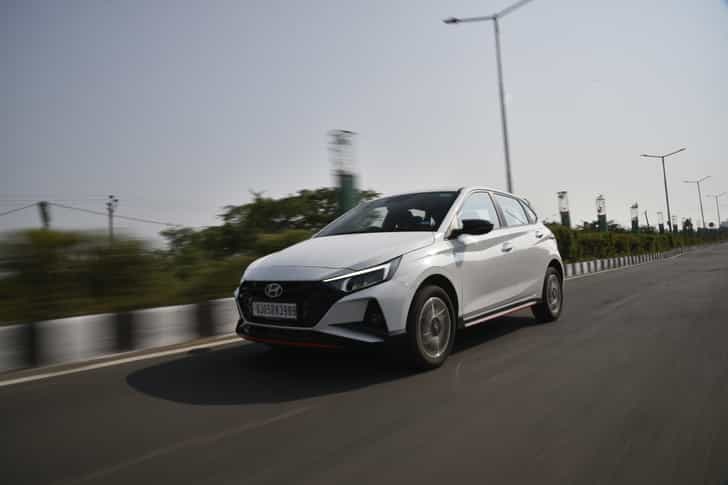
I am considering the Hyundai i20 Sportz CVT and Maruti Suzuki Baleno Zeta AMT for city driving in heavy traffic. My monthly running will be around 1,500-1,600 km, and this will be my first car. I want a car with decent mileage and a smooth driving experience. Which one should I prefer?
Go for the Hyundai i20 Sportz CVT. For your usage of 1,500-1,600 km a month in heavy city traffic, the CVT automatic is the key advantage. It delivers a much smoother, more seamless driving experience in stop-and-go conditions than the Baleno's AMT, which can feel jerky during gear changes. The i20 also feels more premium inside and offers a more refined overall package. The Baleno Zeta AMT is the more fuel-efficient option and a solid, reliable first car, but the mileage difference isn't significant enough to outweigh the comfort and smoothness of the i20 CVT for your usage. For a first car focused on city driving, the Hyundai car mentioned above is the better choice.
I’m looking to buy the Citroen Aircross X 5-seater automatic, but I’m not completely convinced because of Citroen’s after-sales service and parts availability. If I don’t go for the Aircross, I will have to consider smaller cars such as the Kylaq or Venue, as my budget is Rs. 16 lakh at most. The extra space, ride comfort, and good discounts on the Citroen are tempting compared to the other two. Which one should I choose? My usage will be around 60% highway and 40% city.
Go for the Citroen Aircross X 5-seater automatic. This Citroen car is a genuinely comfortable long-distance car with a spacious cabin and a very absorbent ride. The discounts make it excellent value, and you are getting a larger, more comfortable car for the same money as a smaller SUV like the Kylaq or Venue. Citroen's service network is not as extensive as Maruti, Hyundai or Kia, but it is improving, and the Aircross X is not a complex car. If you are in a major city, service and parts availability should not be a deal-breaker. The Kylaq and Venue are both good cars, but they are smaller and less comfortable on long highway runs. The Aircross X is the better fit for your usage and budget.
Please suggest an SUV for me with an annual running of around 8,000- 10,000 km, mostly on highways and mountain terrain such as Ladakh, Jammu and Kashmir. A manual diesel is my priority, along with safety. I have a family of two, and my budget is Rs. 10-15 lakh.
For your 8,000- 10,000 km annual running and frequent highway and mountain trips, the XUV 3XO diesel manual remains the first choice. This Mahindra car has compact dimensions that are useful on narrow mountain roads, while the diesel has plenty of low-end torque for climbs and rough terrain. It also offers strong safety credentials and is much easier to live with as an everyday car.If your Ladakh and Jammu & Kashmir trips involve genuinely challenging terrain and you want a more capable off-roader, the Thar 3-door is the more specialised choice. The 2.2-litre diesel with 4WD offers a proper low-range transfer case, making it far more capable off-road than the 3XO.However, the Thar is less practical for everyday use. It is a four-seater, has limited boot space, and the rear seats are less convenient to access. The 3XO is therefore the better all-rounder, while the Thar makes sense if off-road capability is a major priority.
Need expert advice?
Ask the Autocar community and experts.