autocar-logo
Mumbai
PR

Prabhakar Raj

4d

I am in doubt about DPF. My drive is mostly 30km a day in Bangalore traffic. What's the suggested frequency to go on consistent speed on a long drive?

Autocar India team

Autocar India

Verified
23m
Your 30 km a day in Bengaluru traffic likely means long stretches below about 25 khp, which is exactly when a diesel DPF struggles to passively regenerate. In that kind of stop‑start usage, it’s better to plan regeneration rather than wait for the warning light.
If you go for a diesel car, try to do a dedicated DPF‑friendly run. Hold a steady 60-70 kph at roughly 1,800-2,500 rpm for 20-30 minutes about once every 2-3 weeks, or as soon as a DPF warning appears. The key is consistency and temperature, so don’t cut such a drive short if you suspect a regen is happening, and avoid lots of very short trips immediately after a cold start, which only accelerate soot build‑up.
When you’re at the dealership, ask them to show you how the car indicates DPF status and what the different DPF warnings look like, and to explain the manual‑regeneration procedure in simple terms, so you’re not guessing if a light comes on. On a test drive, also check that you can comfortably cruise at 60-70 kph with the engine sitting near 2,000 rpm in one gear without constant shifting, because that’s exactly the sort of condition that lets the DPF clean itself.
If your usage later shifts to frequent 300 km‑plus highway runs or you start doing more than roughly 1,500 km a month, the DPF will regenerate far more often on its own, and a diesel becomes much less fussy in everyday use.

Recommended questions for you

SS

Sai Shiva

4d

I am looking for a 7-seater car with a lower running cost. I think Mahindra XEV 9S is satisfying the need. Can I purchase it, or should I wait so that Plugin Hybrid EVs or Safari EV might be launched? Need your advice. Thanks.

Autocar India team

Autocar India

Verified
3m

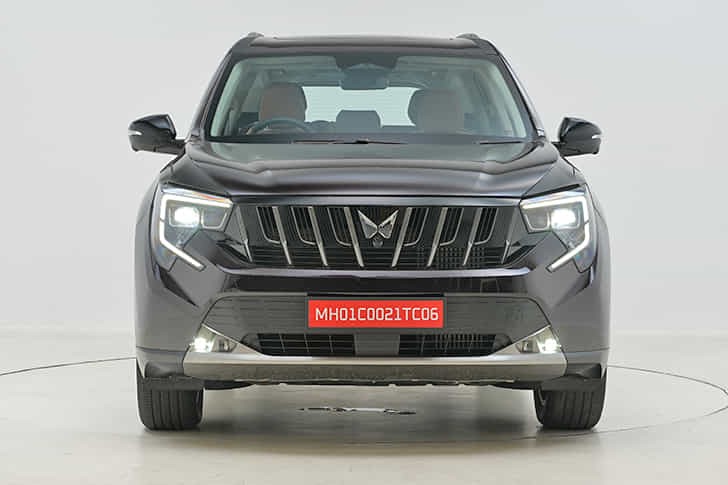
The Mahindra XEV 9S is currently one of the most complete 7‑seater EVs you can actually buy, and if it fits your budget and usage, you don’t need to overthink it. It’s built on Mahindra’s new INGLO EV architecture (shared with the XEV 9E), offers multiple battery options, genuinely low running costs, proper three‑row space and a decent boot with the third row down. The sliding second row gives you useful flexibility to balance legroom between the second and third rows. The suspension is tuned on the softer side, which makes it very comfortable in the city, even if it can feel a bit floaty at higher highway speeds.If you have reliable home charging and your running is mostly city with the occasional highway trip, the XEV 9S is already a very sensible future‑proof pick. Real-world ranges of over 420km on the larger batteries mean that you are not going to be range‑anxious on typical family runs.JSW Motors’ first plug‑in hybrid SUV and the Tata Safari EV are both interesting, but they are still some distance away. JSW’s PHEV, based on the Jetour T2, is only expected towards the end of 2026, and will likely be priced much higher and positioned more upmarket. The Safari EV is also targeting a late‑2026 launch window, and real‑world pricing, range and third‑row comfort are still unknowns.So, unless you specifically want to wait for 6-8 months for more options and are okay with higher likely prices, the XEV 9S is a safe and sensible choice today, especially if low running cost is your top priority.

VehicleJSW Motors Jetour T2
VehicleMahindra XEV 9S
PJ

Prasanna Joshi

3d

I am 68 years old and still drive on highways. My annual running is less than 12,000km. I am not used to all the fancy devices in new cars. Over the last 45 years, I have always owned a petrol sedan. Now, I am looking for an SUV with a large boot and the solid feel of a German car. My current car is in excellent condition, but being a sedan, comfort on highways is a problem. If I do buy a new car, it will be my last. Considering the foreseeable future, an electric option would be preferable.

Autocar India team

Autocar India

Verified
48m

After driving your Vento for over 15 years, it’s easy to see why you value the solid, planted feel of a German car. Given your age, highway usage and preference for a large boot and higher seating, moving to a German SUV is a very logical next (and final) step.The Volkswagen Taigun remains the most straightforward upgrade. The 2026 facelift, which will be unveiled on April 9th, brings refreshed interiors and the new 8‑speed torque‑converter automatic for the 1.0 TSI, while the 1.5 TSI with DSG still delivers that strong, confident performance you’re used to. It will feel familiar enough coming from a Vento, but with better access, visibility and luggage space.If you’re willing to stretch the budget, the newly launched Volkswagen Tayron R‑Line is the one that truly feels like a “last car”. It’s a larger, three‑row SUV positioned above the Tiguan, with a big 850‑litre boot (with the third row folded), a powerful 2.0 TSI engine, 7‑speed DSG and all‑wheel drive for outstanding high‑speed stability and safety. The cabin is modern and feature-packed, and the driving manners are very much in line with what you like about your current VW.You mentioned electric as a preference, but given your running (under 12,000 km a year) and the state of charging infrastructure and costs, a refined turbo‑petrol like the Taigun or Tayron remains the more practical and stress‑free solution for the next 10-15 years.

VehicleVolkswagen Taigun
VehicleVolkswagen Tayron
PI

Piyush

3d

I have been using a Honda City i-VTEC for the last 14 years, and now I want to switch to a new car. I am confused about whether I should go for the newer City or the Elevate. I don’t want to consider Hyundai, as I am very unhappy with my i10 Nios. Within the first year, it has developed noise issues, and the service center has been unable to find the root cause.

Autocar India team

Autocar India

Verified
2h

Your usage should determine which Honda you go for, as the City and Elevate are mechanically identical. Both are powered by a 121hp, 1.5-litre naturally aspirated petrol engine that can be had with either a 6-speed manual or a CVT automatic and are similar in terms of driving experience.If you're going to be primarily using the car in the city and if you are chauffeur-driven, go for the Honda City as it has a more comfortable rear seat and being smaller, it is easier to drive in the city. The City also benefits from a larger boot than the Elevate.However, if you want the elevated driving position of an SUV, the added practicality, more ground clearance, easier ingress/egress to the cabin and a more robust suspension, go for the Honda Elevate.

VehicleHonda City
VehicleHonda Elevate

Posted on: 2 Apr 2026