Maintain Logs
The last page of every destination is for you to use. Do enter your odometer reading at the start and finish of your driving holiday. Also fill in the details when you stop to fill fuel. This will tell you exactly how many kilometres you’ve covered and what it cost you in terms of fuel. Details like these will help you give authoritative advice to someone who wants to do the same drive after you tell them how much fun it was.
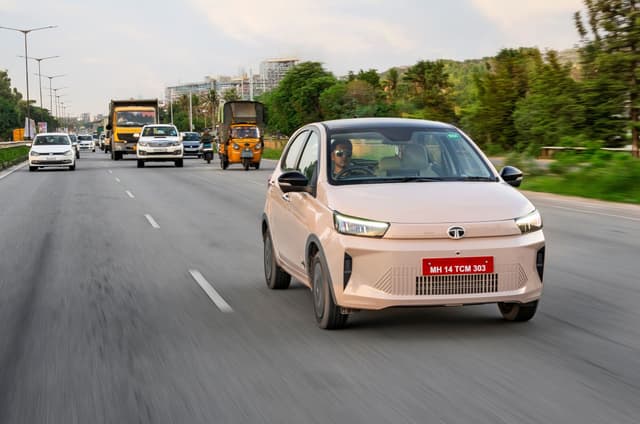
In a vast country like India rest assured that you will come across all kinds of drivers. While drivers in the city adhere to basic rules due to some sense or responsibility or the fear of a fine, out in the country, especially little villages and towns, it is a different ball (or wheel) game altogether.

You’ll find traffic coming in the wrong direction, vehicles parked in the middle of the road or cyclists darting out suddenly. This is a part and parcel of driving in India and we would advise you not to let it get on your nerves. Keep road rage away at all times. Remember you are on holiday.

Remember to:
Start early This helps you avoid morning office rush and signals in a city and you’re out on the highway in no time at all.
Before you start Check that everything is packed in properly. Activate child locks if there are children in the rear seats and keep adequate cash out for toll tickets. It is very inconvenient to reach for your wallet when you are belted in.
Also, insist that all passengers wear their seatbelts and that all head restraints are in place.
Switch drivers at regular intervals You can cover more distance if you do so and the person driving is never too fatigued.
Plan the duration at the wheel according to the route. If one driver is not very confident driving in the hills, then plan stints at the wheel in such a way that the more experienced driver takes over afresh when the hill section starts.
Minimise breaks Too many stops break a driver’s rhythm and drastically reduce the average speed and increase travelling times. Try to combine fuel and refreshment stops. Children should be encouraged to relieve themselves at such stops.
Keep your hands on the wheel Use them to drive, not to eat sandwiches, to use a mobile phone or drink water. To do all this, pull up and stop the car.
Stopping on the road and handling breakdowns
If you need to stop on the road, do it where there is adequate place for all four wheels to be completely off the road and onto the shoulder. Your car’s side can be wiped out due to improper parking on the highway. Never ever suddenly swing off the road. It startles drivers approaching or following you. Signal in advance, slow down and then pull off gently.
If you suffer a puncture, remember to keep small children locked in the car while you go about changing the wheel. Adults too should always stay to the left of the car and never wander on to the road. Put the hazard lights on and in case conditions are foggy or dark, keep the parking lights on too.
If you need to, go get some help. Then leave one male with the women and children. If you’re the only male then try to get the women and children to a dhaba or petrol pump and then go for help. If you have no choice but to leave them with the car then ensure that they are inside with the doors locked, windows up and air-conditioner running.
If the car can’t be started, then put the windows down a fraction so that air can come in but not a human hand. Lock the doors and the windows.
HANDLING ACCIDENTS
This is a section that we sincerely hope you will never need to refer too.
Accidents are unpleasant incidents that are better avoided. But then if you do have one here’s what to do afterwards.
If you hit a person and he is injured, get him to a hospital. Then go to the nearest police station and report the matter. If a mob gathers and you fear for your safety, then take your vehicle and run to the nearest police station and tell them exactly what happened. (If it was a ‘solo’ accident, that is, no other vehicle was involved and you simply crashed into a wall etc then there is no need to file a police report.)
* Always try and resolve the matter amicably, either at the scene of the accident or at the police station. Going in for a formal ‘charge’ can be a huge headache. Remember that in case of a police complaint you will have to answer court summons every time and sometimes the case can drag on for years. God forbid if you’ve had a accident in a remote place, besides the cost of getting there month after month it is a serious waste of time and energy. Cases in rural courts have a knack of dragging on and on. Trust me I’ve been there and done that!
* In case you find that the matter cannot be resolved, then file a complaint. It will usually be written in the local language, and, if you can’t read it, ask the constable to read it out to you and explain. If you have followed step 2, be sure to mention in the report that you couldn’t attend to the injured in fear of injury to self and property. Keep a copy of the report with you.
* On filing a complaint, you will have to hand over your driver’s licence, the car’s registration book and insurance policy (if any of these is missing, you are in BIG trouble!). Your vehicle will be impounded by the police station for the RTO to inspect it prior to the case going to court. (Again, since it can take months for a case to be resolved in court, it is always advisable to try and resolve the matter. Otherwise, your vehicle suffers with you.)
In the event of an accident where the passengers are injured, your first priority should be to get them to medical help as soon as possible.
If your car is incapacitated then you’ll have to flag down help. Most people do not want to get involved with and accident case but there are kind souls on our vast roads and you will definitely find help.