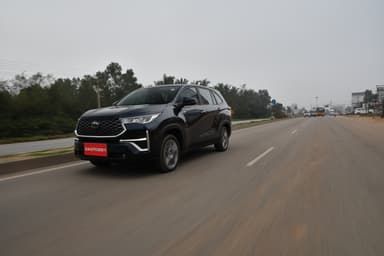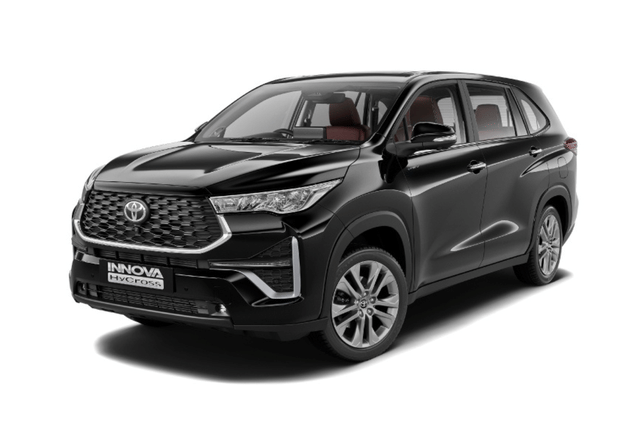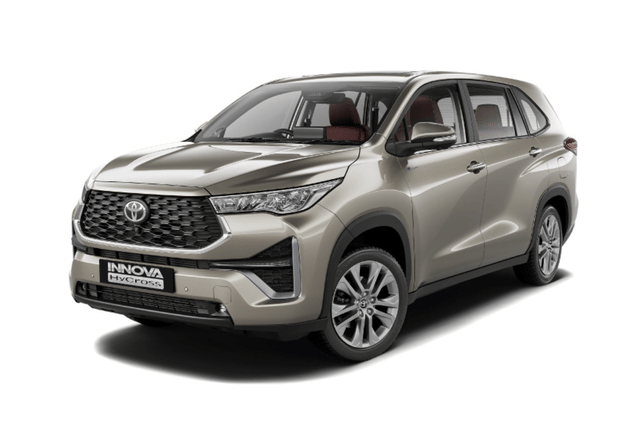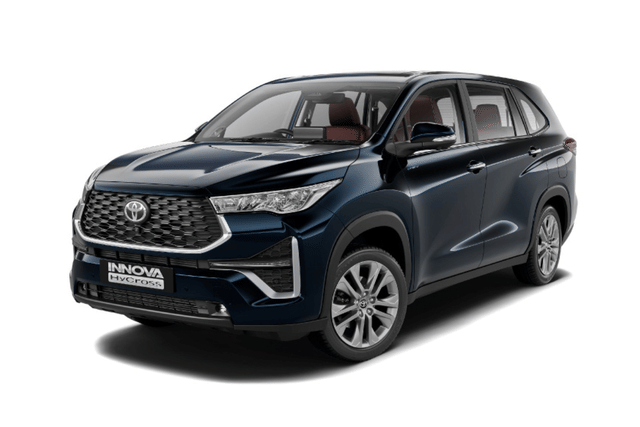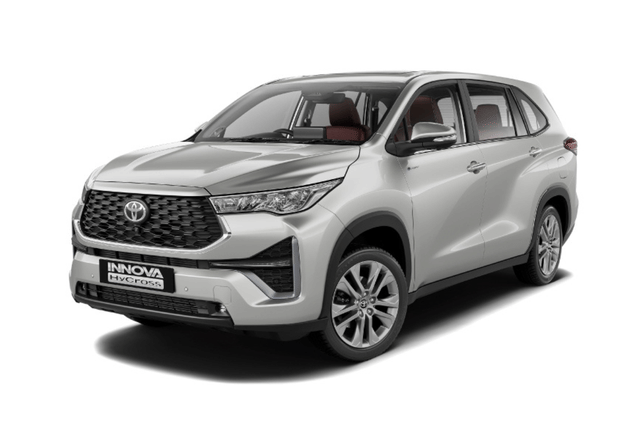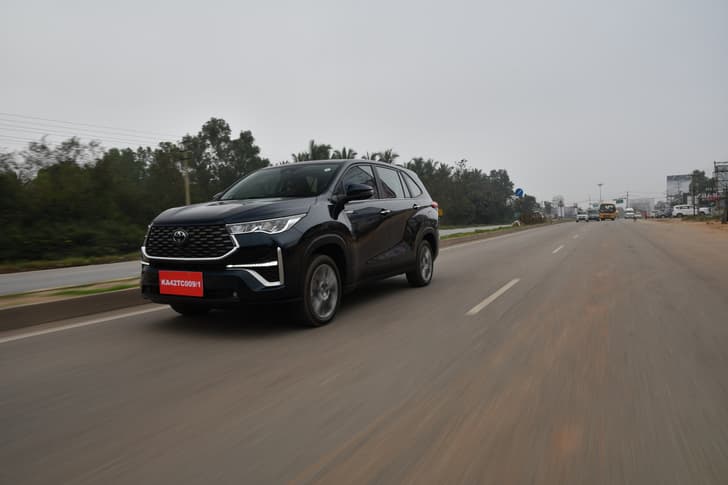
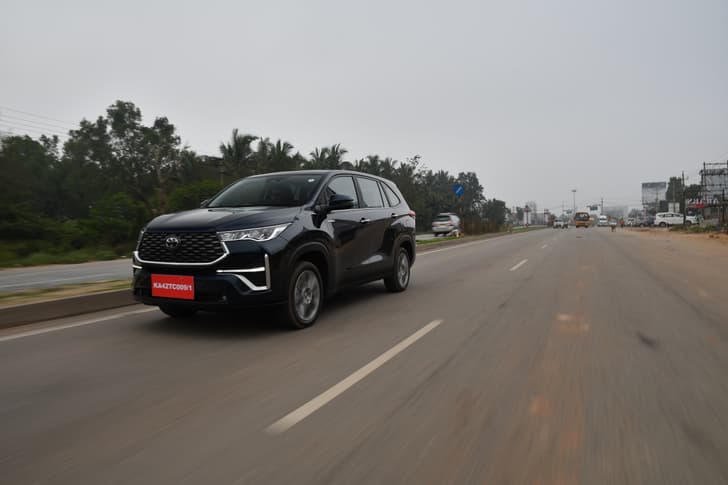
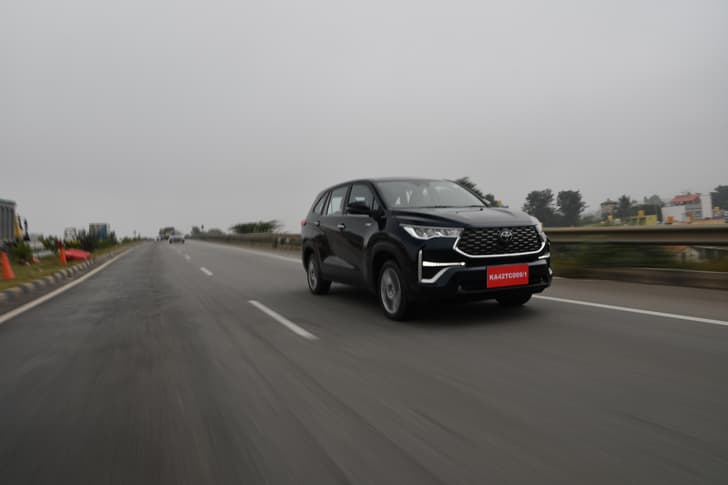
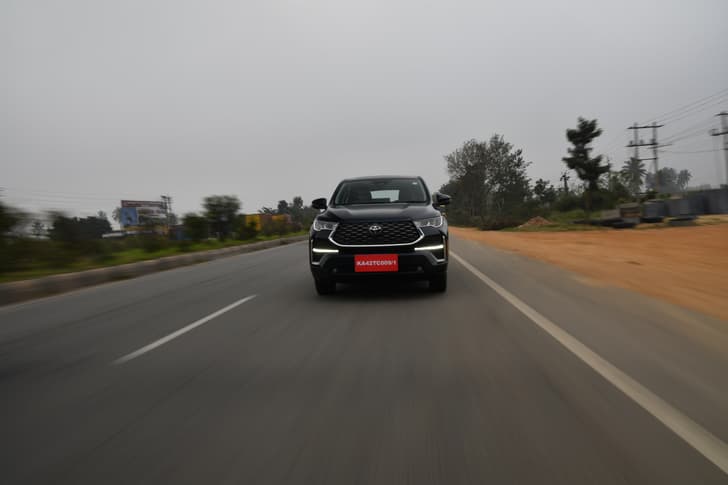
Toyota Innova HyCross
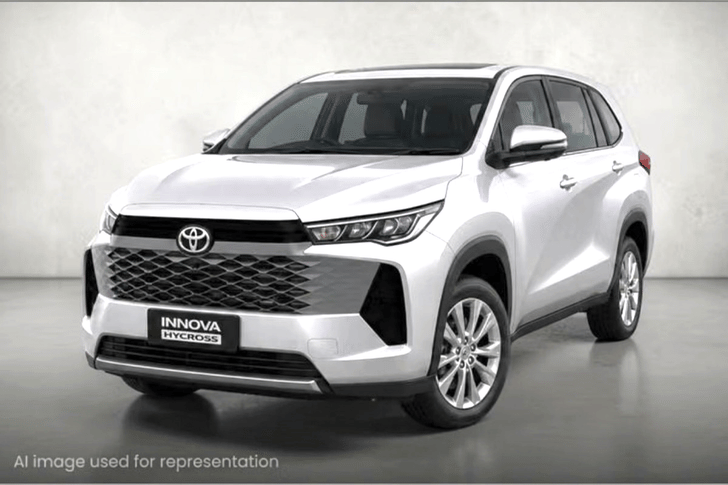
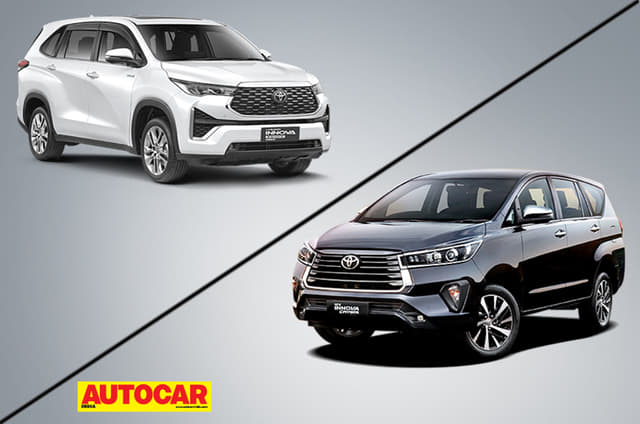
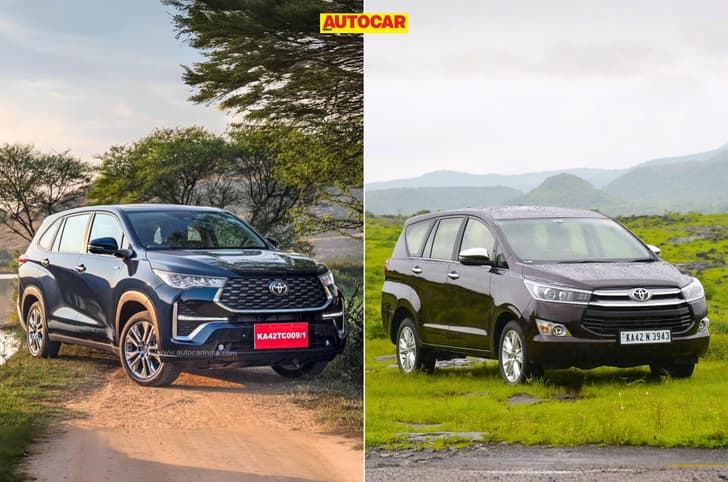
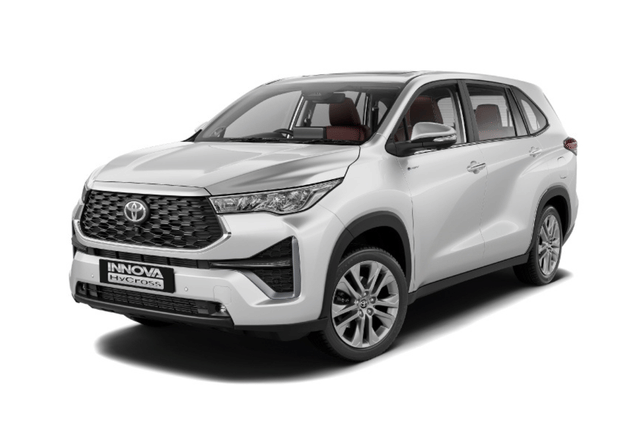
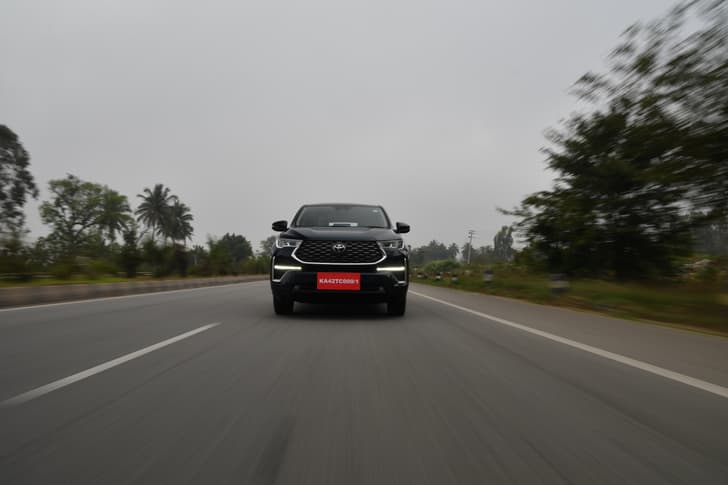
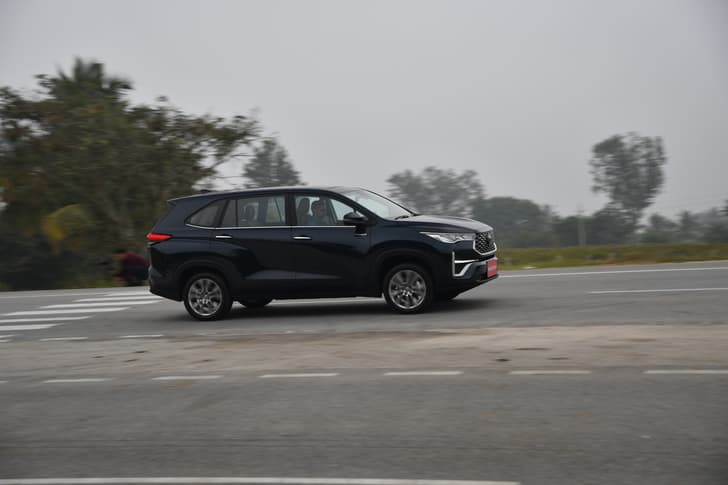
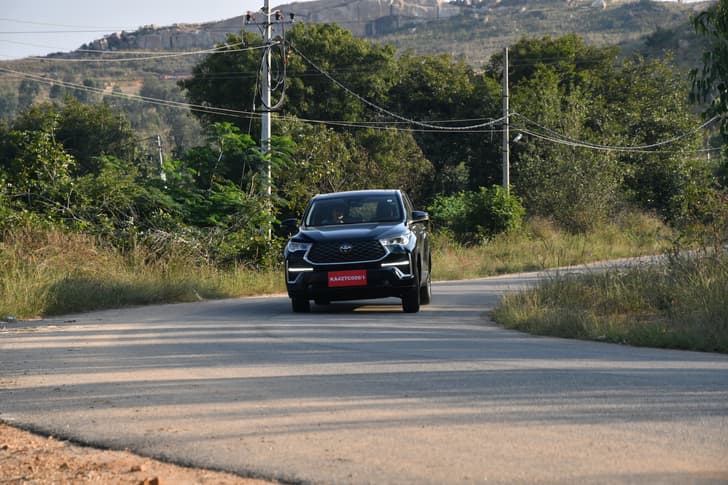
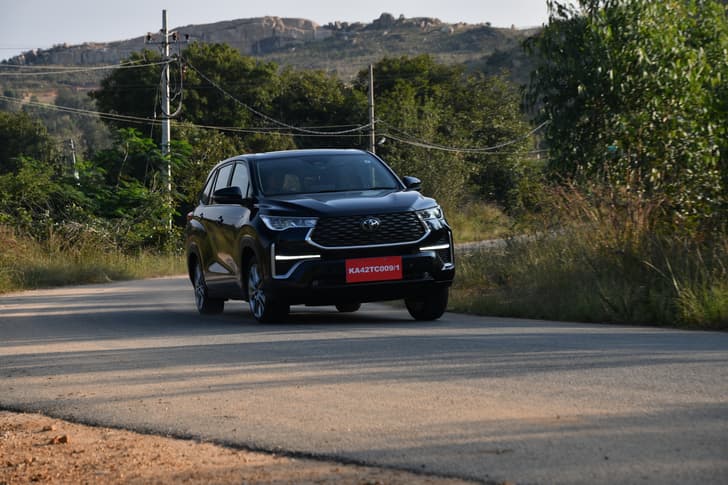
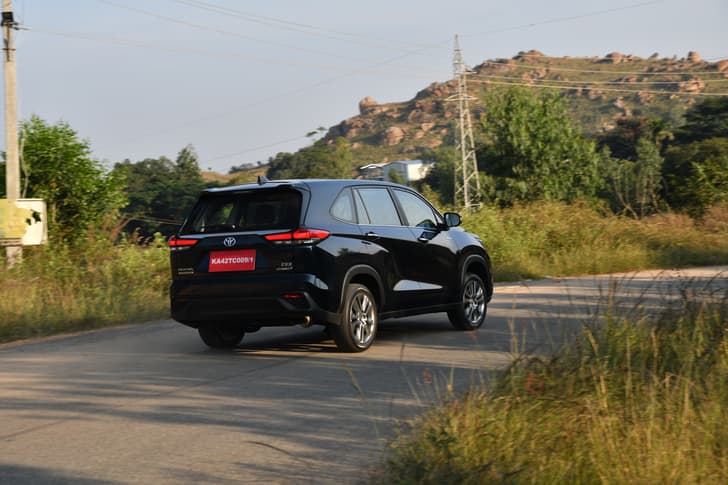
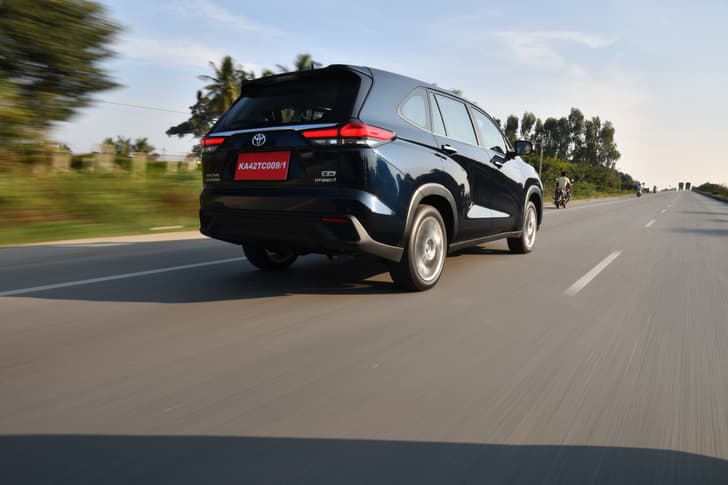
The Innova HyCross is Toyota's third-generation Innova, built with a car-like unibody structure instead of the Crysta's truck-style, body-on-frame chassis. It sits between an MPV and a three-row SUV, with a hexagonal grille, stretched headlamps and SUV-like proportions. In our road test, this structural switch stood out as the biggest change, giving the car a noticeably different driving character to the Crysta it replaces.
Innova HyCross Key Features
Here's a quick look at what the Innova Hycross offers, category by category.
Category | Key Features |
Engine and Gearbox | • 2.0-litre petrol engine with CVT • 2.0-litre strong-hybrid engine with e-CVT • 12 variants across 7- and 8-seat layouts |
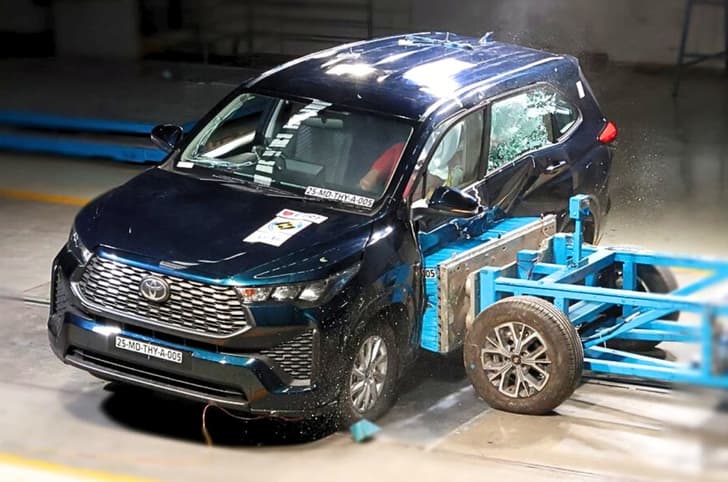
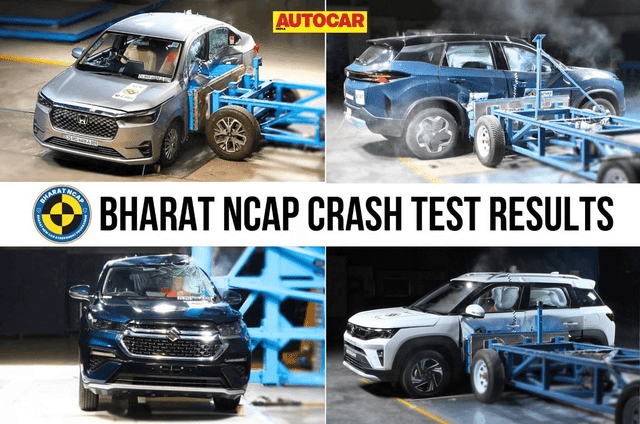
Safety | • 5-star Bharat NCAP rating • 30.47/32 score for adult occupant protection • 6 airbags standard across the range |
Infotainment and Tech | • 10.1-inch touchscreen • Panoramic sunroof • Ventilated front seats • Toyota Safety Sense ADAS on upper trims |
Comfort and Space | • Captain's chairs in the second row • Ottoman footrests • Third row folds for a "cavernous" boot |
Exterior Design | • Hexagonal grille • Stretched headlamps • SUV-like proportions |
Innova HyCross Road Test Findings
Positives
Handling improves "by a quantum leap" over the Crysta, the biggest change we noted in our road test
The electric steering feels noticeably lighter
We recorded 13.10 kpl in the city and 16.10 kpl on the highway for the hybrid
Negatives
The petrol's CVT "groans and moans in protest" under hard acceleration
Cabin plastics lower down "don't befit a car of this price" on the car we tested
Who should buy the Innova HyCross?
The spec sheet and road-test findings point to a fairly narrow set of buyers who get the most out of this MPV.
Buyer type | Why it fits |
If you need space for the family | • Captain's chairs and ottomans across the second row • A "cavernous" boot with the third row folded, we found in our road test |
If safety is your top priority | • 5-star Bharat NCAP rating with 30.47/32 for adult occupant protection • 6 airbags standard across the range |
If you want the latest tech | • 10.1-inch touchscreen and a panoramic sunroof • Ventilated front seats and Toyota Safety Sense ADAS on upper trims |
If you want an automatic gearbox | • Every variant is auto-only, with no manual option • CVT on the petrol, e-CVT with paddle shifters on the hybrid |
If low running costs matter most | • ARAI rates the hybrid at 23.24 kmpl • That figure applies only to the hybrid; the petrol averaged just 9.7 kpl in our own test |
If you're chasing the lowest entry price, look elsewhere first: our road test flags the petrol's fuel economy as a possible "deal breaker" and calls the hybrid premium "rather steep," so value-conscious buyers suit this range least.
Innova HyCross Price Details:
Petrol G 7 seat(base model): 18.70 lakh (ex-showroom)
Hybrid VX 7 seat(mid variant): 26.76 lakh (ex-showroom)
Hybrid ZX (O) 7 seat(top model): 31.84 lakh (ex-showroom)
Toyota Innova HyCross Latest Updates
9 April 2026: Toyota Innova Hycross surpasses 2 lakh units sold since launch in late 2022.
4 April 2026: Toyota to replace Innova Crysta with decontented Innova Hycross hybrid.
Innova HyCross Specifications
16.3 kmpl - 23.24 kmpl
1987 cc
Petrol-Electric Hybrid, Petrol
e-CVT, CVT
7 - 8
183.7 hp
5
188 Nm
Innova HyCross Highlights
Rear Parking Camera
Part Digital / Part Analogue Digital Instrument Cluster
Wireless AA + Apple CarPlay
Roof Rails
Front Only Ventilated Seats
+2
12
Toyota Innova HyCross price & variants
Innova Hycross price starts at 18.70 lakh ex-showroom for the Petrol G 7 seat and rises to 31.84 lakh for the range-topping Hybrid ZX (O) 7 seat. The 12-variant line-up spans a 2.0-litre petrol engine with a CVT and a 2.0-litre strong-hybrid engine with an e-CVT, both front-wheel drive and offered in 7- or 8-seat form depending on trim.
The petrol suits buyers who want Innova space without the hybrid premium, but we found its 9.7 kpl average fuel economy a genuine compromise for daily use in our test.
The hybrid suits buyers prioritising running costs and cabin finish; our road test calls it "a class above" the petrol in appointments.
Six airbags come standard across the range, along with ABS with EBD and hill start assist.
Our road test flags the hybrid's price jump over the outgoing diesel Crysta as a "rather steep premium" worth weighing against the fuel savings.
EMIs for the Petrol G 7 seat start from 31,374 a month, against 53,738 a month for the Hybrid ZX (O) 7 seat.
Toyota Innova HyCross Expert Review
We like
Hybrid's features
Excellent air conditioning
Easy to manoeuvre
See more
We don't like
CVT dulls experience
Petrol's fuel efficiency
Interior quality
See more
7.0
Built on Toyota’s global TNGA-C monocoque platform, the Hycross is front-wheel driven, unlike the rear-driven ladder-frame Crysta. It is 20mm longer and wider with a 100mm longer wheelbase, yet lighter by 205kg in petrol form. The hybrid, at 1,715kg, is still lighter than the old diesel. The design has evolved too, with SUV-like cues: a bold hexagonal grille, Fortuner-style headlights, squared arches, and crossover-inspired rear styling. The hybrid adds chrome elements, LED DRLs, and 18-inch alloys, while the base petrol version looks noticeably bare with smaller wheels and minimal garnish.
9.0
Inside, the monocoque layout ensures a lower floor, aiding ingress. The hybrid’s dual-tone brown-black interior with matte silver accents feels premium, complemented by features like ventilated front seats, powered driver’s seat with memory, and a panoramic sunroof. The dashboard houses physical buttons for key functions and a high-mounted gear console. Fit-finish is mostly good, though some plastics feel budget-grade.
In contrast, the petrol’s all-black interior is spartan, with hard plastics, missing features, and outdated rotary AC knobs. Both versions offer excellent comfort, especially in the second row. The hybrid's captain’s seats with ottomans offer business-class comfort, though space behind the driver is limited. The 8-seat petrol variant features a comfortable bench that’s great for three adults, though it misses niceties like window blinds.
The third row is spacious and adult-friendly, with reclining backrests, three-point seatbelts, and adequate headroom for average-height passengers. Boot space with all seats up is modest, but folding the last row reveals ample cargo room. The hybrid also gets an electric tailgate.
8.0
The Toyota Innova Hycross is offered with two 2.0-litre powertrains: a naturally aspirated petrol and a hybrid. The hybrid can handle up to 60% of urban driving without the petrol engine. Still, it delivers brisk and linear performance, achieving 0–100kph in 10.69 seconds with a 170kph top speed. The e-CVT works well when driven calmly, but feels strained under hard acceleration. The petrol-only version is lighter by 170kg and it is refined and capable, achieving 0–100kph in 11 seconds and a 175kph top speed, but its CVT groans under pressure, encouraging a more sedate driving style.
8.0
The hybrid excels in the city with strong low-speed electric assist and returns 13.1kpl in the city and 16.1kpl on the highway in real-world conditions. The petrol version feels refined but struggles with efficiency—just 6.9kpl in the city and 12.4kpl on the highway.
8.0
Driving dynamics are improved over the Crysta, thanks to a stiffer chassis and electric power steering. The ride is flat and composed, though the hybrid’s low-profile tyres slightly compromise bump absorption.
8.0
The fully loaded hybrid version is packed with features like 18-inch alloys, panoramic sunroof, drive modes, ventilated front seats, powered tailgate, as well as ADAS. The petrol-automatic however isn’t available in higher variants, hence it misses several premium and safety features mentioned here.
7.0
Overall, the Innova Hycross hybrid is a premium, refined, and efficient people-mover with strong appeal, albeit at a steep price. The petrol version is more affordable but feels bare and lacks efficiency. Despite cheaper rivals, Toyota’s brand equity and the Hycross’ strengths ensure it remains a top pick for premium MPV buyers.
Reviewed by: Rivan RS
Toyota Innova HyCross Official Brochure
Download the complete brochure with specs, features, and variants.
Toyota Innova HyCross User Reviews
Tell us about your experience
Toyota Innova HyCross reviews

Toyota Innova HyCross comparison
Toyota Innova HyCross EMI Calculator
Toyota Innova HyCross Mileage
Innova Hycross mileage varies sharply by powertrain. ARAI rates the strong-hybrid at 23.24 kmpl, while the petrol engine is rated at 16.3 kmpl; in our own road test we recorded 13.10 kpl city and 16.10 kpl highway for the hybrid, and 6.9 kpl city, 12.4 kpl highway, 9.7 kpl overall for the petrol.
The hybrid is the clear running-cost pick, particularly for city-heavy use: in our test we noted the electric motor can cover 50-60 percent of a typical urban commute without the petrol engine firing, which explains the gap between the two powertrains' real-world figures. The petrol's CVT lacks a stop-start system, an omission our testers say "would have kept a check on fuel consumption" in stop-go traffic, so buyers focused purely on running costs are better served by the hybrid.
| PowertrainThe combination of engine type, fuel, and transmission that powers your vehicle and determines how it drives and what it runs on. | ARAI MileageMileage certified by the government, tested under controlled lab conditions. Real-world mileage will vary. | User Reported MileageMileage figures are reported by vehicle owners and represent the approximate real-world efficiency you may experience. Actual mileage will vary based on driving conditions, habits, and vehicle condition. |
|---|---|---|
Petrol-Automatic (CVT) 1987 cc | 16.3 kmpl | 20.05 kmpl |
Petrol-Electric Hybrid-Automatic (e-CVT) 1987 cc | 23.24 kmpl | 19.86 kmpl |
Hear from the
Autocar Community
Join the Discussions
Toyota Innova HyCross news
Toyota Innova HyCross Images
Our Innova Hycross gallery runs to 73 photographs covering the car from every practical angle inside and out. The set is detailed enough to judge cabin space and finish quality before a showroom visit.
Front, rear and both three-quarter exterior angles across the six body colours we photographed
Alloy wheel and exhaust close-ups, plus an open-bonnet engine bay shot
Dashboard, instrument cluster and touchscreen layout across trims
Second-row captain's chairs, ottoman footrests and AC vents
Driver's seat adjustment controls, including height and lumbar support
Storage console, door pockets and cabin lamp placement
Toyota Innova HyCross videos
Our video coverage of the Innova Hycross runs to four pieces, each showing something a spec sheet cannot. Together they cover design, real-world pace and the model's place in Toyota's India story.
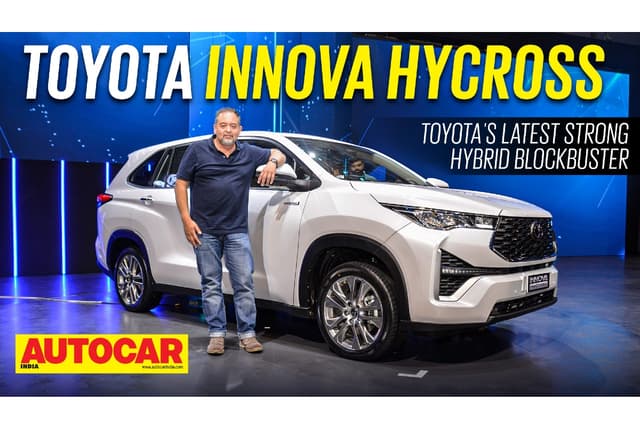
A walkaround video detailing exterior styling and design cues panel by panel
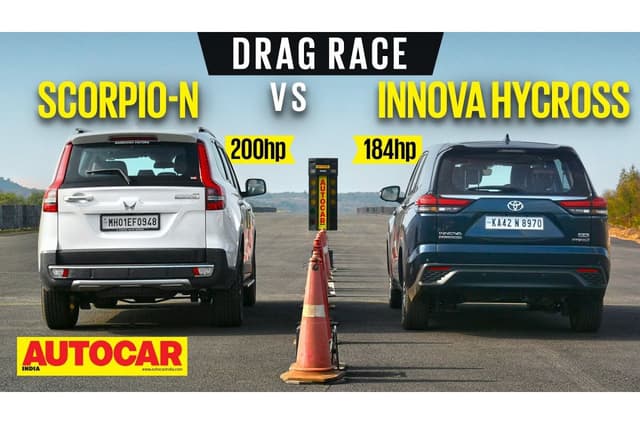
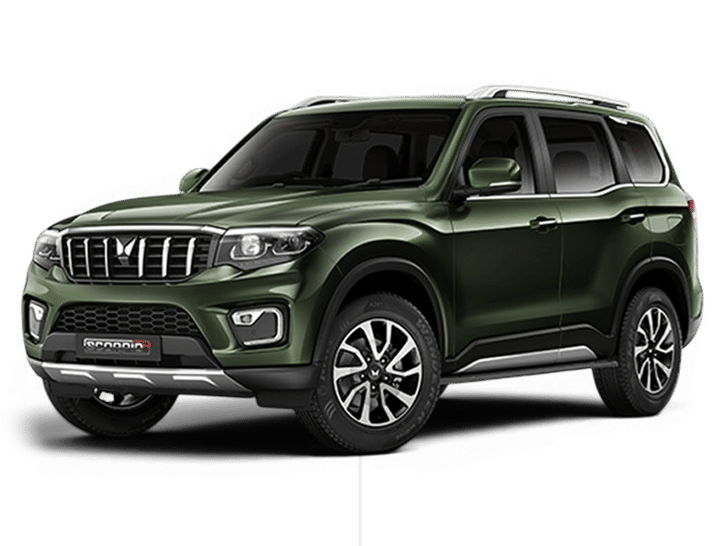
A drag race against the Mahindra Scorpio-N, showing real-world acceleration rather than claimed 0-100 kph figures
A Deep Drive podcast episode tracing how the Innova nameplate built Toyota's presence in India
A quick news update covering a specific development on the model

.png?w=640&q=75&fm=auto)

Toyota Innova HyCross Colours
Innova Hycross colours span seven shades across the range. The options are Super White, Platinum White Pearl, Attitude Black Mica, Sparkling Black Pearl Crystal Shine, Silver Metallic, Avant Garde Bronze Metallic and Blackish Ageha Glass Flake.
Availability varies by trim, so it is worth confirming a chosen shade against the specific variant before booking.
Colour | Notes |
Super White | Solid white finish |
Platinum White Pearl | Pearl-effect white, cited as a popular pick |
Attitude Black Mica | Cited as a popular pick |
Sparkling Black Pearl Crystal Shine | Crystal-effect black |
Silver Metallic | Metallic silver finish |
Avant Garde Bronze Metallic | Metallic bronze finish |
Blackish Ageha Glass Flake | Glass-flake black, cited as a popular pick |
Toyota Innova HyCross Similar Cars to Explore
Toyota Innova HyCross FAQs
The Innova Hycross price in India starts from Rs 18.70 lakh for (Petrol G 7 seat) to Rs 31.84 lakh for (Hybrid ZX (O) 7 seat) ex-showroom prices.
The Toyota Innova Hycross comes in GX, GX(O), VX Hybrid, VX(O) Hybrid, ZX Hybrid, and ZX(O) Hybrid variants in India.
The Toyota Innova Hycross is manufactured in India.
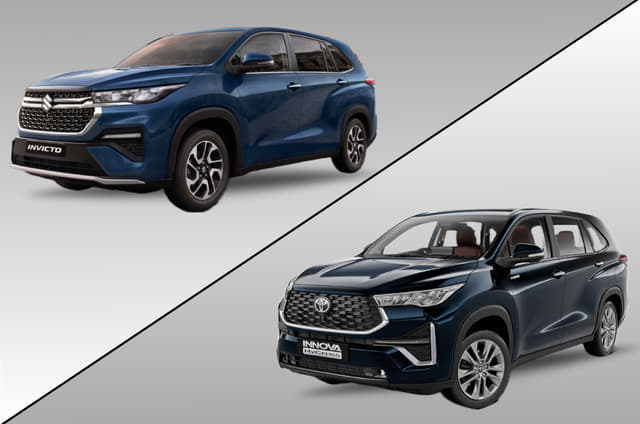
The Toyota Innova Hycross rivals the Maruti Invicto, Mahindra XUV700, MG Hector Plus, and Tata Safari.
The Toyota Innova Hycross safety rating is 5 stars as per Bharat NCAP testing.
The Toyota Innova Hycross ground clearance is estimated at 185mm.
The claimed Toyota Innova Hycross mileage for petrol variants is 16.13kpl.
The Toyota Innova Hycross hybrid mileage is 23.24kpl (claimed).
Yes, the Toyota Innova Hycross gets a CVT for petrol variants and an eCVT for the strong hybrid powertrain.
The Toyota Innova Hycross base model price is Rs 18.70 lakh (ex-showroom).
The Innova Hycross on road price starts from Rs 21.70 lakh and goes upto Rs 37.10 lakh.
Questions you may find useful
I’m planning to buy a new car, and my annual running is around 40,000km, primarily involving highway drives and ghat sections. I have shortlisted the Kia Seltos Diesel HTX and the upcoming facelifted Toyota Innova Hycross ZX. I’m considering two approaches: either buy the Innova Hycross and keep it for the next 10 years, given its reputation for longevity and the expectation that its engine can last at least 4 lakh kilometres, or buy the Seltos, drive it for around 2 lakh kilometres over 4–5 years, sell it and upgrade to a brand-new Seltos or another car of a similar price and size. On paper, the Innova Hycross Hybrid seems like the better choice, considering its long-term reliability and features such as the Ottoman reclining seats. However, I’m concerned that I might get bored of it after four years or that it may start feeling outdated as newer technologies and features enter the market. This makes the second option appealing, as it would allow me to upgrade to a brand-new car every 4–5 years. Which approach would make more sense in the long run, considering my high annual running and ownership costs?
It seems like you're leaning towards the Kia Seltos Diesel HTX, and we think it is a good choice. The diesel engine feels adequately powered for highway usage and ghat driving, and it is likely to return respectable efficiency too. Moreover, despite being modern with all the latest tech and features, the Seltos will be substantially more affordable than the Toyota Innova Hycross hybrid. So unless you need the Innova's extra space, or you frequently travel with six or seven passengers, the Kia Seltos diesel is your best bet.
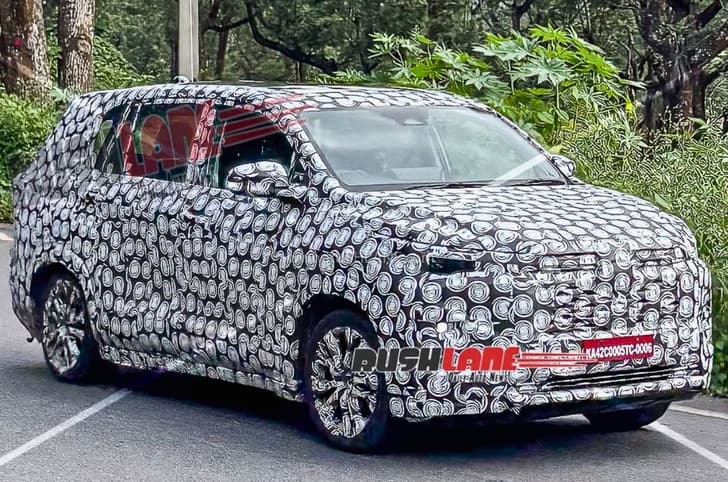
I recently booked a Toyota Innova Hycross ZX(O) and have been promised delivery by early November 2026. However, the recent spy shots of the facelift have me second-guessing my decision. I need to replace my current car before February 2027, but I have priority access at my dealer if I decide to switch my booking to the upcoming facelift. Given my February deadline, is it realistic to get the facelifted ZX(O) by then, or should I stick with my current allocation? Overall, is it worth waiting for the facelift?
Given your February 2027 deadline, we would stick with your current Innova Hycross ZX(O) allocation rather than risk waiting for the facelift. The updated model is expected in early 2027, but Toyota has not confirmed its launch date, and getting your preferred ZX(O) variant delivered by February is far from certain, even with priority dealer access.The facelift is expected to bring styling and feature updates rather than major mechanical changes. The current Hycross remains a comfortable, spacious family car, so you would not be missing out on a fundamental improvement in the powertrain or driving experience.
Hi Dear Auto car team , I am OMKAR from Baner , Pune . On 28th June 2026 autocar team had answered my query regarding Toyota Camary . I want to share my further experience. Here’s my experience. I had done quite extensive research on Camary I had a few friends at the dealership I talked with them and they had a demo Camary for sale it was just 17 - 18 months old and had done around 27,000 Km . It was decently priced at around 37.5 lakhs and it was in Pearl White colour . I loved it . I took my family my mom , dad , wife and son on next Sunday to the dealership to see the car . The Camary was out for test drive the sales team told us to wait for about an hour or so till the Camary returns . In that one hour some other sales person offered to show us the Innova Hycross . My whole Family saw the car and they just loved it so much that we ended up booking the Hycross . My family didn’t even see the Camary , Such is the magic of Hycross . The dealership has tentatively told us the delivery will be by mid January. I will share the further experience also . Thanks autocar for your suggestion support and guidance. As always Deep Drive podcasts gets better and better.
I’m quite confused about my next car upgrade and would really appreciate some advice from people who have experience travelling with large families and pets. We are a family of six: my wife, our child, my parents, our dog and me. Until now, I’ve been using a Tata Punch, which has served us reasonably well. However, with our little baby, things have become considerably more complicated. A five-seater no longer seems practical, especially when we travel with luggage and our dog. My usage is a mix of daily commuting (around 20 km a day) and family road trips. We usually undertake 3-4 long trips a year with approx 3-4k kms round trip. I’ve been considering three options: 1. Tata Sierra The idea here is to use all five seats for the family and create a padded, bed-like platform in the boot for our dog. I could use the space underneath the platform for luggage. The ROX edition’s roof carrier is another interesting option, although I’m unsure about the legal restrictions on roof-mounted luggage carriers and whether they could attract challans in states such as Delhi, Rajasthan and Madhya Pradesh. 2. Tata Safari The Safari offers the advantage of a third row. I’m wondering whether I could fold down half of the third row to accommodate luggage while keeping the other half for my dog. I’d probably need to install some sort of secure partition or cage to prevent luggage from shifting onto the dog or flying forward during sudden braking. However, I’m not sure how practical or safe this arrangement would be. 3. Toyota Innova Hycross (GXO) Given that my daily commute is relatively short, I’m not convinced that the hybrid’s additional cost would be justified by fuel savings alone. However, the Hycross’s cabin and luggage space are appealing. I’m wondering whether the third-row floor and boot could be configured to create a sufficiently large, flat and comfortable space for my dog while still accommodating our luggage. At this stage, these are just ideas, and I’m not sure how practical any of them would be in real-world conditions. I’d particularly appreciate advice from people who travel with their dogs, especially on long road trips. How do you manage luggage, ensure your pet’s safety and keep the cabin comfortable for everyone? Are there any other vehicles or practical modifications I should consider? One important consideration is that our baby is still very small, so we don’t have any major trips planned in the immediate future. I’m perfectly happy to postpone our next big road trip for a year or so. Consequently, I’m in no hurry to buy a car and am open to waiting for upcoming launches if something more suitable is on the horizon. I’d love to hear about your actual experiences, particularly with pet-friendly car setups, rather than just theoretical suggestions. Any advice on the choice of vehicle, safe modifications or alternative configurations would be greatly appreciated.
Given your family size, the presence of a baby and a dog, and your mix of daily commuting and long road trips, the Toyota Innova Hycross GXO is the most practical and sensible upgrade. The Hycross offers a genuinely spacious and flexible cabin, a flat and usable boot area and a proven reputation for reliability and long-term ownership. The third row can be folded flat to create a large, comfortable space for your dog, while the remaining boot area can accommodate luggage. The hybrid premium is not justified with your usage, so you will be better off with the standard petrol powertrain.The Tata Sierra is a good option if you want a more premium and stylish SUV experience, but it is ultimately a five-seater with a boot. Creating a raised platform for the dog is possible, but it compromises luggage space and safety on long trips. The Tata Safari offers a third row, but the Hycross offers more room with the seats up or stowed.On the pet side, the key is to use a proper harness or crate for the dog, ensure good ventilation and avoid loose luggage in the cabin. The Hycross's flat boot and fold-flat third row make it easy to create a safe and comfortable space for your dog without compromising family comfort.Overall, the Hycross GXO is the most practical and family-friendly solution for your needs.
I recently booked an Innova Hycross GX(O) and have been promised delivery by the beginning of November 2026. However, seeing the recent facelift shots has me second-guessing my decision. I need to upgrade from my current car before February 2027, but I do have priority dealer access if I decide to shift my booking to the upcoming facelift. Given my February timeline, is it realistically possible to get the facelifted GX(O) variant by then? Or should I stick to my current allocation? In comparison, is it worth the while to wait for the facelift?
For this particular situation, waiting for the facelift does not make much sense. The current Toyota Innova Hycross is already a mature product, and the facelift is expected to bring styling, interior and feature updates rather than a fundamental change to the powertrain or mechanical package.The bigger issue is timing. Even with priority access through dealers, the Toyota Innova Hycross facelift is likely to be introduced with the higher trims being prioritised initially. Since GX(O) is the chosen variant, its availability could take longer. That creates a genuine risk of missing the February 2027 deadline, whereas a November delivery comfortably meets both requirements of having the car before Diwali and having it available by February.The facelift will naturally be newer and could bring some useful updates, but those benefits need to be weighed against an uncertain launch date, variant availability and potentially higher pricing. There is also little reason to expect the current Toyota car to suddenly become outdated from an ownership perspective.
Upcoming Cars


Toyota Cars

Trending Cars


Latest Cars


Last Updated on: 02 Nov 2026