
Last Updated on: 16 Sep 2026
Toyota Innova Crysta
The Toyota Innova Crysta's price starts at Rs 19.77 lakh and goes up to Rs 26.63 lakh, both ex-showroom. The Toyota MPV is offered in G, GX, GX+ and VX variants. Under the hood, the Crysta gets a 150hp, 343Nm 2.4-litre diesel engine, paired to a 5-speed manual gearbox. Eco and Power drive modes are standard across variants.
Depending on the variant, the Crysta offers features such as projector headlights, halogen fog lamps, 17-inch alloy wheels, dual-tone seat upholstery, wireless charger, tyre-pressure monitoring system, 8-way powered driver’s seat, push-button start/stop and cruise control.
Toyota Innova Crysta Key Highlights
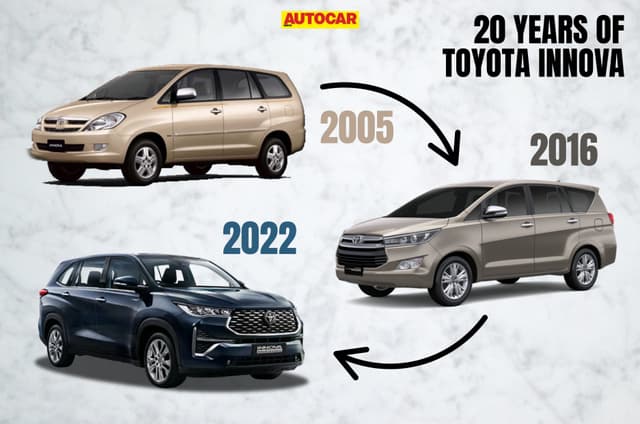
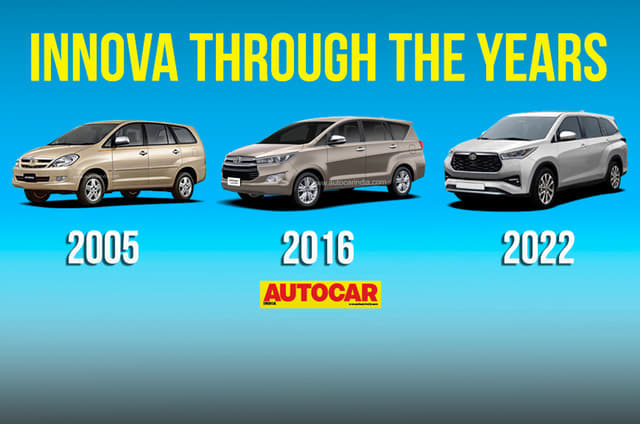
- The Crysta has been on sale since 2016.
- It is currently the only ladder-frame MPV on sale in India.
- An automatic gearbox option is not offered with the Innova Crysta.
- The 2.8-litre diesel engine option was dropped from the line-up due to huge cost of upgrading to BS6 emission norms.
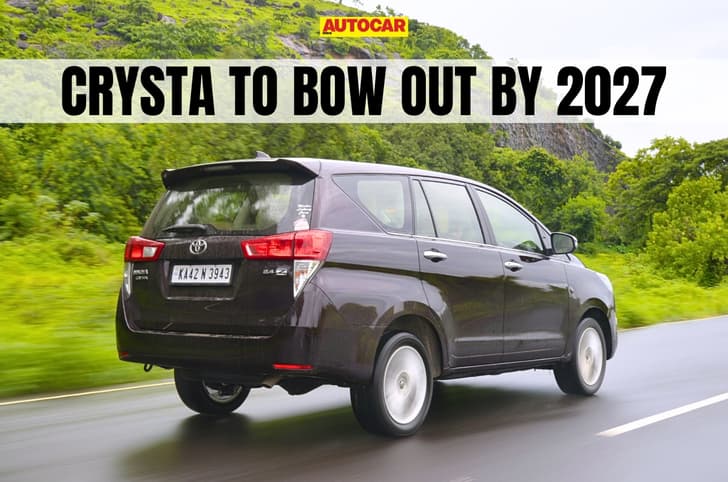
- The Innova Crysta is set to be discontinued in 2027.
Toyota Innova Crysta Latest Updates
- June 4, 2026: 2026 Toyota Innova Crysta launched at Rs 19.72 lakh; this could be the last update for the venerable MPV, set to be discontinued next year.
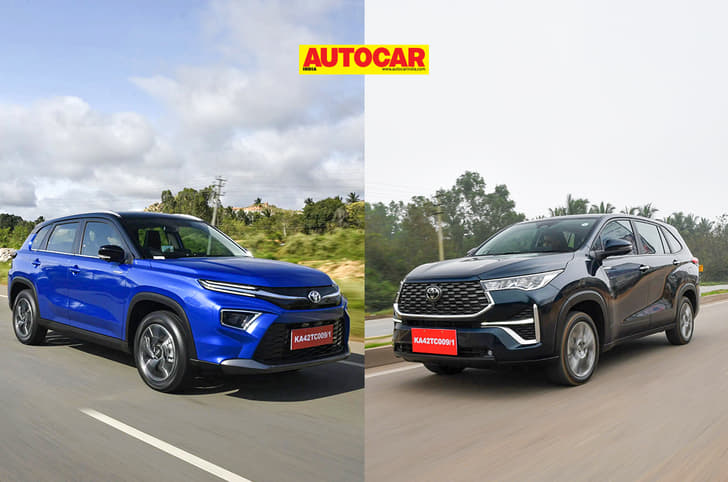
- April 4, 2026: Toyota to replace Innova Crysta with decontented Innova Hycross hybrid.
Toyota Innova Crysta Features and specifications
Our Rating | 7 |
Engine | 2393 cc |
Fuel Type | Diesel |
Transmission | Manual |
Seats | 7 - 8 |
Body Style | MUV |
Doors | 5 |
Max Power | 150 hp at 3400 rpm |
Max Torque | 343 Nm at 1400 rpm |
Warranty Distance | 100000 km |
Warranty Duration | 3 Years |
| Engine Type | Turbocharged |
| Engine Displacement | 2393 cc |
| Number of Cylinders | 4 |
| Engine Installation | Front |
| Fuel Supply System | Direct Injection |
| Emission Standard | Bharat Stage VI |
| Auto Start/Stop | No |
| Fuel Tank Capacity | 55 litres |
| Front Suspension Type | Independent, Double Wishbone |
| Front Springs | Coil Springs |
| Rear Suspension Type | Multi-link suspension |
| Rear Springs | Coil Springs |
| Length | 4735 mm |
| Width | 1830 mm |
| Height | 1795 mm |
| Wheelbase | 2750 mm |
| Power Windows | Front and Rear |
| 12 Volt Port | |
| Accessory Power Outlet | |
| Acoustic Windshield |
| Airbags | 7 |
| Anti-Lock Brakes (ABS) | |
| Auto emergency braking (AEB) | |
| Blind Spot Collision Avoidance Assist |
| Body Coloured Bumpers | |
| Antenna | |
| Cornering Foglamps | |
| Cornering Headlights |
| Speedometer | Analog |
| Tachometer | Analog |
| Trip Meter | |
| Average Fuel Consumption |
| Audio System | |
| Branded Music System | |
| CD Player | |
| Second Row USB port | Type A |
| Find My Car |
Toyota Innova Crysta price & variants
The Toyota Innova Crysta MPV is offered in G, GX, GX+ and VX trims. All trims are offered with a 2.4-litre diesel engine, paired to a 5-speed manual gearbox.
G: It gets manual AC, 16-inch steel wheels with wheel covers, multi-information display, 3 airbags, ABS with EBD. It is pretty basic in terms of equipment and misses out on several convenience features.
GX: GX adds electrically adjustable ORVMs, 16-inch alloy wheels, height-adjustable driver's seat, 8-inch touchscreen, 4-speaker audio system and Apple CarPlay/Android Auto. The GX trim packs much better kit than the bare-bones base model, and is the trim that we would recommend.
GX+: This trim adds follow-me headlamps, leather-wrapped gear lever, reverse camera and retractable ORVMs. Compared to the GX trim, the additional features offered in the GX+ trim do not justify the premium.
VX: This further gets LED projector headlights, automatic climate control, cruise control, push-button start/stop, ambient lights, wireless charger and 7 airbags. The VX trim is a well-equipped trim, offering a good mix of convenience and safety features. However, it is priced quite high for what is on offer.
ZX: Top trim gets 17-inch alloy wheels, leather seat upholstery and tyre pressure monitoring system. The fully loaded trim adds only a handful of features over the VX trim, and it is also expensive.
Toyota Innova Crysta Expert Review
We like
Peace of mind ownership
Space and practicality
We don't like
Heavy steering
Expensive
7.0
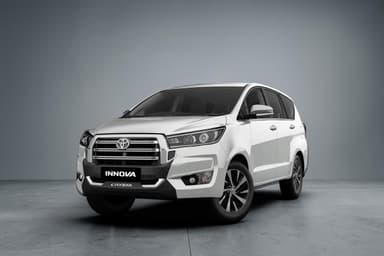
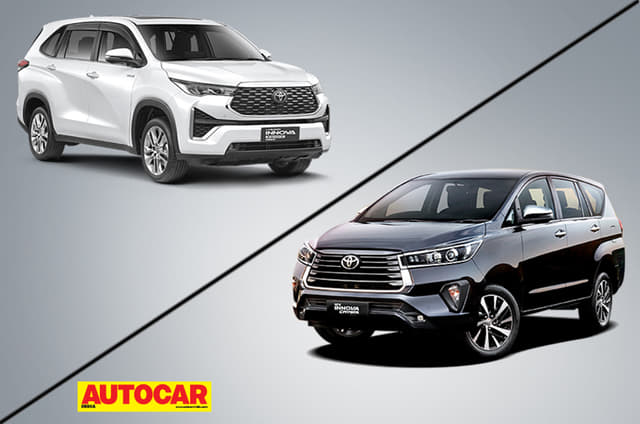
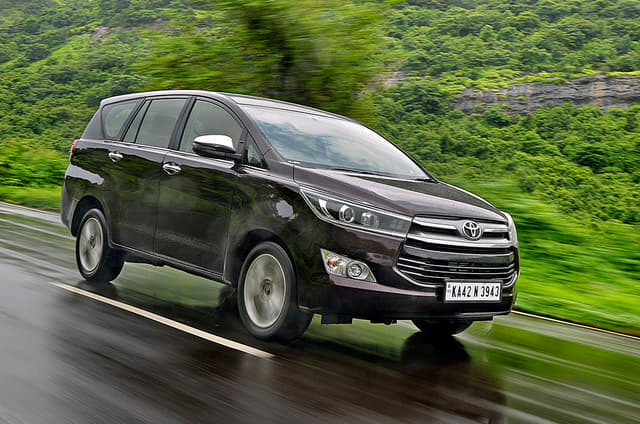
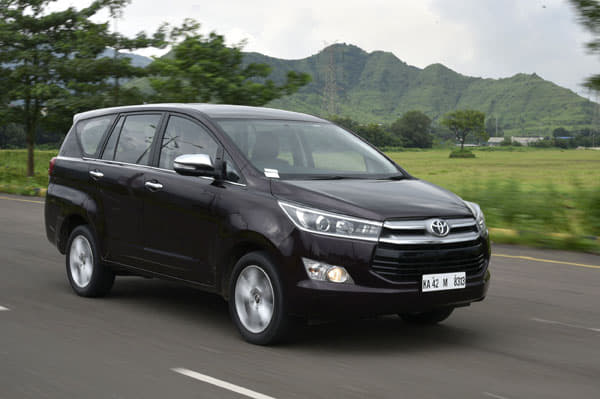
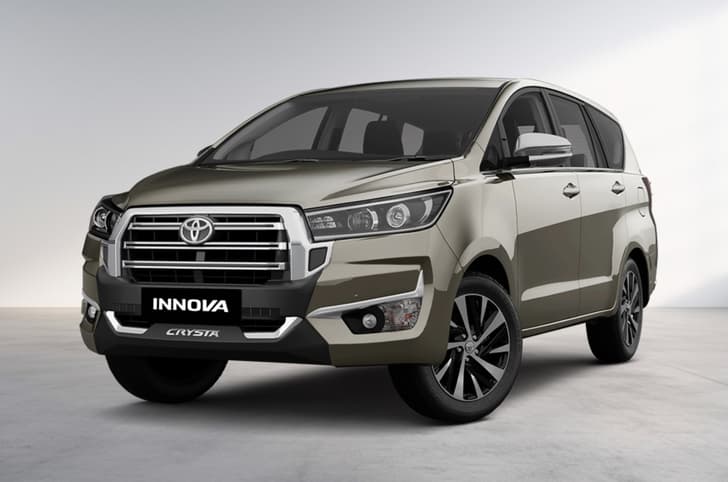
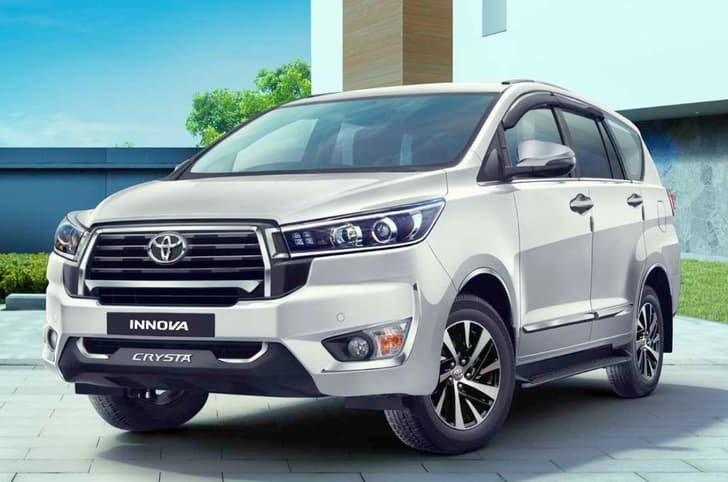
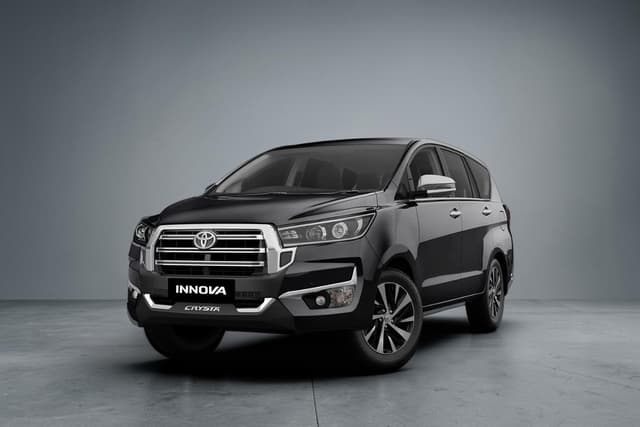
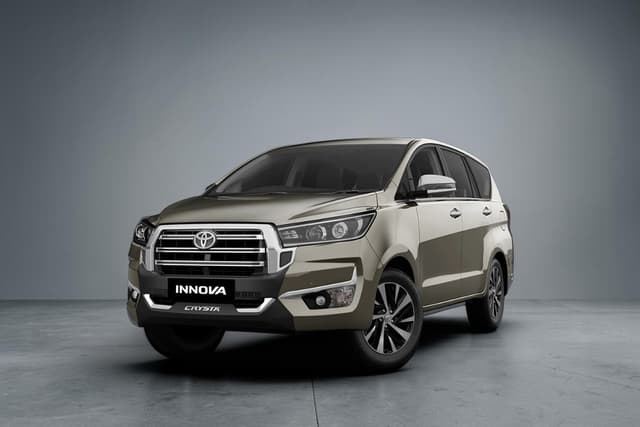
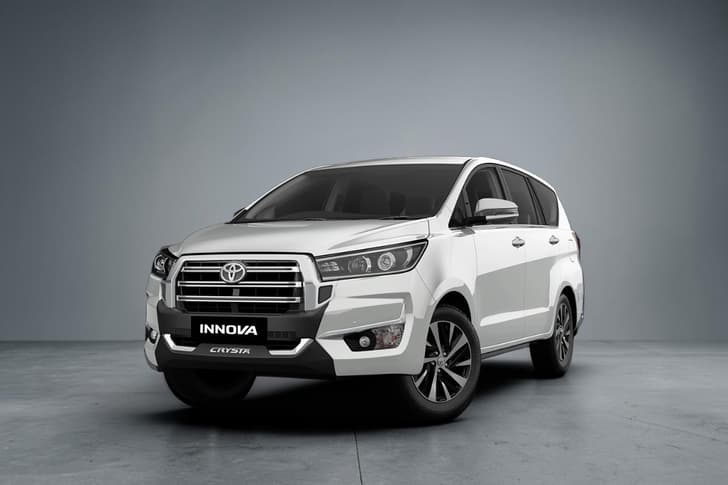
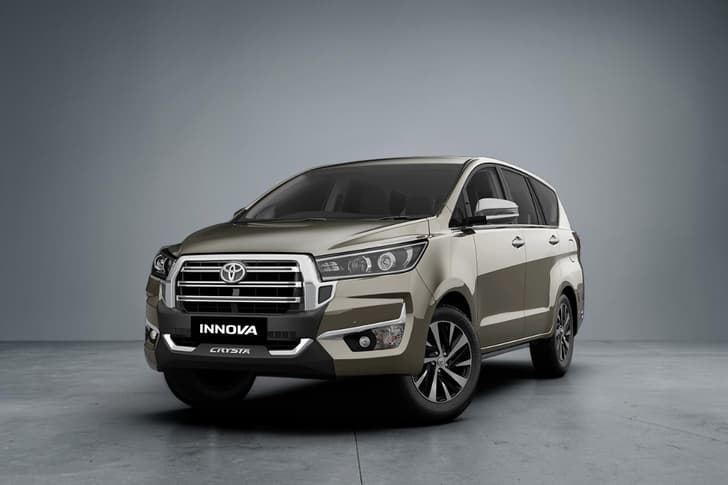
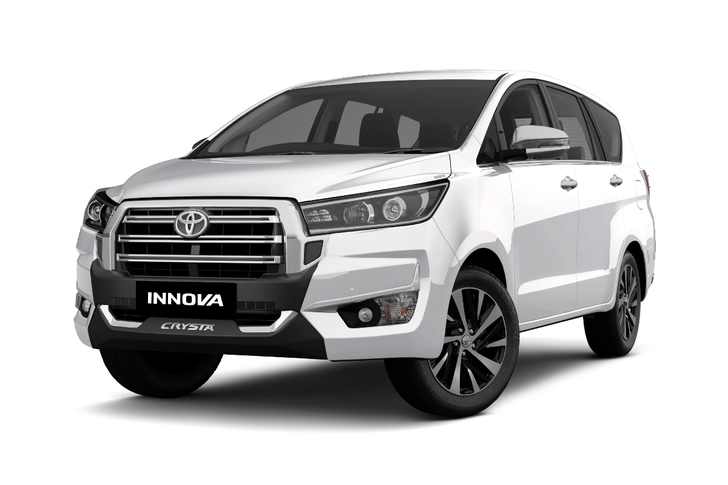
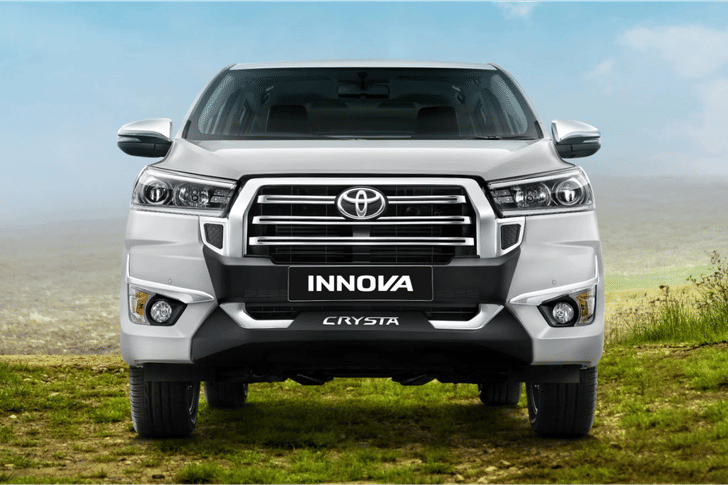
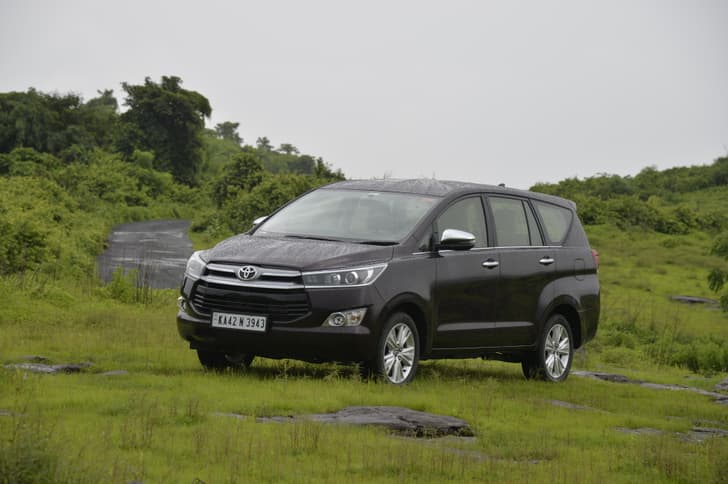
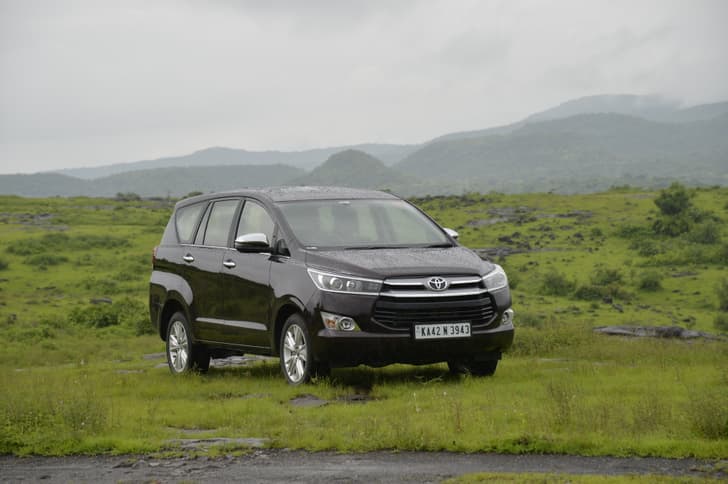
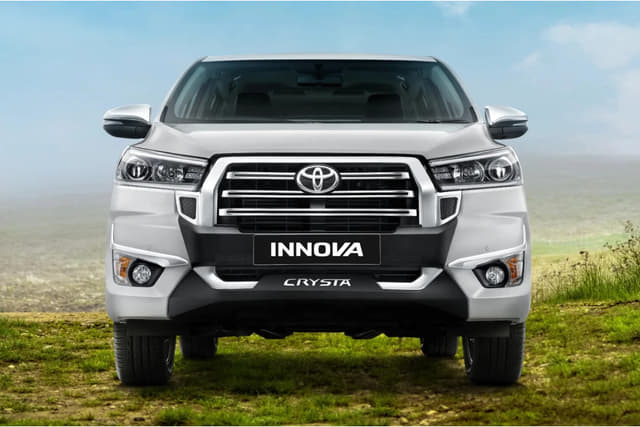
Toyota Innova Crysta retains the familiar MPV silhouette with a a bit muscular and premium appearance. The large grille, swept-back projector headlamps, flared wheel arches and sharply kinked rear glass makes it look contemporary and SUV-like.
Underneath, the Crysta uses a body-on-frame chassis and rear-wheel-drive layout, sticking to the Innova’s proven formula of durability and toughness.
8.0
Inside, the Crysta feels genuinely premium, with a layered dashboard, wood trim, ambient lighting and good material quality. Toyota clearly aimed to push the MPV upmarket, and it succeeded.
Front seats are large and extremely comfortable, while the second-row captain chairs remain among the best in the segment for long-distance travel. They recline, slide and offer generous legroom, reinforcing the Crysta’s chauffeur-friendly appeal. The third row is roomy, has easier access thanks to the one-touch tumble mechanism. While the high floor means passengers still sit slightly knees-up, space and comfort are better than most rivals. Practicality is another highlight. The cabin is filled with storage spaces and bottle holders, while the foldable third row adds flexibility for luggage carrying.
6.0
The Crysta is offered with a 2.4-litre diesel engine producing 150hp and 343Nm paired with a 5 speed manual gearbox. It delivers strong low-end pulling power and very good highway performance, making overtakes easier even with a full load of passengers.
The diesel engines still sound slightly gravelly when revved hard. At cruising speeds, however, the Crysta settles into a relaxed and refined rhythm that makes it an exceptional long-distance machine.
7.0
The claimed mileage for Innova Crysta is around 15.01kmpl. In real-world conditions, the figures vary from around 9kpl to 13kpl depending on weather, driving style and road conditions.
7.0
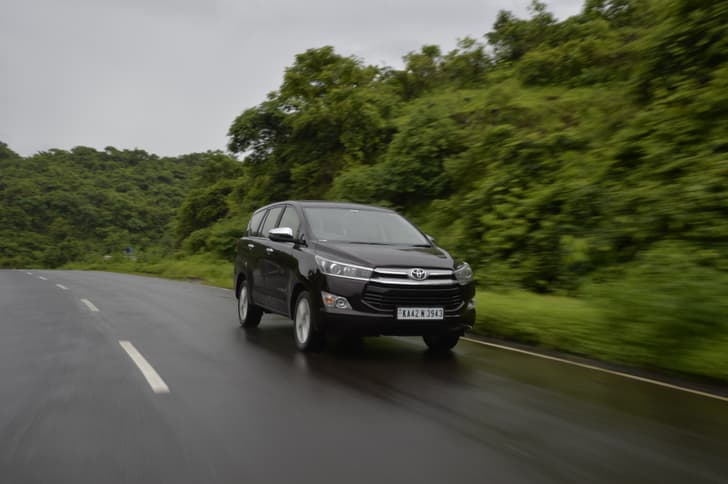
Ride comfort has always been the Innova’s biggest strength, and the Crysta improved it further. The suspension setup absorbs potholes, broken roads and speed breakers with remarkable composure, making it one of the best long-distance family vehicles sold in India.
The suspension is softly tuned, which helps comfort but also results in noticeable body roll around corners. Handling is safe and predictable rather than engaging, and the heavy hydraulic steering feels slow and cumbersome in city driving.
6.0
The Crysta gets features like a 7-inch touchscreen infotainment system, ambient lighting, cruise control, automatic climate control and powered driver’s seat adjustment.
Safety equipment includes up to seven airbags, ABS, hill-start assist and Vehicle Stability Control.
6.0
The Crysta is priced roughly between Rs 18.85 Lakh to Rs 25.50 Lakh (ex-showroom). The Crysta’s pricing seems expensive for an old MPV but few vehicles combine toughness, comfort and long-distance cruising ability as convincingly as the Innova Crysta.
Toyota Innova Crysta Official Brochure
Download the complete brochure with specs, features, and variants.
Toyota Innova Crysta User Reviews
Tell us about your experience
Toyota Innova Crysta reviews

Toyota Innova Crysta comparison


Toyota Innova Crysta news
Toyota Innova Crysta Images
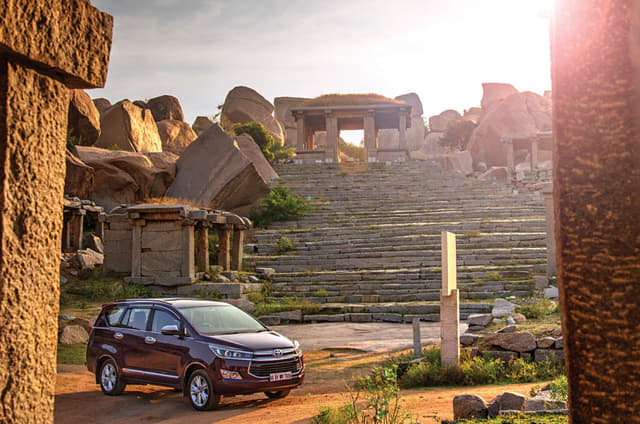
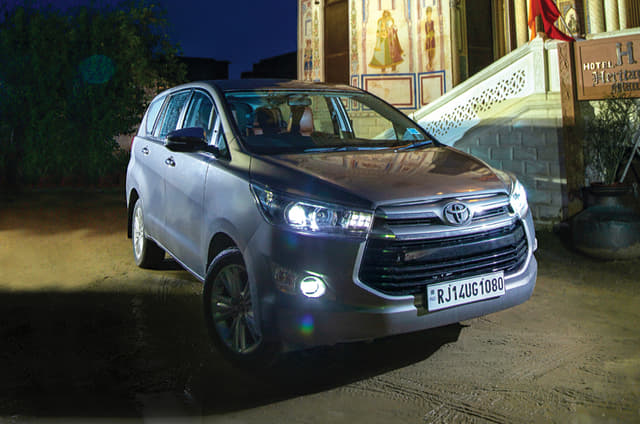
Our photo gallery for the Toyota Innova Crysta runs to 68 images covering the car from nearly every practical angle, inside and out.
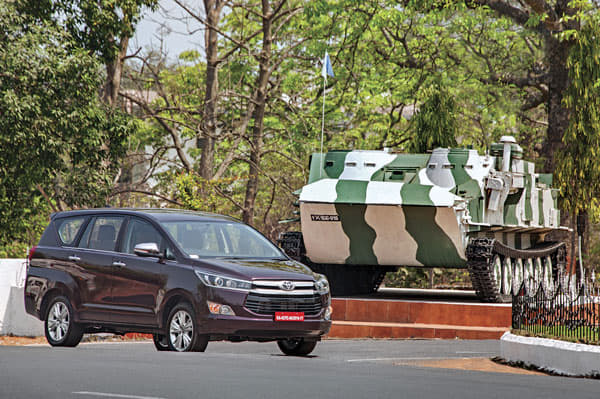
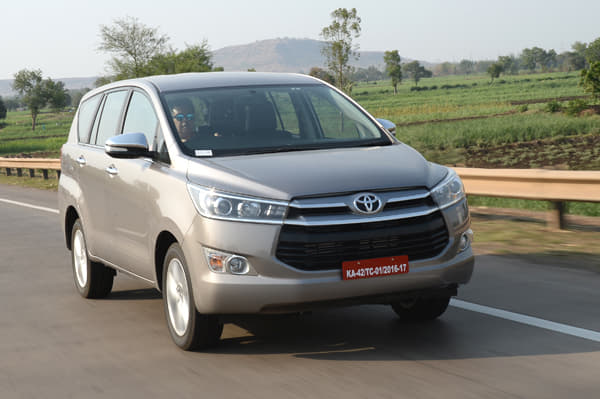
The muscular bonnet's V-shaped crease and the SUV-style front grille, shown across multiple exterior angles
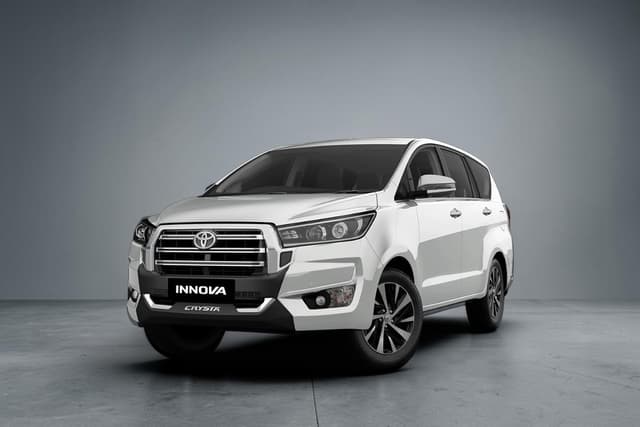
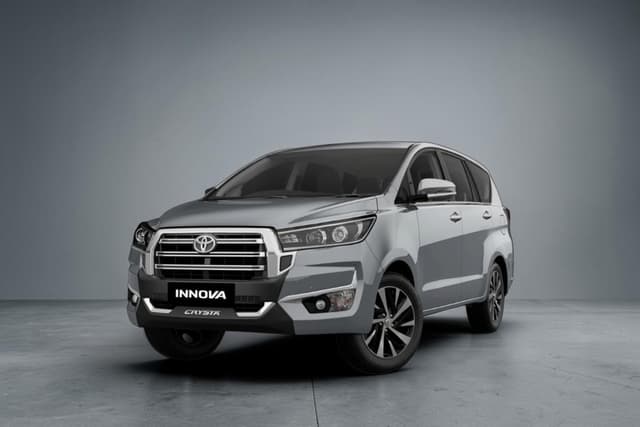
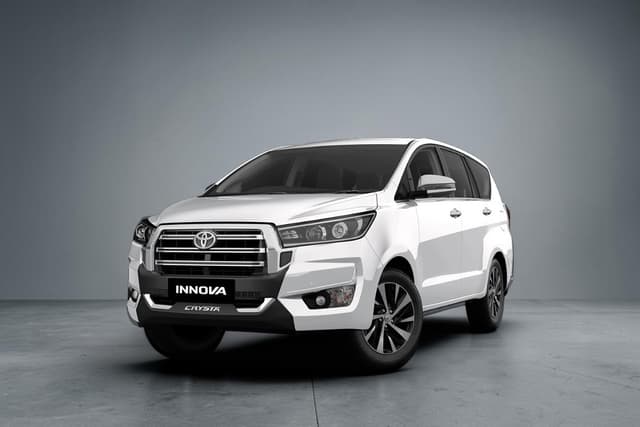
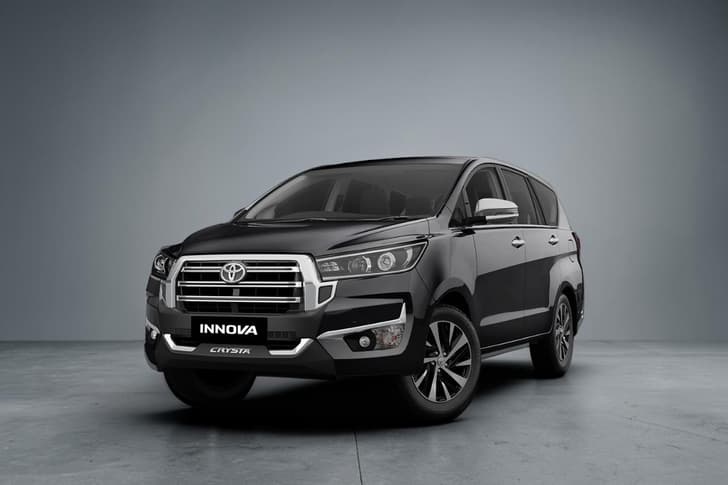
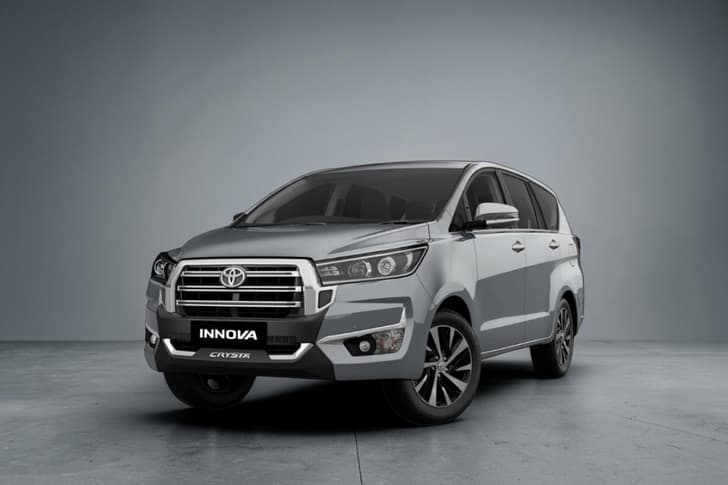
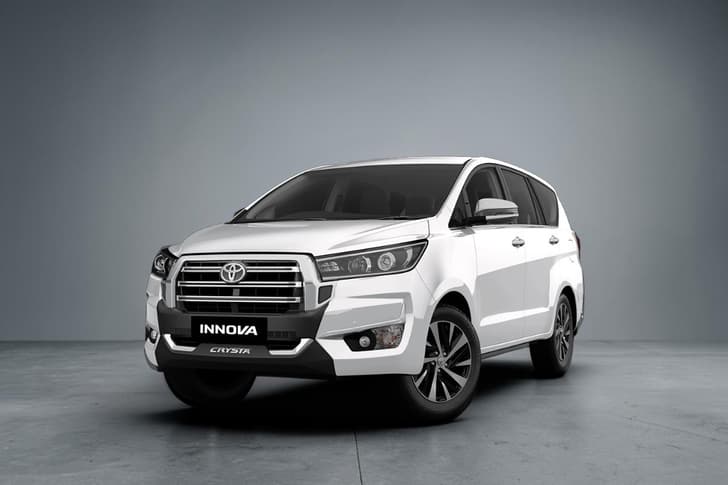
Each of the five exterior shades, including Attitude Black Mica and Platinum White Pearl, photographed on the same body
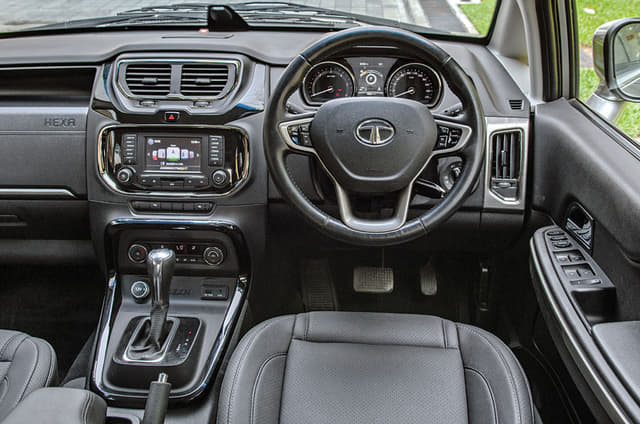
The single-piece dashboard with its faux wood trim and dulled-silver accents
Second-row captain seats and the lever that lets rear passengers slide the front passenger seat forward for extra legroom
Alloy wheel design, engine bay shots and the floor-mounted gear lever

Toyota Innova Crysta videos
Our video section for the Toyota Innova Crysta carries two clips rather than a large library, but between them they cover ground a spec sheet cannot.
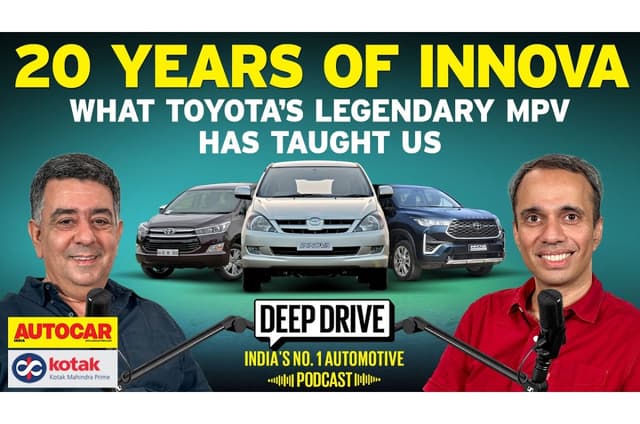
A Deep Drive Podcast episode tracing how the Innova nameplate built Toyota's standing in India, offering context no spec sheet provides
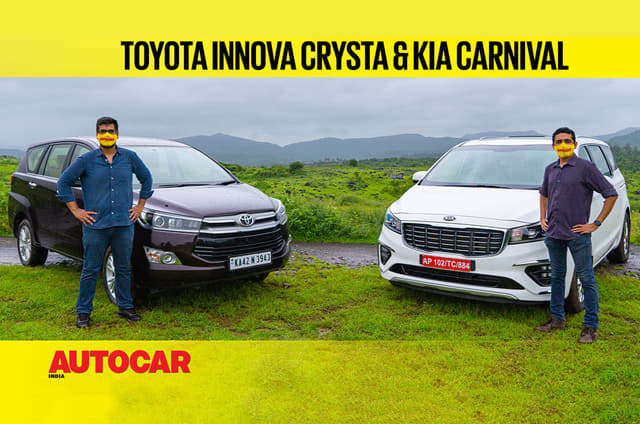
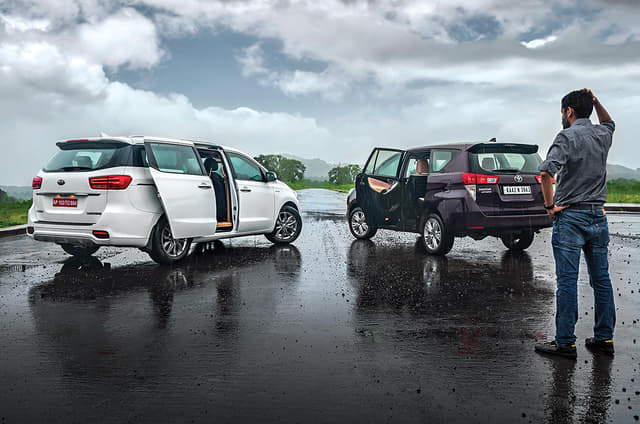
A head-to-head walkaround against the Kia Carnival that lays out how the two premium MPVs' cabins and features actually compare side by side
A sense of the diesel engine's idle and cabin noise levels, which our written road test also flags as a refinement shortfall


Toyota Innova Crysta Colours
Innova Crysta colours run to five shades, all offered in single-tone finish, with no dual-tone option currently listed on our colours page for the model.
The table below sets out the five shades Toyota offers on the current Crysta range.
Colour | Finish |
Attitude Black Mica | Single-tone |
Avant-garde Bronze Metal | Single-tone |
Platinum White Pearl | Single-tone |
Silver Metallic | Single-tone |
Super White | Single-tone |
Toyota Innova Crysta Similar Cars to Explore
Toyota Innova Crysta FAQs
The Toyota Innova Crysta is suited for buyers who want a dependable MPV that can comfortably accommodate 7-8 occupants and gets a frugal yet punchy diesel engine.
The Toyota Innova Crysta's USPs include reliability, comfort, low running costs, and fuel efficiency. Interestingly, the Innova Crysta is the only body-on-frame MPV you can currently buy in the Indian mass market.
Toyota is expected to discontinue the Innova Crysta in 2027 due to incoming CAFE-3 regulations.
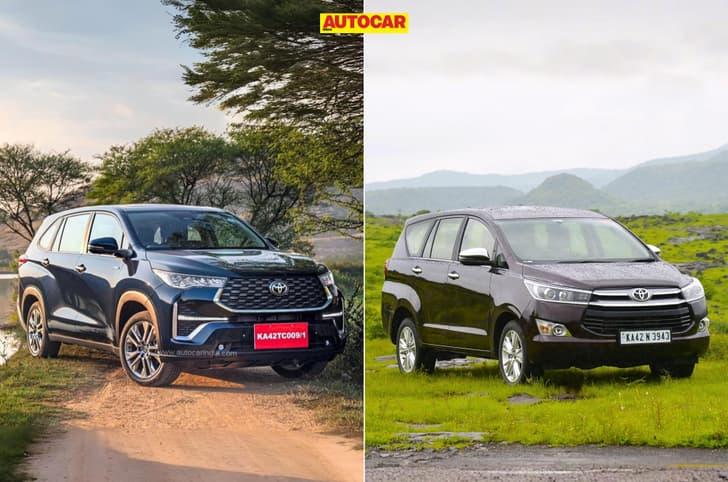
The Toyota Innova Crysta is an old-gen model built on a ladder-frame chassis, while the Innova Hycross uses a more modern monocoque construction. While the Innova Crysta is sold with a sole diesel MT powertrain, the Innova Hycross gets petrol and hybrid options. The Innova Hycross is much more feature-loaded and premium than the Crysta too.
The Toyota Innova Crysta's ride quality is among its biggest strengths, with it maintaining composure on every type of road surface at all speeds.
The Innova Crysta has a spacious three-row cabin that can comfortably seat 7-8 occupants.
Being a much older model, the Innova Crysta doesn't offer as many features as the Hycross, so if those are important to you and your budget allows for it, go for the latter. If you frequently go on road trips, the diesel-powered Innova Crysta makes more sense and is much cheaper like-for-like than the Hycross hybrid too.
Questions you may find useful
Hi, my car usage is around 3,000km per month. Currently, I drive a 2020 Ford Endeavour diesel AT 4x4 and a 2017 Mahindra Thar CRDe 4x4 for rough and countryside roads. I enjoy driving both cars on these kinds of roads, although I experience quite a bit of body roll and physical strain. For city driving and highways, I use a 2017 Skoda Rapid diesel MT and an Innova Crysta diesel. I particularly enjoy driving the Skoda, while I prefer travelling as a passenger in the Crysta because of its comfort. As you can see, I have been a diesel car owner so far, but with diesel cars becoming less common in the market, should I consider switching to a petrol engine or a hybrid? My usage covers almost every type of Indian road, including metro cities, countryside roads, highways and hilly terrain, so I am finding it difficult to decide which car would suit my requirements best within a budget of Rs 40 lakh, with an automatic transmission. My top priorities are safety, with zero compromise, followed by driving comfort and the highest possible mileage.
You already have different cars for different purposes, but you haven't mentioned which of the four cars you would like to replace. Within Rs 40 lakhs, the Toyota Innova Hycross hybrid is an excellent, tried and tested option. It is efficient, extremely spacious, and the ride comfort is good too. Also, with light steering, a responsive powertrain and good visibility and driving aids, it is very user-friendly. So unlike the Innova Crysta, which would be more suited for the chauffeur-driven, the Hycross is also surprisingly easy to drive too.You could also consider the new Kia Sorento, which seems excellent value for money. We haven't got a chance to drive or test it yet, however it seems spacious, well-equipped and on first impression, the interior quality seems to be excellent. This is one SUV you must test drive before finalising - it has both 2.2 diesel and 1.6 turbo strong hybrid options.
I am looking to buy a new EV for my daily office commute, which is roughly 100 km round-trip. My current ride is a Toyota Innova Crysta. While it is a reliable workhorse, I find it increasingly tiring for daily use. The constant body roll, low-speed bounciness, and typical ladder-frame wobble over uneven roads are wearing me down. I want to switch to a smooth, refined electric SUV. My usage will be a mix of self-driving and being chauffeur-driven. My absolute top priorities are: Ride Comfort & Stability: I need a car that glides over bad roads, handles speed bumps cleanly, and minimises vertical movement/head-toss. I want to avoid the wobbliness of the Crysta at all costs. Cabin Space: Generous legroom, good under-thigh support, and a spacious cabin environment are highly important. I am currently considering four upcoming/recently launched options, but I am torn between them: Mahindra XEV 9e, Mahindra XEV 9s, Tata Sierra EV, Tata Harrier EV. Given my 100 km daily run, battery efficiency is a factor, but comfort overrides everything else. Which of these four will offer the most stable, plush, and fatigue-free ride for someone moving away from an Innova Crysta? I do not intend to sell the Innova Crysta, as I want to keep it for the airport and family runs for long distance.
For your 100 km daily commute, with comfort and stability as the absolute priorities, the Tata Sierra EV is the top recommendation. This Tata car is built on Tata's Gen 2 EV architecture, which is a dedicated electric platform with a flat floor and a long wheelbase. This gives it a very stable, planted feel on the road, and the suspension is tuned for comfort, with a soft, absorbent ride that deals with bad roads, speed bumps and undulations far better than a ladder-frame vehicle like the Crysta. The Sierra EV also has a spacious cabin with generous legroom, good under-thigh support and a wide, airy feel, making it a genuinely comfortable place to spend long hours, whether you are driving or being driven. Also, its 75 kWh battery pack gives it a strong range, so you don't have to worry about recharging even on long trips. The Mahindra XEV 9e and 9s are both strong products, but they are not quite as plush or as settled. The Harrier EV has a redesigned floor pan, but it still doesn't feel as spacious or airy inside as the Sierra. The Sierra also has a larger boot compared to the Harrier. Given that you are keeping the Crysta for airport runs and long-distance family trips, the Sierra EV is the best fit for your daily commute. It is the most comfortable, the most stable and the most fatigue-free option of the four.
My requirement is for a reasonably large 7-seater vehicle because I frequently go on very long drives. Sometimes, I even drive 1,200 km in a single stretch. I have been driving a Toyota Etios Liva for almost 15 years, and the car has given me virtually zero problems. So, I have firsthand experience of Toyota reliability. My budget is around Rs. 24 lakh, and reliability is my number-one priority. I love diesel cars, although I understand that diesel options are fewer. At the moment, I am mainly considering the non-hybrid Toyota Innova HyCross ZX(O) petrol. Within my budget, I mayconsider Innova Crysta, depending on the variant and on-road price. I am also considering Honda City Hybrid, but my concern is the reduced boot space in the hybrid version, and of course, it isn’t a 7-seater. I’m not really looking at too many other brands, although I’m also wondering about the Mahindra XUV 7XO. I haven’t driven it yet, so I’m not sure whether I should seriously consider it. When I compare Mahindra with Toyota, I personally don’t feel that Toyota-level reliability is there and reliability is important to me because I plan to keep the vehicle for many years. I also like some of the newer brands and products such as Citroen but I am concerned whether manufacturers will continue operating in India in the long term. I don’t want to buy a vehicle from a brand that may disappear. So, given my requirements including a 7-seater car for long-distance driving, excellent reliability, comfortable highway cruising, reasonable boot space, and a budget of around Rs. 24 lakh, which car would you recommend? Should I go for the Innova HyCross ZX(O) non-hybrid, Innova Crysta, or take a chance on something like the Mahindra XUV 7XO? I’m particularly interested in your recommendation from a long-term ownership and reliability, comfort perspective, because after owning a Toyota for 15 years, I know what genuine reliability feels like.
Given your priorities, the Innova Crysta makes the most sense. You have already experienced Toyota reliability over 15 years, frequently undertake extremely long highway drives and specifically prefer diesel. The Crysta matches that brief better than the HyCross or XUV 7XO.The 2.4-litre diesel is well suited to long-distance touring, with strong low-end torque and a relaxed character on the highway. It also offers a genuinely usable seven-seat cabin and good luggage space. Most importantly, its long-established powertrain and Toyota's service support make it the safer choice if you intend to keep the car for many years.The HyCross is more modern and more efficient, but there is an important point about the variant you mentioned: the ZX(O) is hybrid-only. If you want the naturally aspirated petrol, the top grade is the GX(O), which is available with seven or eight seats. The hybrid ZX(O) is also considerably beyond your Rs. 24 lakh budget.The XUV 7XO is worth a test drive, but if reliability is genuinely your number-one priority, the Toyota is the more reassuring long-term choice.
My Innova Crysta’s periodic service quote came to almost Rs 14,000 this time. Does that sound right for the 40,000km service, or should I look around for better rates?
A Rs 14,000 bill for a 40,000km service on the Toyota Innova Crysta does not sound out of line, especially if it is the diesel. The 40,000km service is one of the bigger scheduled services and typically includes a full oil change, all filters (air, fuel, oil, cabin), brake fluid, differential oil, and a more thorough inspection. The diesel in particular has a more expensive fuel filter and higher oil capacity, which pushes the cost up. That said, it is always worth asking for a detailed breakdown of the bill and checking for any add-ons like wheel alignment, balancing, AC cleaning or engine bay cleaning that are not part of the standard service schedule. If those are included, you can opt out and bring the cost down. Overall, though, Rs 14,000 for a major 40,000km service on the Crysta diesel is within the expected range.
I'm in Bangalore and drive a 2017 Toyota Innova Crysta automatic, which came with the 2.8-litre engine. I have covered 1.3 lakh km, and the body, suspension, engine and gearbox are all in excellent condition. I see no reason to replace the car and am happy to drive it for many more lakh kilometres. However, I'm concerned about external factors that could limit the longevity of the car: Legal longevity of a BS4 diesel car in India: My understanding is that only Delhi-NCR currently has a 10-year age limit for diesel vehicles, and I don't recall any other state or city imposing a similar restriction. However, with rising pollution levels in cities and increasing concerns around older diesel vehicles being high-polluting, are you hearing anything from automakers or industry insiders about potential regulations that could limit the use or lifespan of BS4 diesel cars in other parts of India? Iso-butanol blends: I understand that iso-butanol blending in fuel is still in the early stages of exploration. Could higher levels of iso-butanol blending potentially create any compatibility issues with BS4 diesel engines? Given that my car is in excellent mechanical condition, I'm keen to understand whether these external factors could eventually force me to replace it, despite the car itself having plenty of life left.
You are absolutely right to want to keep your Toyota Innova Crysta 2.8 automatic running for many more years. It is a proven workhorse, and at 1.3 lakh km, with the engine, gearbox, and suspension in good shape, there is no reason to replace this Toyota car from a mechanical perspective.On your concerns:Legal longevity of BS4 diesel: You are correct that the 10-year diesel ban is currently limited to Delhi NCR. There is no nationwide policy capping the age of diesel vehicles, and most other states and cities have not imposed similar blanket restrictions. The industry view is that while there is always a possibility of tighter emission regulations in the future, there is currently no concrete indication from policymakers of a nationwide age-based ban on BS4 diesels. That said, it is always wise to keep an eye on local policy changes, especially in cities with rising pollution concerns.Iso-butanol blends: This is still in the early stages of exploration in India, and there is no clear roadmap for widespread adoption yet. Iso-butanol is being considered as a potential diesel blend to reduce emissions, but its impact on older diesel engines is not fully understood. The general industry view is that modern diesel engines, including BS4 units, are fairly robust, but compatibility will ultimately depend on the blend ratio and how the fuel is rolled out.The bottom line is that your Crysta still has plenty of life left in it, and there is no compelling reason to replace it purely out of regulatory fear.
Upcoming Cars


Toyota Cars

Trending Cars


Latest Cars