

Last Updated on: 01 Aug 2026
Tata Harrier
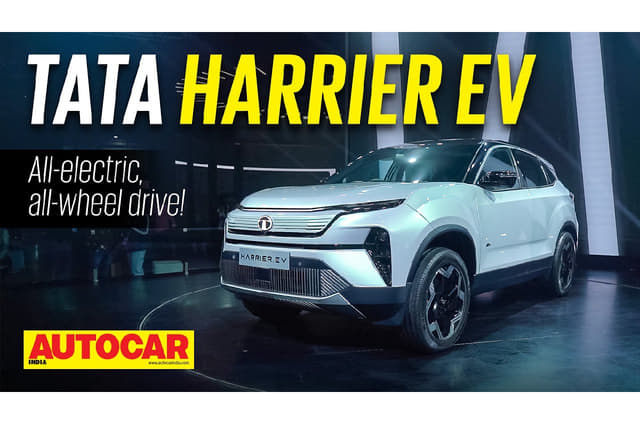
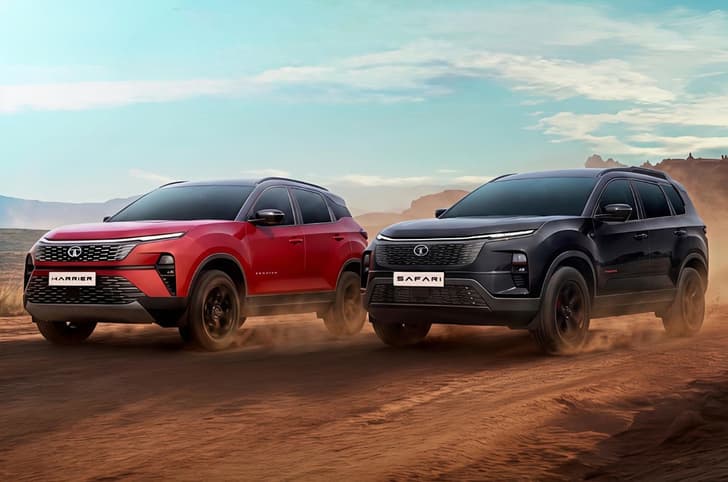
The Tata Harrier price starts at Rs 13.00 lakh (ex-showroom). First launched in 2019, the Harrier is a 5-seater SUV that’s positioned below the three-row Safari. Tata launched a facelift of the Harrier in 2023, and an electric derivative dubbed the Harrier EV in 2025.
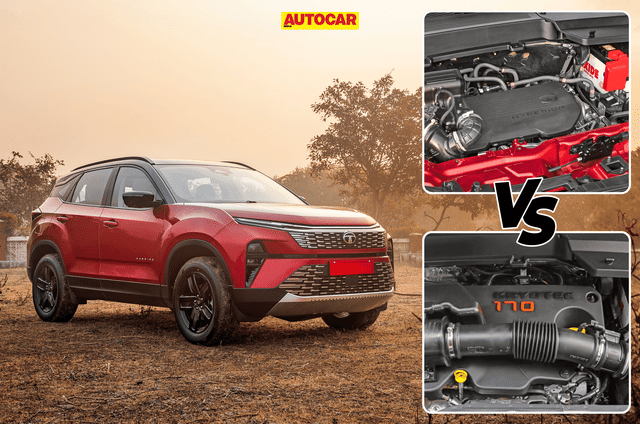
The Harrier engine options include a 2.0-litre, 4-cylinder diesel engine, which produces 170hp and 350Nm, and a 1.5-litre, four-cylinder turbo-petrol engine, generating peak outputs of 170hp and 280Nm. The latter engine debuted on the Tata Sierra. Both Harrier engines can be had with 6-speed manual and 6-speed torque converter automatic gearbox options.
Depending on the variant, the Harrier offers features like a 12.3-inch touchscreen, a four-spoke steering wheel with a backlit Tata Motors logo, a drive selector with a digital display, dual-zone climate control, a 10-speaker JBL-tuned sound system, rear window shades, a 360-degree camera, a panoramic sunroof, up to 7 airbags (6 airbags standard across the range), ADAS, hill-hold control, three-point seat belts with reminders for all passengers and more.
Tata Harrier Key Highlights
- The Harrier slots below the Safari in Tata’s line-up.
- Harrier is a 5-seater SUV.
- 14.53-inch QLED touchscreen, Dolby Atmos, and camera washers offered only with the top-spec Harrier petrol trims.
- Tata offers 17-19-inch wheel options with the Harrier.
- 170hp 2.0-litre diesel and 170hp 1.5-litre turbo-petrol engine options on offer.
Tata Harrier Latest Updates
- 12 May 2026: Tata Harrier gets discounts of up to Rs 75,000 in May
- 5 May 2026: Diesel-powered Tata Harrier Fearless Ultra and Fearless Ultra Red Dark launched
- 21 March 2026: Tata Harrier price to increase by 0.5 percent from April 1 onwards
Tata Harrier Features and specifications
Our Rating | 8 |
Mileage | 16.8 kmpl |
Engine | 1498 cc - 1956 cc |
Fuel Type | Diesel, Petrol |
Transmission | Torque Converter, Manual |
Seats | 5 |
Body Style | SUV |
Doors | 5 |
Max Power | 170 hp at 3750 rpm |
| Engine Type | Turbocharged |
| Engine Displacement | 1956 cc |
| Number of Cylinders | 4 |
| Engine Installation | Front |
| Fuel Supply System | Common Rail |
| Emission Standard | Bharat Stage VI |
| Drive Mode Types | Multiple |
| Terrain Modes | Yes |
| Front Suspension Type | Independent, Lower Wishbone, McPherson Strut |
| Front Springs | Coil Springs |
| Rear Suspension Type | Semi Independent Twist Blade |
| Rear Springs | Coil Springs |
| Length | 4605 mm |
| Width | 1922 mm |
| Height | 1718 mm |
| Wheelbase | 2741 mm |
| warranty Distance | 100000 |
| warranty Duration | 3 |
| 12 Volt Port | |
| 12 Volt Port Boot | |
| Accessory Power Outlet | |
| Acoustic Windshield |
| Adaptive Cruise Control | |
| Airbags | 7 |
| Anti Theft Alarm | |
| Anti-Lock Brakes (ABS) |
| Antenna | Shark Fin |
| Body Coloured Bumpers | |
| Connected LED | |
| Cornering Foglamps |
| Average Fuel Consumption | |
| Average Speed | |
| Distance to Empty | |
| Gear Indicator |
| AUX Input | |
| Android Auto | Wireless |
| Apple CarPlay | Wireless |
| Audio System |
| Alexa Compatibility | |
| Anti Theft Immobilisation | |
| App Details | |
| Breakdown Assistance Call Button |
Tata Harrier price & variants
The Tata Harrier price starts at Rs 13.00 lakh and goes up to Rs 26.01 lakh, ex-showroom. Whereas, the Tata Harrier on road price starts from Rs 15.35 lakh and goes up to Rs 31.61 lakh depending on the city, taxes and variant.
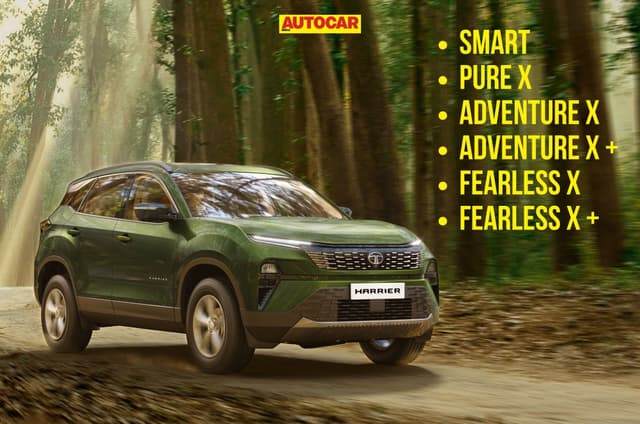
The Harrier is offered in 54 variants, from Harrier base model (Smart 1.5 Turbo-GDI MT) to Harrier top model (Fearless Ultra Stealth 2.0 Diesel AT). Depending on the variant, features such as a 14.53-inch QLED touchscreen, dual-zone climate control, a 10-speaker JBL-tuned sound system, rear window shades, a 360-degree camera, a panoramic sunroof, up to 7 airbags (6 airbags are standard across the range), and an ADAS suite are available.
Tata Harrier expert review
We like
Petrol is smooth with effortless performance
Good ride quality and highway manners
We don't like
Ergonomic quirks persist
Gruff diesel engine
9
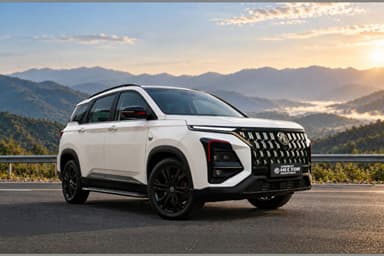
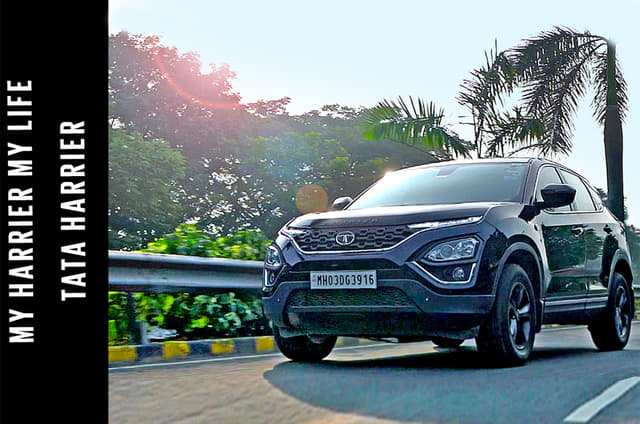
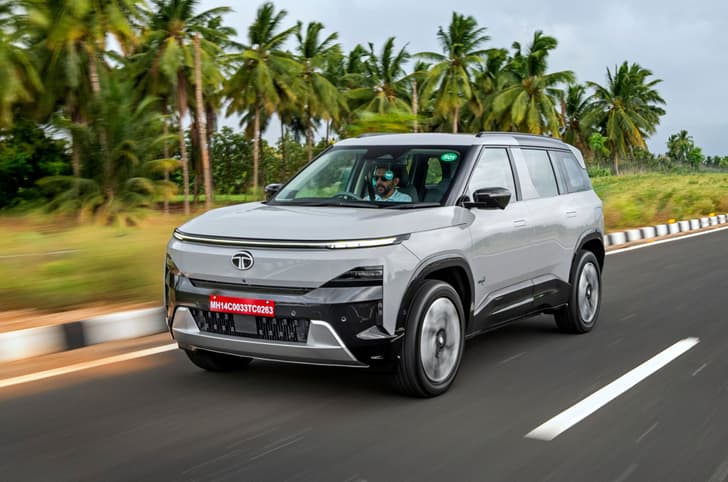
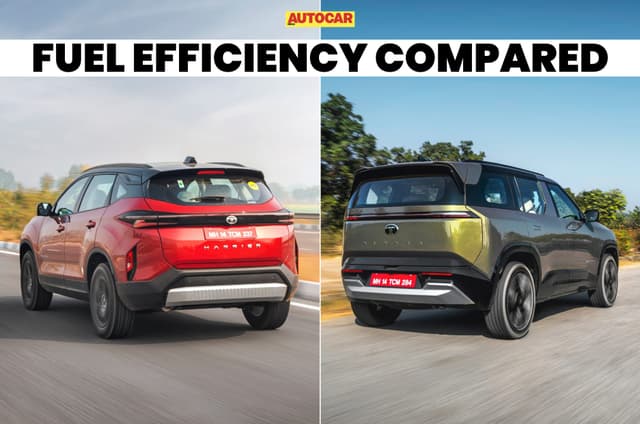
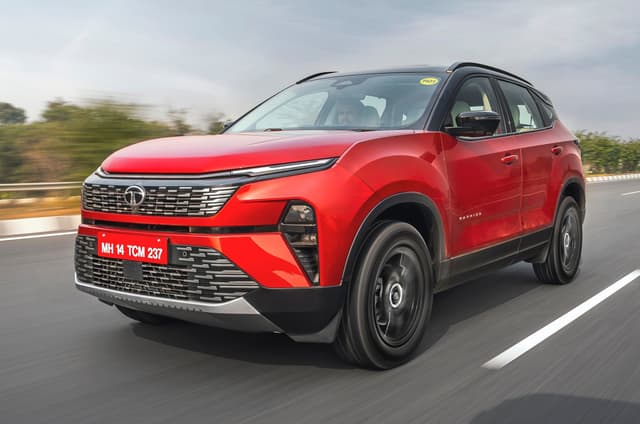
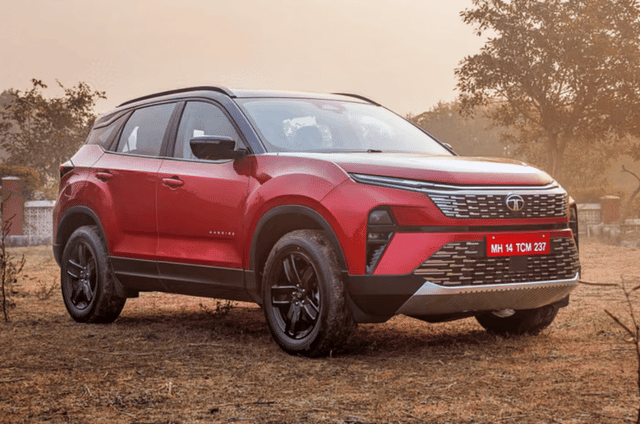
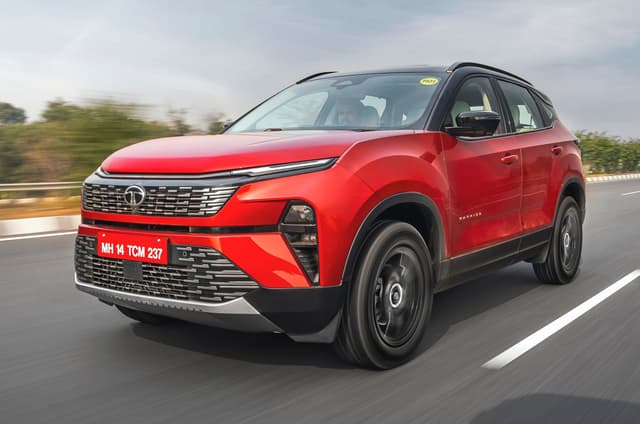
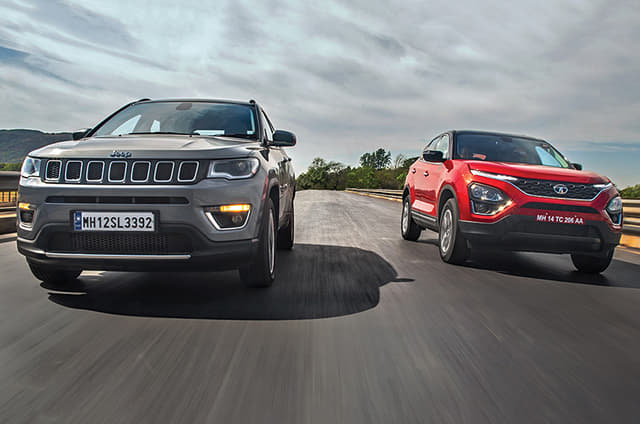
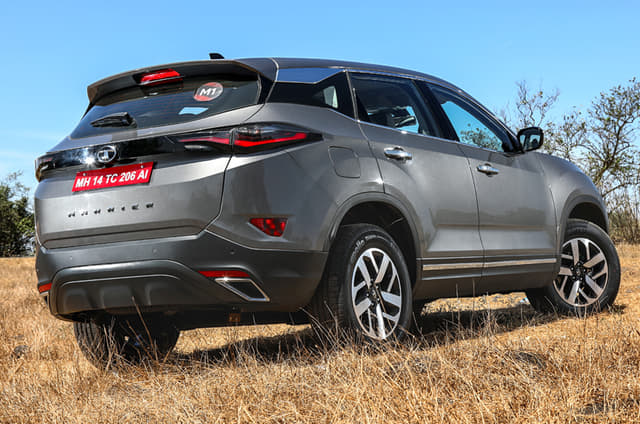
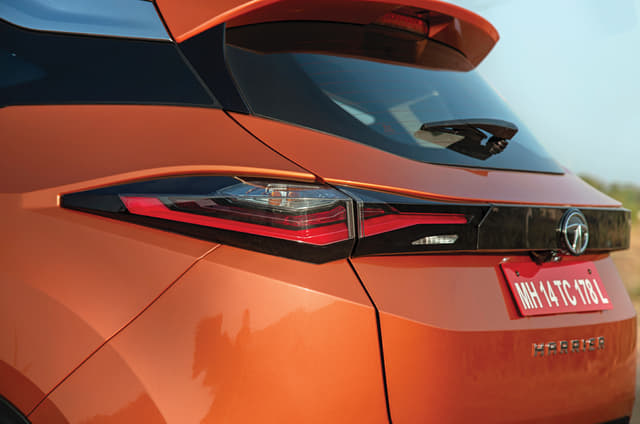
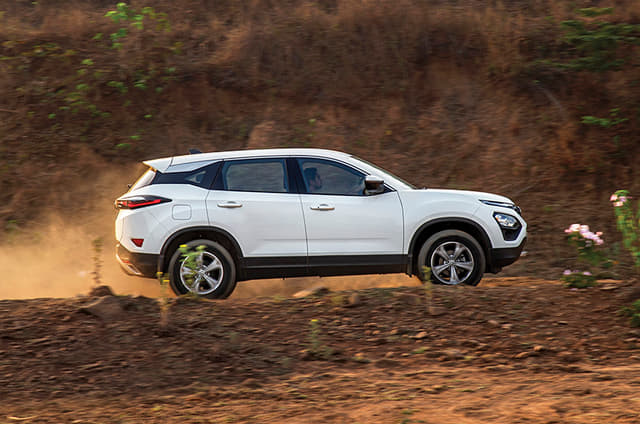
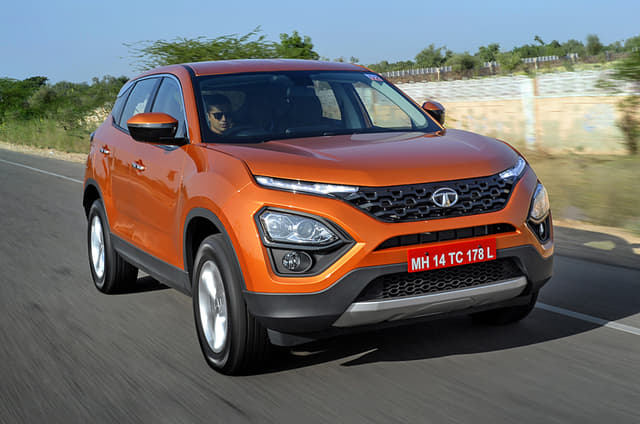
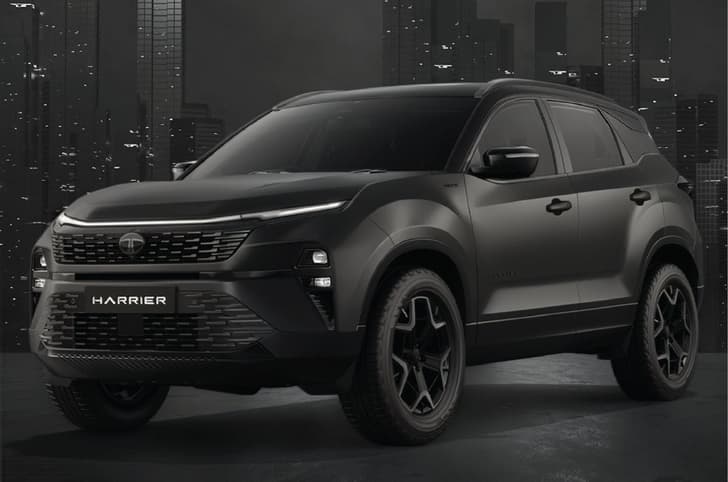
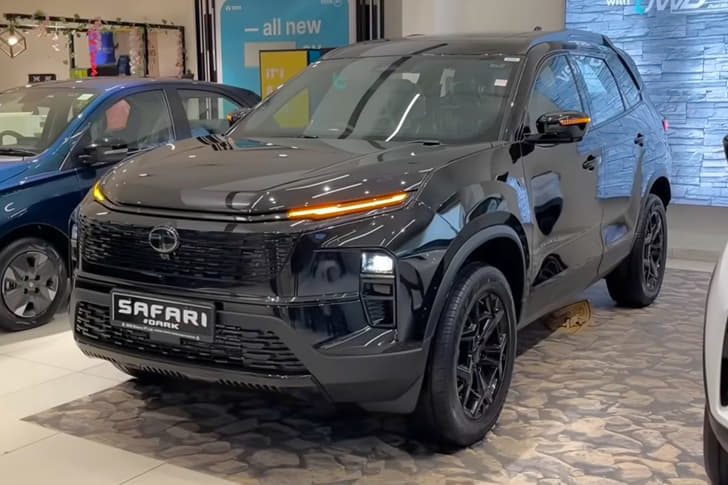
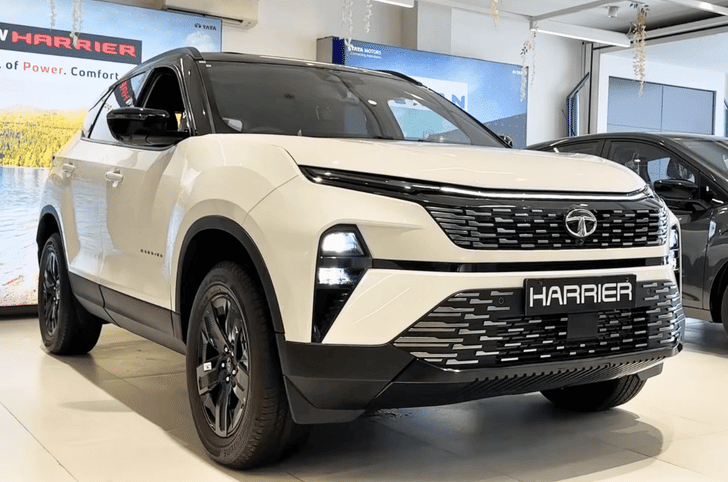
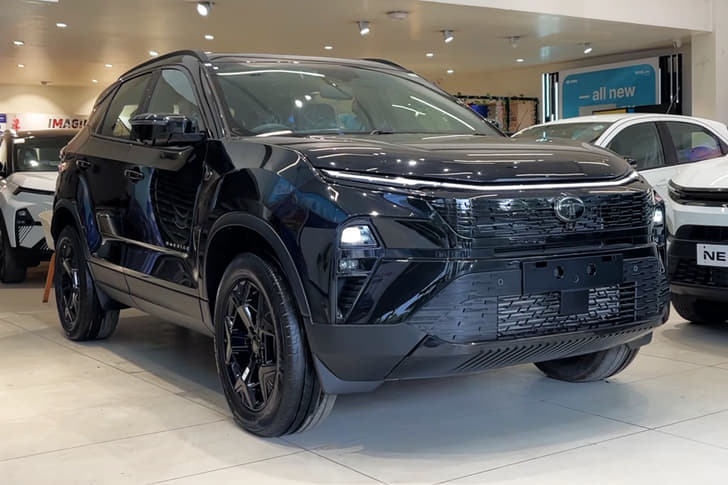
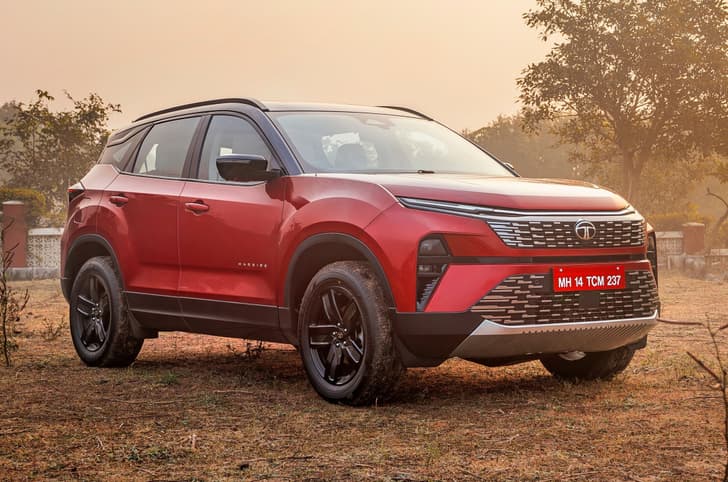
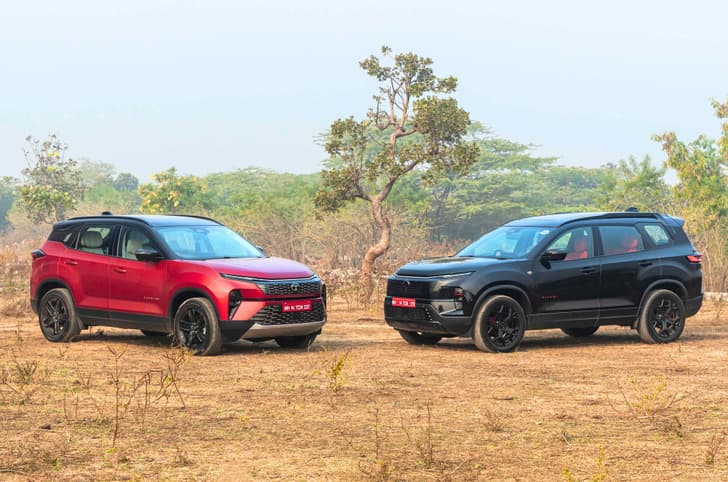
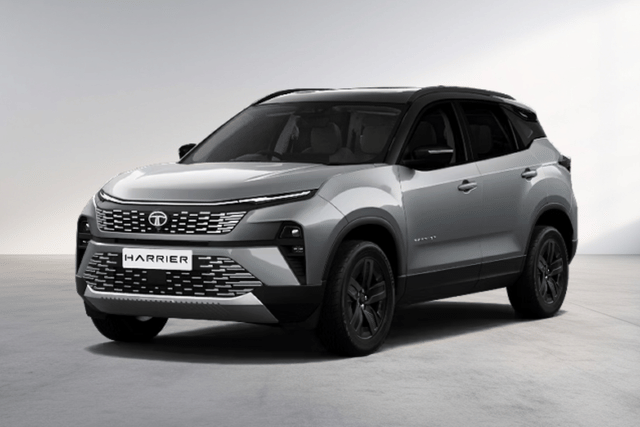
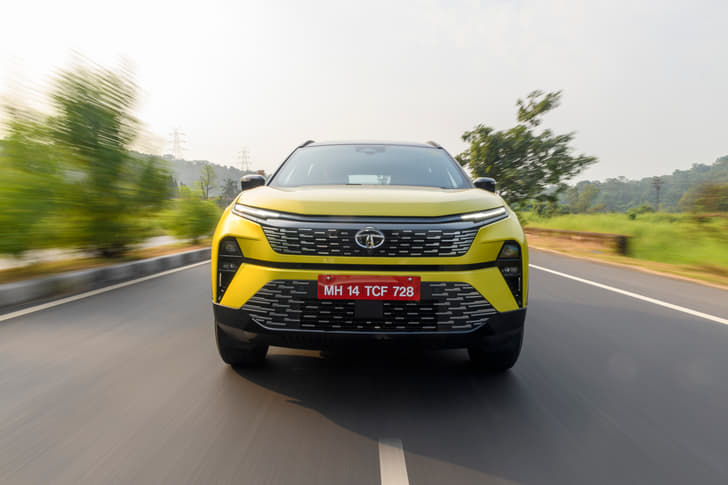
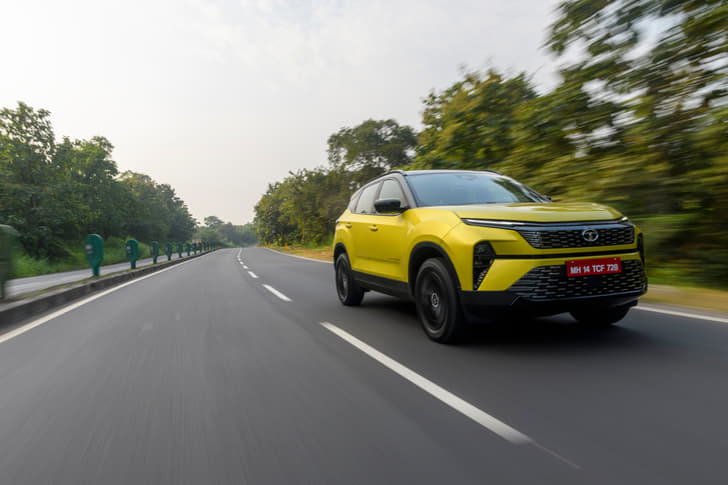
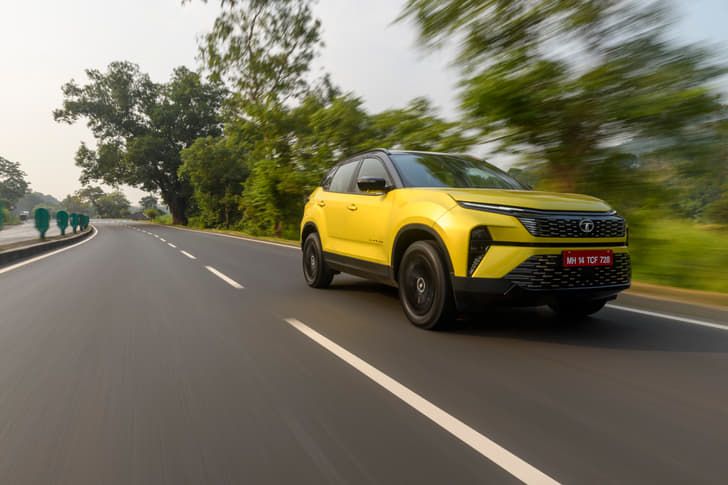
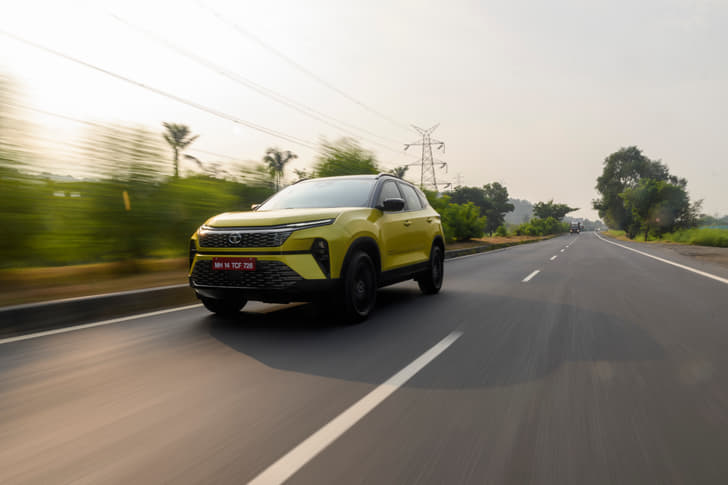
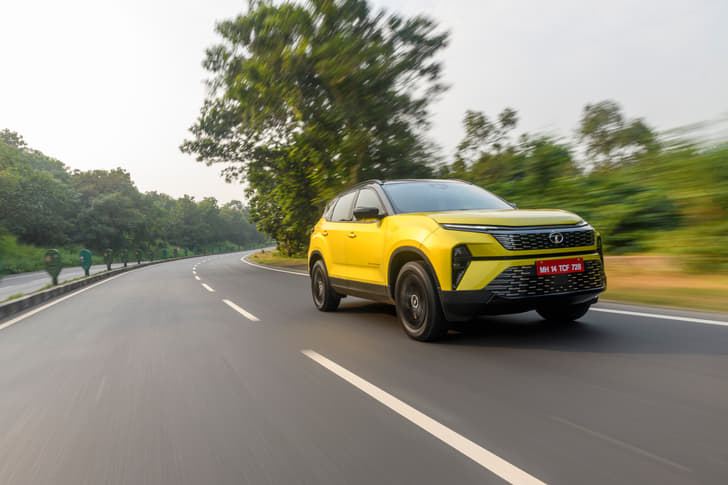
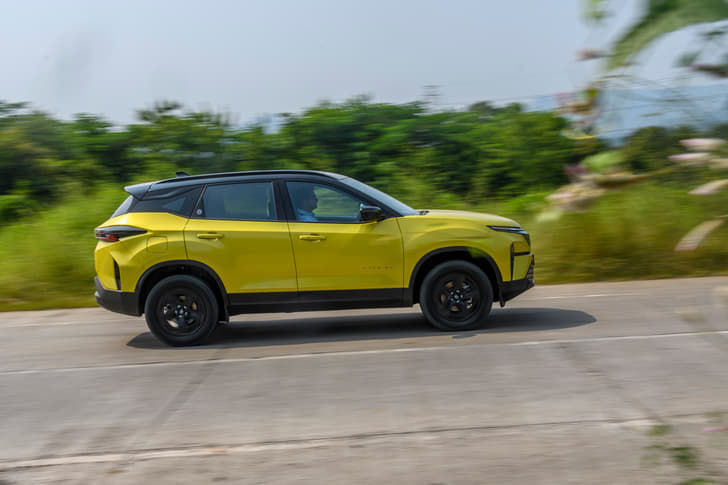
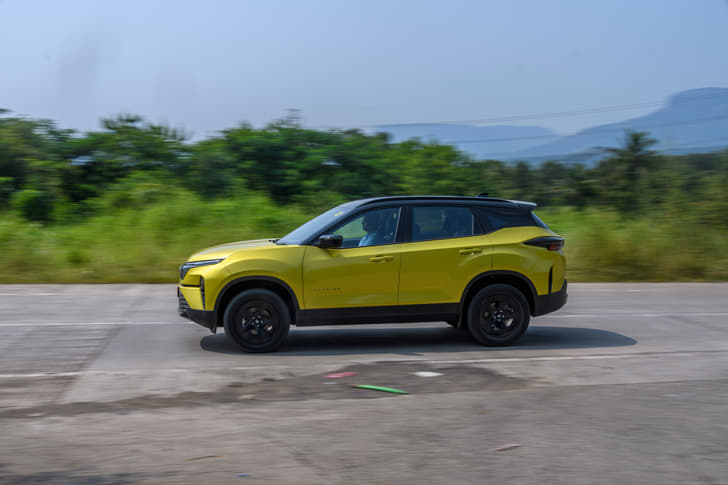
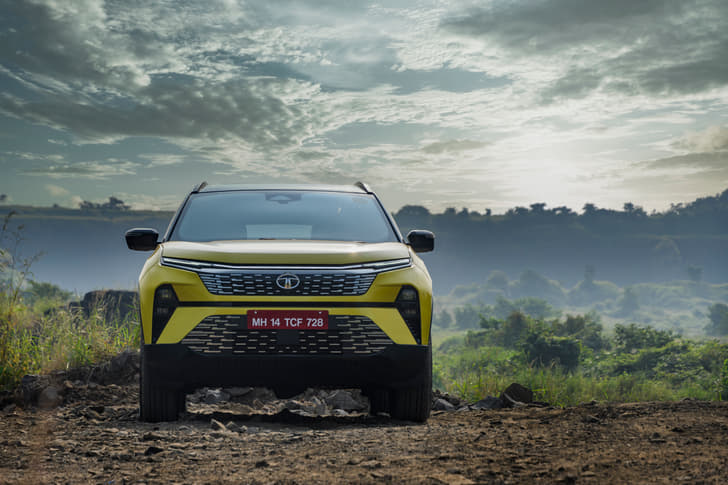
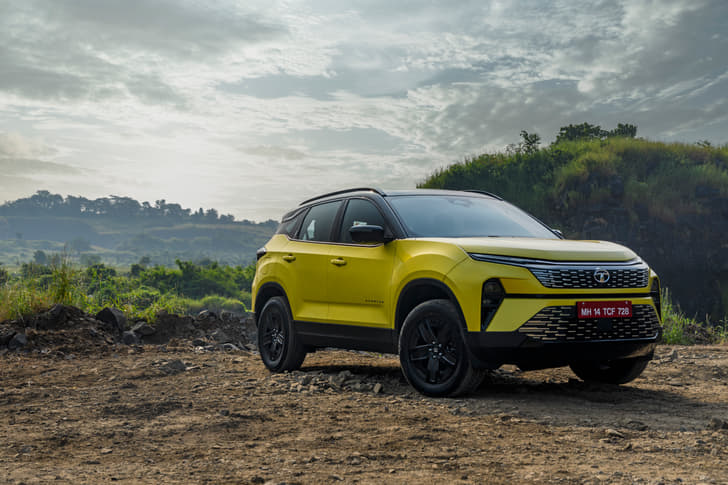
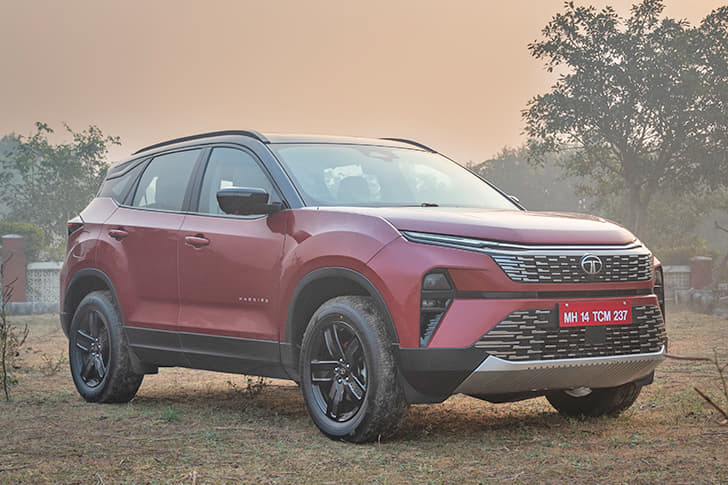
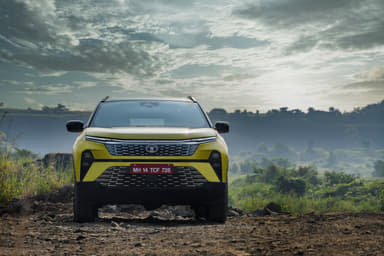
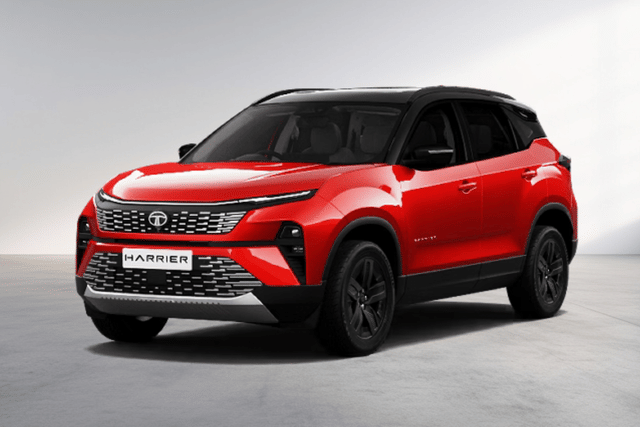
The Harrier cuts a sharp, modern figure with a bold front end defined by a large grille with metal-like accents and slim, connected DRLs that incorporate a light bar and welcome animation. Vertically stacked LED headlamps sit within angular bumper cutouts, while an aero channel guides air from the bumper to the wheel wells. A wide air dam and chunky scuff plate add to the SUV’s visual heft. At the rear, tail-lamps are linked by a full-width light bar and a sculpted bumper completes the look. The petrol version is visually identical to the diesel model, with no exterior identifiers to tell them apart.
9
The Harrier’s front seats are large and comfortable, and the high seating position delivers a commanding view. Both front seats are powered and ventilated, with memory for the driver. Cabin quality is generally strong, with good fit and finish and premium-feeling touchpoints, though some hard plastics remain, and the heavy use of gloss-black surfaces may prove prone to scratches and smudges. Storage is well handled, with multiple cubbies, bottle holders and a cooled centre box with USB ports. Ergonomic quirks persist, but overall comfort is strong, with a roomy and supportive second row.
9
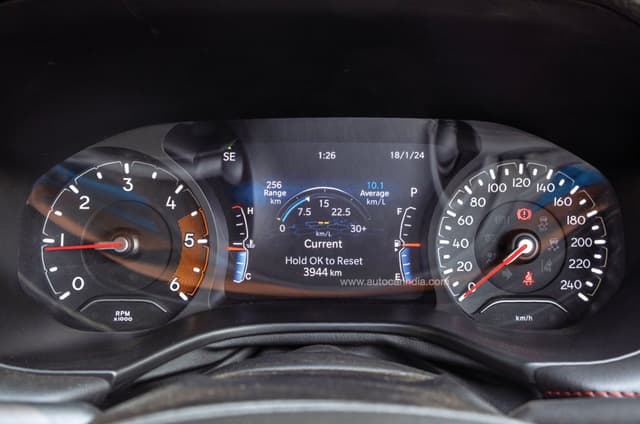
The 10.25-inch digital driver’s display looks crisp, is easy to use and can show a connected phone’s navigation full screen, though it sits a bit deep in the binnacle. The diesel gets a large 12.3-inch touchscreen — slick, responsive and loaded with features including wireless Android Auto and Apple CarPlay, a 360-degree camera with a 3D view, air purifier controls and JBL sound modes. The petrol gets the 14.53-inch Samsung Neo QLED infotainment screen and the digital rear-view mirror from the Harrier EV. The safety kit is comprehensive too, with six airbags, ABS with EBD and ESP standard. Top trims add Level 2 ADAS with over 20 features and seven airbags.
8
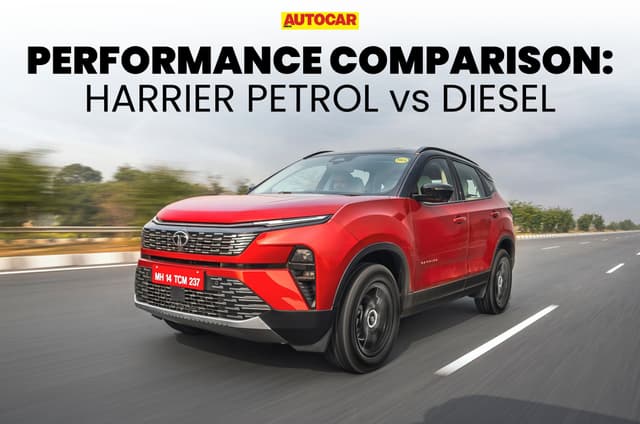
The 2.0-litre diesel feels familiar, with a strong mid-range, wide powerband and effortless cruising ability. It still feels punchy, but refinement remains its weak spot, with noticeable noise and vibrations at low speeds and under hard acceleration. The petrol tells a different story. Despite its 1.5-litre capacity, the Hyperion turbo delivers strong low-end performance, making this heavy SUV feel surprisingly quick off the line. There’s no mid-range turbo shove or top-end zing, but performance is more than adequate, with most of the power concentrated low down. Refinement is significantly better than the diesel, though a mild drone creeps in around 1,500rpm. The smooth 6-speed automatic suits the petrol particularly well.
7
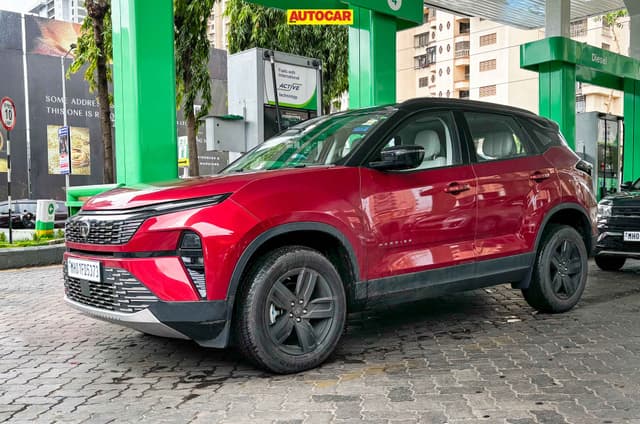
Tata Harrier diesels ARAI mileage is 16.8kpl for both manual and automatic versions. ARAI-certified figures for the petrol are yet to be released, but Tata claims best-in-class efficiency.
8
Ride quality remains a highlight. The platform’s Land Rover lineage shows through in the way it shrugs off bad roads, feeling robust and well damped. There’s a hint of firmness at low speeds, but comfort is never compromised. On the highway, it feels particularly impressive, staying flat, stable and composed at triple-digit speeds. The petrol version is around 80kg lighter than the diesel, which should translate to a touch more agility on twisty roads. Body roll is well controlled, grip from the wide tyres is reassuring, and the electric steering is well judged — light in the city and nicely weighted at speed.
8
Prices for the Harrier diesel start at Rs 13.99 lakh and top out at Rs 25.24 lakh. Pricing for the petrol-powered Harrier had not been announced at the time of writing, but we expect it to be around Rs 50,000 to Rs 80,000 cheaper than the diesel. On the whole, the Harrier is a very well-rounded SUV, and the petrol broadens its appeal further by bringing a level of refinement the diesel never could.
Reviewed by: Lenny D'sa
Tata Harrier Official Brochure
Download the complete brochure with specs, features, and variants.
Tata Harrier reviews

Tata Harrier comparison

Tata Harrier Mileage
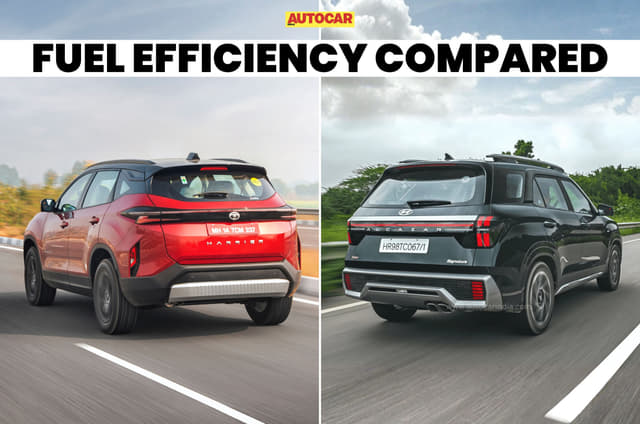
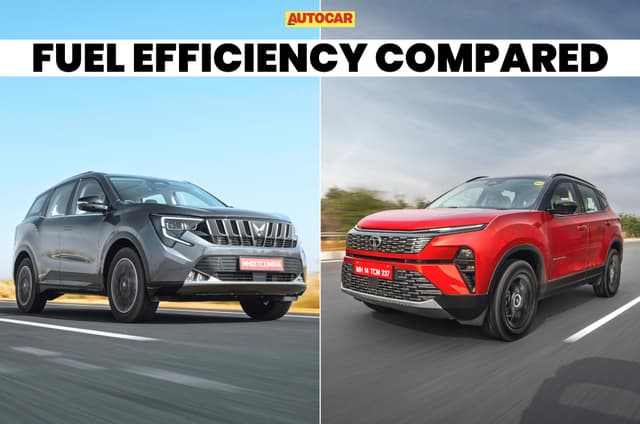
The Tata Harrier diesel mileage is 16.8 kmpl, while the claimed petrol figures are yet to be revealed. Real-world Tata Harrier mileage will vary by driving style and other factors.
| PowertrainThe combination of engine type, fuel, and transmission that powers your vehicle and determines how it drives and what it runs on. | ARAI MileageMileage certified by the government, tested under controlled lab conditions. Real-world mileage will vary. | Autocar Tested MileageAutocar's experts test each vehicle on fixed city and highway routes under standardised conditions - single occupant, AC running, manufacturer-recommended tyre pressures. Tanks are filled to the brim before and after each run to calculate efficiency. Results reflect realistic real-world usage. | User Reported MileageMileage figures are reported by vehicle owners and represent the approximate real-world efficiency you may experience. Actual mileage will vary based on driving conditions, habits, and vehicle condition. |
|---|---|---|---|
Diesel-Manual 1956 cc | 16.8 kmpl | 13.05 kmpl | 16.04 kmpl |
Tata Harrier news
Tata Harrier Images
Browse through our Tata Harrier image gallery to see its design from every angle. Get a closer look at the Tata Harrier interior, exterior and more.

Tata Harrier videos
Discover walkarounds, test drives, and reviews to learn about the Tata Harrier specs, features, performance, seat comfort and more.


Tata Harrier Colours
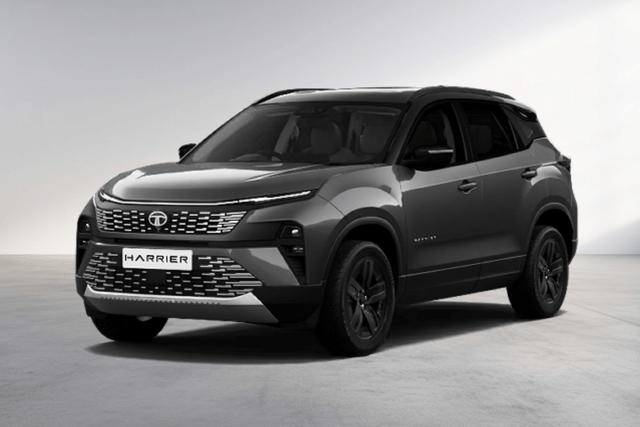
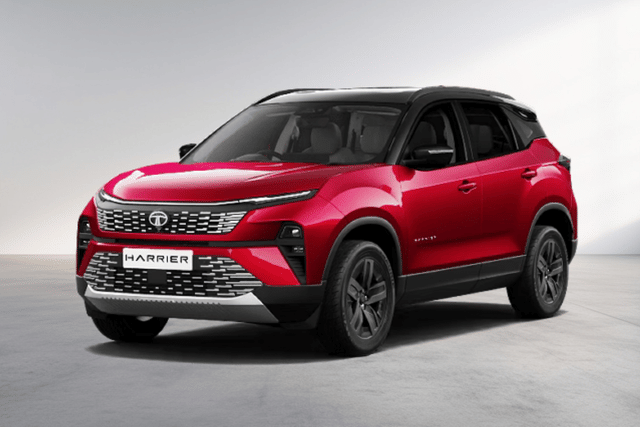
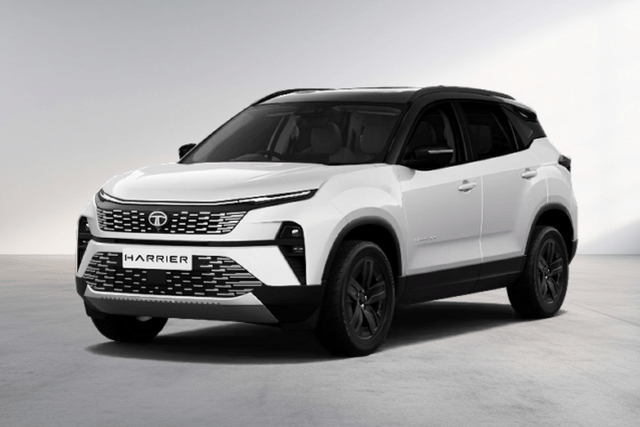
The Tata Harrier is available in 7 colours, namely Ash Grey, Black / Coral Red (dual Tone), Black / Lunar White (dual Tone), Black / Pebble Grey (dual Tone), Black / Sunlit Yellow (dual Tone), Coral Red, Daytona Grey, Fearless Red, Nitro Crimson, Pebble Grey, Pristine White, Pure Grey, Seaweed Green, Sunlit Yellow.
Tata Harrier FAQs
The Tata Harrier is a 5-seater SUV. It is not available as a 7-seater.
The Tata Harrier price starts from Rs 13.00 lakh, and rises to Rs 26.01 lakh (ex-showroom).
Tata does not offer a 4WD setup with the Harrier ICE.
Depending on the trim level, the Tata Harrier offers features like a 14.53-inch Samsung QLED touchscreen, a 10-speaker JBL-tuned sound system, rear window shades, a 360-degree camera, a panoramic sunroof, up to 7 airbags (6 airbags standard across the range), ADAS, hill-hold control, three-point seat belts with reminders for all passengers and more.
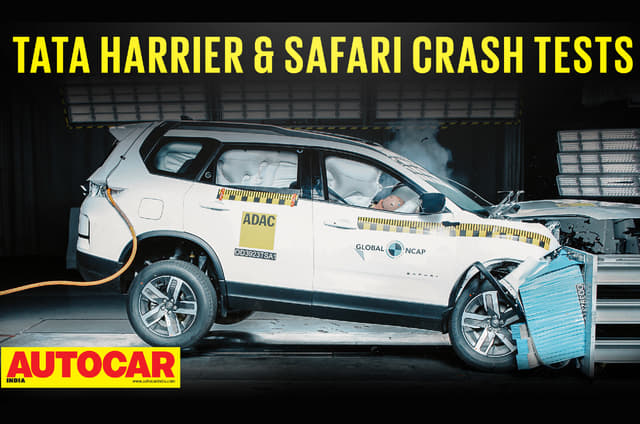
The Tata Harrier achieved a 5-star Bharat NCAP rating in December 2023
The Tata Harrier diesel mileage is 16.8 kmpl.
Tata sells the Harrier in 54 variants.
The Harrier on road price starts from Rs 15.35 lakh to Rs 31.61 lakh based on city to city.
The Tata Harrier base model price is Rs 13.00 lakh for (Tata Harrier Smart 1.5 Turbo-GDI MT) variant (ex-showroom).
The Tata Harrier base model on road price is Rs 15.35 lakh based on city to city.
The Tata Harrier top model price is Rs {{top _ex_showroom_price}} for (Tata Harrier Fearless X + Stealth 2.0 Diesel AT) variant (ex-showroom price).
The Harrier top model on road price is Rs 31.61 lakh based on city to city.
Questions you may find useful
Hello, I am planning to buy a new car in Bangalore. My current car is a 2018 Jeep Compass Petrol AT, and I have been very impressed with its solid build quality and driving dynamics. I have shortlisted the Mahindra XUV 7XO AX7T Petrol AT and the Tata Harrier Fearless Ultra Petrol AT. I drive around 6,000 to 9,000 km a year, need an automatic transmission, and have a budget of around Rs 30 lakh. Which one would be the better choice?
Go for the Mahindra XUV 7XO AX7T Petrol AT. Since the current car is a Jeep Compass, solid build quality and engaging driving dynamics are clearly important priorities, and the XUV 7XO is the better fit in that regard. The 2.0-litre turbo petrol is a strong, punchy engine, and the car feels genuinely quick and engaging to drive. The AX7T variant is also generously equipped, and overall ownership experience of Mahindra cars has improved significantly over the past few years.The Tata Harrier Fearless Ultra Petrol AT is a good car with a strong road presence and a comfortable ride, but its 1.5-litre turbo-petrol engine does not feel as effortless as the Mahindra's 2.0-litre unit. For an annual running of 6,000-9,000 km, a petrol automatic is the right choice, and the XUV 7XO’s engine and gearbox combination is simply the more compelling package.Overall, the Mahindra XUV 7XO AX7T Petrol AT is the better choice for someone upgrading from a Jeep Compass and looking for a solid, engaging SUV in this price range.
I am planning to buy a new car. My budget is around Rs 30 lakh. My final two choices are: 1. XUV 7XO AX7T 2. Tata Harrier Fearless Ultra / Ultra Dark Red. Key considerations: petrol only, automatic transmission, TC is fine; not specifically looking for a DCT, good power and pickup, safety, fun to drive / good driving dynamics, average driving: 7,000- 10,000 km per year. I have driven the Jeep Compass Petrol for 4 years and love its driving dynamics and solid feel. That is the benchmark for me. I am not going for the Compass again because it is an older model and no longer available with a petrol engine.
Go for the Mahindra XUV 7XO AX7T petrol automatic. It is the better fit for your requirements. The 2.0 turbo petrol is a strong engine with good power and pickup, and the 8-speed torque converter automatic is smooth and well-suited to both city and highway driving. This Mahindra car also has a solid, planted feel on the road and good high-speed stability, which is something you will appreciate coming from the Compass. It is also a more modern package overall, with a richer feature set and a more premium cabin experience.The Tata Harrier petrol is a good car, but the 1.5-litre turbo petrol is not as powerful as the Mahindra engine. The Harrier's strength used to be its ride comfort, but with the update, the 7XO matches that too.Between the two, the 7XO is the more complete car.
I am looking to upgrade from my 2017 Hyundai Creta to another SUV. My annual running is around 35,000km, and my budget is up to Rs 25 lakh. I'm confused between a diesel SUV and a hybrid car. My usage is around 75% on highways. I have also considered the Mahindra XUV 7XO and Tata Harrier, but I am concerned about their relatively low fuel efficiency. Which SUV would you recommend, or should I switch to a petrol hybrid such as the Maruti Victoris, considering the coming years?
With 35,000 km a year and 75% highway usage, you are a textbook diesel buyer. The fuel savings at this running are substantial, and diesel engines are at their most efficient on long highway runs. The Mahindra XUV 7XO diesel is the recommendation here. It is a genuinely strong highway SUV with a powerful and refined diesel engine, a comfortable ride and a spacious cabin. The Tata Harrier is also a good product, but the Mahindra car feels more complete overall.Your concern about fuel efficiency is understandable, but both the XUV 7XO and Harrier are large, powerful SUVs and their efficiency is reasonable for what they are.The Maruti Victoris Strong Hybrid is an excellent SUV, but it isn't the best fit for your driving pattern. Strong hybrids deliver their biggest fuel efficiency advantage in city traffic, where they can operate on electric power for longer. Since 75% of your driving is on the highway, that advantage reduces considerably, making a diesel SUV the more sensible choice.The Toyota Innova HyCross Hybrid would have been a strong alternative thanks to its excellent blend of comfort, efficiency and reliability, but it sits well beyond your stated budget.
Hi Team, I am currently driving a 2020 Maruti Suzuki Baleno and am planning to upgrade to an SUV. My shortlisted options are the Honda Elevate, Tata Harrier, and Mahindra XUV 7XO. My daily drive involves around 35 to 40 kms in heavy Bangalore city traffic, along with occasional highway trips. My primary priority is a car with a solid 5-star safety rating, along with good ride comfort and easy city drivability. Coming from a lightweight hatchback, I am looking for an option that offers a clear step up in safety and space without feeling overly cumbersome during my daily urban commute. Could you please evaluate these three models based on my usage and suggest the best option and engine-transmission combination for me?
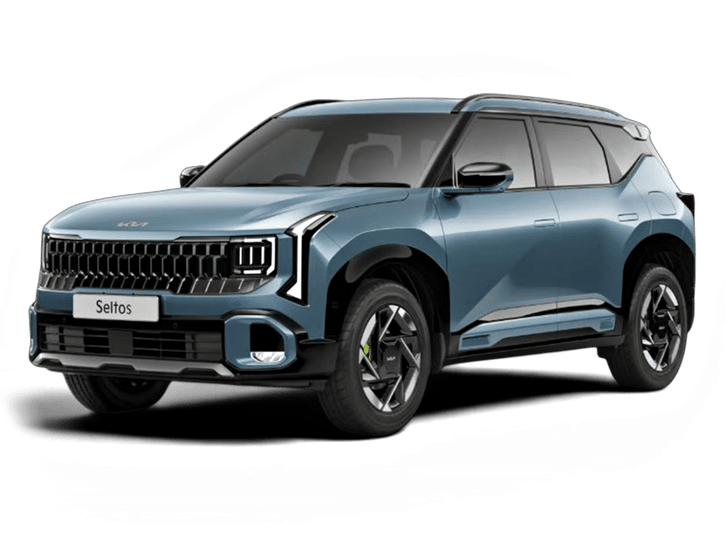
Based on your usage, the Honda Elevate CVT is actually the best fit for your needs among your shortlist. With a 35-40 km commute in heavy Bangalore traffic, the CVT makes life easy; the engine is responsive enough to go for gaps in traffic, and the steering is light in the city. Importantly, this Honda car is not so large as to become cumbersome to drive in tight city traffic, which is important to you. The Tata Harrier and Mahindra XUV 7XO are both physically larger, making them slightly more cumbersome to drive in traffic. Their petrol powertrains are also quite thirsty in the city, while their diesel engines do not suit your city-heavy usage, likely requiring additional highway trips just to keep the DPF happy.If you want an alternative similar to the Elevate, the Kia Seltos is a strong choice. It has a 5-star safety rating, is very well equipped in terms of features, and its 1.5-litre naturally aspirated engine paired with the IVT offers a smooth, relaxing drive in the city.
I am confused between the Tata Harrier and XUV 7XO. My yearly running is around 6,000- 7,000 km. I am also confused between the petrol and diesel versions of each model. My budget is Rs 25-30 lakh, plus or minus. My main concerns are service, reliability and maintenance costs. Will the price difference between petrol and diesel offset my yearly running costs?
With a yearly running of 6000-7,000 km, diesel does not make financial sense. The price premium for the diesel engine will take too long to recover at your usage, and modern petrol engines are efficient enough for this kind of running. Between the Tata Harrier and XUV 7XO, the Mahindra car is the one we recommend. It offers a more refined ownership experience, a more polished cabin and a better overall balance between comfort and driving dynamics. Mahindra’s service network is also strong, and the 7XO has a good track record of reliability.The Tata Harrier is a very capable SUV with excellent ride comfort, but Tata’s service consistency can still be variable depending on location. Go for the XUV 7XO petrol automatic. It will be the most sensible and satisfying long-term ownership choice for your usage and budget.
Upcoming Cars


Tata Cars

Trending Cars

Latest Cars