
Last Updated on: 22 May 2026
Skoda Kushaq
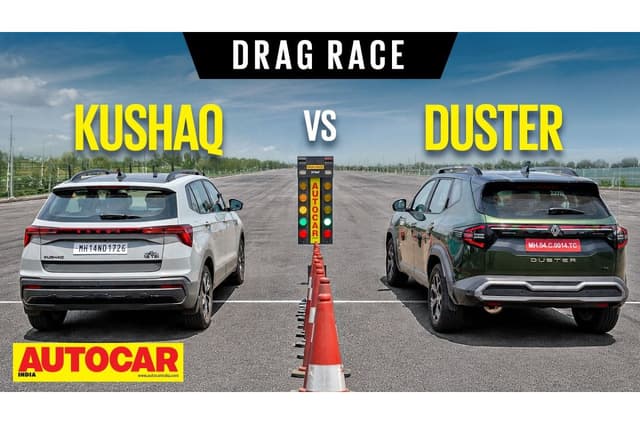
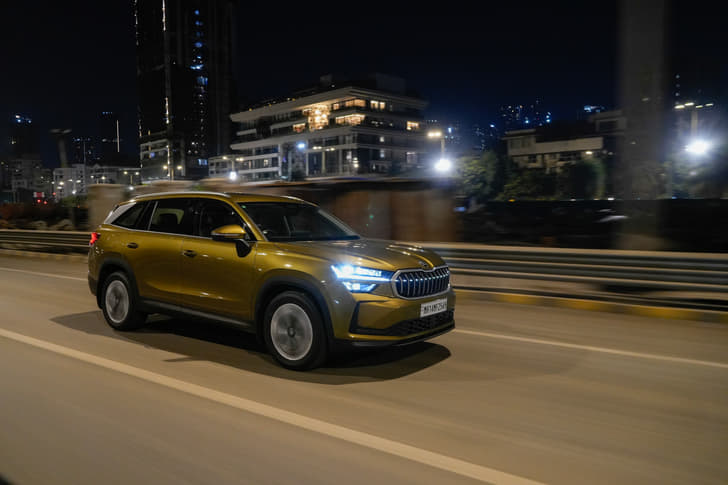
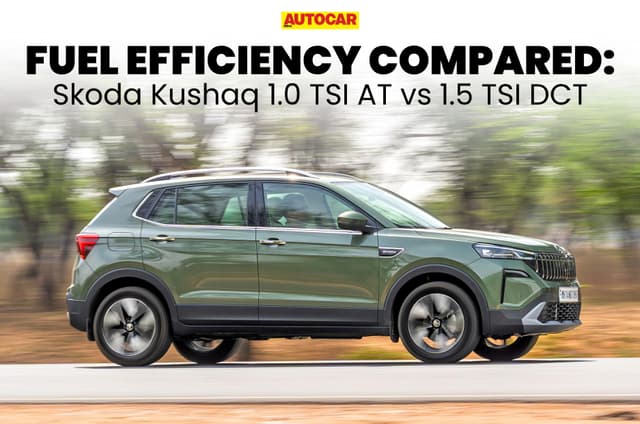
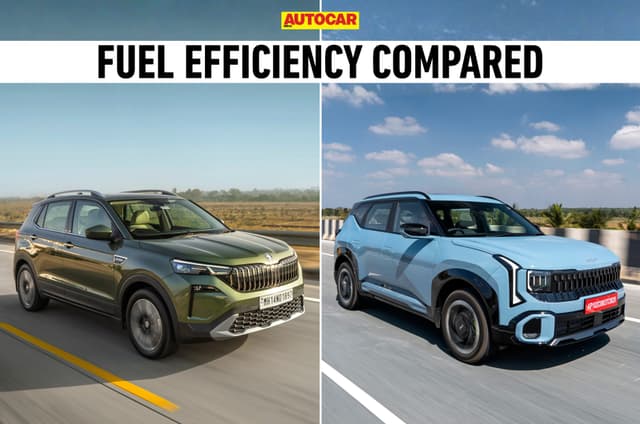
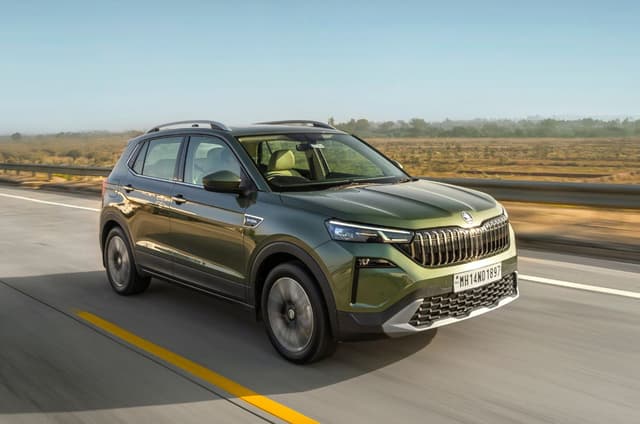
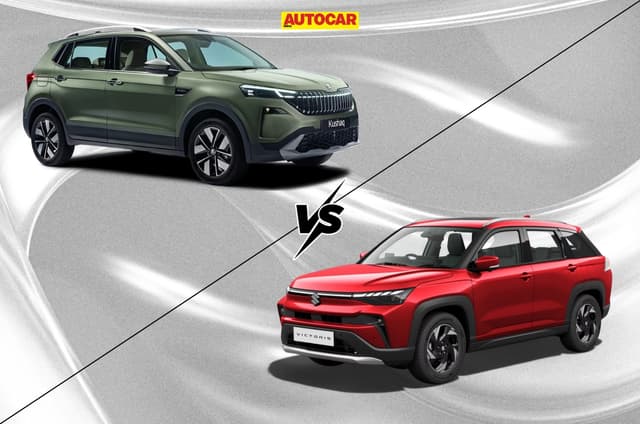
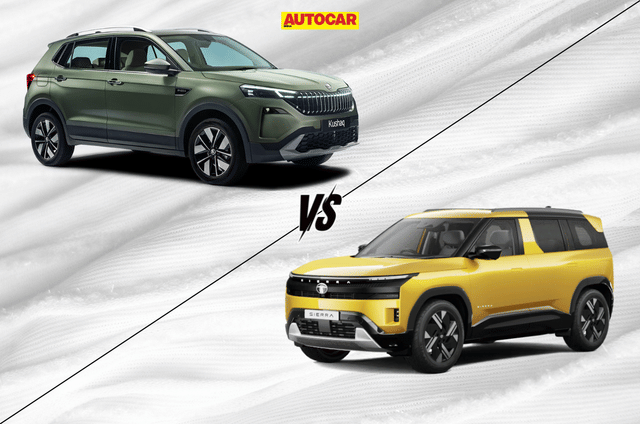
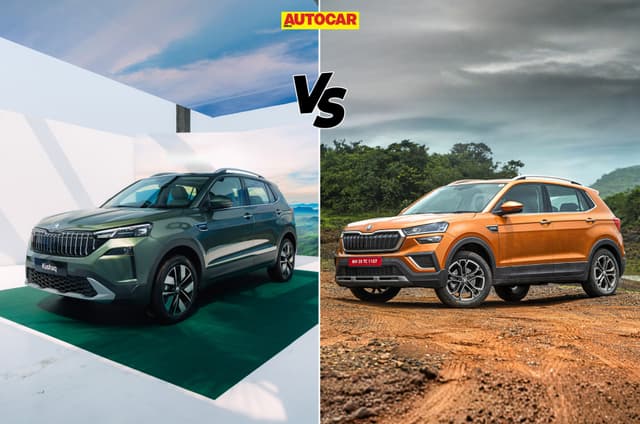
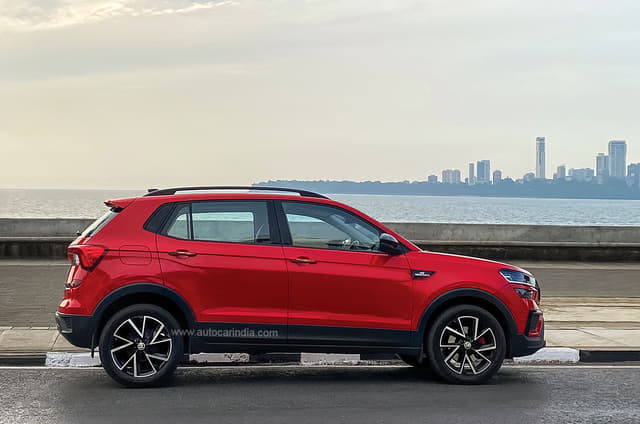
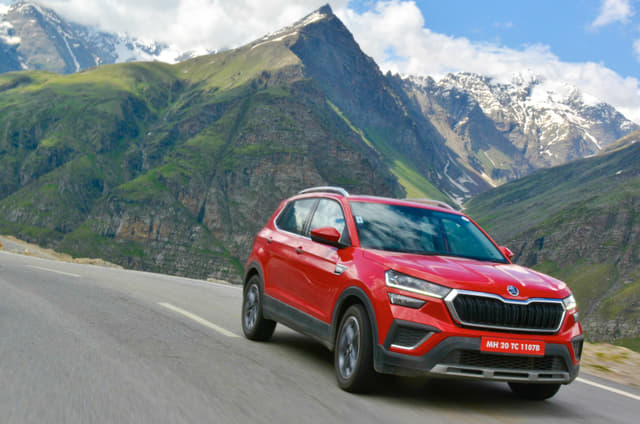
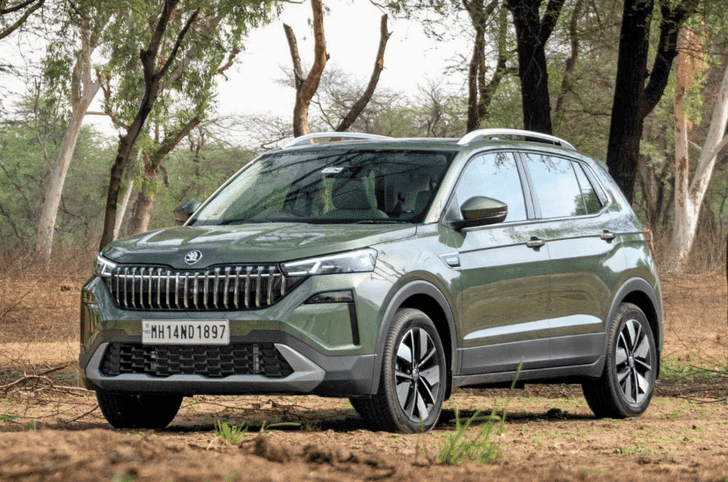
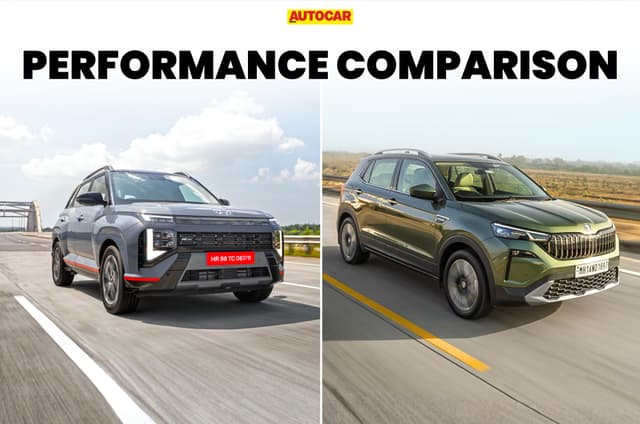
The Skoda Kushaq is the Czech carmaker’s answer to popular midsize SUVs like Creta, Victoris and Sierra. Launched back in 2021, the Skoda Kushaq received a facelift in 2026. The 2026 Skoda Kushaq ex-showroom prices range from ₹10.69 lakh to ₹18.99 lakh.
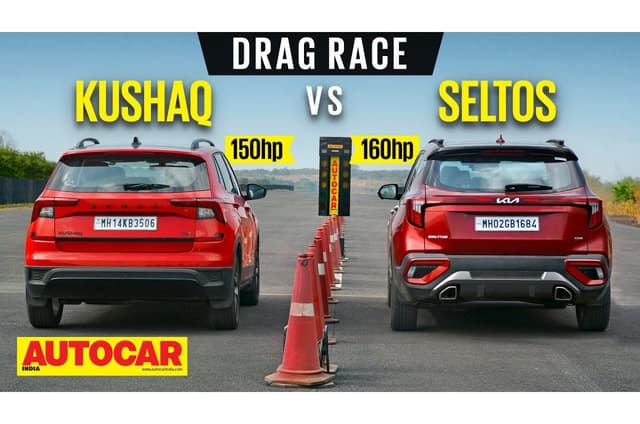
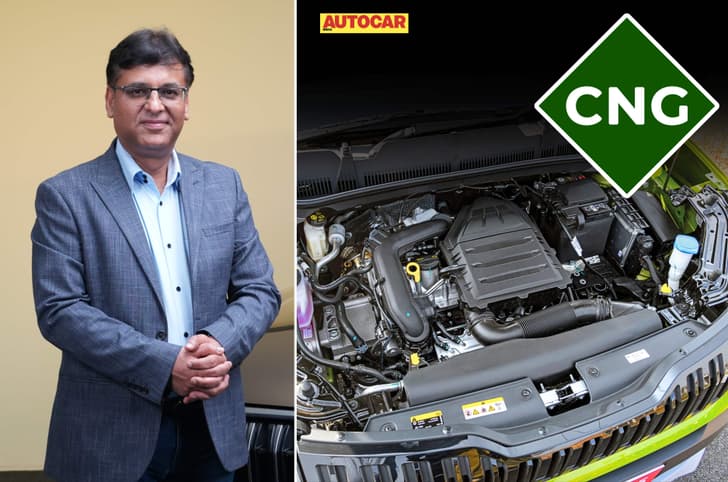
The Skoda Kushaq engine options include a 3-cylinder 1.0-litre and a 4-cylinder 1.5-litre turbo-petrol engine. The 1.0-litre turbo-petrol engine produces 115hp and 178Nm Nm and is offered with either a 6-speed manual or a new 8-speed torque-converter automatic transmission. The larger 1.5-litre turbo-petrol engine delivers 150hp and 250Nm and is available only with a 7-speed dual-clutch automatic gearbox (DCT).
The Skoda Kushaq mileage range is 18.72 kmpl - 19.66 kmpl (claimed figures). Claimed mileage for the 1.0TSI MT is 19.66kpl, for the 1.0TSI AT is 19.09kpl and for the 1.5TSI DCT is 18.72kpl.
Key Highlights of the Skoda Kushaq SUV:
- Skoda Kushaq dimensions are 4229mm in length, 1760mm in width, 1,612mm in height, and a 2651mm wheelbase.
- The Kushaq boot space is 285 litres, and it can seat 5 passengers (including the driver).
- Skoda offers the Kushaq with alloy wheels and roof rails with a 50kg load-bearing capacity across all variants.
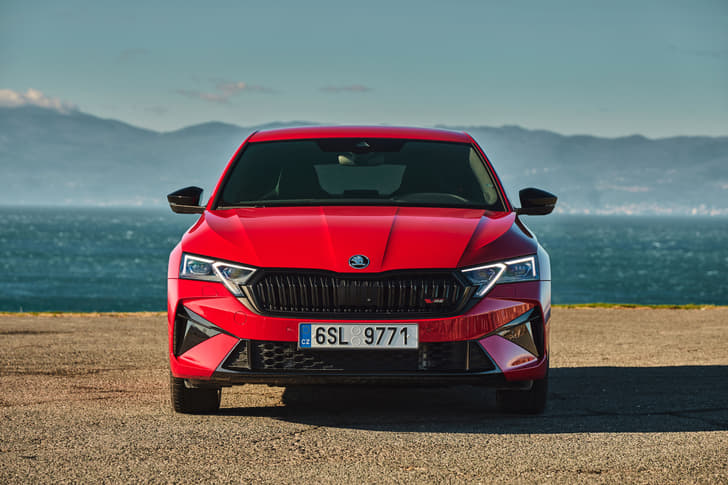
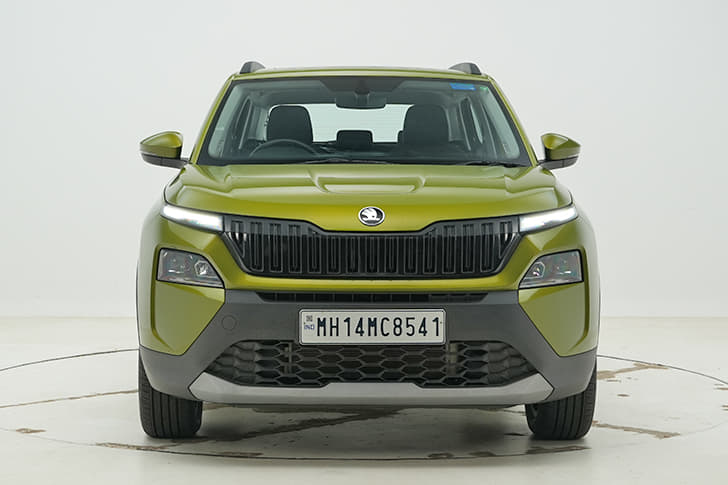
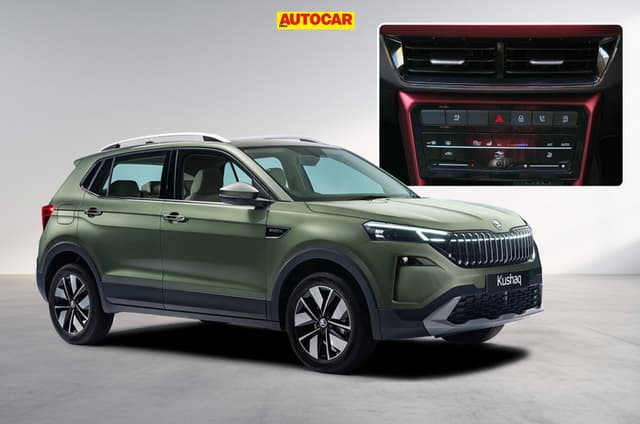
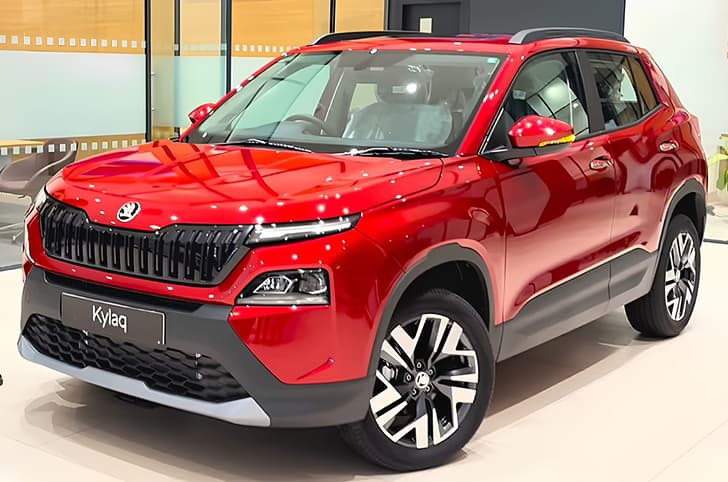
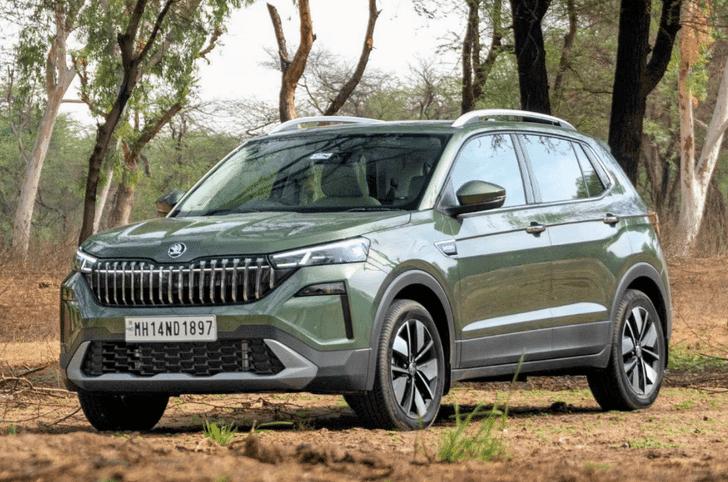
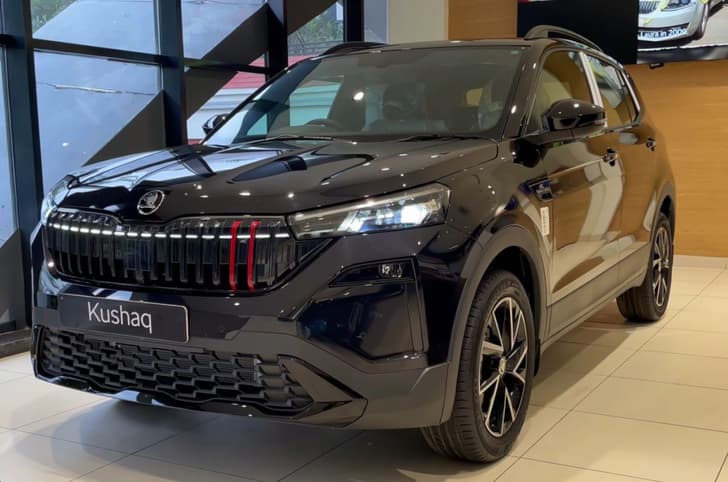
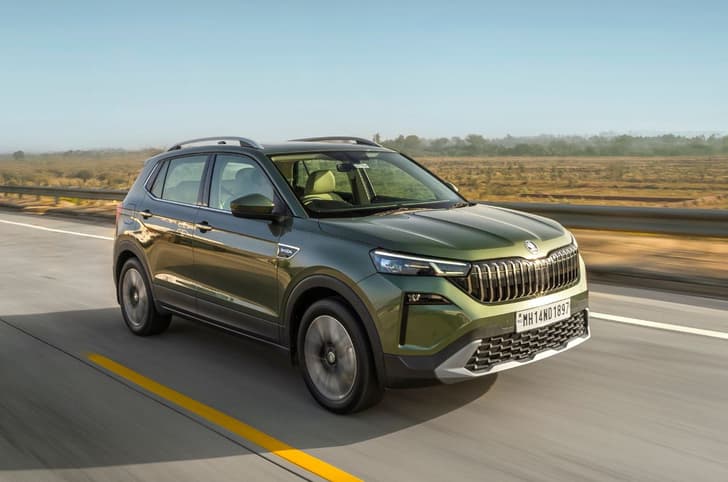
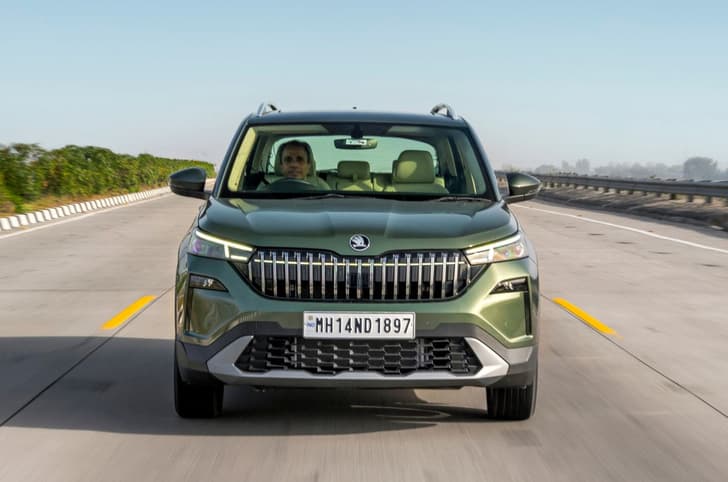
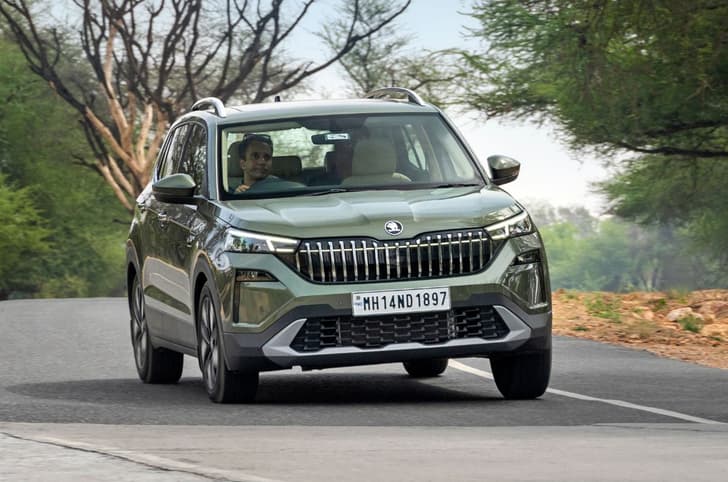
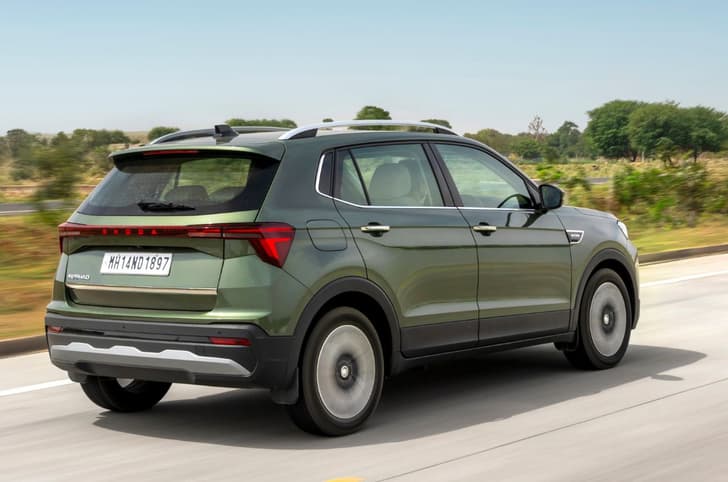
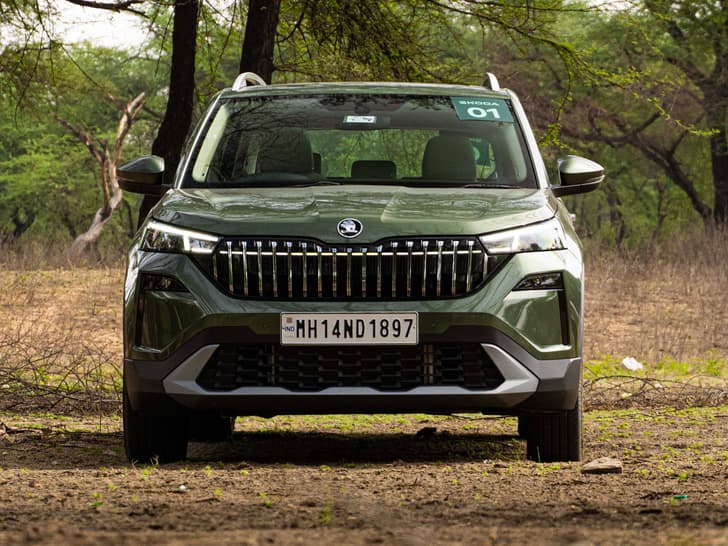
- Skoda Kushaq gets LED headlights, LED DRLs, a segmented LED lightbar on the grille, and connected LED taillights with ‘Skoda’ lettering.
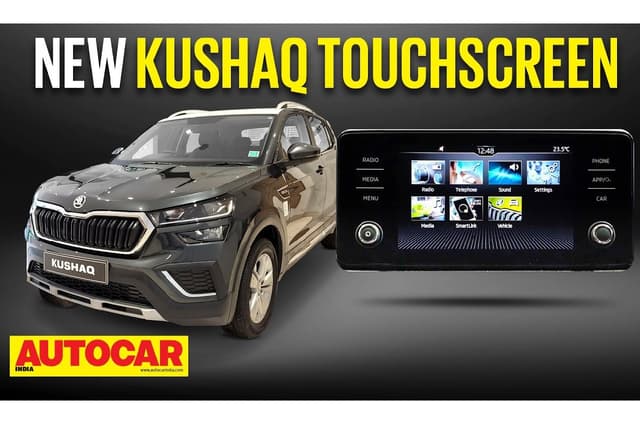
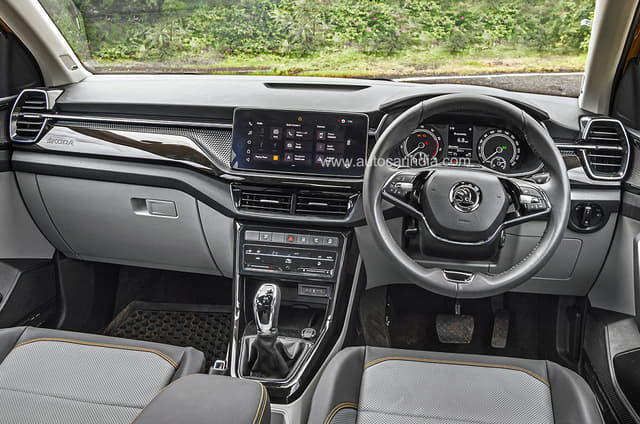
- Skoda Kushaq features include a 10.1-inch touchscreen, a 10.25-inch driver’s display and a 6-speaker sound system.
- It also gets a panoramic sunroof, a wireless phone charger, powered and ventilated front seats and a massage function for the rear seats.
- Safety features include 6 airbags, a rear parking camera, front and rear parking sensors, and TPMS.
- Unlike most of its rivals, it does not have a 360-degree camera or an ADAS suite.
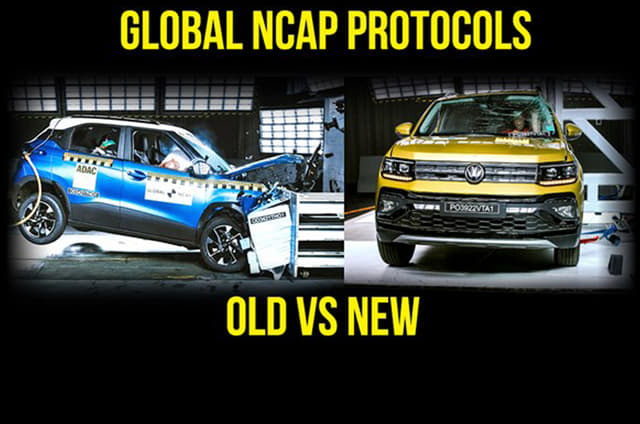
- Pre-facelift Kushaq received a 5-star safety rating in Global NCAP crash tests.
Skoda Kushaq Latest Updates
- 18 Apr 2026: Outgoing Skoda Kushaq is being offered with benefits of up to Rs 3 lakh in April.
- 21 Mar 2026: Skoda launches Kushaq facelift at Rs 10.69 lakh.
- 17 Mar 2026: Skoda to reveal Kushaq facelift prices on March 21, 2026.
Skoda Kushaq Features and specifications
Our Rating | 7 |
Mileage | 18.72 kmpl - 19.66 kmpl |
Engine | 999 cc - 1498 cc |
Fuel Type | Petrol |
Transmission | Torque Converter, Manual, DCT |
Seats | 5 |
Body Style | SUV |
Doors | 5 |
Max Power | 149.55 hp at 5000 - 6000 rpm |
Max Torque | 250 Nm at 1600 - 3500 rpm |
| Fuel Type/ Propulsion | Petrol |
| Engine Installation | Front |
| Number of Cylinders | 4 |
| Engine Displacement | 1498 cc |
| Fuel Tank Capacity | 50 litres |
| E20 Compatibility | Yes |
| Emission Standard | Bharat Stage VI |
| Fuel Supply System | Direct Injection |
| Front Brakes | Disc |
| Rear Brakes | Disc |
| Type of Power Assist | Electric |
| Steering Adjust | Tilt and Telescopic |
| Length | 4229 mm |
| Width | 1760 mm |
| Chassis Type | Monocoque |
| Height | 1612 mm |
| warranty Distance | 100000 kilometre |
| warranty Duration | 4 Year |
| Power Windows | Front and Rear |
| Bluetooth Connectivity | |
| Bottle Holder in Doors | |
| Cooled Glovebox |
| Crash Test Rating | |
| GNCAP Rating | 5 |
| Airbags | 6 |
| Anti-Lock Brakes (ABS) |
| Body Coloured Bumpers | |
| Roof Rails | Functional |
| Projector Headlamps | |
| Headlight Type | LED |
| Speedometer | |
| Tachometer | |
| Trip Meter | |
| Average Fuel Consumption |
| Audio System | |
| Speakers | 6 |
| CD Player | |
| USB Input |
Skoda Kushaq price & variants
Skoda Kushaq variants are divided into Classic+, Signature, Sportline, Prestige, and Monte Carlo trims. The Skoda Kushaq is offered with either a 115hp, 1.0-litre turbo-petrol engine or a 150hp, 1.5-litre turbo-petrol engine. The smaller engine is offered with both manual and automatic gearbox choices, while the larger capacity engine gets only a dual-clutch automatic gearbox.
Skoda Kushaq Official Brochure
Download the complete brochure with specs, features, and variants.
Skoda Kushaq expert review
We like
Smooth 8-speed AT, that’s also quick to shift
Drivetrains feel quick and energetic
Good body control and high-speed manners
We don't like
Ride has a firm edge at lower city speeds
Overall NVH needs improvement
8.0
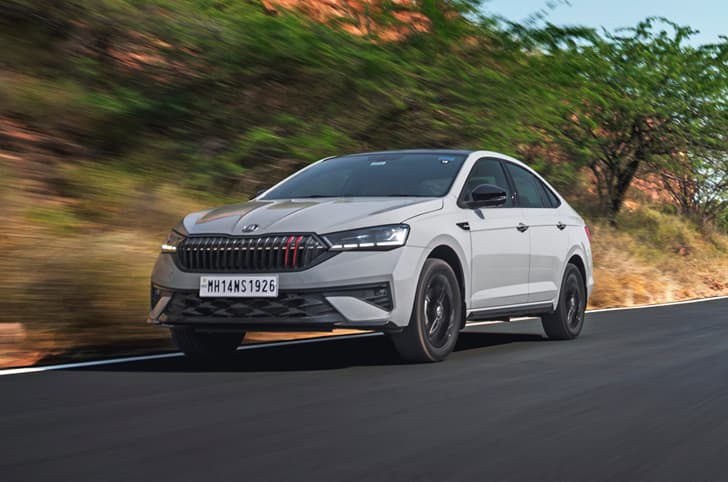
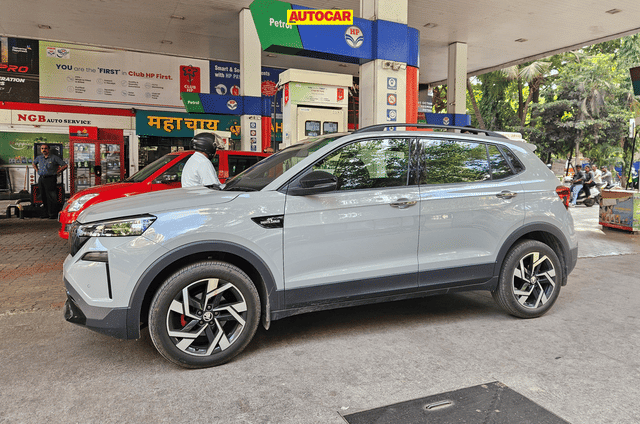
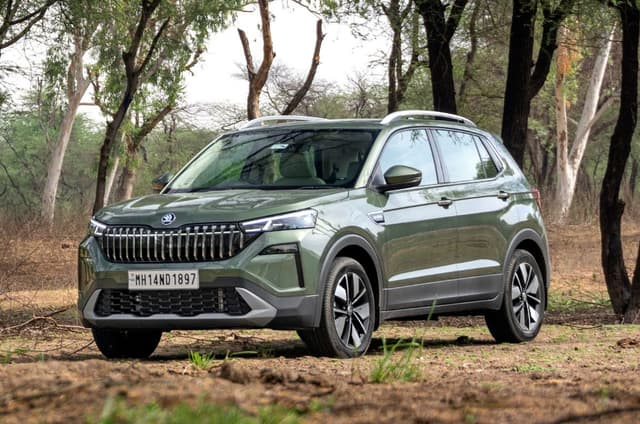
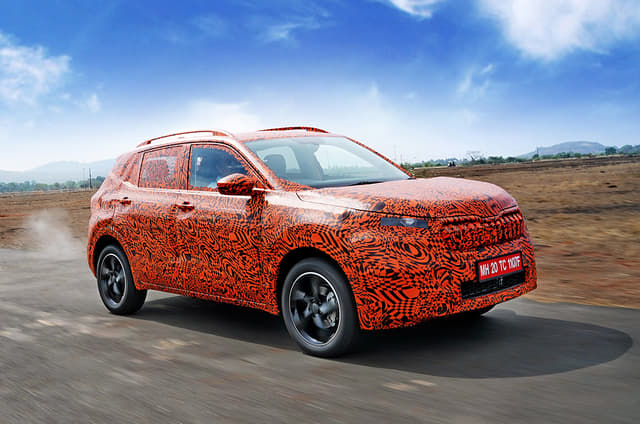
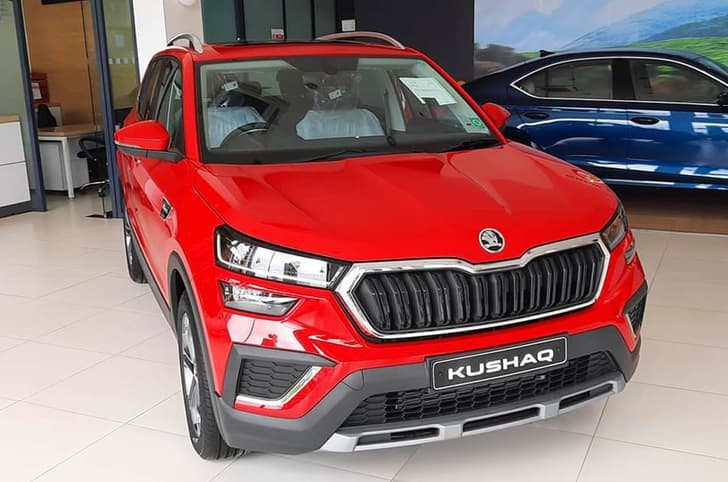
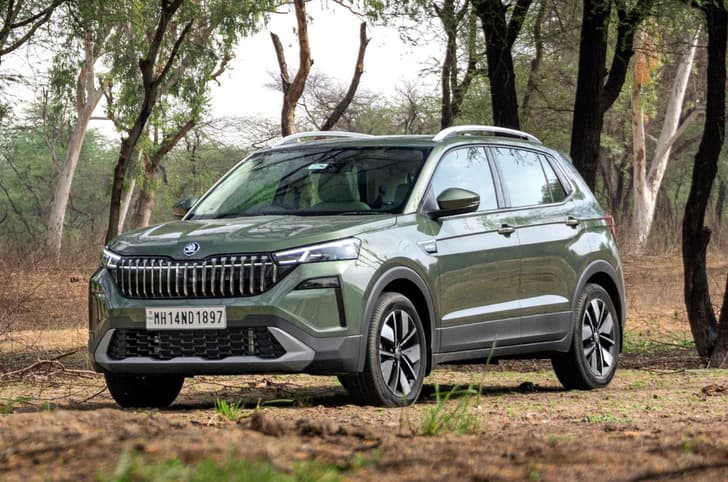
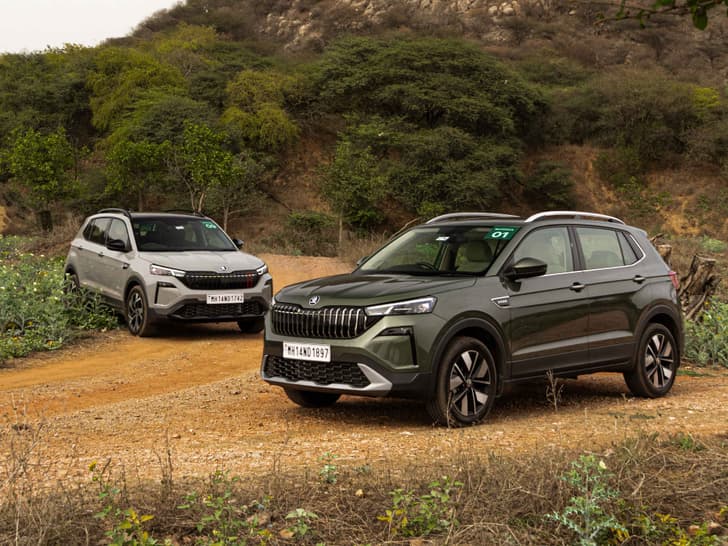
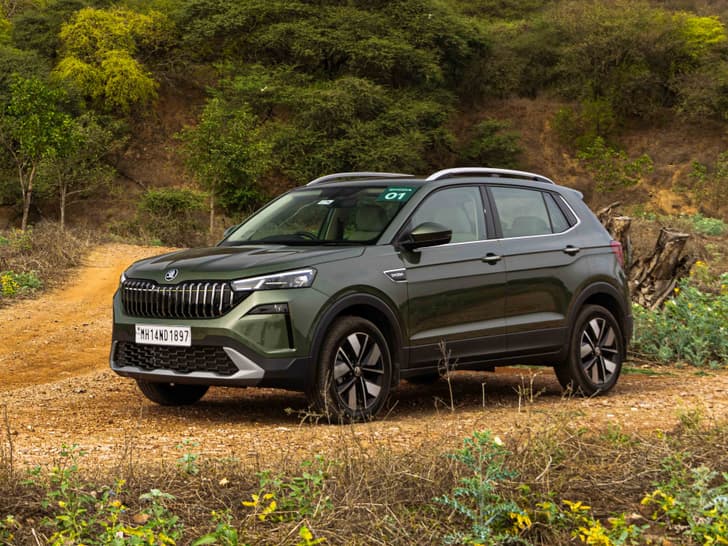
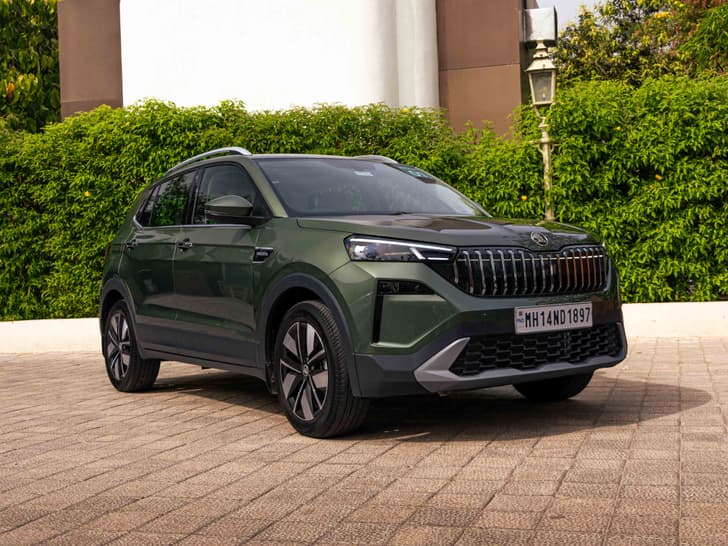
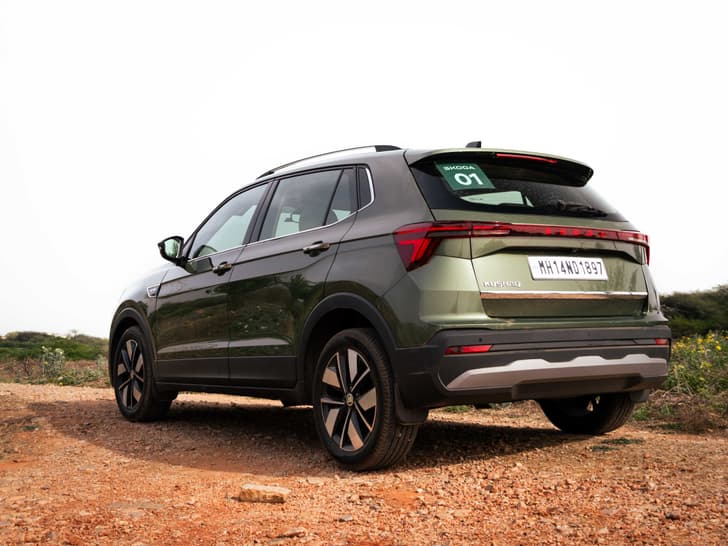
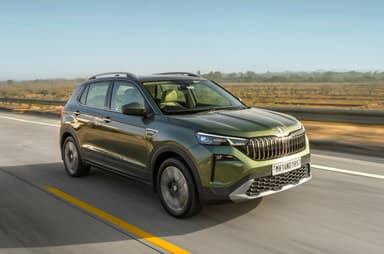
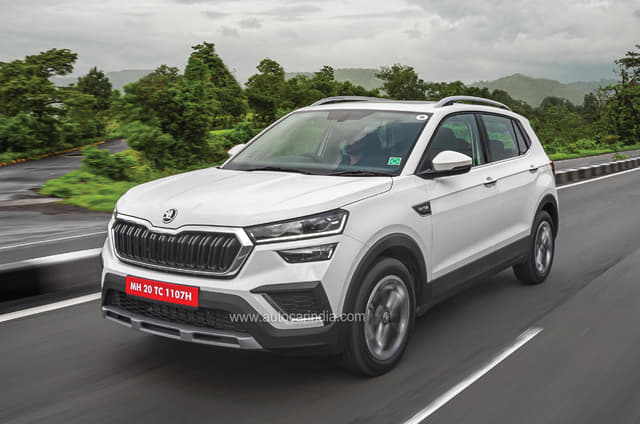
The Kushaq continues on the MQB-AO-IN platform, with major sheet metal unchanged. However, the facelift looks dramatic. Up front, there’s a new bumper, slimmer fog lamps and a wider grille with a segmented DRL running through it. The headlights get a new eyebrow-style DRL.
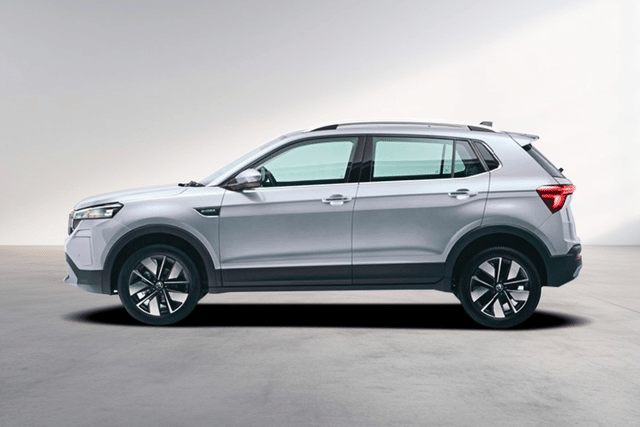
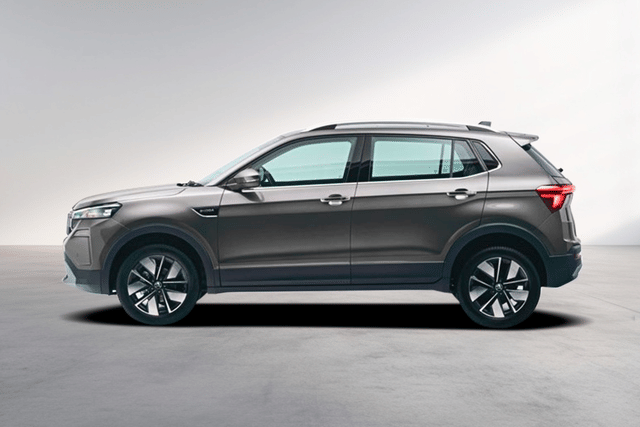
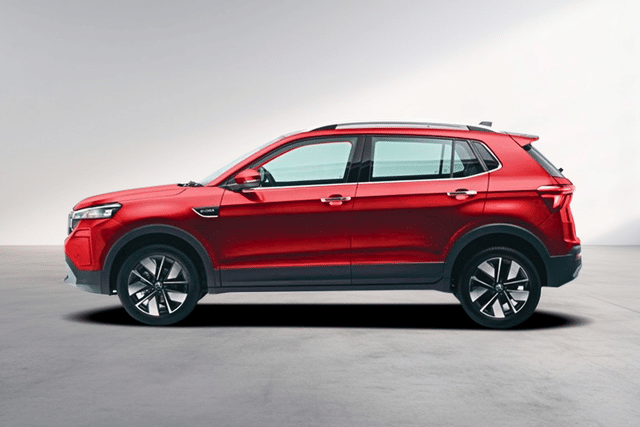
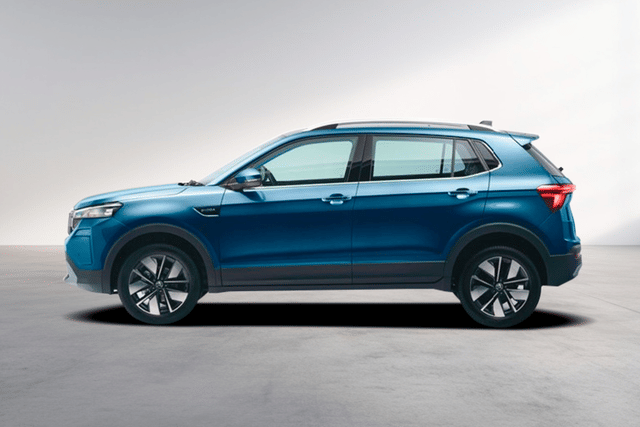
The side profile is largely unchanged apart from new alloy wheel designs. At the rear, a new bumper and connected taillights with segmented lighting and illuminated Skoda lettering give it a distinctive look. It’s striking without being over the top.
8.0
The update addresses several equipment gaps. A panoramic sunroof is offered on top variants, others get a single pane unit. Alloy wheels, auto HVAC, rain-sensing wipers, rear wash-wipe and auto-dimming IRVM are standard. A new 10.24-inch digital cluster adds freshness.
Rear seat massagers are unique to the segment, though offering them only at the rear feels odd. The Google-powered assistant requires phone data and disables Android Auto. Missing features include a 360-degree camera and ADAS.
Safety includes six airbags and ESP as standard, and Skoda says it is engineered for a 5-star rating.
7.0
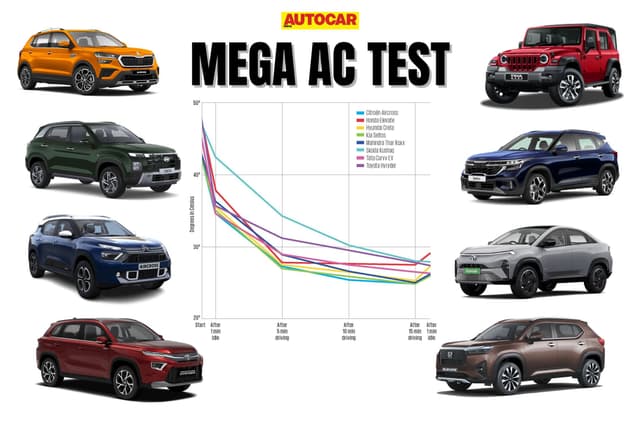
AC performance is noticeably improved thanks to a new variable displacement compressor. Front seat ventilation works well.
Space remains unchanged — rear room is sufficient but doesn’t feel as generous as some newer rivals. The panoramic sunroof adds airiness. Seats are comfortable with the right firmness, even over a full day’s drive.
Rear massagers cover the lower and mid-back but offer only an on/off function and feel gentle. Storage is practical with a large glovebox and good door pockets. Boot space remains 385 litres and is well shaped.
7.0
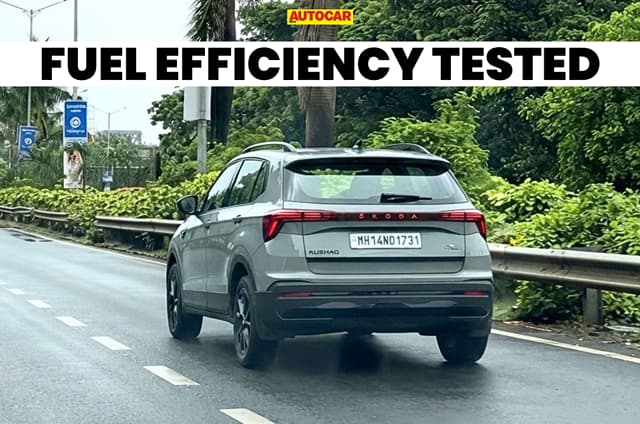
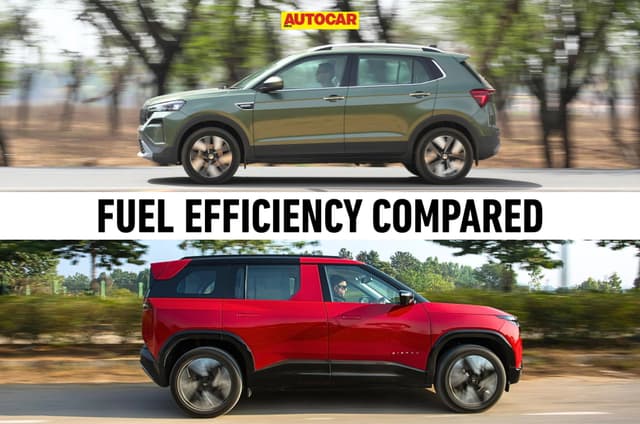
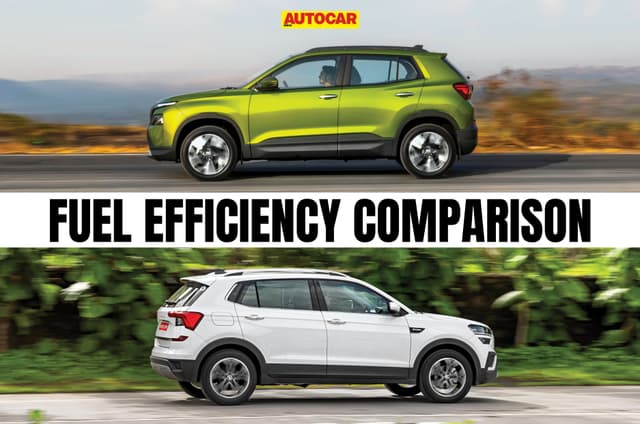
Efficiency has improved across the range. The 1.0 litre 8-speed automatic now claims 19.09kpl versus 15.78kpl earlier. The 1.5 DSG improves to 18.72kpl from 17.71kpl, and the 1.0 manual rises to 19.66kpl. Interestingly, the 1.0 AT is now more efficient than the 1.5 DSG.
On our drive, the 1.0 automatic showed an MID-indicated 11.7kpl over a mixed cycle. For reference, the previous 6-speed AT returned 10.45kpl in our standard test.
7.0
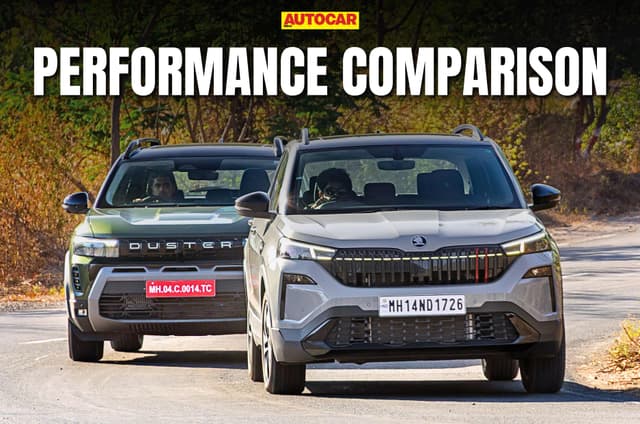
The Kushaq continues with the 115hp 1.0 TSI and 150hp 1.5 TSI petrol engines. The big change is the new 8-speed torque converter on the 1.0, replacing the earlier 6-speed. It remains smooth and seamless in its shifts and reduces the old car’s tendency to lurch forward. Manual inputs feel impressively quick, almost DSG-like, and it holds revs high, making it engaging. Our 0-100kph run of 11.57s is much quicker than before. Ratios feel short and cruising revs are higher than ideal. Refinement remains average, especially past 2500rpm. The 1.5 litre remains stronger, smoother and more effortless, though insulation could be
better here too.
7.0
Ride remains typically European — firm at low speeds with a sharp edge over broken roads. You also hear the suspension at work, adding to the firm impression. As speeds rise, pliancy improves and it becomes more comfortable, with the 1.5 feeling slightly better.
Body control is good, roll is well contained and grip levels are strong. The steering is light and could use more weight at speed. The 1.5 now gets rear disc brakes and braking feels strong and confident.
Overall, it remains stable and enjoyable, even if low-speed comfort isn’t its strongest suit.
7.0
The Skoda Kushaq range starts at Rs 10.69 lakh for the manual 1.0 litre car and tops out at Rs 18.99 lakh for the top end version of the 1.5 litre engine. What’s also nice is that Skoda has not limited the 1.0 litre engine to lower trims and even offers the top end Monte Carlo trim with the 1.0 powerplant, and for most this will be all the car they need. So pricing is right in there with the rest of the segment and Skoda has also put a lot of effort into this update, addressing aesthetics, features and technical updates too. Shortcomings remain like its compact size, high NVH, and missing features like a 360-degree camera, branded audio and ADAS but it offers all the essentials, some nice to have features and those unique rear-seat massagers. The 1.5 is strong and effortless; the 1.0 with 8-speed torque converter is smooth yet adequately responsive. Stable handling keeps it engaging. All in all it delivers enough to keep you interested and with the update, Skoda has managed to keep it fighting fit.
Reviewed by: Sergius Barretto
Skoda Kushaq reviews

Skoda Kushaq comparison


Skoda Kushaq mileage
The Skoda Kushaq mileage range is 18.72 kmpl - 19.66 kmpl, which differs as per the chosen powertrain option. The Kushaq SUV is powered either by a 1.0-litre turbo-petrol engine or a 150hp 1.5-litre turbo-petrol engine. While the smaller engine is offered with both manual and automatic transmission options, the bigger mill gets only an automatic transmission.
Here are the details of the Skoda Kushaq mileage (claimed):
| Fuel type | Displacement | Transmission | Mileage |
|---|---|---|---|
| Petrol | 999 cc | Torque Converter | 19.09 kmpl |
| Petrol | 999 cc | Manual | 19.66 kmpl |
| Petrol | 1498 cc | DCT | 18.72 kmpl |
Skoda Kushaq news
Skoda Kushaq Images
Check out 54 Skoda Kushaq images, which showcase the exterior design of the mid-size SUV. The Kushaq image gallery shows the SUV’s sleek exterior design featuring all-LED headlights and alloy wheels, as well as the elegant interior that shows features like dual digital screens, panoramic sunroof and rear seat massage function.
Skoda Kushaq videos
Check out our Skoda Kushaq videos section featuring reviews, drive tests, and tech deep-dives on the midsize SUV to make an informed choice.


Skoda Kushaq Colours
The Kushaq comes in 7 colour options. Each shade complements its bold styling. Check out our Skoda Kushaq colours gallery below.
Skoda Kushaq FAQs
The Skoda Kushaq facelift was officially launched in India on March 21, 2026, following the commencement of production earlier that February.
The Kushaq is offered with two turbo-petrol engines: a 1.0-litre 3-cylinder TSI (115hp/178Nm) and a more powerful 1.5-litre 4-cylinder TSI (150hp/250Nm).
The 1.0-litre turbo-petrol engine comes with either a 6-speed manual or a new 8-speed torque converter automatic. The 1.5-litre turbo-petrol engine is available exclusively with a 7-speed dual-clutch automatic (DCT).
No, the Skoda Kushaq is a petrol-only SUV and does not offer a diesel powertrain option.
The claimed fuel efficiency varies by powertrain: the 1.0-litre turbo-petrol manual delivers 19.66 kpl, the 1.0-litre turbo-petrol automatic offers 19.09 kpl, and the 1.5-litre turbo-petrol DCT returns 18.72 kpl.
The Kushaq measures 4,229 mm in length, 1,760 mm in width, and 1,612 mm in height, with a segment-competitive wheelbase of 2,651 mm.
The Skoda Kushaq provides a boot capacity of 385 litres, which is sufficient for family weekend trips.
The cabin features a 10.1-inch touchscreen infotainment system, a 10.25-inch digital driver’s display, powered and ventilated front seats, and a premium 6-speaker sound system.
Yes, the higher trims of the Skoda Kushaq facelift come equipped with a panoramic sunroof, while the rest get a single pane unit.
In a first-in-segment move, the facelifted Kushaq offers a massage function for the rear seats, specifically available in the higher Prestige and Monte Carlo trims.
Standard safety includes 6 airbags, electronic stability control, a rear parking camera, and front and rear parking sensors. The pre-facelift model notably earned a 5-star Global NCAP safety rating.
No, the 2026 Skoda Kushaq facelift does not include an ADAS suite or a 360-degree camera, features that are commonly found in many of its direct rivals.
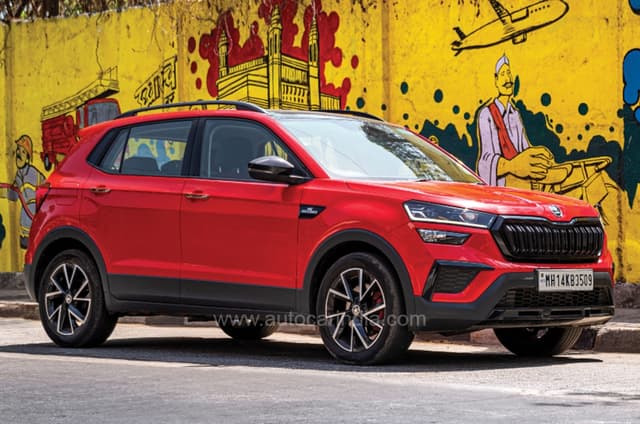
The Skoda Kushaq is available in five main trims: Classic+, Signature, Sportline, Prestige, and Monte Carlo. The 1.5-litre engine is reserved for the top-tier Prestige and Monte Carlo versions.
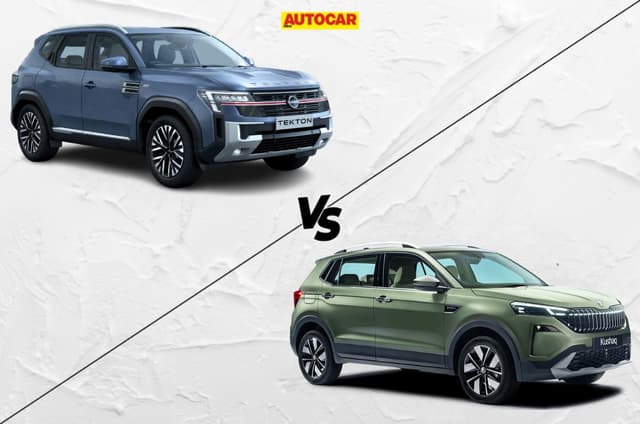
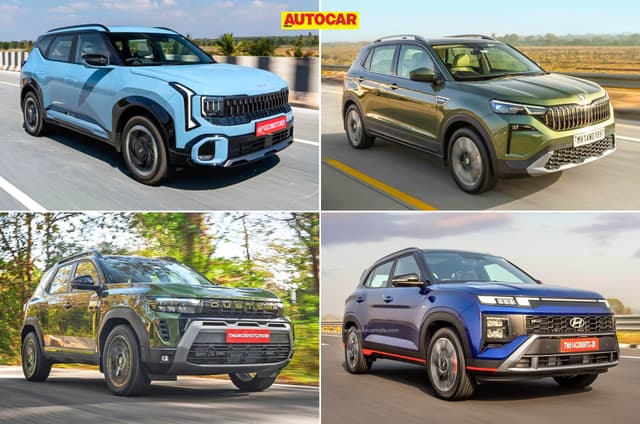
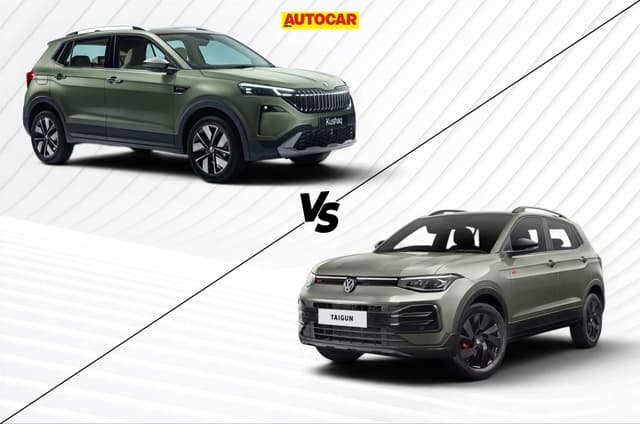
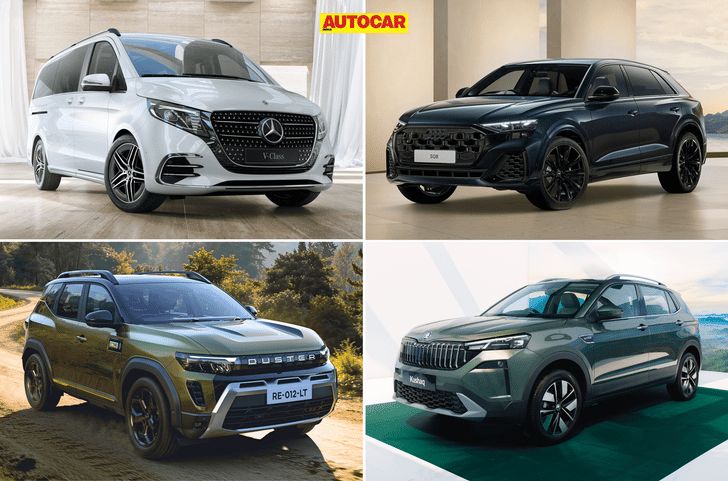
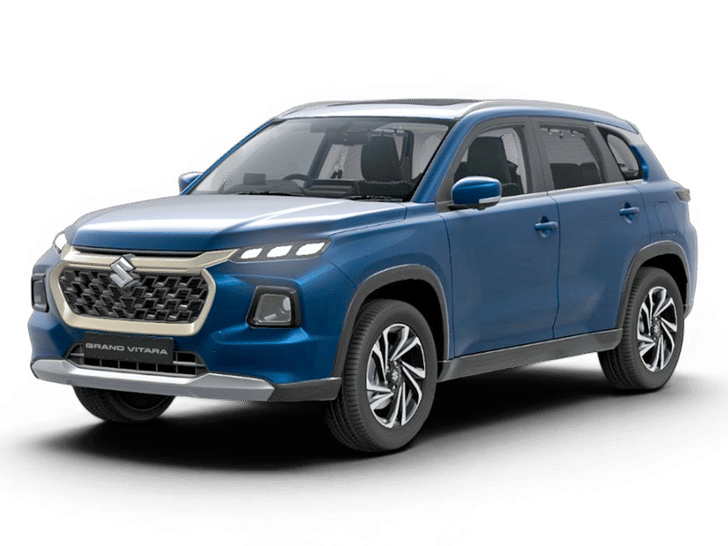
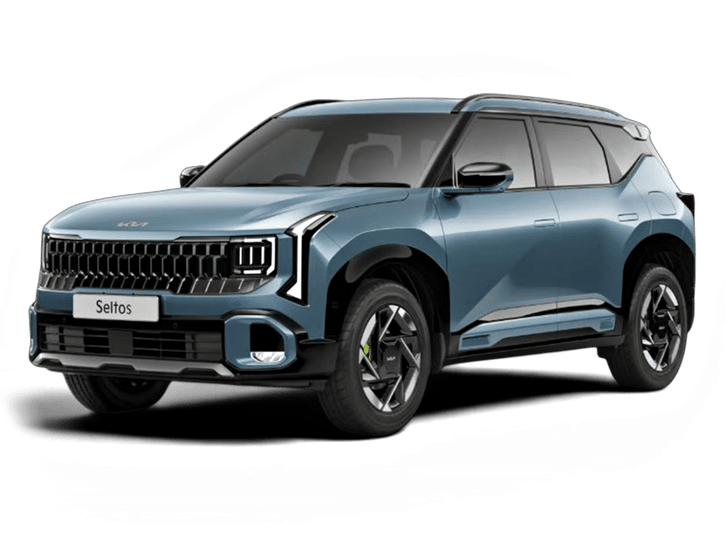
The Kushaq competes against the Hyundai Creta, Kia Seltos, Maruti Grand Vitara, Volkswagen Taigun, and Honda Elevate, as well as upcoming models like the Tata Sierra and Nissan Tekton.
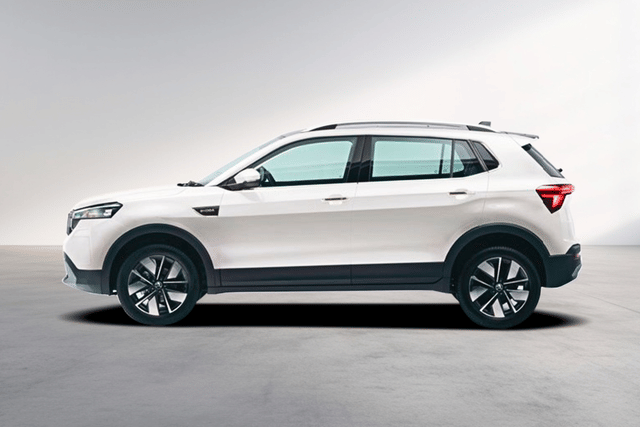
The colour palette includes Carbon Steel, Lava Blue, Deep Black, Candy White, Brilliant Silver, Cherry Red, Shimla Green, and Steel Grey, with dual-tone options available on the top trim.
Questions you may find useful
ithihas reddy
•2dI am currently using a Fiat Punto Evo 1.3 Sport, 2015 model, and I am planning to upgrade this year. My daily running is around 35-40 km in the city. Please suggest a suitable car for my usage.

Autocar India
Since you are upgrading from a Fiat Punto Evo, you should consider the Skoda Kushaq 1.5 TSI DSG. Coming from the Punto, you'll appreciate the Skoda's European build quality and solid ride and handling balance. It also comes with a punchy 150hp, 1.5-litre turbo-petrol engine mated to a quick-shifting 7-speed dual-clutch automatic gearbox, so you'll enjoy driving it. Safety is also taken care of, as it comes with 6 airbags, and the pre-facelift Kushaq has also received a 5-star crash safety rating. Given your budget of Rs 20-30 lakh, you can go for the top-spec Kushaq Monte Carlo, which comes with features like a panoramic sunroof, rear seat massage and much more.
Srujanansh Das
•3dHello Autocar India Team, I am planning to buy a new family car with a maximum on-road budget of ₹13-14.5 lakh and would love your recommendation. My requirements include strong engine performance, good features, ample cabin space, 5-star safety, good fuel efficiency, comfortable ride quality, and solid build quality. I currently own a Renault Kwid and am looking for a car that would be a significant upgrade in every aspect, including performance, comfort, safety, and overall driving experience. My usage will be approximately 65% on rural roads and 35% in city driving, so ride comfort, ground clearance, and durability are especially important to me. I am particularly interested in the new Renault Duster Techno 1.0 variant and would like to know whether it would be a suitable choice for my needs. If not, please suggest other cars within this budget that you believe offer a better overall package. Thank you for your guidance.

Autocar India
If strong performance is high on your priority list, we would be cautious about the Renault Duster 1.0 Techno. While we have experienced this 1.0 turbo petrol engine in the Magnite, where it feels punchy and capable, the Duster is a significantly larger and heavier SUV, so we do not expect it to feel particularly quick or effortless, especially if you are looking for a meaningful upgrade from a Kwid in outright performance.If your heart is set on the Duster, the smarter move would be to stretch slightly for the 1.3 turbo petrol, which sits only a little above your budget and will feel substantially stronger and more satisfying to drive, especially on rural roads where effortless overtaking and usable performance matter.If you are open to alternatives, the Skoda Kushaq Classic+ 1.0 TSI is a very strong option. The turbo petrol engine feels punchy, the Kushaq is genuinely nice to drive, has good rear seat space, solid build and safety credentials that you are looking for.If fuel efficiency matters more than outright performance, then the Kia Seltos 1.5 petrol HTE(O) is worth considering as well. It will not feel as punchy as the turbo petrol options, but it is the most premium feeling of the lot, more efficient in everyday use and a very sorted family SUV overall.
Shyam
•4dI’m looking to buy a compact SUV with an automatic transmission for my family, with a budget under Rs. 17 lakh. It should comfortably seat 5 people - 4 adults and 1 child - plus luggage. My usage will be mostly city driving in Pune for office commutes, with occasional highway trips to Mumbai and other outstation routes that include ghat sections. I’m considering the Skoda Kushaq, Volkswagen Taigun, Hyundai Creta N Line, Kia Sonet, Maruti Suzuki Victoris, and MG Astor. Could you please help me decide which automatic option would be most reliable for me? I’d like to compare them on safety, mileage, comfort, and service/maintenance. If there’s another car you’d recommend that fits my needs better, please suggest that too.

Autocar India
Mostly city use in Pune with room for five and a Rs 17 lakh cap - the Hyundai Creta IVT is the best fit. The N Line or other turbo-petrol trims will require you to stretch your budget beyond Rs 20 lakh. Since most of your use is in Pune city traffic, performance from the 1.5 NA is more than adequate. It is also the roomiest amongst your choices and comfortably seats five with room for their luggage. One drawback, though, is that on your occasional highway excursions, you may find overtaking needs a bit more planning with a full load and luggage.If performance feels inadequate, then the Skoda Kushaq 1.0 TSI automatic or the Volkswagen Taigun 1.0 TSI automatic are great choices too. They feel solid and safe, have top crash ratings, and stay steady in sharp bends. The automatic is smooth in traffic, the engine pulls well on climbs, and fuel use is sensible for daily runs. They are not as roomy as the Creta, but overall, the space is good for four adults and a child, and the ride handles broken roads well. The Maruti Suzuki Victoris should be very easy to own and efficient, but highway performance would trail the Kushaq/Taigun.Overall, for your mix of city and highway with ghats, the Creta IVT fits best.
Ankur
•4dI am planning to buy a second car for around Rs. 20 lakhs. It will be used 40% for city driving and the rest for highways. My office round trip is around 35 km, twice a week. I have shortlisted the Skoda Kushaq, Hyundai Creta, and Kia Seltos, all petrol variants. Could you suggest which would be better in terms of maintenance, ease of driving, and space for a tall family?

Autocar India
With your mix of city and highway use, a Rs. 20 lakh cap, and a tall family, the Kia Seltos 1.5 petrol IVT in a mid variant fits best. It will be the easiest to live with, and it suits both slow traffic and weekend drives.Kia and Hyundai’s service is the simplest here: costs are usually lower, parts are easy to find, and the dealer network is wide. In traffic the Seltos feels light to steer, the automatic moves off smoothly, and visibility is good, so parking and tight gaps are easy. For tall passengers, the back seat in the Seltos has the most knee room and cabin width among these three, and the seat is comfortable on long trips.A trade-off to note: the 1.5 petrol is smooth but not as quick as the 1.5 turbo options in the Skoda or Kia if you push hard on the highway.If you want stronger highway pull and a more connected drive, the Skoda Kushaq 1.5 petrol automatic is the driver’s choice, but service costs can be higher, and the cabin is bit tighter. Overall, the Seltos lines up best with your brief.
Kumar
•1wI own an Alto LXI 2011 and now want to upgrade to a new car. My requirements are mainly for family trips with senior citizens and kids, ranging from 250 km to 1200 km per trip. My usage is around 70% highway and hill driving, and 30% city driving. I live in a tier-3 city and am looking for a strong, safe, and comfortable family car that is also comfortable to drive. I am 5 feet tall. Please suggest a good car within a budget of ₹15-23 lakh. I am open to ICE, hybrid, or EV options.

Autocar India
On a Rs 15-23 lakh budget, the Kia Carens Clavis diesel automatic fits your use best. It rides comfortably on long trips, the low step-in makes it easy for elders, and the third row lets you carry six or seven or fold it to free up a big boot. The diesel pulls well on hills with a full load, and the automatic keeps driving effortless in traffic. For you at 5 feet, the high seat, wide glass area and light controls help with confidence in a tier-3 city, and Kia’s service reach outside big metros is a plus.Know that, compared to your Alto, it is a long car, so tight parking needs a bit more care. With all three rows up, boot space is small, so plan to fold one side when needed. If five seats are enough and you want a sportier feel on hills, look at the Skoda Kushaq 1.5 automatic. If smooth city running and lower fuel use matter more, you can go for Maruti Suzuki Victoris strong hybrid. Given your affinity for long family road trips, we would not recommend an EV at this stage. Overall, the Carens suits your family-first brief best.
Bibek Kumar Patro
•1wI want to buy a petrol car under 20lac. Please suggest to me a few cars which have a 5-star safety rating, a powerful engine, and good mileage.

Autocar India
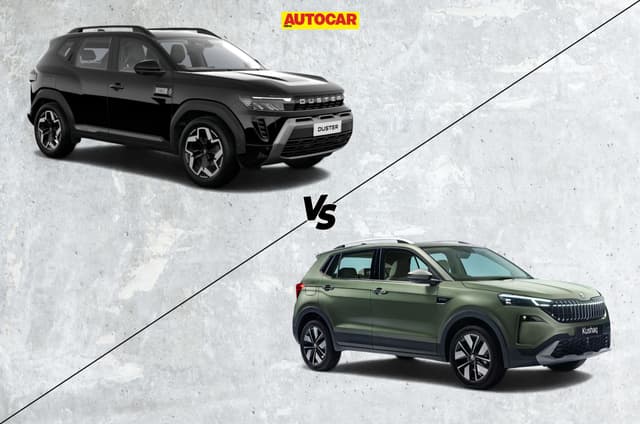
For under Rs. 20 lakh, petrol, a strong engine, and a 5-star crash rating, the Renault Duster would be a good option. The 1.3 litre turbo coupled with the automatic is a fun car to drive. The powertrain is quick, and the Duster feels nice and lively to drive, even when driven in a regular manner efficiency is decent too. As an option, consider the Skoda Kushaq 1.0 petrol. It too has a 5-star crash test rating, the 1.0 turbo feels quick enough and returns a good fuel efficiency too. Like the Duster, the Kushaq is also a fun-to-drive car.
Madhu
•1wI own a 2018 Innova Crysta, 3rd owner. with Odo at 1.16 lakh km. In reality, I am the second owner as the vehicle was in the name of the company before the MD decided to transfer it to his individual name. I have two questions- 1. It is a BS-IV model, and can I drive it in Delhi safely, without being penalised? 2. Looking at the policy fluidity concerning diesel vehicles, what would you recommend- A replacement car- I love Ecosport. and would prefer a driver's car. Please advise.

Autocar India
A 2018 BS‑IV diesel is allowed in Delhi‑NCR till it completes 10 years from its first registration. So you’re fine till 2028 if your RC, insurance and PUC are valid. Be aware that on some severe pollution days, Delhi temporarily stops BS‑IV diesels from running; on those days, it’s safer to park it to avoid a penalty or even impound.Given the diesel policy swings and that you enjoy a driver’s car, shift to petrol. The Skoda Kushaq 1.5 turbo‑petrol fits best. It feels quick, the steering has a good feel, and the size is like your loved EcoSport, so it’s easy in the city yet steady on highways. Being petrol keeps you clear of future diesel bans in Delhi.Trade-offs: it’s much smaller inside than your Crysta, and if you drive hard, the fuel use will go up. If you prefer another brand with the same fun-to-drive nature, look at the Renault Duster 1.3-litre turbo.
Ankur
•1wI am looking for a reliable petrol automatic car with good boot space, strong safety credentials, and features like cruise control. I would preferably avoid a sunroof, although it is not a deal-breaker. My budget is around ₹16 lakh with BH registration. The cars I am currently considering are: Kia Seltos Toyota Hyryder New Renault Duster Volkswagen Taigun Skoda Kushaq My usage mainly includes a daily office commute of around 15 km, along with 1-2 trips every year to my hometown, which is around 850 km one way, mostly on expressways between Haryana and Uttar Pradesh. I also make occasional 120 km trips to nearby cities such as Chandigarh, Delhi, and Gurugram.

Autocar India
With short daily city runs and a few very long expressway trips each year, a safe, smooth petrol automatic that holds steady at speed is the priority, and within your Rs. 16 lakh budget, the Skoda Kushaq Classic+ 1.0 TSI AT fits your brief best. It keeps things simple: a proven torque converter automatic for stress‑free traffic driving, light controls, and clear visibility for city use, plus cruise control for those 850 km Haryana-UP hauls that cut fatigue. It has a 5‑star crash safety rating and comes with the key safety tech you would want. The boot is wide and deep enough for two big suitcases plus soft bags, and the rear backrest folds if you need extra room.Know these trade‑offs: the ride is a bit firm on broken roads at low speeds, the rear seat isn't as spacious as some larger rivals, and Skoda’s service reach beyond big cities isn’t as wide as some rivals.
Amit
•1wHi Autocar, I am looking for a car to keep for 10 years. My driving is not much at the moment. I currently own a Nexon AMT that has done 20,000 km. I mostly do frequent short trips in the city and occasional long highway drives. I love the turbo in the Nexon, but not much else, as it started giving me trouble as soon as it entered its fifth year, so I am no longer sure about its reliability. I am now thinking mainly from a reliability perspective and am confused between the Seltos/Creta diesel automatic, Seltos/Creta iVT, and Elevate CVT. However, I would still like to retain Nexon’s grunt and avoid DCTs.

Autocar India
For a ten-year ownership period with strong reliability, mostly short city runs with the occasional highway trip, the Honda Elevate CVT is a good fit. Given your usage is fairly low and largely limited to the city, a petrol would be a better choice than a diesel. Being naturally aspirated, it won’t have the same grunt as the Nexon’s turbo-petrol, but among naturally aspirated midsize SUVs, it feels one of the most energetic.Test drive it to see if the performance feels adequate, but if you miss that turbo punch, then consider the Skoda Kushaq 1.0 TSI AT instead. It comes with an 8-speed torque-converter automatic, which avoids your DCT concerns, though overall upkeep cost will be higher than Honda’s.If you want the least hassle with many short city trips, pick the Honda Elevate.
Varun
•2wI’m confused between the Skoda Kushaq 1.5 DSG and the Volkswagen Virtus GT 1.5 DSG. I personally prefer the Virtus for its sedan driving feel and enthusiast appeal, but the Kushaq seems more practical for long-term usage and family comfort. My main concern is: Will proper enthusiast sedans and 1.5 turbo petrol engines like the Virtus still exist 5–6 years later, or will the market fully shift towards SUVs, hybrids, and EVs? Would it make more sense to: Buy the Kushaq now and possibly move to a sedan later if the segment still exists, or Buy the Virtus now and keep it long term before enthusiast sedans become rare? Which would you recommend considering future trends, practicality, and ownership experience?

Autocar India
We would pick the Volkswagen Virtus GT now and keep it for a while because you already prefer the sedan feel and, over the next 5-6 years, cars like this are likely to become fewer while taller cars will only get more common. The 1.5 turbo with the DSG, which is a quick-shifting automatic, gives the Virtus a lively, smooth feel that makes daily drives and highway runs special. Also, if you truly enjoy sitting low and feeling connected to the road, the Virtus delivers that better than the Skoda Kushaq, so you’ll smile more every day you own it. And looking ahead, SUVs and hybrids will grow fast, but sporty petrol sedans will likely shrink in choice, not vanish overnight. So it makes sense to buy the one you really want now; the “practical” taller car will be easy to find later if your needs change. Moreover, the Virtus has plenty of ground clearance, especially for a sedan, so that should not be a worry either. Do bear in mind, though, that both the Virtus and its sister model, the Skoda Slavia, will be updated later this year, so if you can wait for just a few months, we would recommend doing so.