
Last Updated on: 19 May 2026
Maruti Suzuki Baleno
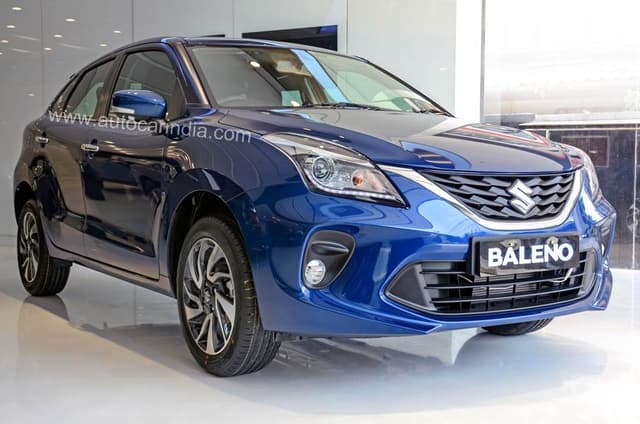
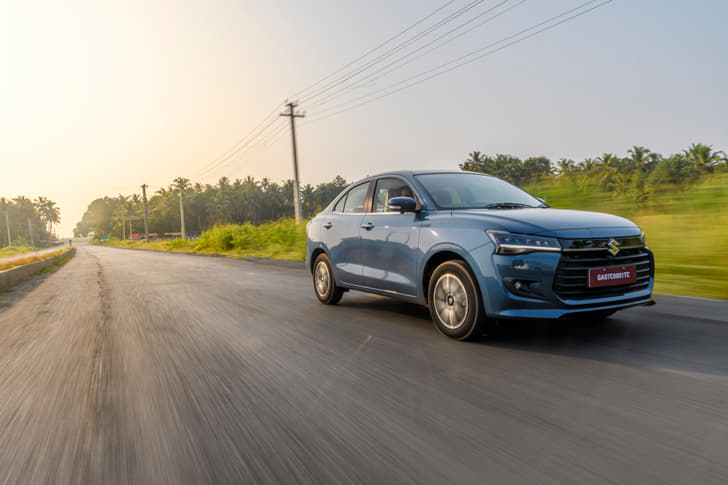
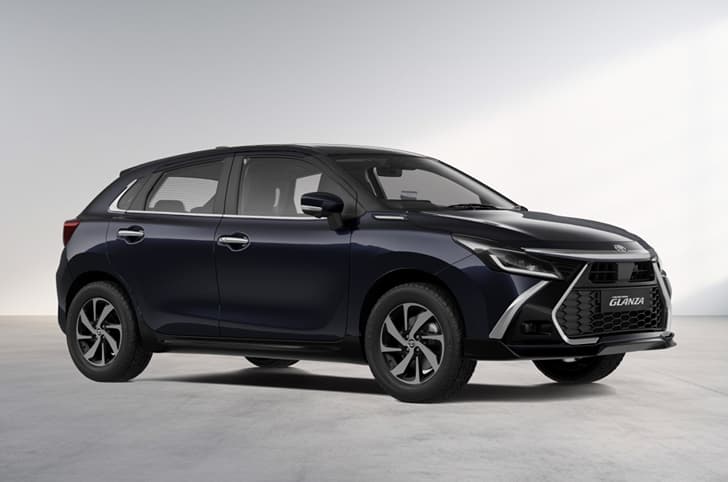
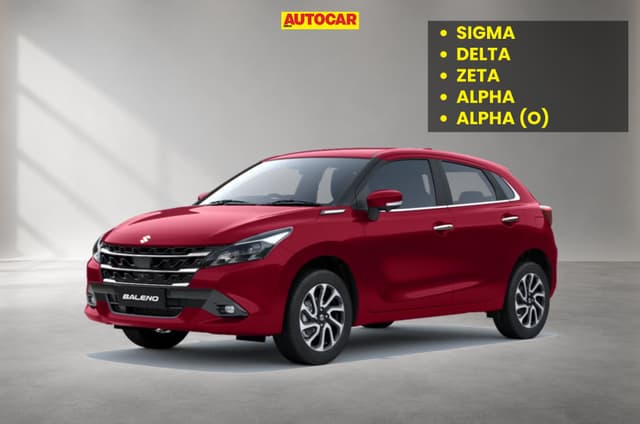
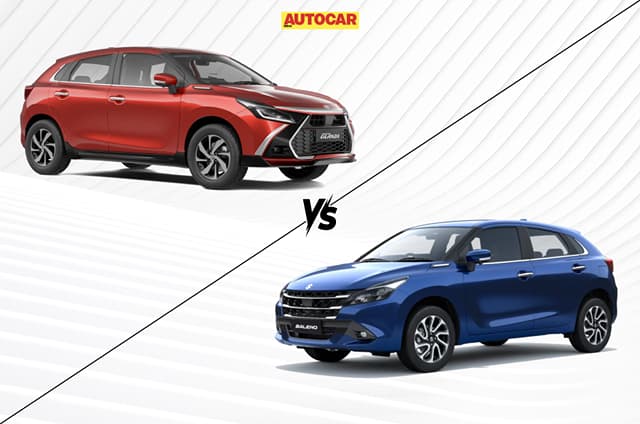
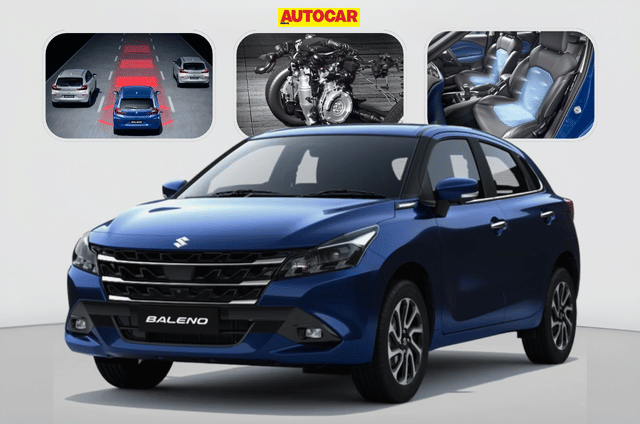
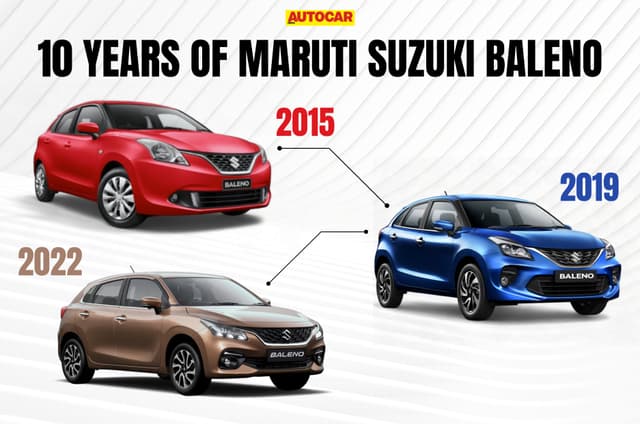
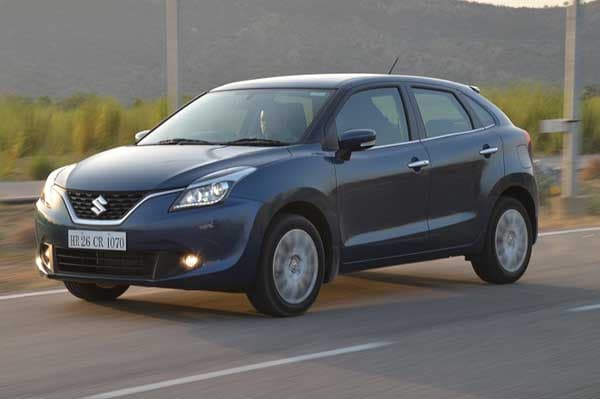
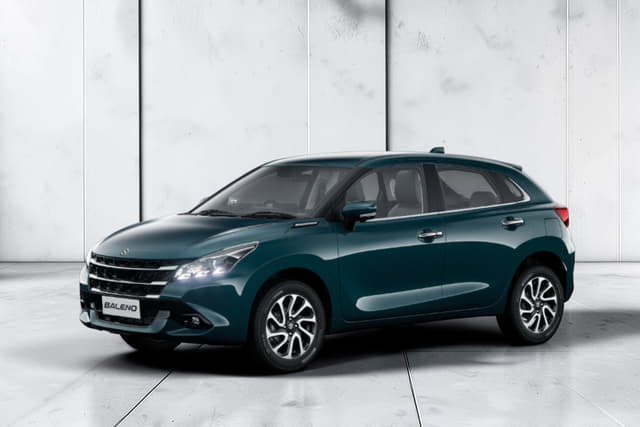
The Maruti Baleno is a premium hatchback in India, which is priced from ₹5.99 lakh to ₹9.10 lakh. After being launched in its hatchback iteration in 2025, the Baleno received a generation update in 2022. It is sold via the carmaker’s premium Nexa showrooms. The Toyota Glanza is the badge-engineered sibling of the Maruti hatchback.
The Maruti hatchback is powered by a 90hp, 113Nm 1.2-litre, four-cylinder naturally-aspirated petrol engine, paired to either a 5-speed manual gearbox or a 5-speed AMT option. Maruti also offers the Baleno with a factory-fitted CNG choice, with which it produces 78hp and 98.5Nm.
The Maruti Baleno mileage range is 22.35 kmpl - 30.61 km/kg. The petrol manual option has a mileage of 22.35kpl, the AMT version returns 22.94kpl, and the CNG version has a claimed fuel efficiency of 30.61km per kg.
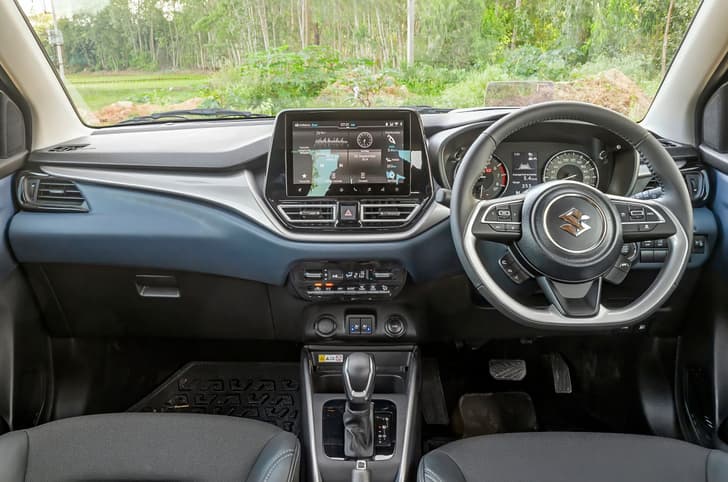
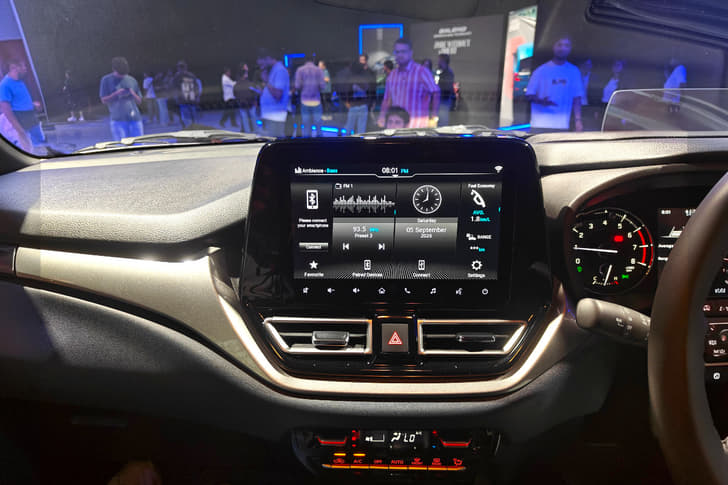
The Baleno features include a 9-inch touchscreen infotainment system with wireless Android Auto and Apple CarPlay support, a head-up display (HUD), a 360-degree camera, automatic climate control and 6 airbags. However, none of the Baleno variants gets a sunroof.
Maruti Baleno Key Highlights:
- Maruti sells the Baleno through its premium Nexa chain of showrooms
- Baleno comes with a 90hp, 1.2-litre 4-cylinder NA petrol engine with MT, AMT options
- Factory-fitted CNG kit option with MT is also available
- A diesel powertrain is not on offer with the Baleno
- Baleno petrol mileage goes up to 22.94kpl; CNG version returns 30.61km/kg
- Baleno features include 16-inch alloy wheels, projector headlights, 9.0-inch touchscreen and more
- Toyota Glanza is the badge-engineered sibling of the Maruti Baleno
Maruti Baleno Rivals
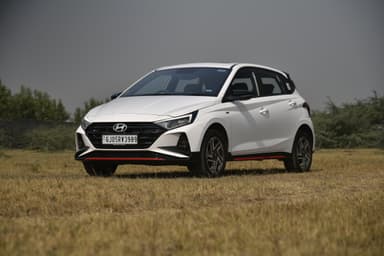
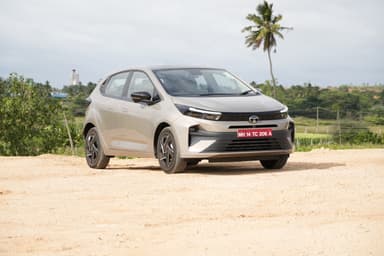
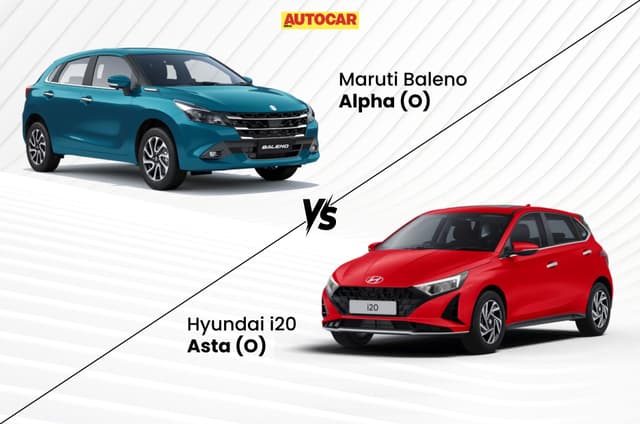
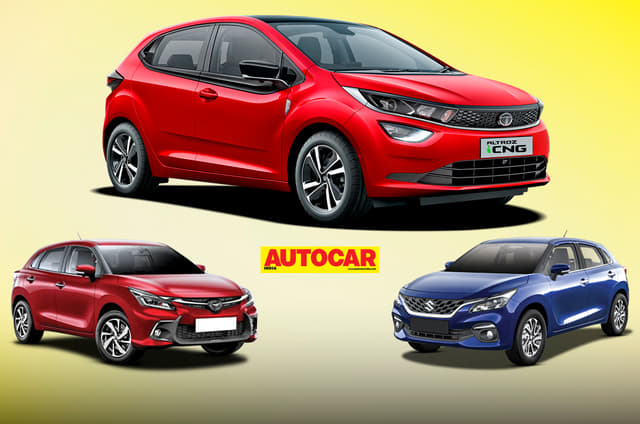
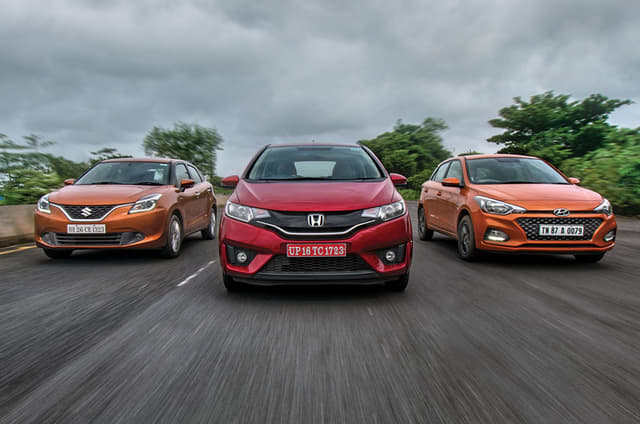
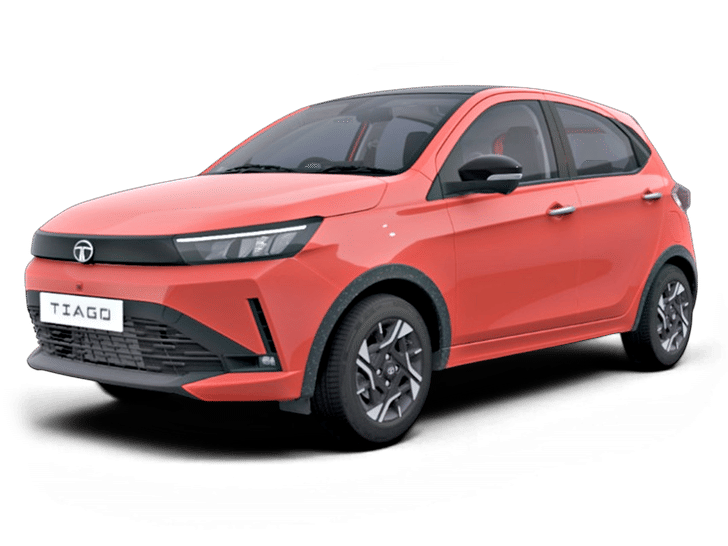
The Baleno premium hatchback goes against the likes of the Tata Altroz, Hyundai i20 and the Toyota Glanza. Notably, the Tata Altroz stands out as the only hatchback in this set to offer a diesel powertrain.
Maruti Baleno Safety Rating
The Maruti Baleno has scored a 4-star crash safety rating in its Bharat NCAP test results announced in June 2025. The Baleno is the first hatchback to be tested by Bharat NCAP.
Maruti Baleno Key Specifications for All Variants
Maruti Baleno key specifications | |
Dimensions | 3990mm x 1745mm x 1500mm |
Wheelbase | 2520mm |
Cargo Volume | Petrol: 318 litres | CNG: NA |
Engine | 1.5-litre petrol | 1.5-litre CNG |
Engine cylinder configuration | Inline four | Inline four |
Power | 90hp | 77.5hp |
Torque | 113Nm | 98.5Nm |
Fuel economy | 22.35-22.94kpl | 30.61 km per kg |
Which Maruti Baleno variant should you buy in 2026?
- Baleno Delta CNG MT: Offers good value for money with a fuel-efficient CNG option that enables continued savings.
- Baleno Delta MT: Offers a decent suite of features, including a 7-inch touchscreen, 4 speakers, all power windows and steering-mounted controls.
- Baleno Zeta AMT: Best for city driving and is more fuel efficient than the manual gearbox. Alo offers a well-loaded feature suite.
Maruti Baleno Interior and Exterior
Maruti Baleno Interior:
- Black and blue cabin theme and fabric seat upholstery
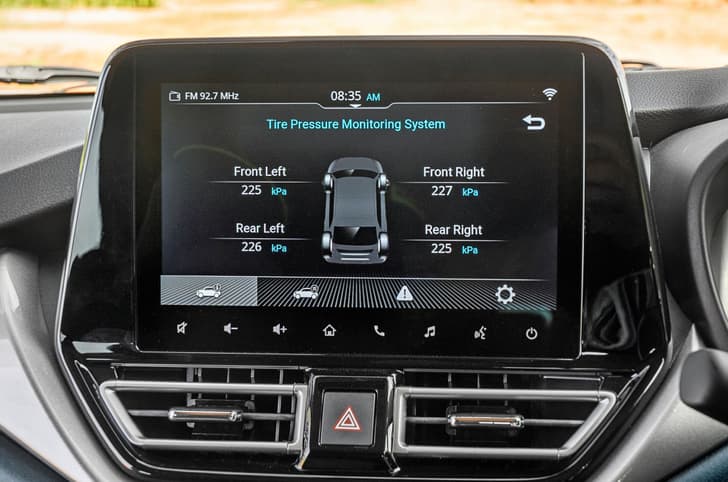
- 9-inch touchscreen with wireless connectivity
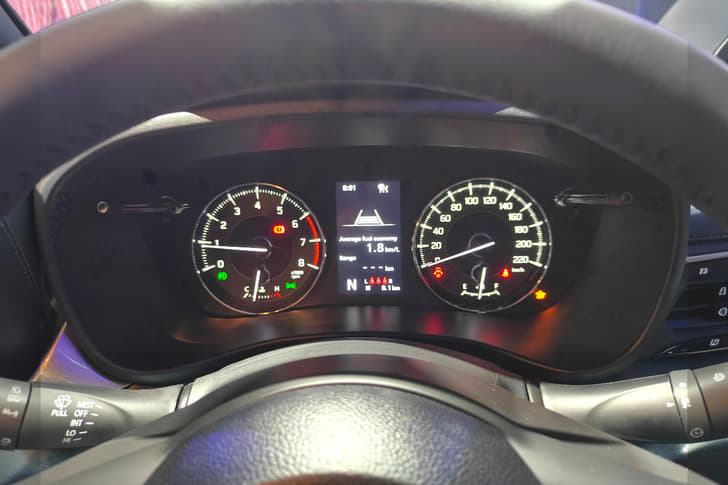
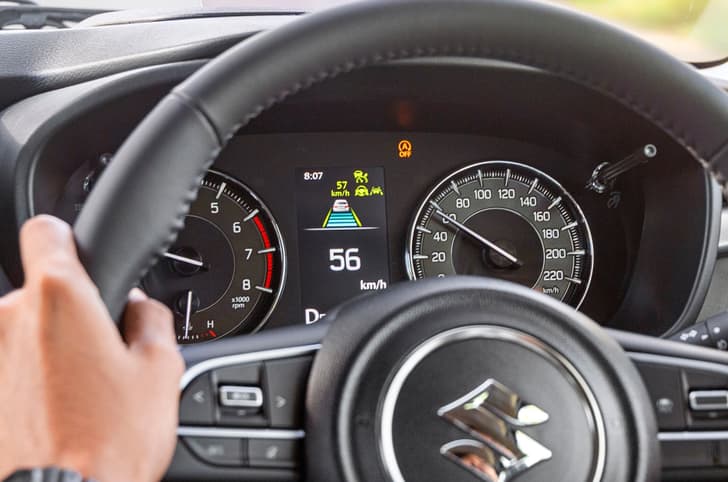
- Instrument cluster with analogue dials and MID
- Auto AC with rear vents
- Head-up display and 360-degree camera
Maruti Baleno Exterior:
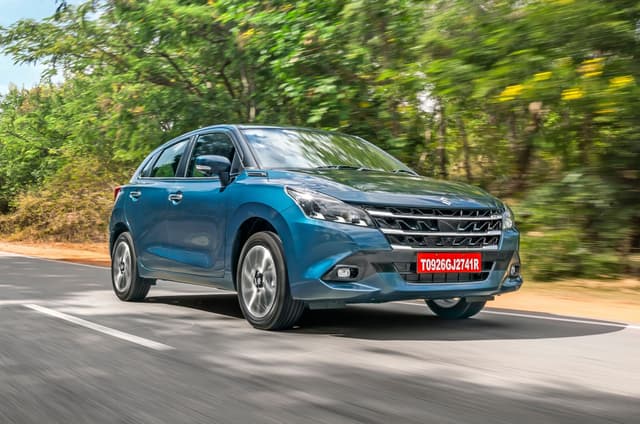
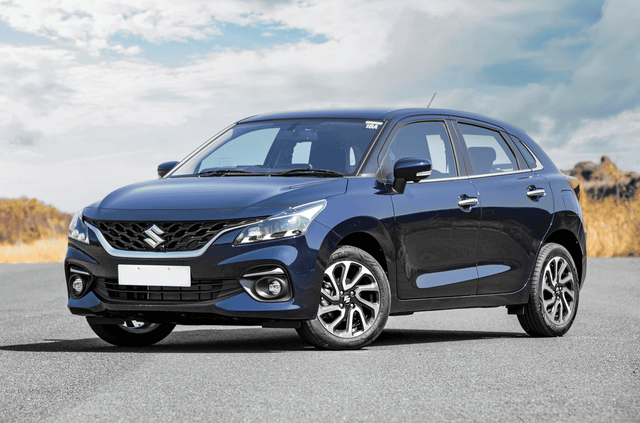
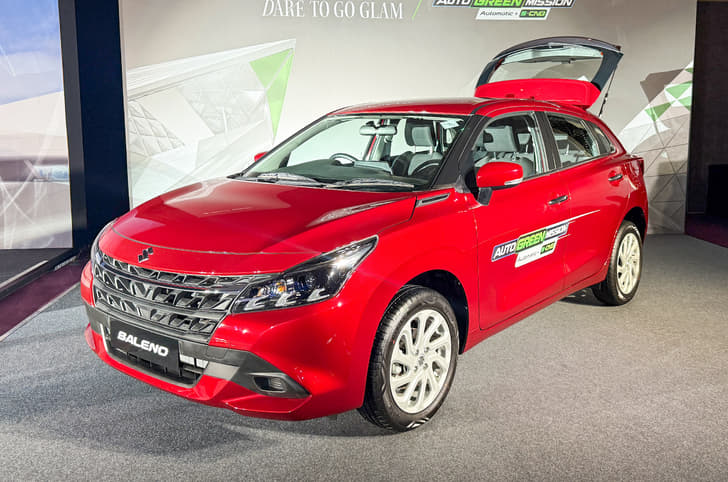
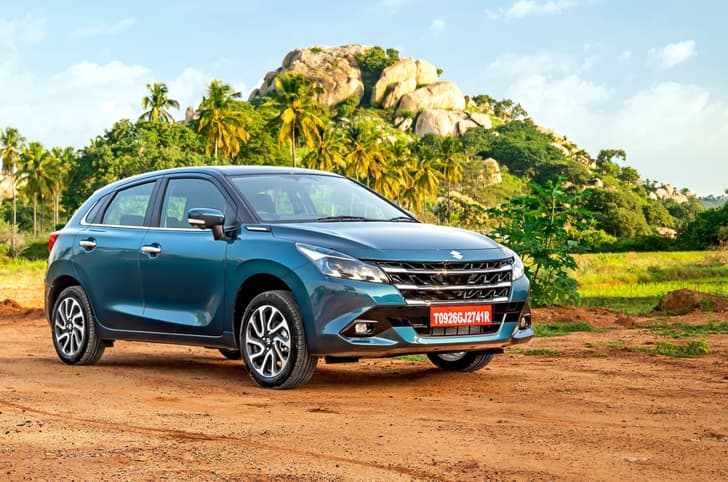
- Sleek silhouette
- Projector LED headlights and LED fog lamps
- Segmented LED DRLs
- Wraparound LED taillights
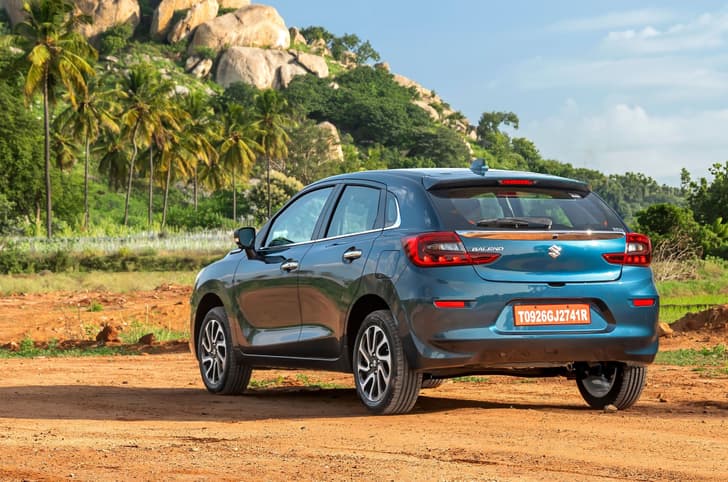
- 16-inch dual-tone alloy wheels
Maruti Suzuki Baleno Latest Updates
07 May 2026: Maruti Baleno available with offers of up to Rs 40,000 in May
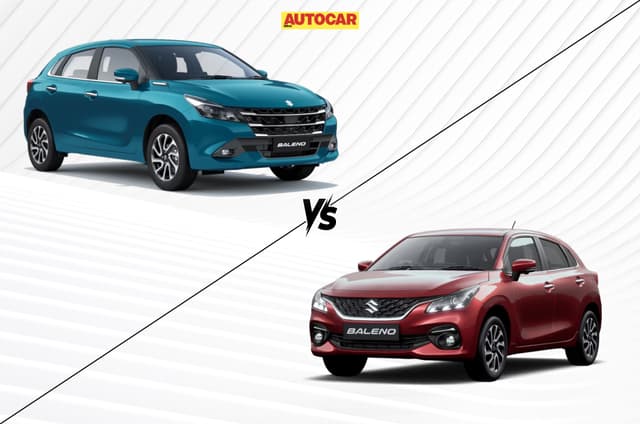
20 Apr 2026: Maruti Baleno facelift spied testing for the first time with a new grille and front bumper design
Maruti Suzuki Baleno Features and specifications
Our Rating | 8 |
Mileage | 22.35 kmpl - 30.61 km/kg |
Engine | 1197 cc |
Fuel Type | CNG, Petrol |
Transmission | Manual, AMT |
Seats | 5 |
Body Style | Hatchback |
Doors | 5 |
Max Power | 90hp at 6000rpm |
Max Torque | 113Nm at 4400rpm |
Warranty Distance | 100000 km |
Warranty Duration | 3 Years |
| Fuel Type/ Propulsion | Petrol |
| Pure Electric Driving Mode | No |
| Number of Cylinders | 4 |
| Engine Installation | Front |
| Fuel Tank Capacity | 37 litres |
| Official Fuel Economy | 22.94 kmpl |
| Emission Standard | Bharat Stage VI |
| E20 Compatibility | Yes |
| Front Brakes | Discs |
| Rear Brakes | Drums |
| Type of Power Assist | Electric |
| Steering Adjust | Tilt and Telescopic |
| Length | 3990 mm |
| Width | 1745 mm |
| Height | 1500 mm |
| Wheelbase | 2520 mm |
| Power Windows | Front and Rear |
| Voice Assisted Sunroof | |
| Vanity Mirror | |
| Cup Holders |
| Crash Test Rating | 4 |
| Airbags | 6 |
| Curtain Airbag | |
| Speed Sensing Door Lock |
| Body Coloured Bumpers | |
| Antenna | |
| Cornering Headlights | |
| Outside rear view mirror (ORVM) |
| Speedometer | Analog |
| Tachometer | Analog |
| Trip Meter | |
| Average Fuel Consumption |
| Audio System | |
| Branded Music System | |
| Speakers | 6 |
| CD Player |
| Car Light Flashing & Honking via App | |
| Remote Car Lock/Unlock via App | |
| Check Vehicle Status via App | |
| Remote AC On / Off via App |
Maruti Suzuki Baleno price & variants
The Maruti Baleno price starts at Rs 5.99 lakh and goes up to Rs 9.10 lakh, ex-showroom. Whereas, Baleno on road price starts from Rs 6.65 lakh and goes up to Rs 10.30 lakh based on the city, variants and taxes.
There are 9 Baleno variants available in India, divided into four trims: Sigma, Delta, Zeta and Alpha.
Maruti Suzuki Baleno ex showroom price range | |
Baleno base-spec variants (Sigma) | ₹5.99 lakh |
Baleno mid-spec variants (Delta, Zeta) | ₹6.80 lakh to ₹8.60 lakh |
Baleno top-spec variants (Alpha) | ₹8.60 lakh to ₹9.10 lakh |
Key differentiators among the different versions of Maruti Baleno:
Criteria | Baleno base-spec variant (Sigma) | Baleno mid-spec variant (Delta) | Baleno top-spec variant (Alpha) |
Engine | 1.2 petrol | 1.2 petrol, 1.2 CNG | 1.2 petrol |
Gearbox | MT | MT, AMT | MT, AMT |
Headlight | Halogen | Halogen | LED |
Taillight | LED | LED | LED |
Wheels | 15-inch steel | 15-inch steel | 16-inch alloys |
Infotainment | No | 7-inch | 9-inch |
Driver’s display | Analogue dials with MID | Analogue dials with MID | Analogue dials with MID |
Seat upholstery | Fabric | Fabric | Fabric |
Sunroof | No | No | No |
Maruti Suzuki Baleno Official Brochure
Download the complete brochure with specs, features, and variants.
Maruti Suzuki Baleno expert review
We like
Ride quality
Spacious cabin
We don't like
Only one engine option
AMT not as smooth as CVT
7.0
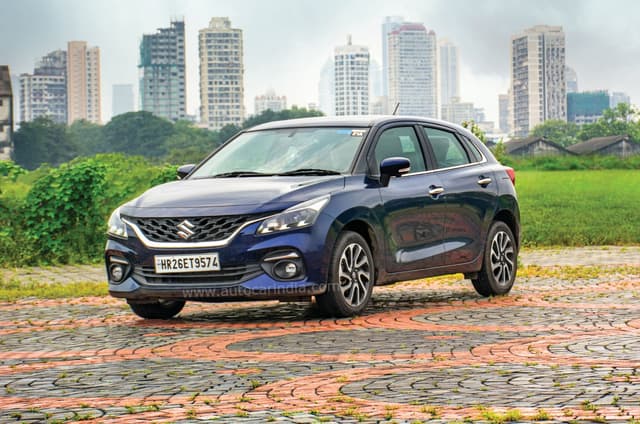
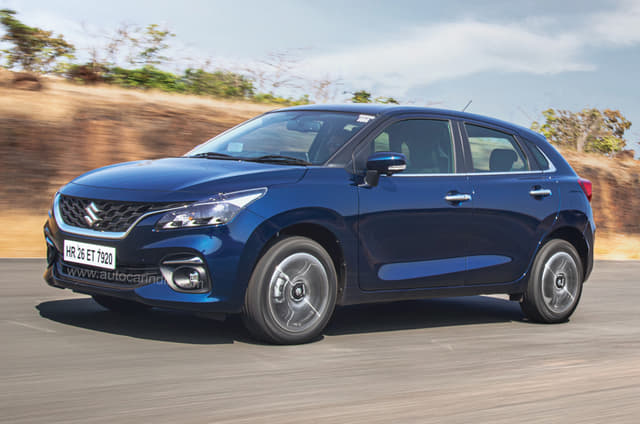
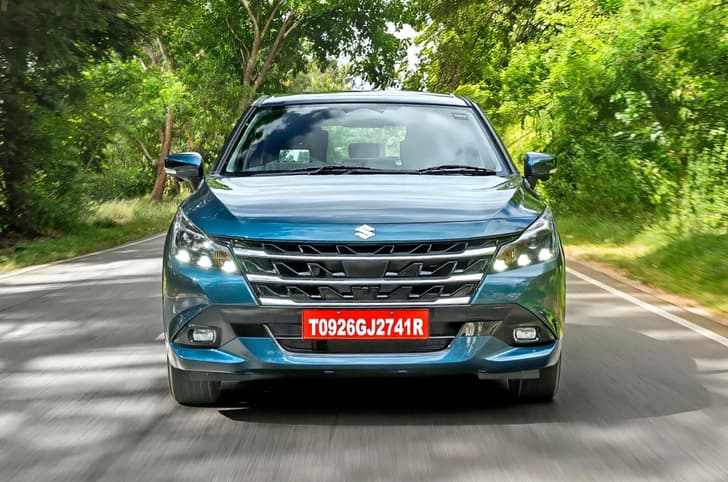
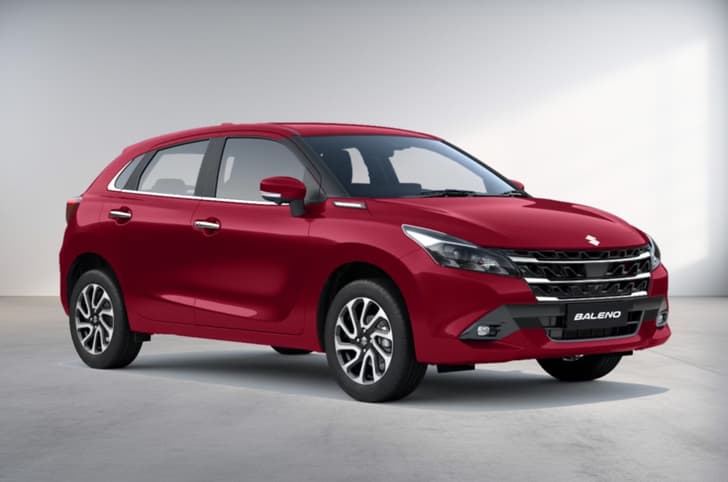
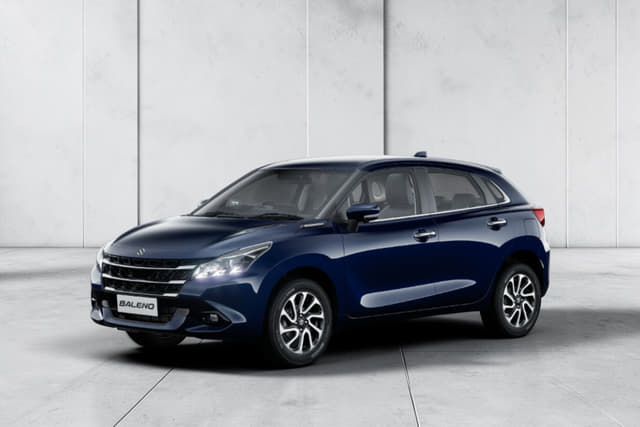
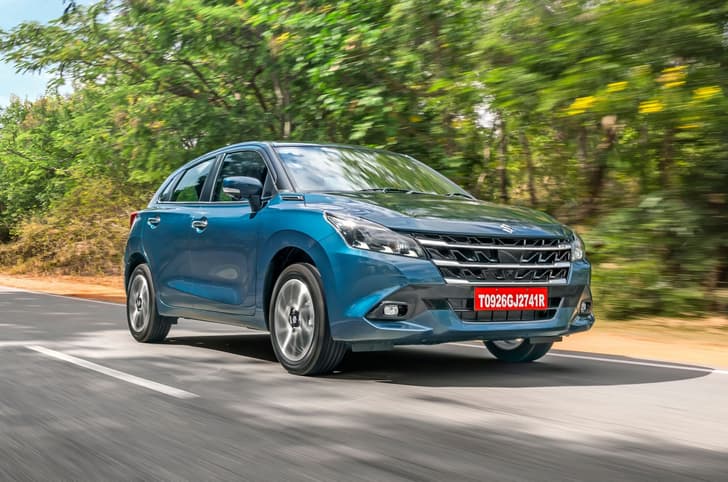
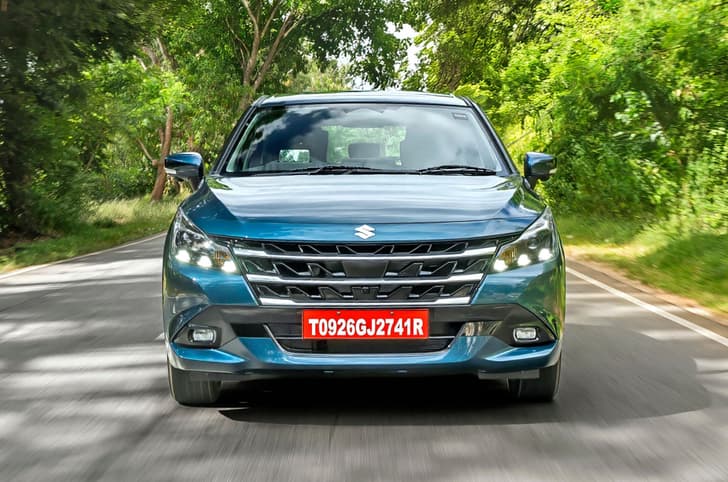
The 2022 Maruti Suzuki Baleno looks familiar at first glance, but it is an all-new generation car rather than a simple facelift. Every exterior panel is new, even though the overall silhouette remains recognisably Baleno. The approach is evolutionary rather than dramatic, aimed at retaining mass appeal.
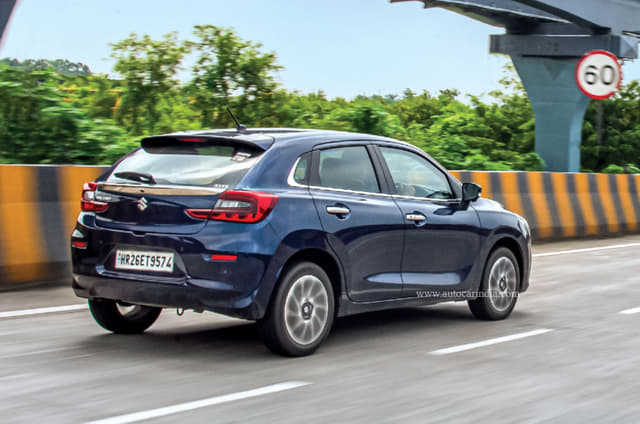
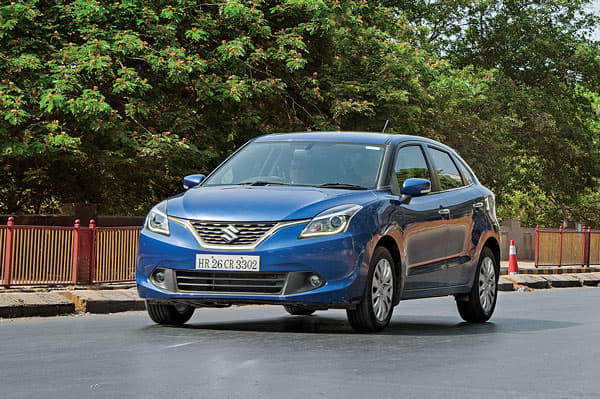
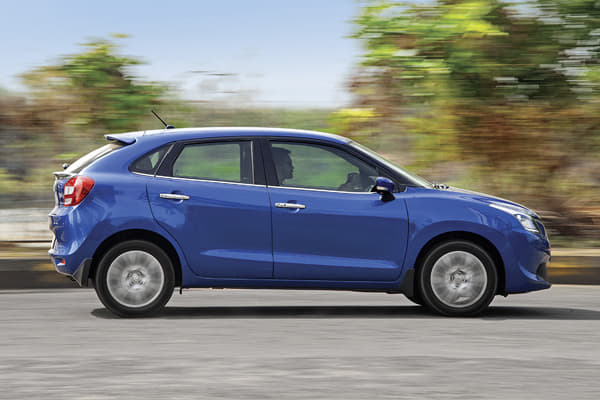
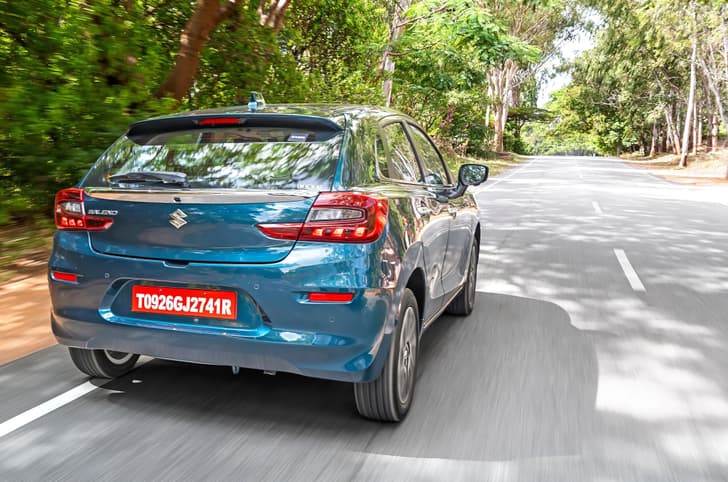
The front gets a flatter bonnet, a wider grille with chrome accents and slimmer LED headlamps featuring a three-block DRL signature. At the rear, redesigned LED tail lamps extend into the tailgate and give the car a wider stance. Dual-tone 16-inch alloys and subtle chrome highlights add polish without excess.
Underneath, Maruti has used a higher proportion of high-strength steel, resulting in better rigidity and a noticeably more solid feel, especially in door shut and overall build impression.
8.0
The cabin is where the biggest improvement lies. The dashboard is completely redesigned and feels far more premium, with dual-tone materials and improved fit and finish. The flat-bottom-style steering wheel borrowed from the Swift suits the sporty cabin well.
A new 9-inch touchscreen dominates the centre and runs the SmartPlay Pro+ system. It is sharp, responsive and easy to use. The analogue dials are clear and legible, and overall ergonomics are well thought out.
Seat cushioning and contouring have improved, offering better support on longer drives. Rear seat space remains generous, comfortably accommodating taller passengers. The boot measures 318 litres, slightly smaller than before but still competitive for the segment.
8.0
Power comes from the 1.2-litre DualJet petrol engine producing around 90hp and 113Nm. It is paired with either a 5-speed manual or a 5-speed AMT. The previous CVT has been dropped in favour of better efficiency and lower emissions.
The engine is smooth and predictable, with adequate performance for everyday driving. It feels best when revved, as the mid-range is not especially strong. Refinement levels are good, with engine noise well contained at cruising speeds.
The AMT is one of the better calibrated units of its type, though it still shows hesitation during quick acceleration and between lower gears.
9.0
Fuel efficiency remains a strong Baleno trait. Official figures stand at around 22.35kmpl for the manual and 22.94kmpl for the AMT. These numbers represent an improvement over the outgoing model and should translate into strong real-world economy.
8.0
Ride quality has seen a noticeable improvement. Revised suspension tuning helps the Baleno deal with broken roads more confidently, while low-speed comfort has improved significantly. The car feels more planted and composed than before.
Steering is light in the city and stable on the highway. While there is some looseness around the straight-ahead position, overall handling is predictable and secure rather than sporty.
8.0
The Baleno is now one of the most feature-rich cars in its segment. Highlights include a 360-degree camera, a head-up display, connected car tech and a high-quality infotainment system.
Safety has also improved, with six airbags on higher variants, ABS with EBD, stability control on AMT trims and ISOFIX mounts across the range.
8.0
With its improved interior quality, better ride comfort, strong efficiency and long feature list, the new Baleno continues to be a compelling premium hatchback. It may not be the most exciting to drive, but as a comfortable, efficient and well-equipped family car, it remains one of the strongest all-rounders in its class.
Reviewed by: Gavin DSouza
Maruti Suzuki Baleno reviews

Maruti Suzuki Baleno comparison
Maruti Suzuki Baleno mileage
The Maruti Baleno mileage is 22.35 kmpl - 30.61 km/kg. Real-world range may vary depending on driving style and other factors.
| Fuel type | Displacement | Transmission | Mileage |
|---|---|---|---|
| CNG | 1197 cc | Manual | 30.61 km/kg |
| Petrol | 1197 cc | AMT | 22.94 kmpl |
| Petrol | 1197 cc | Manual | 22.35 kmpl |
Maruti Suzuki Baleno news
Maruti Suzuki Baleno Images
Explore all angles of the Maruti Suzuki Baleno with detailed images of its exterior, interior, and features.
Maruti Suzuki Baleno videos
Watch expert video reviews, drive tests, and tech deep-dives on the Maruti Baleno to make an informed choice.


Maruti Suzuki Baleno Colours
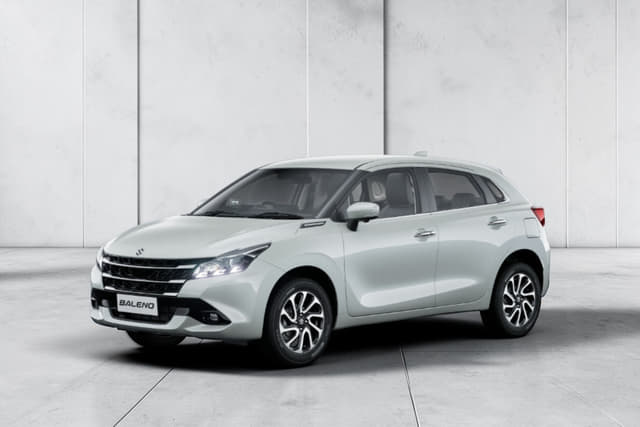
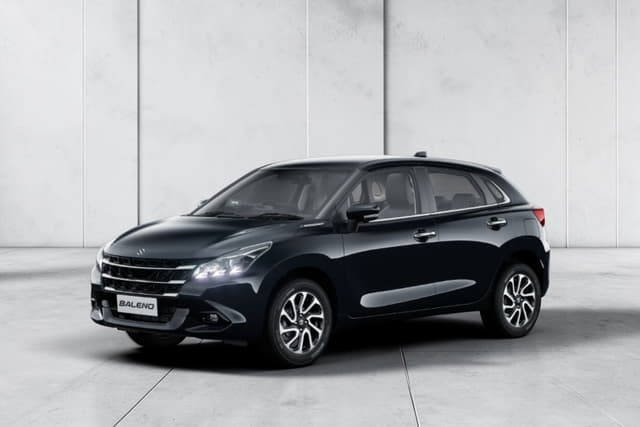
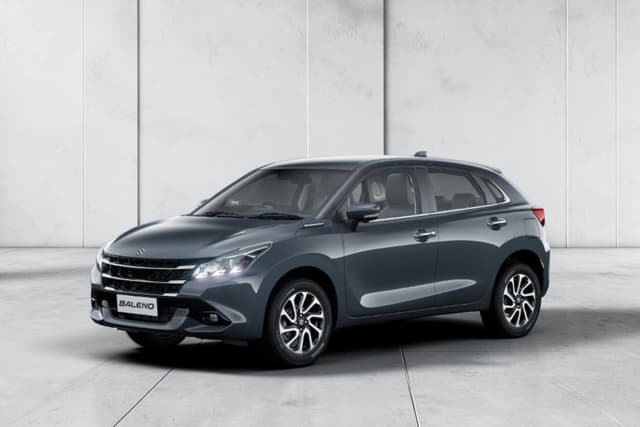
The Maruti Baleno is offered in 7 colour options. Have a look at the premium Maruti hatchback in different exterior shades in our Baleno colours gallery below.
Maruti Suzuki Baleno FAQs
No, Maruti Suzuki Baleno does not have a sunroof.
Yes, the Maruti Suzuki Baleno is available in CNG.
The Maruti Baleno price in India starts from Rs 5.99 lakh and goes up to Rs 9.10 lakh (ex-showroom).
The Baleno premium hatchback goes against the likes of the Tata Altroz, Hyundai i20 and the Toyota Glanza.
Maruti exclusively sells the Baleno via its premium Nexa showrooms.
Variant-wise Maruti Baleno features differ. The Baleno top model comes with goodies like a head-up display (HUD), a 360-degree camera, a 9.0-inch touchscreen infotainment system with Android Auto and Apple CarPlay support, automatic climate control and 6 airbags.
The Maruti Suzuki Baleno CNG claimed fuel efficiency is 30.61 km/kg.
The Maruti Suzuki Baleno is available with a 1197cc, 4-cylinder naturally aspirated petrol engine that is available with a 5-speed manual or a 5-speed automated manual transmission (AMT).
The Maruti Suzuki Baleno comes with 6 airbags from its base-spec 1.2 Petrol Sigma MT variant.
The Maruti Baleno has received a 4-star Bharat NCAP rating.
The price of Baleno base model is Rs 5.99 lakh (ex-showroom).
The Maruti Suzuki Baleno top model price starts from Rs 9.10 lakh (ex-showroom).
The Baleno on road price starts from Rs 6.65 lakh for the base model and go up to Rs 10.30 lakh for the top model, based on the city and taxes.
The Maruti Suzuki Baleno CNG starts from Rs 7.70 lakh (Baleno 1.2 CNG Delta) and goes upto Rs 8.60 lakh (Baleno 1.2 CNG Zeta) all prices are ex-showroom.
The Baleno base model on road price is Rs 6.65 lakh depending on the city to city.
The Baleno top model on road price is Rs 10.30 lakh based on the city and taxes.
Questions you may find useful
Udit
•20hI currently drive a petrol Baleno that is about 8 years old. My monthly running has increased to around 2,500-3,000km. Should I install a CNG kit or look for a used BS6 diesel car? My maximum budget is Rs 6 lakh.

Autocar India
At your kind of running, moving away from petrol does make financial sense, but we would first look at how that 2,500 to 3,000 km a month is split between city and highway use.If a large chunk of it is on a highway, a well-maintained used BS6 diesel can make sense because the fuel savings will be meaningful, and the usage pattern suits modern diesel engines far better. If, however, this mileage is mostly city traffic, we would avoid a BS6 diesel because DPF-related issues can become a headache with repeated stop-and-go use.Installing an authorised aftermarket CNG kit on your Maruti Baleno is absolutely legal, provided it is a government-approved kit, fitted by an authorised installer and the RC and insurance are updated accordingly. Financially, this is the lower-risk route if your Baleno is otherwise mechanically healthy, because you will recover the conversion cost relatively quickly with your kind of running. The trade-off is some loss of boot space and a drop in performance.
Girish
•6dI have an i20 manual petrol car that is 9 years old. I drive around 50 km daily in traffic. Please suggest whether I should switch to an automatic and recommend a car within Rs 10-12 lakh.

Autocar India
A daily 50 km commute in heavy stop-and-go traffic is exactly the kind of usage where an automatic makes the biggest difference, so upgrading from your 9-year-old i20 manual to an automatic is a sensible move for better comfort and lower driving fatigue. In your Rs. 10-12 lakh budget, the Maruti Suzuki Baleno AMT is the neatest fit. It is very easy to drive in traffic, the steering is light, the gearbox takes the hard work out of slow moves, and the ride is comfortable over broken roads. Coming from your older i20, it will feel quieter and more relaxed, and it’s also easy to park. Running costs and service reach are simple too, which matters when you drive every day.Two things to note: the AMT's shift can feel slow, and if you want a higher seat and extra ground clearance, you may want a taller car instead.If you prefer to stay with Hyundai, look at the i20 CVT as well. For a higher seating position within budget, the Tata Punch AMT is a good second choice. Overall, for your city commute, the Baleno AMT lines up best.
NEEL S
•2wI am planning to buy my first car. My net annual income is around ₹11 lakh. Could you please suggest which brand and model I should consider? My main criteria are fuel efficiency (petrol), ride comfort, good looks, suitability for a taller driver like me, reliability and safety for the next 8-10 years, and low hassle in terms of service and maintenance.

Autocar India
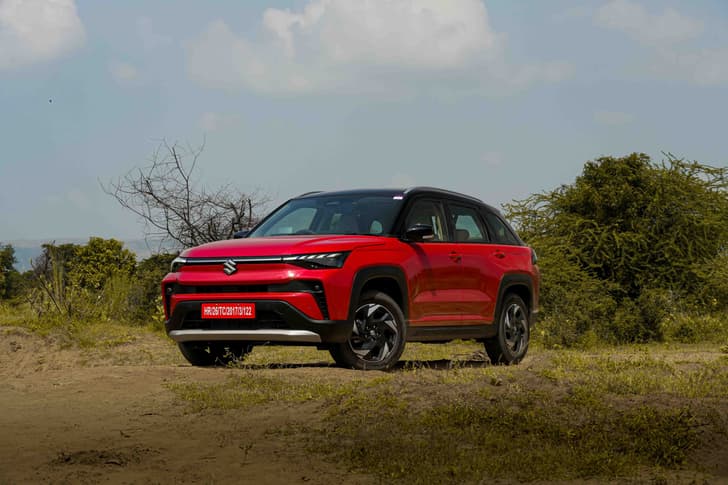
Go for the Maruti Suzuki Brezza petrol. It is the most balanced and sensible first car for your income and requirements. With a net income of Rs 11 lakh, you should ideally look at cars in the Rs 10-12 lakh range, which gives you a comfortable EMI and low ownership stress. In this space, the Brezza stands out because it delivers exactly what you want. It has a reliable, naturally aspirated petrol engine, good real-world fuel efficiency and one of the lowest maintenance costs in the segment thanks to Maruti’s service network. It is also known for strong resale value, which matters over 8-10 years.For your height, the Brezza works very well. It offers a tall seating position, good headroom and easy ingress and egress, which makes daily use comfortable. Ride quality is well-tuned for Indian roads, so it remains comfortable in the city and stable on highways. Smaller options like Maruti Baleno or Hyundai i20 will give better mileage, but they will not offer the same seating comfort or ground clearance you are looking for.
Soumil Kundu
•2wHello Autocar, I am planning to buy a hatchback. I have shortlisted the Swift LXi and Baleno Sigma. Please suggest which one would be better for long-term usage, as I have a very limited budget. My priorities are good fuel efficiency and low maintenance costs.

Autocar India
Go for the Baleno Sigma. It is the better long-term choice between the two. While the Swift LXi is slightly more fuel efficient thanks to its newer 3-cylinder engine, it does feel a bit less powerful and not as smooth. The Baleno’s 4-cylinder engine is more refined, smoother and stronger, which makes a noticeable difference in everyday driving, especially over long-term ownership.The Baleno is also a bigger and more spacious car, which makes it more comfortable for passengers and more practical for family use. Ride comfort is better and overall it feels like a more premium and complete product compared to the Swift.Yes, the Swift will give you slightly better mileage, which is one of your priorities, but the Baleno is not far behind in fuel efficiency, and the gains in comfort, space and engine refinement make it the better value overall.
Nishant Agrawal
•2wI have a daily work commute of around 50 km, of which nearly 40 km is on the highway. I am currently driving a Maruti Baleno and am planning to upgrade to an SUV. I have shortlisted three petrol automatic options: the Tata Harrier Adventure X Plus Dark 1.5L Petrol, Kia Seltos GTX(A) 1.5L CVT, and Toyota Urban Cruiser Hyryder V AWD 1.5L Automatic. I personally prefer the larger and more substantial Harrier, while my wife is inclined towards the Hyryder. I have also used my Baleno for nearly 10 years, so long-term reliability and longevity are very important factors for me in this purchase.

Autocar India
With 40 km of highway in your 50 km daily run and a 10-year plan, the Urban Cruiser Hyryder 1.5 petrol automatic fits your brief best from your list. It is a calm, easy choice for daily use, and it should be the cheapest and simplest car to live with over the long term. If you aren’t planning any off-roading, skip the AWD and stick to the 2WD to save around Rs 2 lakh.Why it suits you: that 1.5 petrol with the 6-speed torque-converter automatic is smooth and relaxed at steady highway speeds, so your daily run will feel easy rather than tiring. Toyota-Maruti parts and service are widely available and usually straightforward, which helps when you plan to keep the car for a decade. Also, coming from a Maruti Suzuki Baleno, the Hyryder will feel familiar to drive in the city but steadier on the highway, which should please both you and your wife.Two trade-offs to be aware of: quick overtakes at 90-110 kph need a firm press on the accelerator, and with five people and luggage, it can feel a bit slow. Also, the cabin is not as wide as the Kia's, so three adults in the back can feel tight on longer trips.If you want a bit more punch in everyday driving and a richer cabin, the Kia Seltos 1.5 petrol IVT is the other strong pick. On the Harrier, petrol is a good choice, but for long-term ownership and ease of use, the Hyryder will likely be the simpler car to live with. For your commute and 10-year plan, the Hyryder automatic lines up best.
Manish
•3wHi Autocar Team, My wife and I are planning to buy a new car with an AMT in the ₹10-12 lakh range. We are currently considering the Maruti Suzuki Fronx, Hyundai Exter, and Maruti Suzuki Baleno. We are not considering the Tata Punch, as my brother already owns one, and we do not want the same car in the family. My wife is very particular about safety ratings, but the Hyundai Exter has not received an official crash test rating yet. We will mostly be driving in the city, with occasional highway trips. We are not in a hurry and can wait until Diwali if needed. Could you please suggest the best option within our budget (preferably AMT)? Also, are there any upcoming cars in this segment that we should wait for, or should we go ahead with the current options in the market?

Autocar India
Mostly city use with the odd highway run and Rs 10-12 lakh to spend points me to the Hyundai Exter HX10 AMT. The AMT here makes your daily drive easy, and in this top trim, you get one of the strongest safety feature sets in this price range.It fits your brief because its small size and high driving position make tight city roads and parking simple for you and your wife. It also rides over speed breakers and bad patches without scraping, which helps on daily commutes. For your safety focus, the Exter gets important items like electronic stability control and six airbags, so even though the official crash test score is not out yet, you still have strong protection features on board.Two trade-offs to know: like most AMTs, there can be a slight jerk when moving slowly or during gear changes in traffic. And on highways, overtaking will need some planning. If you would rather have more rear seat space and a calmer highway feel, the Maruti Baleno Alpha AMT is the other good pick in your list.If a 5-star rating is a priority, though, the facelifted Tata Punch is your best bet. Otherwise, for your usage and budget, the Exter AMT lines up best.
Animesh
•3wI am planning to buy a new car with a manual transmission (no CNG). I do not prefer top models. My budget is ₹10 lakh. My daily commute is 80 km, mostly on highways and in the city. I am a family of three.

Autocar India
With 80 km a day split between city and highway and a ₹10 lakh cap, the Maruti Suzuki Baleno Delta manual fits your use best. It keeps costs in check without going for the top trim, and it is an easy, calm daily car for a family of three.In traffic, the Baleno’s light clutch and steering mean less effort, while the engine is smooth at low speeds, so speed breakers and start-stop runs feel easy. On the highway, this Maruti Suzuki car stays steady and feels confident at normal cruising speeds, and the seats are comfortable enough for the two long runs you will likely do every weekday. Space is good for three, and the boot will take daily bags and a small stroller without a squeeze.There are a couple of trade-offs to know. For quick overtakes you may need to shift down a gear, so do not expect instant shove like a bigger engine. Also, at higher speeds, you will hear some road and engine noise in the cabin compared to heavier, more expensive cars.If you want a stronger body feel and a bit more solid ride on rough roads in the same price band, look at the Tata Altroz XM+ manual. It feels tough, but the engine is not as lively in the city, and the clutch is a touch heavier.Overall, for your daily mix and budget, the Baleno Delta manual lines up best.
vishal
•3wI am planning to buy my first car for a family of four, with 90% city usage and 10% highway driving (which may not happen every month). I will not be driving more than 50 km per month. My budget is ₹10–12 lakh.

Autocar India
For a family of four, mostly short city trips with only rare highway runs and ₹10-12 lakh cap, I’d pick the Tata Punch Accomplished AMT. It suits easy city driving with the AMT, so stop-go traffic is much less tiring. The high seat and compact size make it simple to park, and you get a clear view of the road. It rides well over broken roads and tall speed breakers, which helps on daily runs. With your very low monthly use, petrol is the right choice, and this Tata car feels solid and safe, which adds peace of mind when you do head out of town.Know a couple of trade-offs: The AMT can feel a little jerky at very low speeds, especially when you lift off and come to a stop. Also, the engine is fine for the city but not very quick for fast highway passes. Since your highway use is rare, so this should not bother you.If you want a slightly more refined engine, the Hyundai Exter is a good bet, and its AMT is a bit smoother too. If you prefer a low, wider car with a smoother highway feel and a bigger boot for family luggage, the Maruti Suzuki Baleno Zeta AMT is a strong alternative.Overall, for your city-first use and budget, the Punch Accomplished AMT lines up best.
Rajneesh
•4wHi, I have been using a Wagon R CNG for the past 4 years and now want to upgrade. My daily running is approximately 40 km in the city, along with around 400 km of outstation driving per month. Please suggest.

Autocar India
With 40 km a day in the city and about 400 km outside each month, you drive around 1,600 km monthly, so staying with CNG makes sense for low running cost. In that use, the Maruti Baleno S-CNG mid variant (Delta) is the best step up from your Wagon R because it feels more solid on the highway, is calmer at 80-100 km/h, and is still easy to drive and park in the city.You will feel a clear jump in comfort and seat support on bad roads compared to your Wagon R. The steering is light for traffic but steadier on faster roads, so long drives feel less tiring. You also keep the Maruti service network you already know, and the CNG running cost stays close to what you are used to.A couple of things to note. The CNG tank eats into the boot, so big suitcases will need some planning. Also, CNG is only with a manual, so if you wanted an automatic for traffic, you would need to pick a petrol automatic instead and accept higher fuel cost.If you want a taller car and do more family trips, look at the Maruti Suzuki Brezza S-CNG VXi. It rides better on bad roads, the back seat is roomier, and it feels more relaxed on highways, but again the boot is smaller and it is manual only. If you prefer a compact footprint with a higher driving position, the Hyundai Exter CNG is a good city-friendly choice and it comes with a dual CNG tank setup that's below the boot floor giving you a very useable boot. Overall, for your mix of city use and monthly trips, the Baleno S-CNG lines up best with what you described. Trim availability can change, so do confirm the exact variant at the dealer.
Siddhi Bhosale
•4wSuggest a good sporty-looking car under 10 lakh that offers good mileage. This will be my first car, and I do not want to overspend. I want something that feels worth the money in the long run.

Autocar India
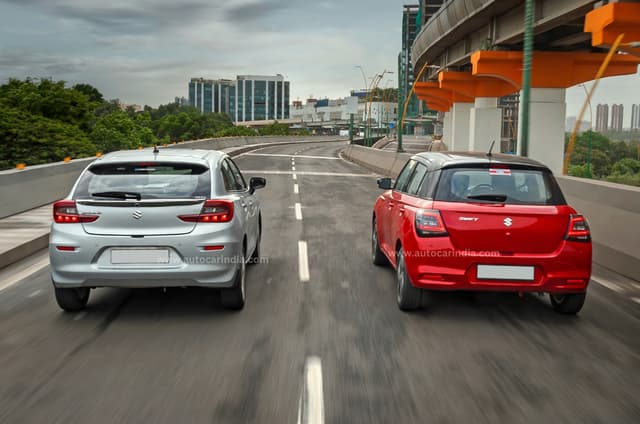
Mostly city use, a strict Rs 10 lakh budget and a preference for sporty looks with low running costs, in that case, the Maruti Suzuki Swift ZXi Plus is the one we’d pick. It looks sporty without trying too hard, feels light and easy in traffic, and the 1.2 petrol engine is efficient in daily use, so you won’t feel like you are spending mindlessly. Maruti’s service is everywhere, and parts are well-priced, which helps long-term peace of mind for a first-time owner. The Swift is also simple under the skin with no turbo or complex tech, which is good for longevity and hassle-free upkeep.A couple of trade-offs to note for your use. The rear seat and boot are fine for a small family, but not the roomiest. Also, it cruises okay, but quick highway overtakes need a downshift and a firm press on the pedal, so keep that in mind if you plan many long trips.If you want a slightly bigger-feeling car with a calmer ride while still staying near your budget, look at the Maruti Suzuki Baleno. It won’t look as sporty as the Swift, but it feels more spacious inside, is also light on fuel, and shares the same low-running-cost strengths.Overall, for a first car that looks sporty, is easy to live with, and feels worth the money over many years, the Swift fits your brief best.
Maruti Suzuki Baleno price in India
Maruti Suzuki Cars