

Last Updated on: 07 Aug 2026
Kia Carens
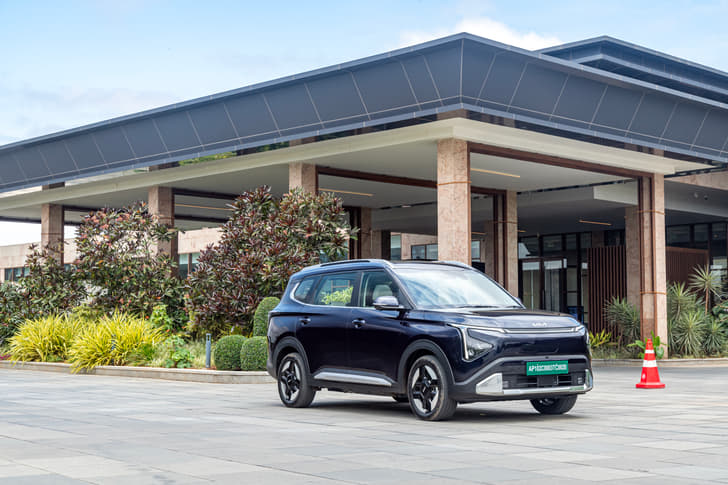
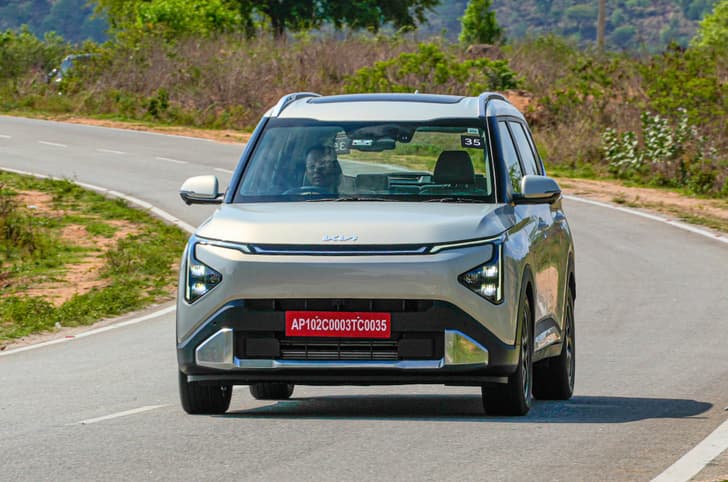
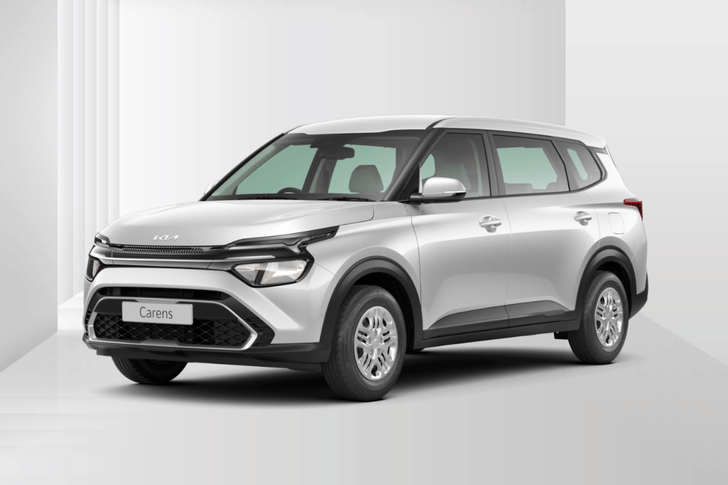
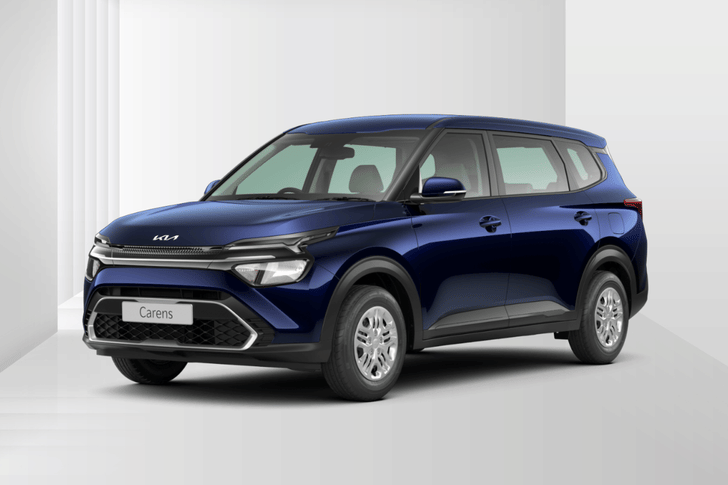
The Carens is a seven-seat MPV that competes with the Maruti Suzuki Ertiga and Toyota Rumion, built to prioritise cabin practicality over outright style. The range comes in just two variants, and the boxy, upright body makes the most of room across all three rows without adding excess length. It's a sensible pick for buyers who value space and ease of use over outright pace.
Carens Key Features
Here's a quick look at what the Carens offers, category by category.
Category | Key Features |
Engine and Gearbox | • 1.5-litre petrol engine, 6-speed manual • 1.5-litre turbo-diesel engine, 6-speed manual • No automatic option in the current line-up |
Safety | • 6 airbags as standard • ABS with EBD • Electronic stability control • Rear-view camera |
Infotainment and Tech | • 8-inch touchscreen • 12.3-inch digital instrument cluster • Wireless Apple CarPlay and Android Auto |
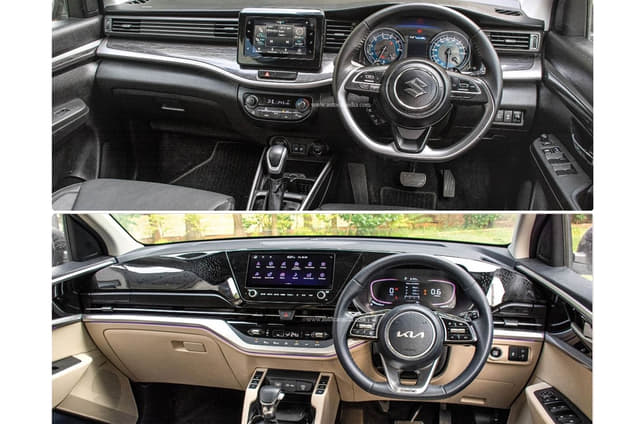
Comfort and Space | • One-touch electric tumble second-row seats for third-row access • 216 litres of boot space with all rows up, expanding to 1,164 litres with the third row folded • Layered dashboard for a lift in perceived quality |
Carens Road Test Findings
Positives
Refined, responsive low-to-mid-rev delivery that we found made the Carens easy to drive in traffic and on the open road alike
Light clutch action that added to the easy driving experience
In our road test of the petrol-manual, we recorded 0-100kph in 11.59 seconds
Negatives
The engine turns loud and strained once revs climb
Mid-range punch trails turbocharged rivals
Entry trims skip a rear wiper/washer and electric wing mirrors
Global NCAP's crash test flagged an unstable bodyshell at 64kph and only marginal chest and knee protection for the driver, limiting the Carens to a 3-star adult occupant rating
Who should buy the Carens?
Cross-referencing our spec feed with our road tests and comparison drives narrows the field to five clear-cut buyer types.
Buyer type | Why it fits |
If you need space for the family | • Genuine seven-seat practicality, with 216 litres of boot space with all rows up, expanding to 1,164 litres with the third row folded • In our long-term test, we found third-row entry "relatively easy" and no discomfort for rear passengers |
If you want good value for your money | • In our first-drive review, we called the petrol-manual "an excellent value proposition" against the pricier Maruti Suzuki Ertiga ZXi+ • The Carens is available from 11.02 lakh for the Premium (O) Petrol MT |
If low running costs matter most | • Kia's ARAI-certified diesel-manual returns 21.30kpl on paper • In our long-term test of a turbo-petrol automatic, we recorded only 8.5-10.2kpl in city-only running, well below the claimed figure |
If this is your first car | A light clutch and slick manual shifts, as we found in our road test, make the Carens unintimidating for a first-time owner moving up from a smaller hatchback |
If you want the latest tech | • Standard-fit kit across the line includes an 8-inch touchscreen, wireless Apple CarPlay and Android Auto • A 12.3-inch digital cluster gives it a genuinely modern cabin for the segment |
If safety is your top priority, we'd look elsewhere first: Global NCAP's crash test flagged an unstable bodyshell at 64kph and only marginal chest and knee protection for the driver, limiting the Carens to a 3-star adult occupant rating.
Carens Price Details:
Premium (O) Petrol MT(base model): 11.02 lakh (ex-showroom)
Premium (O) Petrol MT(mid variant): 11.02 lakh (ex-showroom)
Premium (O) Diesel MT(top model): 12.88 lakh (ex-showroom)
Kia Carens Latest Updates
- Oct 2025: Kia Carens CNG available at Rs 11.77 lakh.
Kia Carens Features and specifications
Our Rating | 8 |
Engine | 1493 cc - 1497 cc |
Fuel Type | Diesel, Petrol |
Transmission | Manual |
Seats | 7 |
Body Style | MPV |
Doors | 5 |
Max Power | 116 hp at 4000 rpm |
Max Torque | 250 Nm at 1500 - 2750 rpm |
Warranty Distance | Unlimited km |
Warranty Duration | 3 Years |
| Engine Type | Turbocharged |
| Engine Displacement | 1493 cc |
| Number of Cylinders | 4 |
| Engine Installation | Front |
| Fuel Supply System | Common Rail |
| Emission Standard | Bharat Stage VI |
| Terrain Modes | No |
| Auto Start/Stop | Yes |
| Front Suspension Type | Independent, MacPherson Strut |
| Front Springs | Coil Springs |
| Rear Suspension Type | Non-independent, Torsion Beam |
| Rear Springs | Coil Springs |
| Length | 4540 mm |
| Width | 1800 mm |
| Height | 1708 mm |
| Wheelbase | 2780 mm |
| Power Windows | Front and Rear |
| 12 Volt Port | |
| Acoustic Windshield | |
| Bluetooth Connectivity |
| Airbags | 6 |
| Anti Theft Alarm | |
| Anti-Lock Brakes (ABS) | |
| Auto emergency braking (AEB) |
| Body Coloured Bumpers | |
| Antenna | Shark Fin |
| Connected LED | |
| Cornering Foglamps |
| Speedometer | Digital |
| Tachometer | Digital |
| Trip Meter | |
| Average Fuel Consumption |
| Audio System | |
| Branded Music System | |
| CD Player | |
| Front Passenger Screen |
| Auto Crash Alert | |
| Breakdown Assistance Call Button | |
| Car Light Flashing & Honking via App | |
| Check Vehicle Status via App |
Kia Carens price & variants
Carens price starts at 11.02 lakh for the Premium (O) Petrol MT and goes up to 12.88 lakh for the Premium (O) Diesel MT, both ex-showroom. There are only two variants. Both are offered with a single petrol or turbo-diesel engine, each mated only to a 6-speed manual gearbox; there is no automatic option in the current line-up.
The petrol-manual suits buyers who cover most of their running in cities and shorter highway stints, where its light controls and adequate low-end pull, as we found in our road test, feel most natural.
The diesel-manual is the better fit for owners logging high monthly distances, given its ARAI-rated 21.30kpl and stronger 250Nm of pulling power.
Standard equipment across the range includes 6 airbags, ABS with EBD, electronic stability control and a rear-view camera, per Kia's specification sheet.
In our road test, we found the entry trims skip a rear wiper/washer and electric wing mirrors, a caution worth weighing against the asking price.
EMIs for the Premium (O) Petrol MT start from 18,824 a month, making entry into the range relatively accessible.
Kia Carens expert review
We like
Feature-rich
Spacious, premium cabin
We don't like
Diesel performance with full load
Thirsty petrol engines
7.0
9.0
8.0
8.0
8.0
9.0
8.0
Kia Carens Official Brochure
Download the complete brochure with specs, features, and variants.
Kia Carens reviews

Kia Carens comparison


Kia Carens news
Kia Carens Images
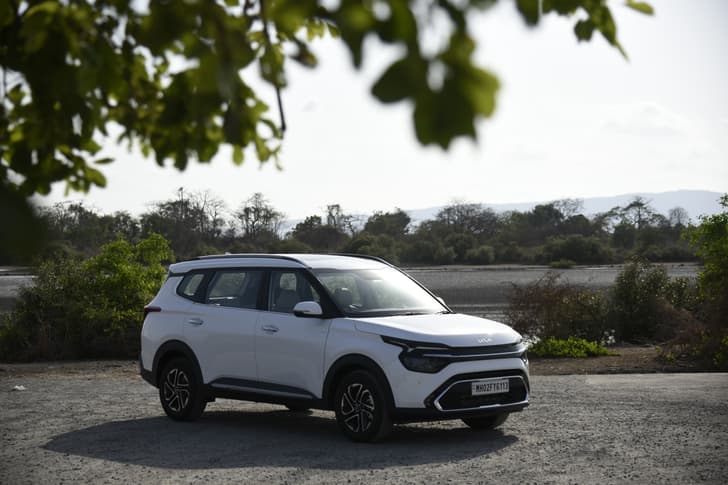
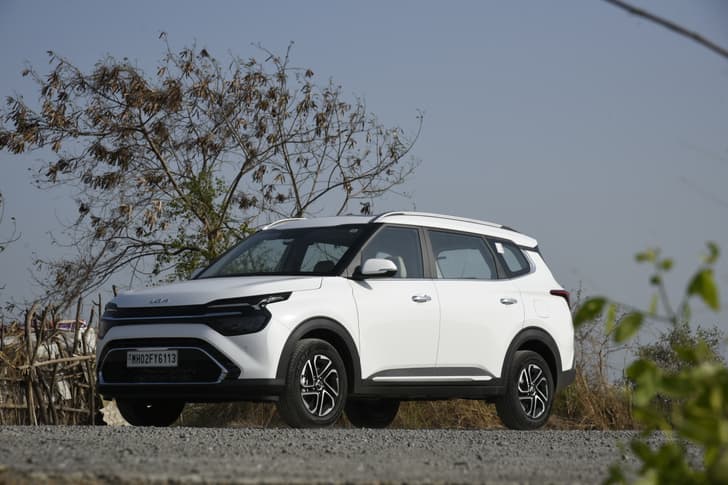
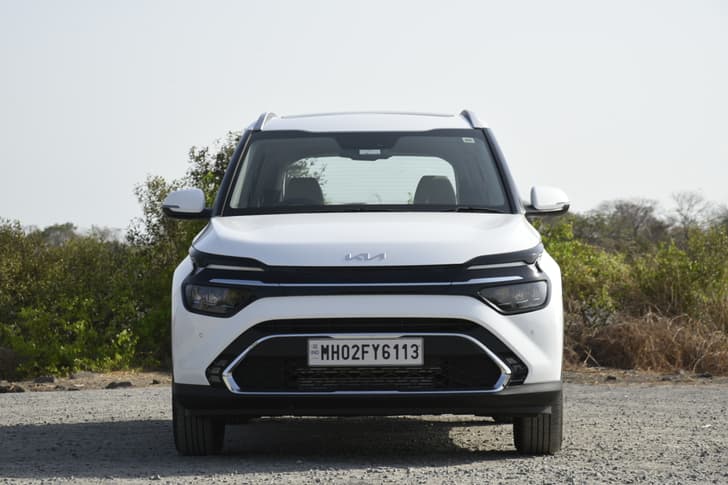
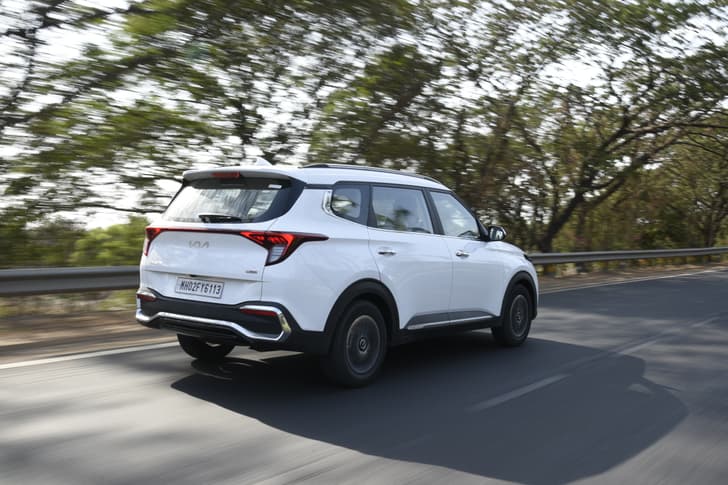
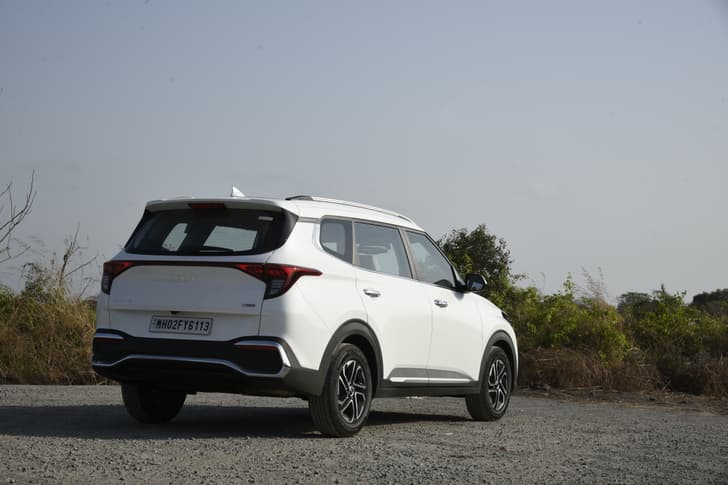
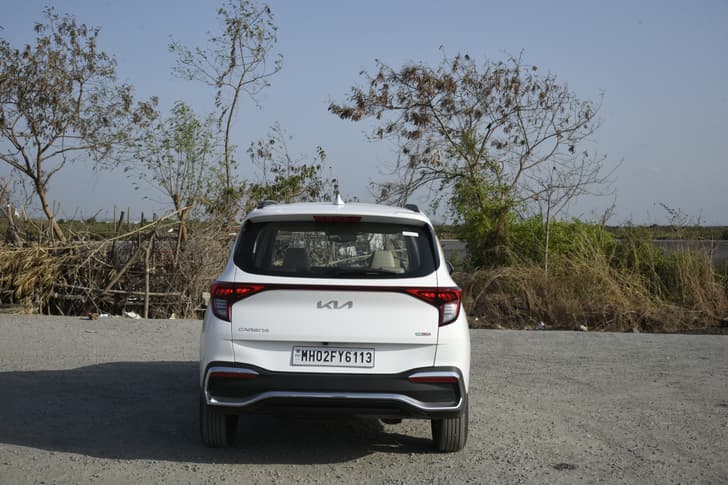
Our image gallery of the Carens runs to dozens of shots covering the MPV from every angle, inside and out, useful for judging fit and finish before a showroom visit.
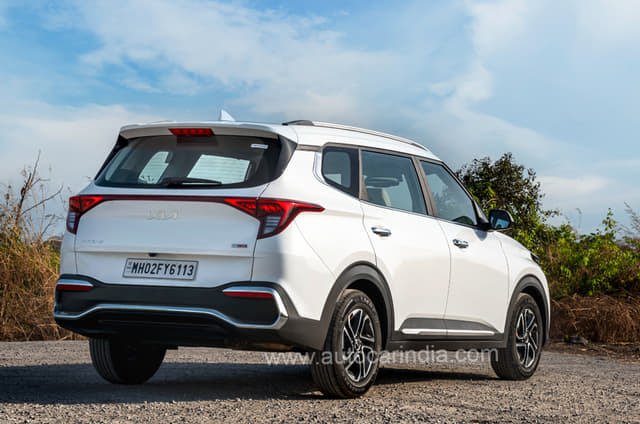
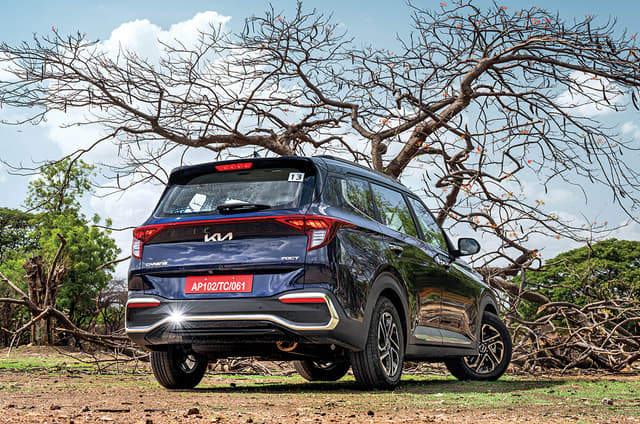
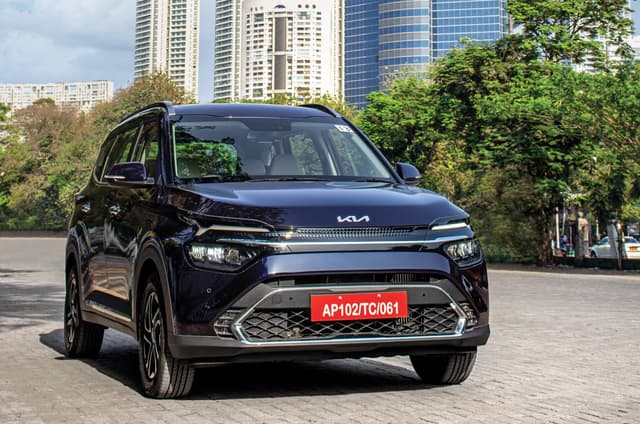
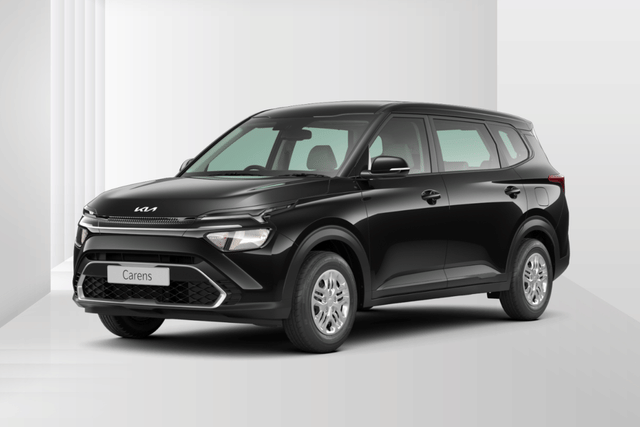
Front and rear three-quarter exterior views showing the boxy, upright body-in-white
Alloy wheel and steel-wheel-with-cover designs across trims, plus the halogen headlamp treatment on entry variants
The layered dashboard with its 8-inch touchscreen and 12.3-inch digital instrument cluster
Second-row seats showing the one-touch electric tumble mechanism for third-row access
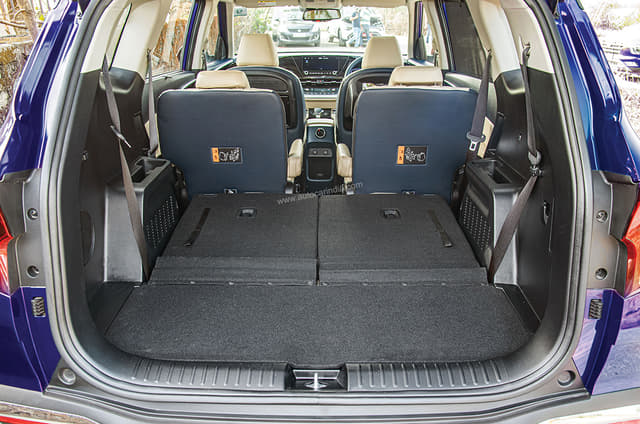
Third-row seat and boot shots illustrating the 216-litre load bay with all rows in place
Black-and-beige cabin upholstery across the front and middle rows
Kia Carens videos
Autocar India's video review of the Carens covers the petrol-manual in Premium and Prestige trim, the version the channel identifies as the best-selling configuration, giving a closer look than any spec sheet at how the cabin and controls actually behave.
- A walkaround of the exterior, including the halogen headlamps and 15-inch steel wheels fitted to the base trims.
- A cabin tour highlighting the layered dashboard, 8-inch touchscreen and seating across all three rows.
- The light clutch take-up and gearshift feel through the 6-speed manual, described in Autocar's written road test as a low-effort operation.
- Engine note captured at higher revs, where testers noted the unit turns loud and strained.
- A look at the one-touch second-row tumble mechanism used to reach the third row.
Kia Carens Colours
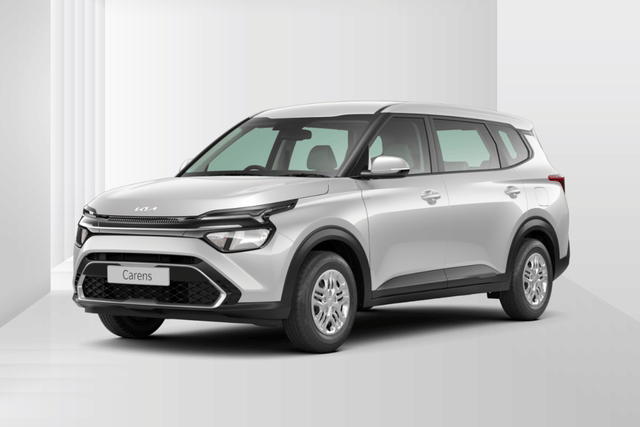
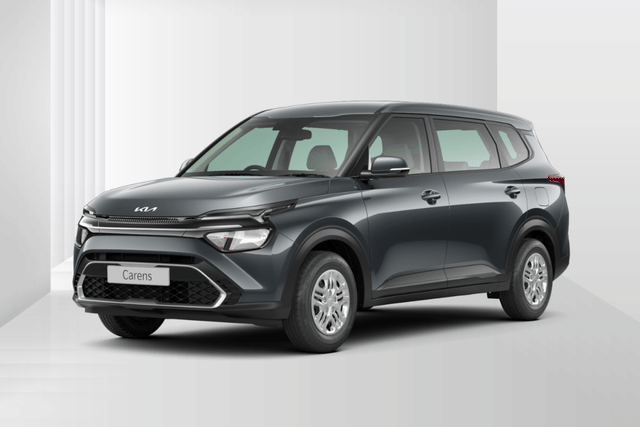
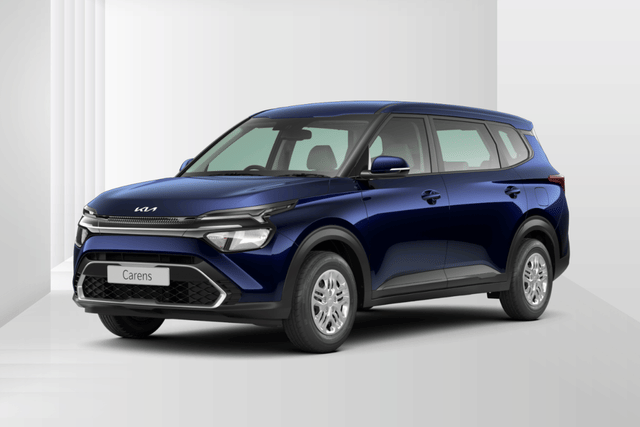
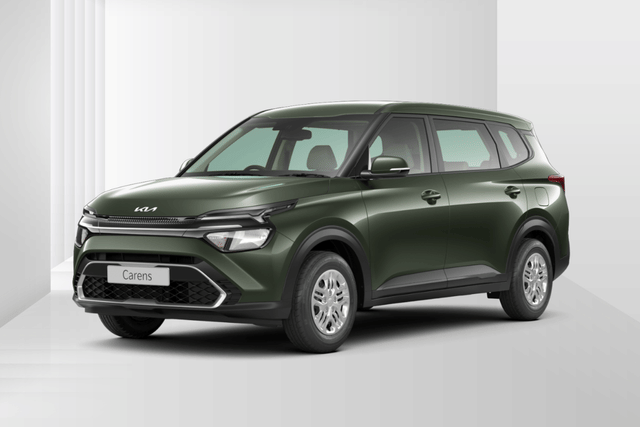
Carens colours number six, and every shade is offered as a single-tone finish with no dual-tone roof option on the current line-up. The palette runs from muted metallics to one solid white, giving buyers a straightforward, no-frills choice list.
The table below sets out the full Carens colour range as listed on Autocar India.
Colour | Finish |
Aurora Black Pearl | Single-tone |
Clear White | Single-tone |
Gravity Grey | Single-tone |
Imperial Blue | Single-tone |
Pewter Olive | Single-tone |
Sparkling Silver | Single-tone |
Autocar India's road-test car for the petrol-manual review was finished in one of the entry-trim's limited shade choices, drawn from White, Silver and Grey.
Kia Carens FAQs
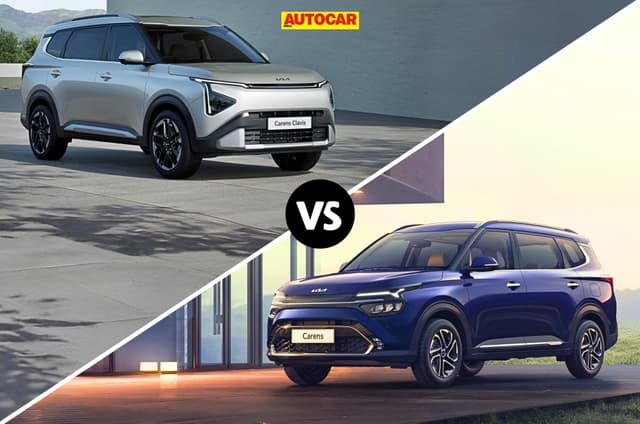
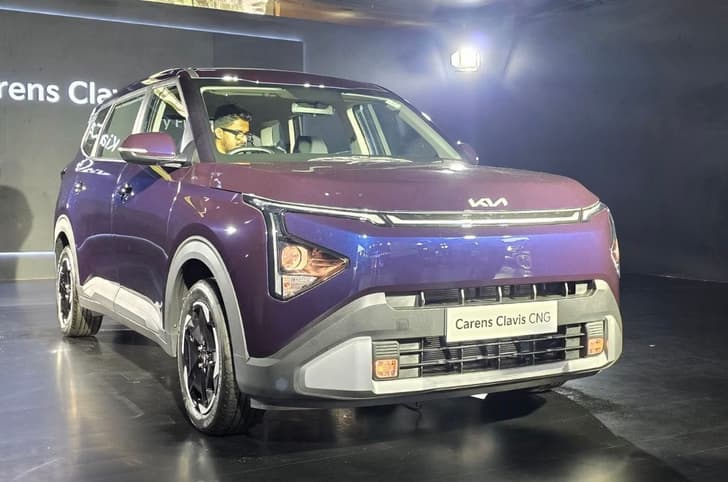
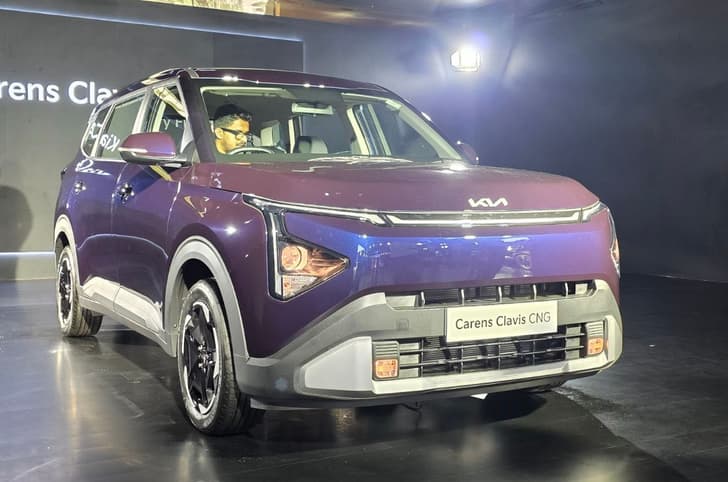
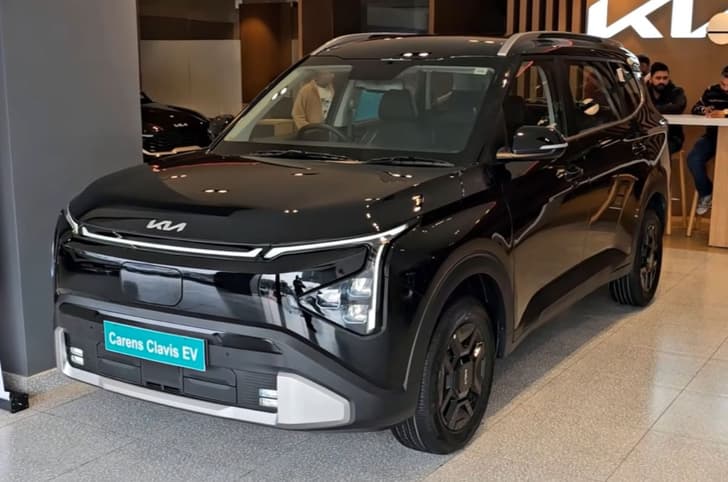
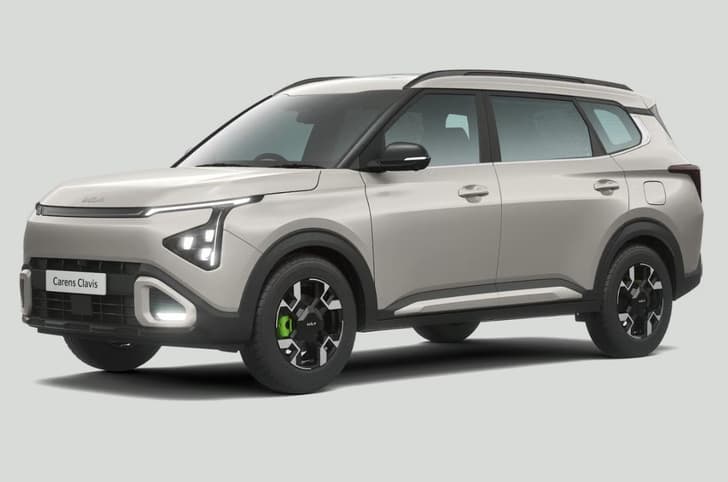
Carens has been partially replaced by Carens Clavis which has more variants features and engine, gearbox options.
The Kia Carens is sold as a 7 seater only.
If your priority is carrying seven people comfortably, then yes. The Carens offers a more spacious third row and a more practical cabin than similarly priced midsize SUVs. However, if you prefer a higher driving position, stronger road presence and occasional off-road ability, an SUV may suit you better.
The diesel suits buyers with high monthly running thanks to its better fuel efficiency, although it can feel less responsive when the car is fully loaded. The naturally aspirated petrol is best suited to primarily city use.
The Carens offers a more premium cabin, more modern technology, stronger turbo-petrol performance and a richer feature list. The Ertiga, however, remains the more affordable option to buy and run, especially in CNG form.
Yes. The Carens remains one of the strongest value-for-money three-row family cars, combining a spacious cabin, extensive feature list, multiple seating configurations and a choice of petrol or diesel engine at a competitive price.
The Carens focuses on practicality and value, offering more seating flexibility and a lower starting price. The Alcazar, meanwhile, feels more SUV-like and offers a more premium overall experience.
Questions you may find useful
I'm looking for your expert opinion to help me finalise my next used family car. I'm currently considering the MG Hector Plus Sharp Pro 1.5 Turbo Petrol MT (2024), Hyundai Alcazar 2.0 MPI Petrol, Kia Carens 1.5 Naturally Aspirated Petrol, and Maruti XL6 Alpha Plus Petrol. My usage is around 500 km per month (approximately 6,000 km per year), with most of my driving being in the city. My family consists of four members, and while I rarely need the third row, having a 6- or 7-seater is a bonus for occasional family trips. I plan to keep the car for at least 7 to 10 years. Fuel economy is not a priority; instead, I value comfort, features, reliability, and good performance. Long-term dependability, ease of maintenance, and a hassle-free ownership experience are far more important to me than mileage. One of my biggest concerns is the increasing use of ethanol-blended petrol, with E20 already in use and the possibility of higher blends such as E30 in the future. I'm unsure whether I should avoid turbo-petrol engines for long-term ownership or whether modern turbocharged engines are reliable enough. Based on my usage, which of these four cars would you recommend? Would you choose a naturally aspirated engine, such as those in the Alcazar, Carens, or XL6, over the MG Hector's 1.5-litre turbo-petrol for someone planning to keep the vehicle for 7 to 10 years? How concerned should I be about E20 or future E30 fuel and its long-term impact on these engines? Is the MG Hector's 1.5 Turbo Petrol engine dependable enough for long-term ownership, or would you prefer the Hyundai 2.0 MPI or the other naturally aspirated options? Is the Kia Carens 1.5 NA petrol sufficiently powerful for occasional trips with six or seven passengers, or is it likely to feel underpowered? Similarly, is the Maruti XL6 Alpha Plus adequately powered for highway driving with a full load, or does its 1.5-litre mild-hybrid engine struggle in such conditions? Finally, how would you rank these four cars in terms of long-term reliability, performance (especially when fully loaded), build quality and safety, maintenance costs, service network, feature list, and overall ownership experience? If this were your own long-term family car purchase, which one would you choose and why? I'd really appreciate an unbiased recommendation based on my specific requirements rather than general market popularity. Thank you!
Based on your usage and priorities, the Hyundai Alcazar 2.0 naturally aspirated petrol would be our recommendation. Your monthly running is low, the third row will only be used occasionally, and you're looking for a comfortable, feature-rich family car that can be kept for 7 to 10 years. The Alcazar strikes the right balance. Its 2.0-litre naturally aspirated petrol engine is a simple, proven unit that should be easy to own over the long term, while also offering better performance than the Kia Caren's 1.5-litre naturally aspirated petrol engine. Hyundai cars also have a strong reputation for reliability and aftersales support, which becomes even more important for long-term ownership.As for the E20/E30 question, there's little reason to worry. The Alcazar's 2.0 engine is likely E10 compliant but will run on E20 just fine, and while higher ethanol blends can lead to a slight reduction in fuel efficiency, they are unlikely to have a significant impact on long-term reliability.The MG Hector 1.5 turbo petrol is a good engine, but it is a heavier car and the turbo petrol will not offer any real advantage in your running. The Carens is the more practical and better packaged family car, but since you aren't frequently using the third row, the Alcazar is the better pick.
I commute nearly 90 km a day for work. I previously drove a 10-year-old Honda Jazz petrol and wanted to switch to an EV, but I live in a gated society where the committee doesn't permit residents to install a personal charger - I'd have to rely entirely on the common charger they provide. That dependency made me uncomfortable running an EV as my only car, so I bought a pre-owned 2024 Kia Carens diesel instead. I now plan to run two cars: the EV for my daily 90 km commute, and the Carens diesel for long drives and highway trips. My budget for the EV is under Rs. 15 lakhs, and I'd be charging only on the shared society charger. Which options would you recommend?
Given your 90km daily commute and the fact that you will be relying entirely on a shared society charger, the key is to choose an electric car with a strong real-world range and fast enough charging speeds. The Tata Punch EV is the most sensible recommendation here. This Tata car should give you a real-world range of around 250km, which gives you plenty of buffer for your daily commute even if you cannot charge every single day. Tata’s EV ecosystem is well established, and the Punch EV is a proven product with good service reach and a robust ownership track record. The Tata Nexon EV is another strong option. It is larger and more spacious, and with a larger battery, you could get more out of a single charge. However, since you have a Carens diesel for big-car duties, the smaller Punch EV makes for a far better city car. Plus, while you will only get a low-spec variant of the Nexon EV in your budget, you will get a fully loaded variant with all the bells and whistles. Both Tata EVs charge at up to 7.2kW on an AC charger and 60kW on a DC fast charger, which is decent when you have to use a common charger.
I commute nearly 90 km a day for work. I previously drove a 10-year-old Honda Jazz petrol and wanted to switch to an EV, but I live in a gated society where the committee doesn't permit residents to install a personal charger. I would have to rely entirely on the common charger they provided that made me uncomfortable running an EV as my only car, so I bought a pre-owned 2024 Kia Carens diesel instead. I now plan to keep two cars: an EV for my daily 90 km commute, and Carens diesel for long drives and highway trips. My budget for the EV is under Rs. 15 lakhs, and I would be charging only on shared society charger. Which options would you recommend?
Given your 90 km daily commute and the fact that you already have a Carens diesel for long trips, an electric car makes a lot of sense as your primary city car. The key consideration here is your charging situation which is relying solely on a shared society charger. That means you need an EV with good efficiency and a battery size that gives you enough buffer so you are not constantly worrying about range.The Tata Nexon EV is the most sensible recommendation here. It is well priced, efficient and has a battery size that is well suited to your daily commute. The car itself is compact and easy to drive in the city, but still feels substantial enough for occasional highway use. Most importantly, it has enough range to allow you the flexibility of charging it every other day in case your society's common charger is occupied. Get into the practise of topping up your battery whenever the common charger is free so you are always topped up and ready to go.
I want to buy 6/ 7 Seater car, budget-friendly. Also, more comfortable in all three rows. I chose Kia Clavis and Xl6. I did test drive both vehicles. I'm comfortable with XL6. More leg room in all three rows. But experts in many forum they praised Clavis. Most of my family members are above 5.9. So I feel XL 6 would be a better option. Suggest to me what's best?
The Kia Carens has a roomier third row, as well as a middle-row bench seat option, while the XL6 is only available with captain chairs. But if you and your family members found the Maruti XL6 more comfortable, and you're fine with the six-seater layout, then that is the one you should get. It is a fuss-free, no-nonsense offering, and with Maruti's widespread, as well as proven, reputation for reliability, it is an option you can't go wrong with.
How is the life of my Kia Carens diesel automatic purchased in 2023?
Your 2023 Kia Carens Diesel Automatic should have a long and healthy life ahead of it, provided it is maintained properly and used in a manner that suits a modern diesel.The good news is that your car is still relatively new, and the 1.5-litre diesel engine has proven to be a refined and dependable unit. If your driving includes regular highway runs or trips where the engine gets fully warmed up, there is no reason why the car cannot comfortably serve you for well over a decade. Modern diesels are capable of very high mileages when maintained correctly.The main thing to watch out for is the DPF (Diesel Particulate Filter). If your usage is predominantly short city trips, the DPF can clog over time. However, if you regularly drive on highways or take longer journeys, the system should regenerate naturally and remain trouble-free.
Upcoming Cars


Kia Cars


Trending Cars


Latest Cars