Latest questions answered by experts
Giri
•22hI am confused between the Tata Sierra, Kia Seltos, and Tata Harrier as a first-time buyer. My priorities are safety, features, comfort, and long-term ownership, along with the availability of ADAS features. I am specifically looking for a petrol automatic, with a usage split of around 50% city (tier-1 and tier-2) and 50% highway driving. I would appreciate your advice on which of these would be the best choice for my needs. Additionally, how reliable are dry-clutch DCT gearboxes in the long run? I am concerned about potential issues and whether I might regret choosing an IVT (CVT) in the Seltos. Also, Tata has a good dealership and service network in my area, which is an added advantage.

Autocar India
Go for the Kia Seltos, the car is a very good all-rounder and provides a good balance of comfort, features and safety as well as being a good option for the long term. As for your query on the gearbox, yes, DCTs can heat and cause issues in the long run if driven in a lot of traffic. However, in Kia's case, IVT indicates a CVT, which is a generally more reliable option than a DCT.Coupled to the 1.5 litre naturally aspirated petrol engine, the IVT is quite smooth when driven in everyday situations. It has very little of that 'rubberband' effect where, during acceleration, the revs rise more than the corresponding vehicle speed.
Suresh Kumar
•11wI am confused between the Mahindra BE 6 and the VinFast VF7. My primary priorities are performance, handling, and driving range. Could you please advise which of these two electric SUVs would be the better choice based on these factors?

Autocar India
Both the Mahindra BE 6 and Vinfast VF7 are excellent EVs at a similar price but offer two completely different experiences. Where the Mahindra wows you with its design and long list of features, the Vinfast doesn't have the same road presence, though it is still unique-looking. Similarly, the interior of the BE 6 is far more radical and exciting to look at, but the VF7 is built of higher-quality materials and has better ergonomics. The biggest difference, however, is space, of which the Vinfast offers far more, especially in the rear seat, where the BE 6 is cramped. And finally, performance, where the VF7 comes in dual-motor guise with 350hp, the BE 6 offers 286hp for about the same price. The Vinfast's AWD system allows for much better acceleration than the RWD setup of the Mahindra. On handling, too, the lower-slung Vinfast feels sharper and more confident around corners, whereas the Mahindra feels loose, with lots of body roll.As for range, the two have similarly sized batteries, and we expect range to be comparable. In our real-world test, the Mahindra achieved 449km of range overall, so expect the AWD Vinfast VF7 to offer a slightly lower number.
Vishist Vijay Tiwari
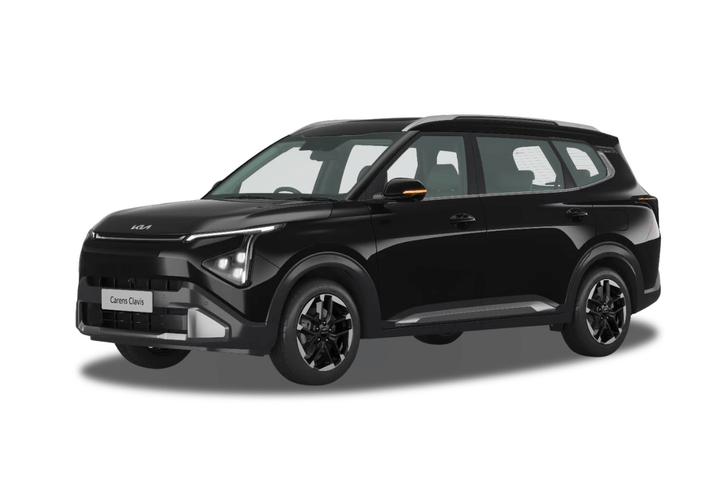
•1dI am planning to buy a 7-seater car in the coming months. My annual running is approximately 18,000 km, including 4–5 long trips ranging from 800 to 2,200 km. The car will mostly be used with full seating capacity. My budget is around ₹18-20 lakh (on-road), and I expect good fuel efficiency. I currently own a Tata Tigor and am now looking for an upgrade with a more premium cabin and a stress-free ownership experience. I am confused between a used Toyota Innova Crysta and the Kia Carens Clavis (both diesel). I am open to other options as well, provided they offer good fuel economy.

Autocar India
You're right to shortlist a diesel 7-seater and specifically these two MPVs, which, for the money, have the best three rows of seats on the market. The Kia Carens Clavis is the more modern option, of course, and will get you the latest features and better quality interiors. It is also the more fuel-efficient of the two and the friendlier vehicle to drive in the city, when you are not taking your long road trips. However, it's worth noting that with a full load of passengers and luggage, the 1.5 diesel engine will have to work hard, and those fuel economy numbers will drop, and overtaking won't be as effortless. Getting a used Innova Crysta in your budget, in good condition with low mileage and high specification, may actually be more of a challenge than you think. But that's just an indicator of how reliable it is, and how well it holds its value. It definitely has the stronger engine and more space, but makes some sacrifices to low-speed ride comfort, ease of driving and fuel economy. Overall, though, given your full-capacity usage, we would recommend the Innova.

Azhar
•6hHi Autocar Team, I currently own a 2012 Hyundai Verna Fluidic diesel manual and have clocked around 2.2 lakh km. I am now planning to buy an additional car as an upgrade. I have shortlisted the Mahindra XUV700 AX7 diesel manual and the Renault Duster 1.3 turbo petrol manual. I recently test-drove the XUV700 diesel automatic and was impressed with its cabin space and ride quality. I intend to keep the new car for around 15 years and am specifically looking for a driver-focused car as an upgrade from my Verna. Could you please suggest which of these would be the better choice for my needs?

Autocar India
We would suggest going for the Mahindra XUV 7XO diesel manual. The biggest reason is that it feels like a proper upgrade in every sense. It is a larger, more spacious car, with a more premium cabin and a very comfortable ride, which you have already experienced in your test drive.More importantly, the diesel engine suits what you are used to with your Verna. It offers strong low-end torque and relaxed cruising, which makes it feel effortless on highways and more satisfying to drive over long distances. Over a long ownership period, diesel also tends to be more efficient for regular highway use.The Renault Duster 1.3 turbo petrol, on the other hand, is a good driver’s car. It will feel lighter and easier to drive, especially in tighter city conditions. However, while the turbo petrol is enjoyable, it won’t give you the same sense of punch as the Mahindra larger 2 litre diesel, or the same space and long-distance comfort as the XUV 7XO.We would still urge you to test drive the new Duster before taking a final call, but as an overall upgrade, the XUV 7XO is the stronger choice.
Sameer
•10hHi Autocar Team, first of all, I would like to thank you for your excellent service. I own a Tata Tigor CNG AMT, purchased in 2024. At the time of purchase, my expected usage was quite high, which is why I chose this model. However, due to unforeseen circumstances, my usage has now reduced significantly to around 50 km per month or even less. The car has been driven approximately 12,000 km so far, mainly due to a few trips and family events. There are also periods when the car is not used at all for 4–6 weeks continuously. I am concerned about whether such low and irregular usage could negatively impact the car’s long-term health, especially since I plan to keep it for many years. Could you please advise: Whether keeping the car with such low usage is advisable What precautions or maintenance steps I should follow Or whether it would be better to consider selling the car under these circumstances

Autocar India
For your situation, there is no need to worry or consider selling the car. Your current usage of around 50 km per month, even with 4-6 weeks of no driving, is not harmful as long as you follow some basic precautions.Modern cars like your Tata Tigor CNG AMT can handle low usage, but they do need to be run periodically to stay healthy. The main things affected by long idle periods are the battery, tyres and fluids, not the engine itself.You should make it a point to drive the car once every 2-3 weeks for about 15-20 minutes, and occasionally run it on petrol as well, not just CNG. It is also important to stick to annual servicing, even if the running is very low, and keep an eye on battery condition and tyre pressure.There is no real downside to keeping the car, apart from following basic maintenance. Selling it now does not make financial sense either, since the major depreciation has already happened and replacing it will only add more cost.Overall, it is perfectly fine to continue using your current car, and with simple care, it will remain reliable for many years.
Krrish
•1dI am planning to buy a new car and am currently waiting for the new Honda WR-V to be launched. Could you please advise on its expected launch timeline? Also, if there are any good alternatives to the WR-V that meet my requirements, kindly suggest them. My key requirements are: A responsive automatic gearbox Comfortable seats and good ride quality for long drives Good ground clearance Decent mileage

Autocar India
Honda has no plans to launch the WR-V in India, at least not in its current avatar. If a new sub-four-metre SUV is launched, it won't be before 2029, with several other products planned before then, such as the 0 Alpha EV, a new Honda City, a new 7-seat SUV and a new Elevate, as well as some CBUs.Until then, check out the Maruti Suzuki Fronx (or its sibling, the Toyota Urban Cruiser Taisor), specifically with the 1.0 Boosterjet turbo petrol engine and 6-speed AT gearbox. This powertrain delivers, at once, performance, smoothness and efficiency, giving the best of all worlds. The Fronx is a sharp-looking compact crossover that's surprisingly practical and well equipped. It's got good ground clearance and a comfortable ride, and space is more than enough too. Plus, being a Maruti, running costs are low, and reliability is rock solid.
Nipen
•1dHi Autocar Team, I am confused between the new Skoda Kushaq facelift automatic and the Kia Seltos HTK(O) IVT. My usage is around 90% city driving, covering approximately 40 km daily. Could you please advise which would be the better option for long-term ownership, considering comfort, after-sales service, and overall reliability?

Autocar India
Of the two, you should go for the Kia Seltos HTK (O) IVT. For your 40km daily use, that's 90 percent in the city, the smooth CVT and lighter steering will make day‑to‑day driving a lot easier. Despite being the larger vehicle, the Seltos feels a bit lighter on its feet and easier to manoeuvre. Though the new 8-speed torque converter auto is in the Kushaq facelift. It is a vast improvement and a match for the Kia CVT on smoothness; the engine's turbo lag at low RPMs can catch you out at crawling speeds, such as in slow-moving traffic. The one thing you give up with the Seltos IVT is mid‑range punch. Its 1.5-litre naturally aspirated petrol engine may be smooth, but it doesn't have the same solid surge of torque of the Kushaq's 1.0 TSI engine, once its turbocharger kicks in.
Arun Sharma
•8hHello Autocar Team, I am planning to buy a new car. My monthly running will be around 500 km, and I also have a second home that is connected by a 1 km stretch of rough, unpaved (kuccha) road. At times, when the entire family travels together, we require seating for up to 7 people. Considering these requirements, would the Kia Carens Clavis be a suitable option for my needs, or should I look at other alternatives?

Autocar India
For your requirement, the Kia Carens is actually a very good fit, and yes, it makes sense to consider it. Your usage is quite low at around 500 km per month, so a petrol automatic or manual is the right choice. Diesel is not required and may not suit such low running.The biggest reason the Carens works for you is the flexibility of 7 seats. It is also a comfortable car, especially for family usage. The ride quality is well-suited for city and highway driving, and the second and third rows are usable, which is important in your case.For your 1 km kuccha road, the Carens can handle it without any issues as long as you drive carefully. The suspension is compliant enough for mild rough roads, but it is not a hardcore SUV. So you will need to go slowly over bad patches.If you want something more rugged with better ground clearance, you can also consider the Tata Safari. It is better suited for rough roads and has a stronger SUV stance. While it is not as flexible or practical as the Carens as a 7-seater, it is still decent for family use. It is also a better 7-seater than something like the Mahindra XUV 7XO, where the fixed middle row makes the third row less flexible and more cramped.Go for the Kia Carens if your priority is comfort, space and flexibility for family use. Consider the Tata Safari if you want better rough-road ability and a more rugged feel, but with some compromise on third-row practicality.
Rahul
•22hI am planning to buy a new car for my family of five, including a 3-year-old child. My driving will be around 60% in the city and 40% on highways, with a monthly running of approximately 1,500 km in a tier-3 city. I also take a trip to Vrindavan every 1-2 months. We plan to keep the car for over 7 years, so space, low running cost, and safety are my top priorities. My budget is between ₹15-20 lakh. I am considering the Kia Seltos HTX (A) IVT. Would this be a suitable choice for my requirements, or are there better alternatives I should consider?

Autocar India
Yes, the Kia Seltos HTX IVT is a good option for you. It offers a roomy cabin, smooth driving, and a robust safety kit. Your usage of mostly city driving will benefit from the convenience of the smooth-shifting IVT, which will be far easier than a manual in Punjab’s Tier‑3 city traffic. The Seltos’ rear bench can seat three better than most in this class, and installing a child seat is simple with ISOFIX mounts, helpful for your 3‑year‑old. For safety, 6 airbags are standard, come with a safety kit, and although the Kia has not yet been tested by any crash test agency, it is expected to score highly, thanks to its new-gen global platform. Highway stability is good, which will help on your Vrindavan trips every 1-2 months and though the engine isn't the strongest in the Seltos range, it is more than powerful enough. The one thing you give up is the absolute lowest running cost versus a diesel or strong hybrid, but it is not bad enough to be a deal breaker in what is otherwise a great all-around package.

Need expert advice?
Ask the Autocar community and experts.