Last Updated on: 17 May 2026
Kia Seltos
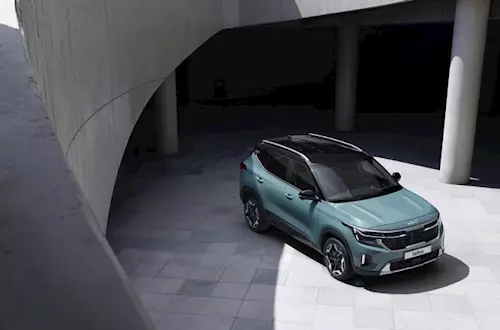
The Kia Seltos price starts from Rs 10.99 lakh and goes upto Rs 19.99 lakh (ex-showroom). The Seltos was Kia’s first-ever offering for India in 2019, and received a second-generation update for MY26.

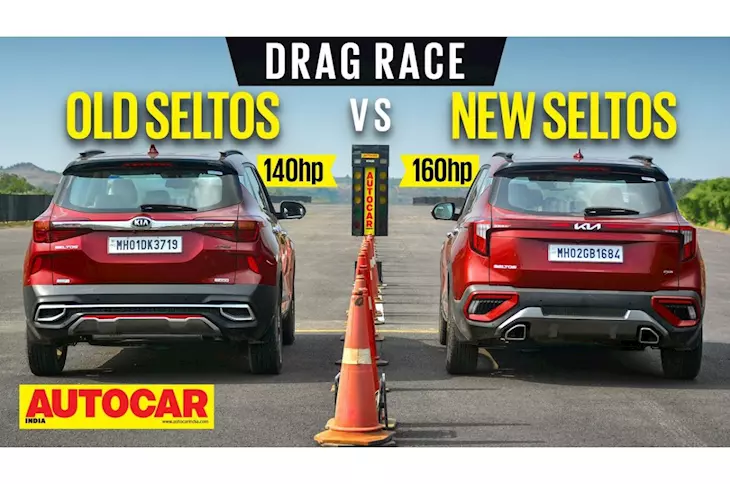
Kia India offers three engine options for the Seltos: a 115hp, 1.5-litre naturally aspirated petrol, a 116hp, 1.5-litre turbo-diesel, and a 160hp, 1.5-litre turbo-petrol. All Seltos engines are available with manual and automatic gearboxes.
The Kia Seltos interior features premium leatherette upholstery, a 12.3-inch infotainment touchscreen and digital driver’s display, ambient lighting, ventilated front seats, panoramic sunroof, and dual-zone climate control.
Seltos Key Highlights:
- The Kia Seltos has secured a 5-star safety rating in BNCAP crash tests.
- Seltos gets six airbags as standard, ESC, rear parking sensors, front and rear disc brakes, TPMS, traction control, ABS with EBD, ISOFIX child seat anchor points, a 360-degree camera and Level 2 ADAS in higher variants, etc.

- At 190 mm, the Seltos ground clearance is adequate to deal with Indian road conditions.
- The Kia Seltos boot space is 433 litres, ample for luggage and daily use.
- In terms of dimensions, the Seltos measures 4,315 mm in length, 1,800 mm in width, 1,620 mm in height, and 2,610 mm in wheelbase.
- Kia Seltos features include a 12.3-inch infotainment touchscreen, 12.3-inch driver’s display, ventilated front seats, Level 2 ADAS, dual-zone climate control, wireless Android Auto and Apple CarPlay, ambient lighting, 8-speaker Bose sound system, and more.
Kia Seltos Latest Updates
- 30 March 2026: Seltos secures 5-star BNCAP rating.
- 18 Feb 2026: Seltos crosses 6 lakh sales milestone.
Kia Seltos Features and specifications
Our Rating | 8 |
Mileage | 16.5 kmpl - 19.4 kmpl |
Engine | 1482 cc - 1497 cc |
Fuel Type | Diesel, Petrol |
Transmission | Torque Converter, CVT, DCT, Manual, IMT |
Seats | 5 |
Body Style | SUV |
Doors | 5 |
Max Power | 116 hp at 4000 rpm |
Max Torque | 250 Nm at 1500 - 2750 rpm |
| Max Engine Torque | 250 Nm at 1500 - 2750 rpm |
| Max Engine Power | 116 hp at 4000 rpm |
| Fuel Type/ Propulsion | Diesel |

| Number of Cylinders | 4 |
| Terrain Modes | Yes |
| Fuel Supply System | Common Rail |
| Auto Start/Stop | |
| Fuel Tank Capacity | 47 litres |
| Rear Brakes | Disc |
| Front Brakes | Disc |
| Steering Adjust type | Manual |
| 4 Wheel Steer | No |
| Width | 1830 mm |
| Length | 4460 mm |
| Height | 1635 mm |
| Wheelbase | 2690 mm |
| warranty Duration | 3 |
| warranty Distance | Unlimited |
| Power Windows with One Touch-Up | Driver Window Only |
| Roof Grab Handles | |
| Remote Locking | |
| Rear Windscreen Sun Shade |
| Adaptive Cruise Control | |
| Day/Night Interior Mirror | Auto |
| Day Night Interior Mirror | Automatic |
| Dashcam |
| Door Handle Finish | Body Coloured |
| Follow Me Home Headlamps | |
| Projector Headlamps | |
| Puddle Lamps |
| Trip Meter | |
| Distance to Empty | |
| Tachometer | Digital |
| Gear Indicator |
| Branded Music System | Bose |
| Speakers | 8 |
| Android Auto | Wireless |
| CD Player |
| Remote Sunroof Open / Close via App | |
| Check Vehicle Status via App | |
| Remote AC On / Off via App | |
| Remote Car Lock/Unlock via App |
Kia Seltos price & variants
The Kia Seltos is available in 40 variants across 10 trims: HTE, HTE(O), HTK, HTK(O), HTX, HTX(A), GTX, GTX(A), X Line, and X Line(A). The Seltos is offered with a choice of three engines: a 115hp, 1.5-litre petrol, a 160hp, 1.5-litre turbo-petrol, and a 116hp,1.5-litre diesel engine. A 6-speed manual gearbox is standard on the petrol and diesel engines, while the petrol offers a CVT gearbox and the diesel offers a 6-speed torque converter automatic. On the other hand, the turbo-petrol engine can be paired to either a 6-speed iMT gearbox or a 7-speed DCT.
Seltos Car Price List (On Road) (2026 May) -
- Seltos on road price in Delhi - ₹12.79 lakh - ₹23.64 lakh
- Seltos on road price in Mumbai - ₹13.01 lakh - ₹23.94 lakh
- Seltos on road price in Hyderabad - ₹13.56 lakh - ₹24.54 lakh
- Seltos on road price in Kolkata - ₹12.79 lakh - ₹23.14 lakh
- Seltos on road price in Chennai - ₹13.67 lakh - ₹24.74 lakh
Kia Seltos Official Brochure
Download the complete brochure with specs, features, and variants.
Kia Seltos expert review
We like
Ride that’s comfort oriented without sacrificing handling balance
Smooth and strong turbo-petrol engine performance
We don't like
Misses some expected features in this segment
The diesel engine lacks punch
7.0
The second-generation Seltos moves from the K2 platform to Kia’s new K3 platform, bringing in new tech and allowing the SUV to grow substantially. Powertrains, however, carry forward from the previous car. Length has increased by 95mm to 4,460mm, making it the longest in its class, while the wheelbase is up by 80mm to 2,690mm, second only to the Tata Sierra in the segment.
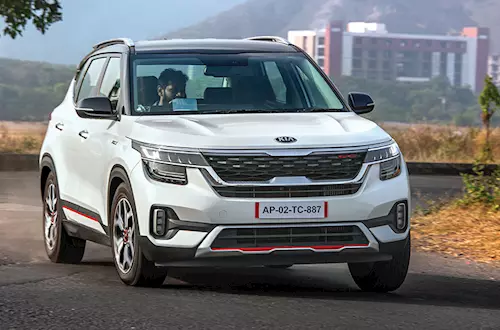
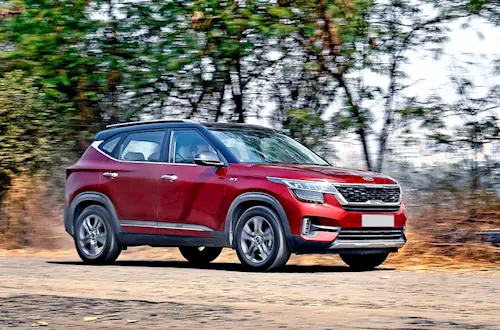
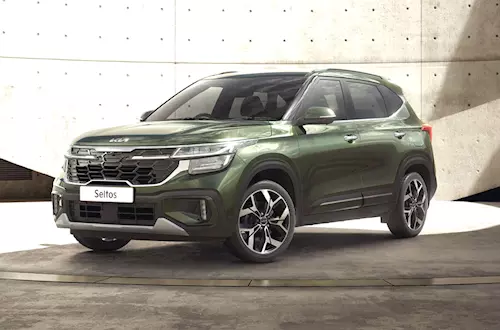
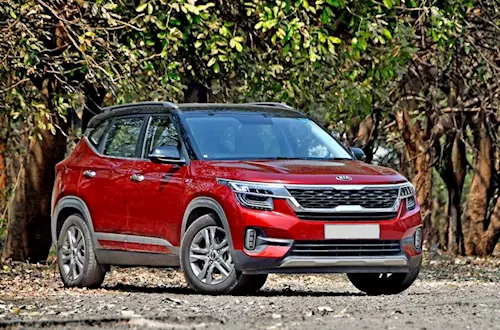
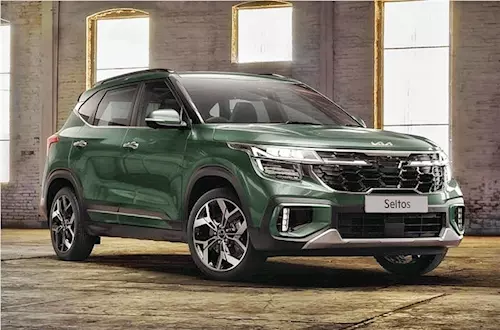
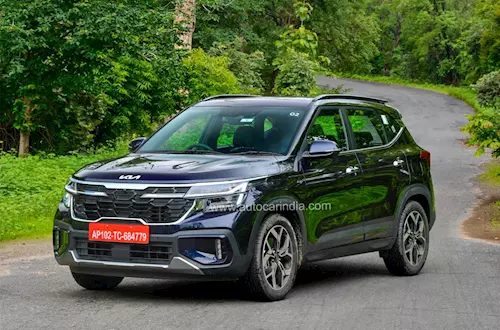
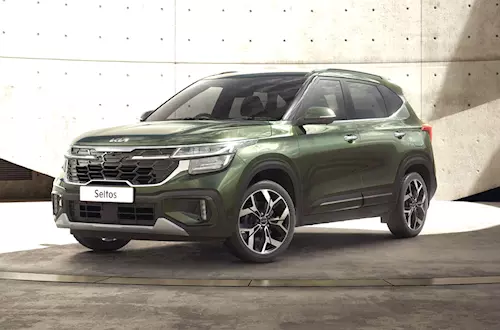
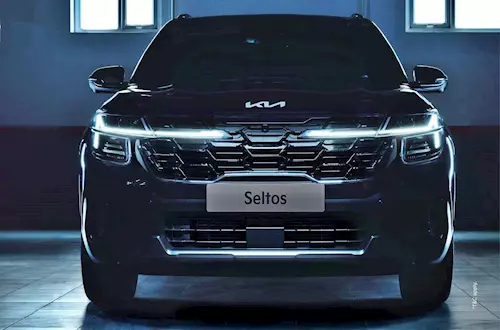
The new design is bold and introduces fresh Kia design traits, though it may not appeal to everyone. The increased size helps balance strong elements like the vertical DRLs that wrap onto the bonnet and fenders. The square-set headlights sit within a large gloss-black grille, which still features the Kia tiger-nose pinch but feels visually lost amid the loud styling.
The side profile gets chunky gloss-black cladding with body-coloured inserts, flush door handles, and 18-inch alloy wheels on GT Line variants with a geometric design and neon-painted brake calipers. The pinched glasshouse flows into the tailgate, creating a floating roof effect, while roof rails are purely decorative.
At the rear, the design is cleaner, with large vertical LED tail-lamps connected by a light strip. The tailgate has a wraparound look, and the spoiler neatly integrates the stop lamp and hides the rear wiper.
8.0
The cabin is new but retains familiar Kia elements, which is good. Fit and finish are very good, and while more soft-touch materials would have been welcome, high-quality plastics and texturing prevent the interior from feeling plasticky.
A single glass panel houses a 12.3-inch touchscreen, a 12.3-inch digital instrument cluster, and a 5.0-inch HVAC touchscreen, though the latter is partly obscured by the steering wheel. Thankfully, there are physical buttons and toggles for key functions. The touchscreen is slick, the 360-degree camera feed is sharp, and the instrument display is clear.
The new chunky steering wheel has well-placed controls, including buttons for drive and traction modes. Features include a Bose sound system, panoramic sunroof, wireless charging, ambient lighting, front cooled seats, and a powered driver’s seat with memory for seat and ORVM positions, including an adjustable entry-exit function. Missing features include an air purifier and rear cooled seats.
Safety equipment includes six airbags, ESC, downhill brake control, and a full ADAS suite. Lane-departure correction feels natural, though lane centring can feel intrusive on poorly marked roads. Crash-test ratings are yet to be announced.
7.0
Front seats are comfortable, but larger occupants may find them snug. The headrests are well designed for safety but lack side padding for those resting their heads.
Rear-seat legroom has improved significantly and will suit six-footers, while headroom is adequate. Three average-sized adults can sit abreast, and the seatback angle is adjustable. The seat base is comfortable but short for taller passengers, and lumbar support feels excessive. Rear AC vents and well-designed sun blinds help cooling.
Storage is good overall, though the glovebox is small. Boot space is a generous 447 litres with a flat floor and a full-sized spare underneath.
8.0
Engine options remain unchanged: a 115hp 1.5 NA petrol, a 160hp 1.5 TGDi petrol, and a 115hp 1.5 diesel, with the same gearbox choices as before. We sampled the automatic versions of the TGDi petrol and diesel.
The diesel remains refined, with muted noise and linear power delivery, making it a relaxed cruiser. However, it feels short on punch, even in Sport mode, and the torque-converter gearbox is slow to respond.
The TGDi petrol delivers strong, linear performance from 2,000rpm to the 6,200rpm redline. Refinement is good, and the dual-clutch gearbox is quick, though it can hesitate at low speeds.
8.0
Official figures are pending, but efficiency should be similar to before. Expect high single digits in city driving and 13–14kpl on highways for the TGDi, while the diesel should deliver 16–17kpl on highways and low double digits in the city.
8.0
While the suspension hardware is unchanged, the tuning is now comfort-focused. Bumps are absorbed well without harshness, yet body control remains tidy. High-speed stability is strong, and the car feels composed on uneven surfaces.
Steering weight varies with drive modes but lacks natural feel, especially in Sport mode. Brakes are progressive and confidence-inspiring.
8.0
The new Seltos isn’t a revolution and has some negatives like it lacks some features and the diesel feels underpowered. However, while not a revolution, it feels like a nice evolution of what was an already good car. It offers bold styling, more space, improved ride comfort, and a wide choice of powertrains. With sensible pricing, it should continue to attract strong interest.
Reviewed by: Sergius Barretto
Kia Seltos reviews

Kia Seltos comparison


Kia Seltos mileage
Kia Seltos mileage is yet to be officially confirmed. However, we've tested the petrol CVT version where it averaged 12.26kpl.
| Fuel type | Displacement | Transmission | Mileage |
|---|---|---|---|
| Petrol | 1497 cc | CVT | 16.5 kmpl |
| Diesel | 1493 cc | Manual | 19.4 kmpl |
| Petrol | 1497 cc | Manual | 16.5 kmpl |
Kia Seltos news
Kia Seltos Images
83 Images of the Kia Seltos highlight the SUV’s butch stance, ‘tiger nose’ grille, LED headlamps and tail-lamps, rear LED light bar, dual-tone alloy wheels, etc. Seltos interior shots show off its upmarket dashboard layout, premium materials, and comfort enhancing features.
Kia Seltos videos
Videos of Kia Seltos cover the midsize SUV’s ride comfort, handling, performance of petrol and diesel engines, smoothness of the automatic gearboxes, boot space, and safety features.


Kia Seltos Colours
The Kia Seltos colour options span 10 exterior shades. Dual-tone finishes are available for certain Seltos colours too. The Seltos interior gets multiple colour schemes to choose from namely black and grey, brown and grey, black and white and black and green.
Kia Seltos FAQs
Yes, the Seltos comes with a 1.5-litre diesel engine.
No. The Kia Seltos variants did not get a CNG option from the factory.
The Seltos is 4.46 meters long, 1.83 meters wide and 1.63 meters tall.
The Seltos gets three automatic gearbox options: a CVT for the petrol, a DCT for the turbo-petrol and a torque converter for the diesel.
Kia Seltos fuel tank capacity is 50 liters.
Seltos has a ground clearance of 190mm.
Kia Seltos petrol mileage is expected to range between 15kpl to 18kpl.
The Kia Seltos mileage is expected to range between 15kpl and 19kpl, depending on the engine and gearbox combination.
Kia Seltos price starts at Rs 10.99 lakh and goes up to Rs 19.99 lakh (ex-showroom).
Kia Seltos diesel mileage is expected to be in the 16kpl to 19kpl range.
Seltos has a boot space of 447 litres.
The Kia Seltos gets 1.5-litre petrol, 1.5-litre turbo-petrol, and a 1.5-litre diesel engine.
The Kia Seltos comes standard with 6 airbags across all its variants.
No. The Kia Seltos is a 5-seater car.
The Kia Seltos rivals the Hyundai Creta, Mahindra XUV700, Maruti Grand Vitara, Toyota Hyryder, Skoda Kushaq, and the Volkswagen Taigun in India.
The Kia Seltos petrol base model is priced at Rs 10.99 lakh ex-showroom.
The Kia Seltos turbo-petrol top model price is Rs 19.99 lakh (ex-showroom)
The Kia Seltos diesel top model price is Rs 19.99 lakh (ex-showroom).
The Kia Seltos base model on-road price is Rs 13.01 lakh
The Kia Seltos top model on-road price is Rs 23.94 lakh
Questions you may find useful
Rahul Rajbhoj
•3dIs the Seltos Turbo DCT a good option, or should I go for the Seltos Diesel automatic for a monthly driving of about 800 km to 1000 km. My driving includes 80% city and 20% highway usage. I am concerned about the DCT being a dry clutch and the Diesel DPF issues. Please suggest the best option for my usage. The most important factors for me are comfort, performance, and safety.

Autocar India
The concern around the dry clutch DCT is valid. In heavy crawling traffic, it can feel a bit jerky and it is not as seamless as a torque converter automatic. But in everyday ownership, it is still a perfectly liveable gearbox if you drive it as intended and do not constantly creep aggressively in bumper to bumper traffic. The upside is that you get strong performance, a punchy engine and an engaging drive.The bigger concern for your usage is actually the diesel. With 800 to 1,000 km a month and 80 percent city use, you are entering the zone where DPF related issues can become a bigger ownership concern, especially if most of those city runs are short stop go commutes. Yes, your highway usage helps, but if peace of mind is what you are after, the DCT is actually the less worrying choice here.That said, if your absolute priority was smoothness and fuss free city comfort, the ideal recommendation would actually be the Seltos IVT, because that gearbox is far better suited to urban use than either of these. But since performance is one of your key requirements, the naturally aspirated IVT loses its edge.So between your two options, we would choose the turbo DCT. It may be slightly less polished at crawling speeds, but it is livable, enjoyable and for your usage pattern, the safer long term bet versus worrying about diesel DPF issues.
Adarsh Suman
•3dI’m planning to buy a new car (budget ~₹16L), and I’m confused between the Hyundai Venue HX6 DCT (1.0 turbo petrol) and the Kia Seltos HTK 1.5 NA petrol manual. My usage is roughly 50% city and 50% highways, with occasional road trips carrying 5 people. I currently drive a 2019 Dzire manual, and I’m comfortable with manuals-I actually prefer downshifting for overtakes and like having some pickup on demand. During test drives, I noticed turbo lag in the Venue at low speeds, while the Seltos manual felt smooth and linear, but I couldn’t really test it properly at higher speeds due to traffic. I also took a test drive of the Seltos IVT, but I felt it might lack during highway overtaking, especially with full load, so I’m leaning more towards the manual with the 1.5 NA engine. My main questions are: Will the Seltos 1.5 NA manual feel underpowered on highways with 5 people + luggage during overtakes? Is the IVT actually capable enough for highway overtakes, or does it start feeling strained with full load? In the long run, which would be the better choice for my usage between these two?

Autocar India
With a 50-50 city-highway mix, some 5-person trips, and a Rs. 16 lakh cap, the Kia Seltos HTK 1.5 petrol manual is the stronger fit than the Hyundai Venue 1.0 turbo with the automatic (DCT). It gives you more space for people and bags, and the smooth, linear power works well with your habit of downshifting for quick overtakes.Will the Seltos 1.5 manual feel underpowered when loaded? Yes, but this can be overcome by using the gears. At 70-100 kph, a shift to 4th gives enough pull for safe passes. It won’t jump forward like a turbo, so start the move a little earlier on hills or when fully loaded.Is the Seltos IVT capable? Yes for cruising and single-car passes, but with five on board, it will hold high revs and sound loud. It does the job, but responses are softer than the manual, so you may miss that direct control and pickup you enjoy.Over the long run, the Seltos 1.5 manual suits your use better. It avoids the low-speed lag you felt in the Venue, is less fussy in traffic than a DCT, and is simply the better 5-person car.
Venkat
•3dMy monthly running is around 500 km only. Is it worth opting for a hybrid, or should I consider another car in a similar price range that offers better features which I may not get in a hybrid at the same cost?

Autocar India
With about 500 km a month, a strong hybrid is usually not worth the extra price. In your case, pick a well-equipped petrol automatic instead; something like the Kia Seltos 1.5 petrol IVT or 1.5 turbo-petrol DCT, which come with the latest features.At this low monthly use, the fuel you save with a hybrid will take a very long time to cover the higher price. A modern petrol automatic is smooth enough in traffic and still uses a sensible amount of fuel for 500km a month. More importantly for you, the same money can get more features in the petrol version than in a hybrid at the same price, like a 360-degree camera, six airbags, a better sound system, and connected tech that some lower or mid hybrid trims may skip.Know the trade-off: a petrol will use more fuel in heavy traffic and is not as silent as a hybrid at low speed.
VR Reddy
•3dDear Ask Autocar Team, I am 62 years old, 5’11” tall, and currently suffering from sciatica/lower back pain. I am looking for a comfortable automatic car, mainly for city driving and occasional highway trips. My priorities are: Easy ingress and egress without bending too much Comfortable seats with good lumbar and thigh support Soft suspension and comfortable ride quality Automatic transmission for relaxed driving Good visibility and driving position Reliable long-term ownership My budget is under ₹20 lakh on-road. I would also prefer modern safety and convenience features such as: 360-degree camera ADAS features, if available in this budget Could you please suggest the most suitable cars for my condition and age?

Autocar India
Mostly city use with a sensitive lower back and an under Rs 20 lakh cap points to a taller, easy-to-drive automatic. The Kia Seltos 1.5 petrol IVT HTX (A) fits this brief best. The seat height makes getting in and out simple without bending or climbing. So, the ride is soft at low speeds, thanks in part to this variant's smaller 17-inch wheels, so your back gets less shock from broken roads, and the automatic moves smoothly in traffic. You sit upright with a clear view out, the steering is light, and the 360 camera takes the stress out of parking. What's more, this should just about fit in your budget, and it gets you ADAS features as well. Kia’s wide service network helps with easy, reliable ownership over many years, too. The other good option is a Hyundai Creta, but getting these features will require you to move to a top-spec variant only, which is out of your budget. You could also consider the Maruti Suzuki Victoris 1.5 petrol AT, which offers even lower running costs but is not quite as comfortable as the Hyundai or Kia.
sudip
•3dI am planning to buy the Kia Seltos Petrol Automatic, most likely the HTX (A) variant considering the availability of the 360-degree camera. However, I am confused between the IVT and DCT engine options. I like the performance of the turbo engine, but I am unsure about the suitability of the DCT gearbox in Bangalore traffic. On the other hand, while the IVT may be better suited for crawling traffic conditions, most video reviews mention that it feels underpowered. Please suggest which option would be better for my usage.

Autocar India
Bengaluru’s slow, stop-start traffic and your need for the 360-degree camera point you to the Seltos HTX automatic with the IVT. It suits daily city use better because it moves off the line smoothly and crawls along without any fuss. You won’t feel that slight jerk or hesitation you can get with the Turbo DCT at very low speeds, and there’s less worry about heat and clutch wear when traffic barely moves. Power-wise, the 1.5 petrol with the IVT feels fine in the city and light highway runs; use the Sport mode when you need a quick overtake and it responds cleanly.The trade-off is clear: the Turbo-DCT is quicker and more fun on open roads, but in packed Bengaluru traffic it can feel a bit hesitant. If most of your driving shifts to highways with a full load, then the Turbo-DCT is worth it.Overall, for your usage, pick the HTX IVT.
Yatin
•4dHi, I’m planning to buy an automatic petrol SUV and I’m confused between these two options: Kia Seltos HTK(O) IVT Petrol and Hyundai Venue HX8 DCT Petrol. The on-road price difference is around Rs 3 lakh, so I want to understand whether the Seltos is truly worth the extra cost. My typical usage includes office commuting twice a week, with a one-way travel time of about 1 hour 15 minutes, mostly in city traffic. I also do weekend trips with my wife and occasional trips with family or friends, usually with 4-5 people. The only factor strongly pushing me towards the Seltos is the panoramic sunroof. However, I currently drive a Punch, so I am a little doubtful about handling the Seltos’ size in city traffic.

Autocar India
The reason is simple. Your driving is largely city traffic with occasional family use, and in that scenario, the Seltos’ naturally aspirated petrol with the IVT automatic is the more relaxing and long-term friendly package. The Venue’s 1.0 turbo DCT is peppier and quicker, but in heavy stop-and-go traffic like your 1-hour 15-minute office commute, a DCT is not the ideal transmission if smoothness and peace of mind matter. Hyundai itself positions the Venue turbo with the 7-speed DCT, while the Seltos IVT is Kia’s smoother CVT-style automatic option.The Rs 3 lakh premium is not just buying you a panoramic sunroof. You are also getting a significantly larger and more comfortable cabin, much better rear seat space for family use, a more substantial boot and a car that simply feels a segment above the Hyundai Venue. Since you already own a Tata Punch, the Venue will not feel like a dramatic step up in size or cabin experience, whereas the Seltos will.On the length concern, yes, the Kia Seltos is noticeably bigger than your Punch, and for the first few days in city traffic, you will be conscious of that. But, this is something most drivers adapt to very quickly, especially with a rear camera and parking sensors. It is not large enough to become a burden in everyday urban use.So the real question is whether you value the extra space, comfort, and smoother automatic enough to justify Rs 3 lakh. For your usage, especially with regular traffic and occasional full family trips, we would say yes, the Seltos is worth it. If your use was mostly solo city driving and budget mattered more, the Venue would make more sense.
Anil
•4dI am confused between the Hyryder E MT and the Seltos HTE. Toyota is offering the 2025 Hyryder at an on-road price of ₹10.5 lakh. However, there is no discount on the Seltos, which costs ₹12.5 lakh. What should I choose?

Autocar India
At Rs 10.5 lakh on-road, the Toyota Urban Cruiser Hyryder looks like a strong deal. You get Toyota’s reliability, strong resale confidence, good fuel efficiency and a comfortable family SUV package. The naturally aspirated petrol is smooth and easy to live with, though not exciting.The Kia Seltos HTE at ₹12.5 lakh gives you a more premium feeling cabin, a more substantial road presence and a more upmarket overall experience. But the HTE is still a lower variant, so you are paying a noticeable premium without getting the richer equipment that makes the Seltos really shine.Purely from a value perspective, the Hyryder makes much stronger sense here. The only reason to stretch to the Seltos would be if you specifically prefer its design, cabin ambience and larger car feel enough to justify the extra spend. Otherwise, at a Rs 2 lakh saving, the Toyota is the smarter buy.One thing though, do a proper pre-delivery inspection, check VIN, tyre manufacturing dates and battery health before signing, since it is stock clearance.
NIPEN
•4dHello, I have a budget of around ₹18 lakh and am looking for a petrol car that will be used mostly for city driving (around 90%) and occasional highway trips (around 10%), usually once or twice a month. My approximate running is around 500 km per month. I am currently inclined towards the Kia Seltos HTX Automatic and the Toyota Hyryder NeoDrive V AT. I have two questions. Firstly, considering my usage and budget, which one would be better for long-term ownership and a comfortable driving experience? Secondly, which SUV is more reliable in terms of after-sales service and maintenance costs? Please advise.

Autocar India
Both are excellent choices, but do bear in mind that the on-road prices of both SUVs would work out to over Rs 19 lakh. As for picking between the two, we would lean more towards the Kia Seltos HTX 1.5 IVT. It's the newer and more modern option with more advanced onboard tech, it is larger and has a far more spacious cabin with comfier seats and higher-quality materials, and its 1.5-litre petrol engine is more powerful than the Toyota's, which will come in handy both around town and on your occasional highway trips. Though the Hyryder is comfy enough, the new Seltos is comfier still and feels more stable at higher speeds too. In terms of long-term ownership, both SUVs should have good resale value, and Kia and Toyota offer a strong aftersales and service experience. What works in Urban Cruiser Hyryder's favour is, its slightly lower maintenance costs from the Maruti-sourced powertrain, and better fuel efficiency too. On balance, however, we feel the Kia Seltos is the better all rounder, and the one you should pick.
AVINASH PARWANI
•4dI have booked the Kia Seltos turbo DCT. My monthly running is around 900 km, mostly in Chennai traffic. Should I wait for the hybrid version? Is it expected soon? Also, how much price difference can be expected between the turbo-petrol and the hybrid?

Autocar India
The Kia Seltos hybrid, as well as the new-generation Hyundai Creta with the hybrid tech, are both expected to arrive next year. If you can wait until then, it would be better to do so, as the hybrid would be far more fuel-efficient. As for the price difference, it's hard to pinpoint right now, but expect to pay about Rs. 50,000 extra over a turbo-petrol automatic.Thus, if the wait time and the premium are not ok with you, stick with the Kia Seltos. However, given that you are mostly driving in traffic, remember that a turbo petrol would not be very efficient, and for heavy, slow traffic, the DCT can feel a bit hesitant at crawling speeds and can run warm in long jams. The Seltos with the naturally aspirated 1.5-litre petrol with CVT is better suited to your use, as its smoother in the city, would be more fuel-efficient and would potentially be more reliable too.
SUNIL NAIR
•4dI have been using a Hyundai Grand i10 for the last 10 years. My usage is around 60% city and 40% highway. I want an automatic variant, and my budget is between Rs 20-25 lakh. I have looked at the Creta, Seltos, Harrier, and XUV 7XO. I plan to keep the new car for at least 5-7 years. I prefer a car with more dashboard features like the Seltos and 7XO, along with strong service support and maximum features for the driver and co-passenger.

Autocar India
Given your 60% city and 40% highway usage, with a budget of Rs 20-25 lakh, the Kia Seltos petrol CVT automatic suits your requirements very well. It is easy to drive in town, the 115hp, 1.5-litre petrol engine is refined, the CVT automatic is smooth in traffic, and feels steady on the highway. More importantly for you, it is packed with technology and convenience features. You get twin screens, a clear 360-degree camera, ventilated front seats and ADAS features, and Kia also has a strong service network in most cities.Two things to note: it won't have the performance of the turbo petrol, and the back seat is not as wide as the Tata Harrier or 7XO if you often seat three adults. If you want a more powerful and a bigger car, look at the Mahindra XUV 7XO petrol automatic, although the variant with the features you want may stretch beyond your budget. Overall, the Seltos lines up best for your needs and features focus.
Kia Seltos price in India
Latest Cars