
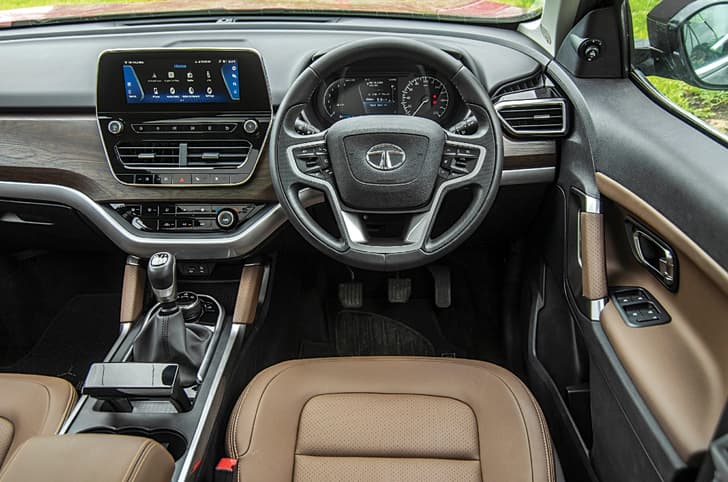
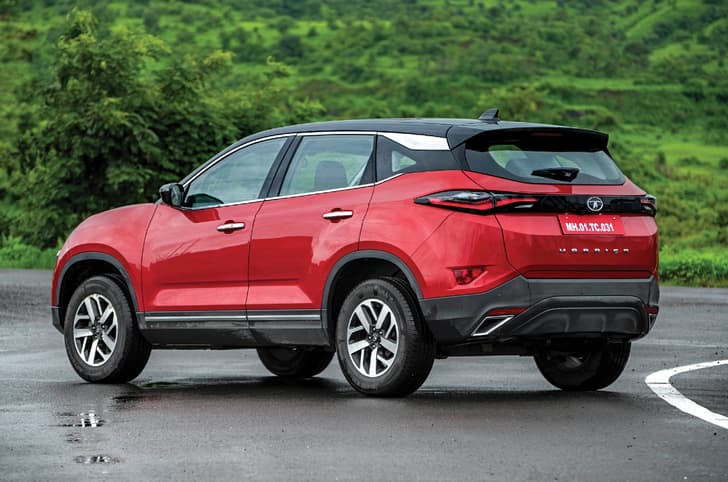
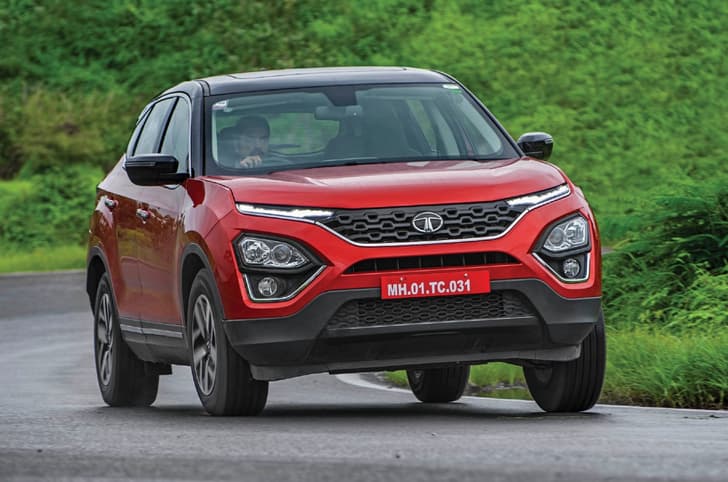
On the face of it, the Tata Harrier has everything that an SUV buyer in India is looking for – imposing road presence, ample space and comfort, a diesel engine and, finally, a much-needed automatic transmission. The 2020 Harrier also gets more power, a panoramic sunroof and other features to enhance its appeal. With a lot more thrown into the latest Harrier, it’s certainly a step forward from the 2019 model. But how big is that step? That’s the question we answer in this full-blown and fully instrumented road test.
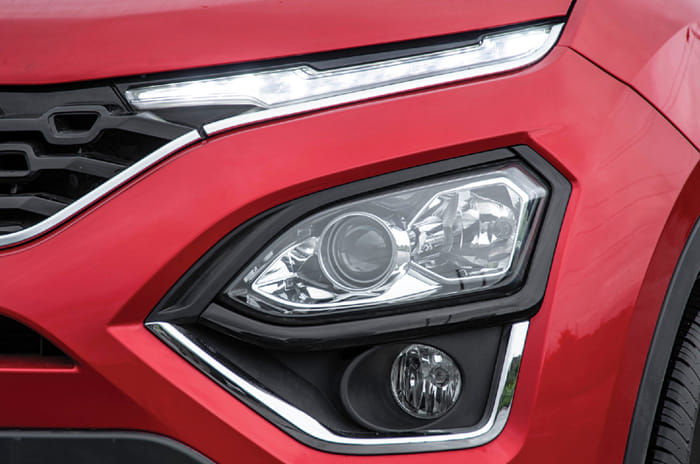
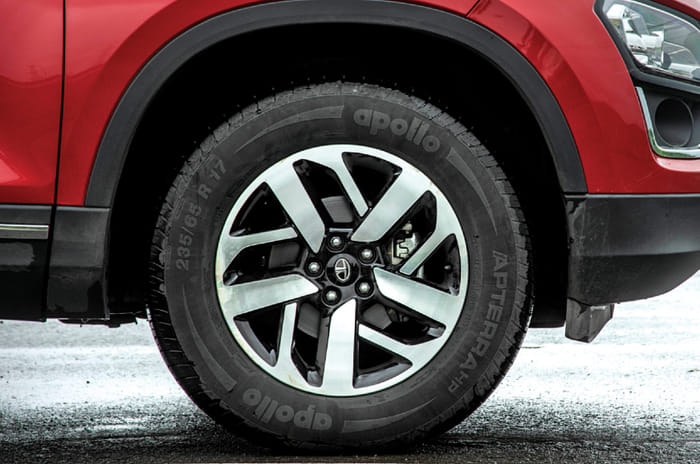
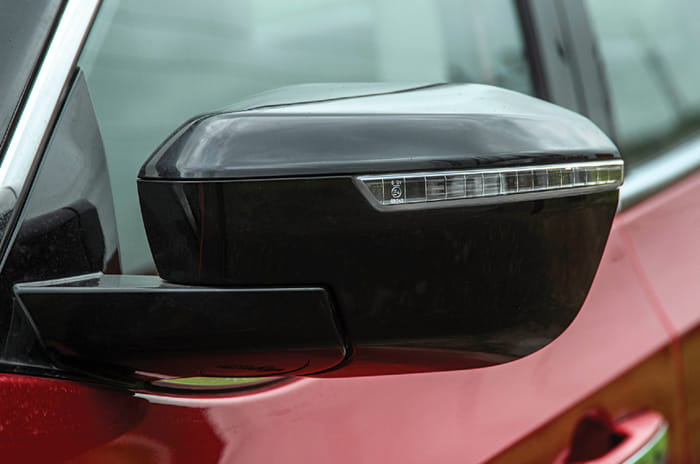
With its sizeable footprint and striking design, the 2020 Harrier, in its new ‘Calypso Red’ paint shade, doesn’t fail to turn heads. While there aren’t many changes to its styling, what’s new are the dual-tone 17-inch alloy wheels, which though of the same size, appear far more premium than the earlier set. Another crucial change are the redesigned door mirrors, which are now shorter in height and therefore don’t create as much of a blind spot as before.
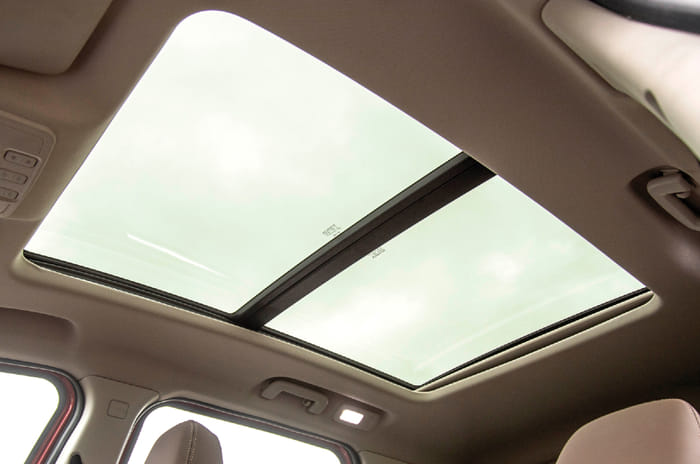
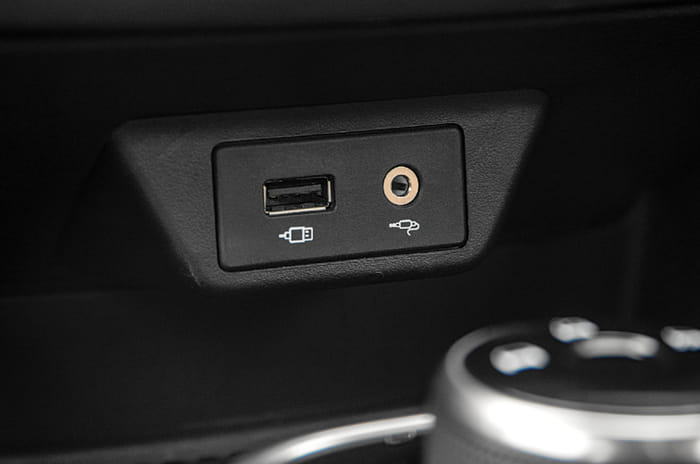
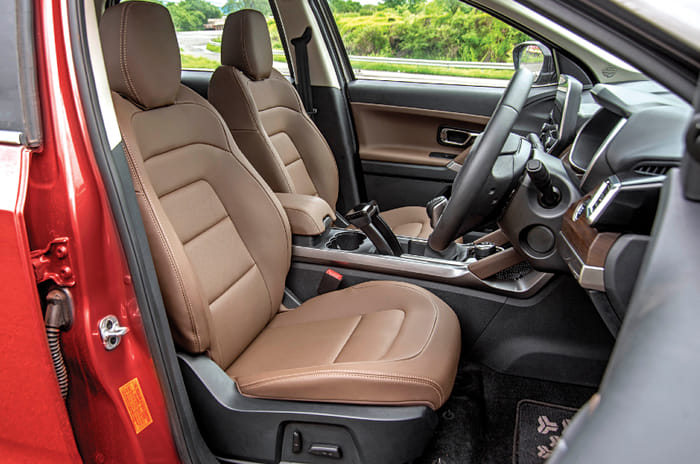
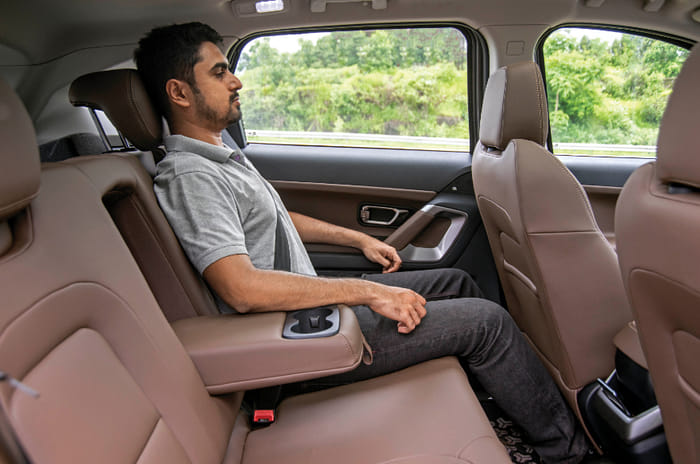
The plush, spacious interiors remain largely unchanged, but the cabin welcomes you with a massive panoramic sunroof on the top-spec car, which elevates the premium feel by several notches. A smaller, yet significant change is that the USB port for the infotainment system is much easier to access than before (a criticism we had in the past). These aside, there is no other change to the interior, which remains a comfortable place to be in.
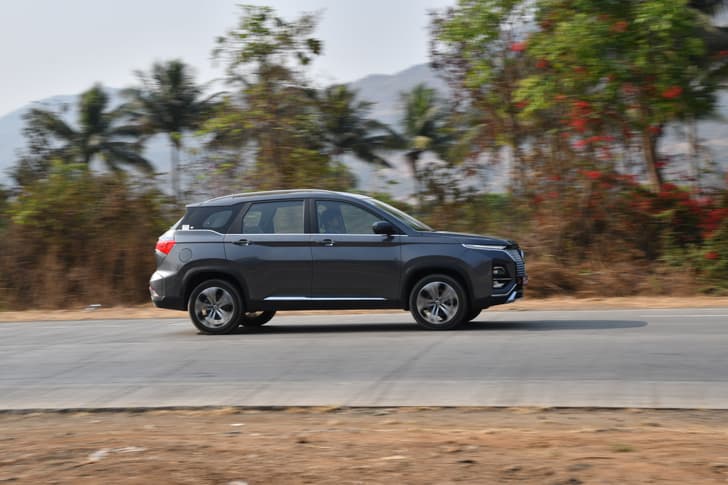
For this 2020 update, Tata engineers have tried to improve the Harrier’s NVH (noise, vibration, harshness), which was one of the sore points of the 2019 version. The engine mounts have been softened for better absorption of vibrations, additional sound insulation has been used, and the injection timing of the BS6 engine has been recalibrated for more progressive combustion, thereby reducing the harsh diesel clatter. Our sound meter did indicate lower decibels at idle, but the diesel rattle is still audible inside the cabin, and it becomes louder with an increase in engine speed. Road noise too is on the higher side. Vibrations have been reduced, but some still filter through the pedals, steering wheel and gear lever. Refinement, overall, is still not as good as the MG Hector, which is considerably quieter with fewer vibrations, despite using the same engine.
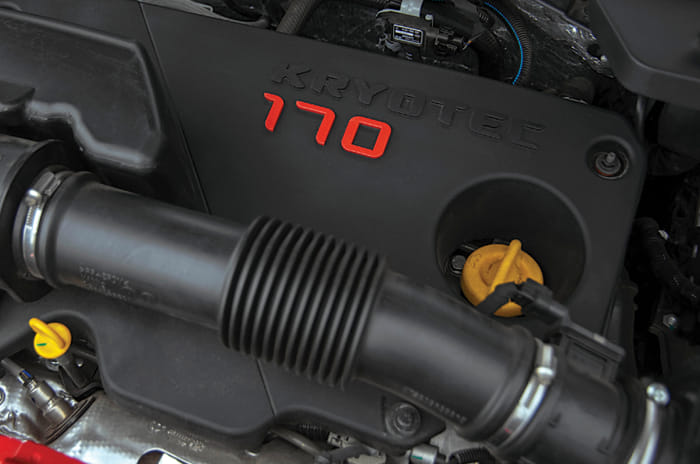
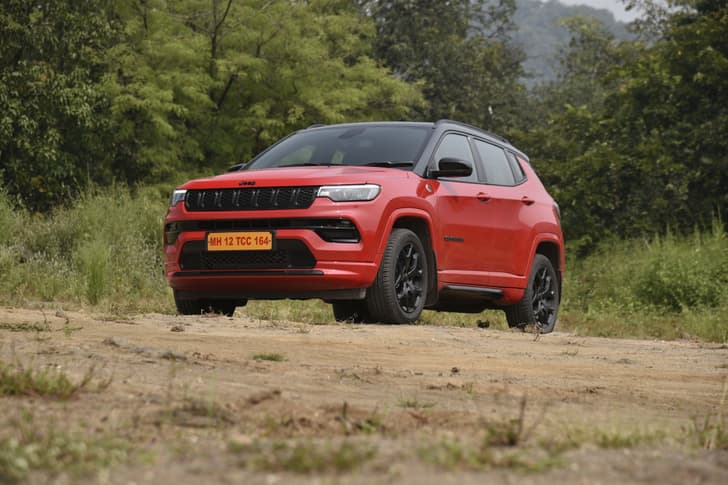
Speaking of which, it is the same FCA-sourced 2.0-litre diesel engine as before, dubbed ‘Kryotec170’ in this BS6 avatar. Power has been bumped up by 30hp to 170hp thanks to a new, larger turbocharger, so it now makes as much power as the Hector and only 3hp less than the Jeep Compass, which also uses the same engine. The Harrier’s torque output remains unchanged, so all the three cars sharing this engine make an identical 350Nm of torque.
Tata has tuned this diesel engine rather well, and it is very drivable, with turbo lag being nicely contained. The additional 30hp can be felt once the turbo spools up past 1,800rpm, after which there is a noticeable step up in performance and a strong surge of torque to the front wheels. This engine’s sweet spot lies in the mid-range and it feels strongest between 1,800 and 3,500rpm. Because of the loud clatter beyond 3,000rpm, you will be happier upshifting early. But if you prod even further, the revs climb till 4,200rpm, after which there is a momentary pause as though you’ve hit a wall, and then the tachometer needle rises further, till its 5,000rpm redline. The Harrier’s top-end performance in the last 1,500rpm of the rev band isn’t as punchy as the freer-revving Compass, which has been calibrated for a stronger top end. The Tata’s clutch, however, is lighter than the Jeep’s, and though a bit more progressive than before, it’s still a bit snatchy. The manual gearbox has well-defined gates, but the shift isn’t as slick as the Compass’ 6-speeder.
Like before, there are driving modes on offer – Eco, City and Sport – but the difference in performance between them isn’t as apparent, especially under hard acceleration or heavy engine load. The outgoing Harrier had its max revs restricted in Eco and City, compared to a slightly higher revving Sport mode. In this version, however, that isn’t the case, and in all modes, it revs till 5,000rpm in the lower gears. What’s noticeable is, at part-throttle in Eco mode, the engine feels less eager and the accelerator pedal offers a bit more resistance, compared to Sport.
Owing to the stronger performance, flat-out acceleration from 0-100kph has improved by 2.3sec and 1sec, respectively, in City and Sport modes, compared to the 140hp version. However, the improvement in Eco mode is drastic – nearly 4sec quicker than before, at 13.22sec. In-gear acceleration times have marginally improved in fifth and sixth gears, but performance remains near identical in the first four gears.
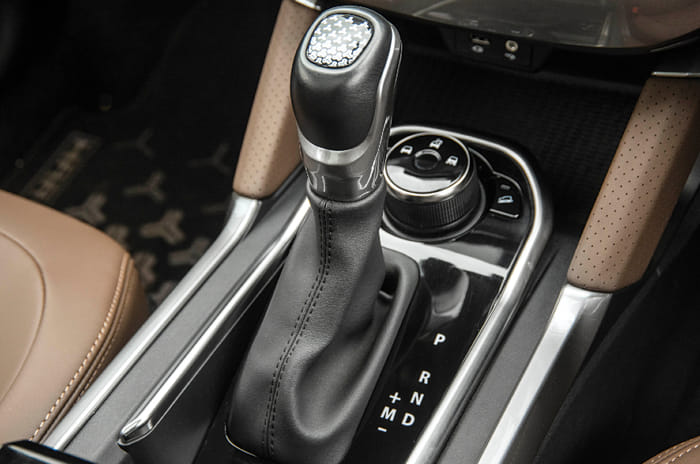
Recently added to the Harrier’s range is a Hyundai-sourced 6-speed automatic, driven by an old-school torque converter. This transmission gives a much-needed dose of convenience with its smooth and seamless character. This gearbox doesn’t disappoint, provided you don’t expect shifts to be as quick as you’d get from a dual-clutch auto (or even the Hexa’s torque converter, for that matter). The Harrier auto ambles around lazily and it will even keep the engine below 2,000rpm for the most part, adding to a sense of calm into the cabin. Some peculiarities in the way this auto-box behaves are that it continues to carry the same amount of speed for a short while after you lift off the throttle, and it will automatically shift up a gear while going downhill, even without any throttle input, which can get unnerving.
While there are no gearshift paddles, flick the lever to the left and it engages ‘Sport Manual’ mode. You can shift manually this way, but the lever’s sticky action takes away from the joy of tapping through ratios, and it doesn’t support aggressive downshifts either. Even in manual mode, it upshifts automatically at max revs, and will also downshift automatically if the revs fall too low.
Here’s a tip – if you are in a hurry, or want to extract the quickest times out of your Harrier automatic, leave it in ‘D’ in ‘City’ mode, as it performs the best this way. It’ll upshift optimally and keep the motor in the meat of its power band at all times. As with the manual, there are drive modes here too, and it is only at part throttle where the differences are noticeable. Stomp on the accelerator and under heavy engine load, all three modes perform the same way, delivering full performance. Interestingly, the Harrier automatic is almost as quick as the Compass diesel with its 9-speed automatic, be it from 0-100kph with is 11.75sec (versus 11.4sec), or from 20-80kph which is 6.82sec (versus 6.66sec).
Broken roads that would make some of its competitors wince are a piece of cake for this hardy Tata SUV. Its Land-Rover-derived underpinnings give it a sense of toughness and solidity that you’d otherwise get only from some body-on-frame SUVs. For this version, the suspension mount point stiffness has been altered to reduce component sounds inside the cabin. The large, 235mm-wide tyres do well to iron out tinier road imperfections and dismiss potholes. But, being on the firmer side, the suspension doesn’t deal with sharper bumps as nicely as the MG Hector does, and like the earlier version, passengers seated at the back especially will feel more of the road shocks. The manual version feels a bit tauter and more composed than the automatic, and while both variants are well behaved on the highway, neither feel as rock-stable as the Jeep Compass.
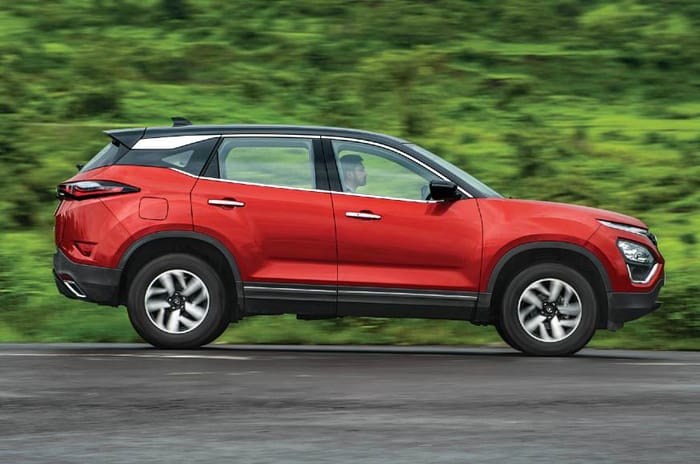
With its wide track, firm suspension and wheels pushed to each corner, the Harrier does boast of a solid mechanical grip, and even its handling and body control really impress. Its steering is chunky to hold, but piloting this SUV does require some effort, as the hydraulically assisted power steering is on the heavier side, particularly at low and parking speeds. This heft does offer a degree of confidence at high speeds, but the manual’s steering especially feels a bit too sharp and sporty for this SUV, with no free play at the straight-ahead position. Its brakes require a firmer press than usual to shed speed, and still lack a strong bite (as reported in our earlier road test), and the pedal feel isn’t very confidence-inspiring.
An area where the Tata Harrier has improved is fuel efficiency. In its BS6 avatar, with 170hp to boot, the manual Harrier returned 10.8kpl in the city and 15.3kpl on the highway, an improvement of 1kpl and 1.1kpl, respectively, over the 140hp version. Interestingly the manual’s gear ratios are identical to the outgoing version. The automatic version managed a rather respectable 9.6kpl in the city and 14.36kpl on the highway.
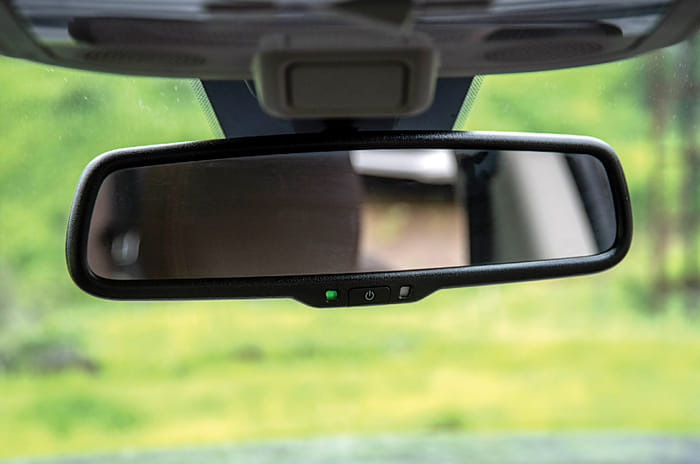
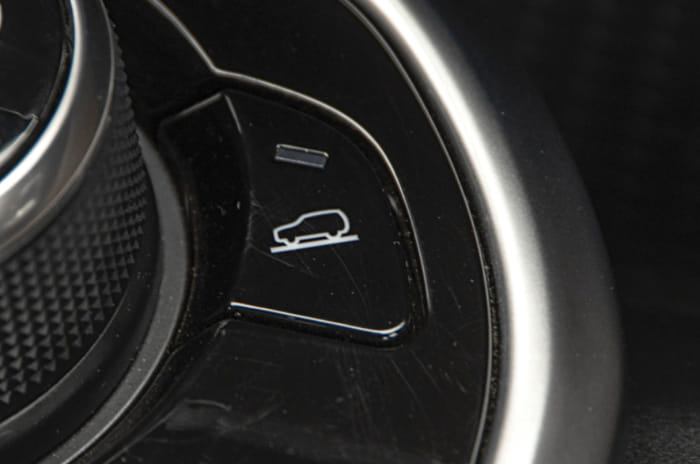
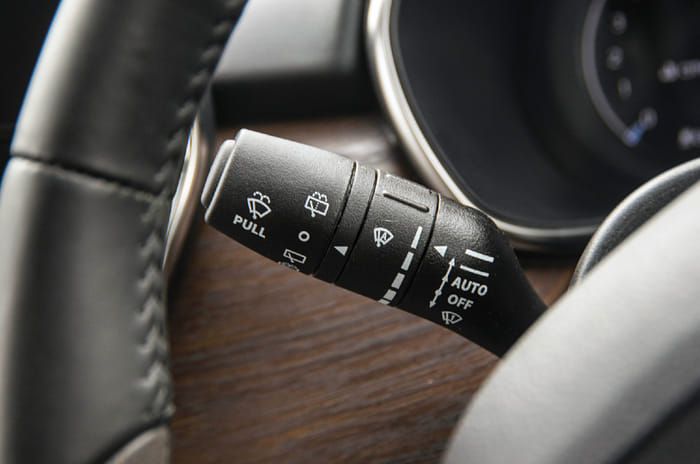
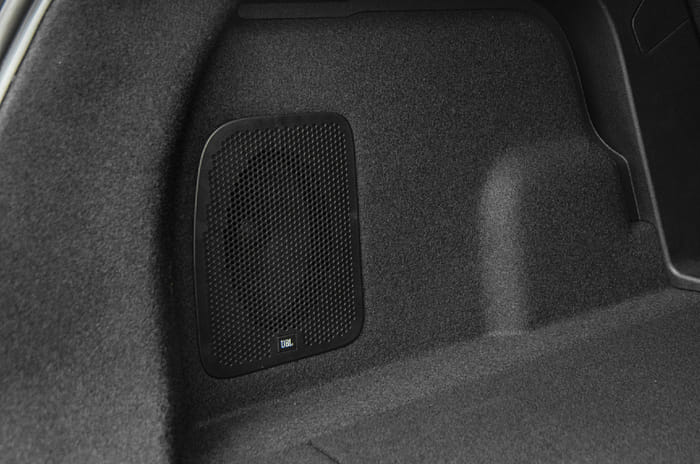
New equipment on the 2020 version includes electric adjustment for the driver’s seat, an auto-dimming inside mirror and the rain-sensing panoramic sunroof. As before, you get ESP, hill-start assist, hill-descent control, six airbags, Xenon projector headlamps with LED DRLs, leatherette upholstery, a part-colour-screen instrument cluster, drive modes (Eco, City, Sport), Terrain Response Modes (Normal, Rough, Wet), auto headlamps, rain-sensing wipers, cruise control and an 8.8-inch touchscreen with Android Auto and Apple CarPlay, and a nine-speaker audio system from JBL. Stuff like LED headlamps, 360-degree cameras, connected-car tech and a powered tailgate are features we’d have liked to have seen on the Harrier, all of which are available on the MG Hector.
The Harrier’s updated diesel engine offers better performance as well as improved fuel efficiency (manual), over the outgoing version. But while it is quieter than before, this diesel is still quite clattery, and the overall refinement falls short of class standards. What’s nice are the new panoramic sunroof and additional equipment, which lift the cabin experience. Spec-for-spec, the Harrier is pricier than its key rival, the MG Hector, by as much as Rs 1 lakh, but the real ace up the Tata’s sleeve is its diesel-automatic configuration, which gives it an edge over the MG, as well as the much more expensive Jeep Compass. This 6-speed automatic is smooth, seamless and the answer to what the majority of Harrier buyers were looking for. The addition of an automatic and extra features builds on the Harrier existing strengths to make it a complete SUV and a far more compelling buy.

 Lenny D'sa
 Sergius Barretto
 Saumil Shah
 Soham Thakur
 Nikhil Bhatia