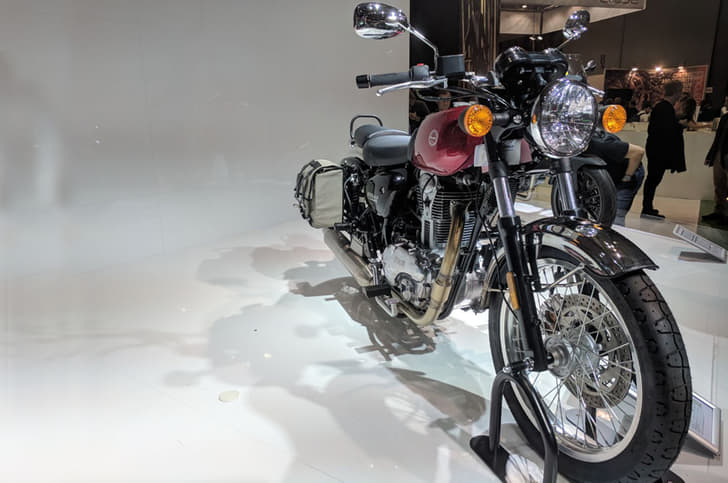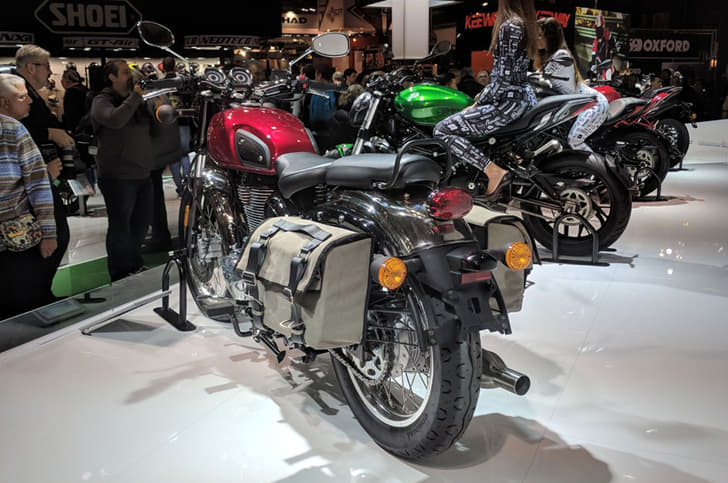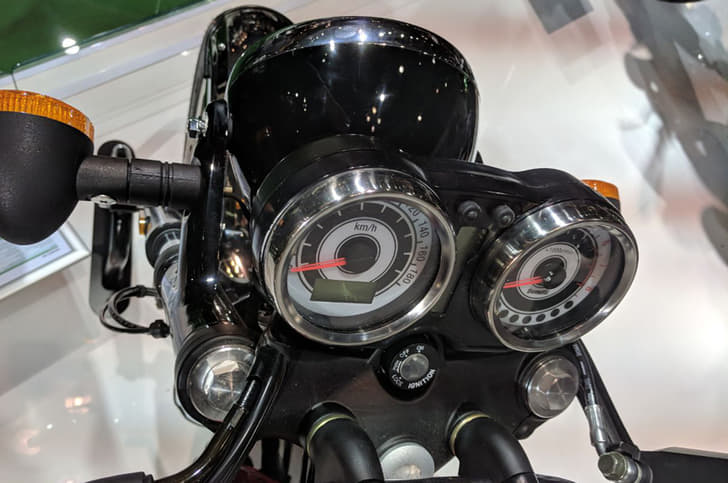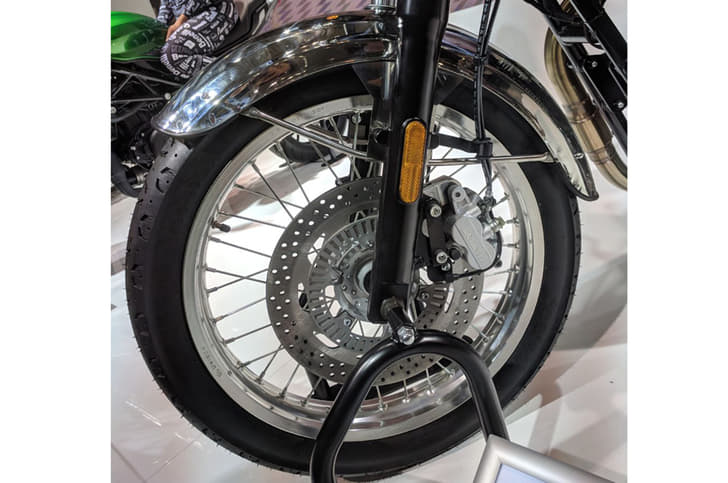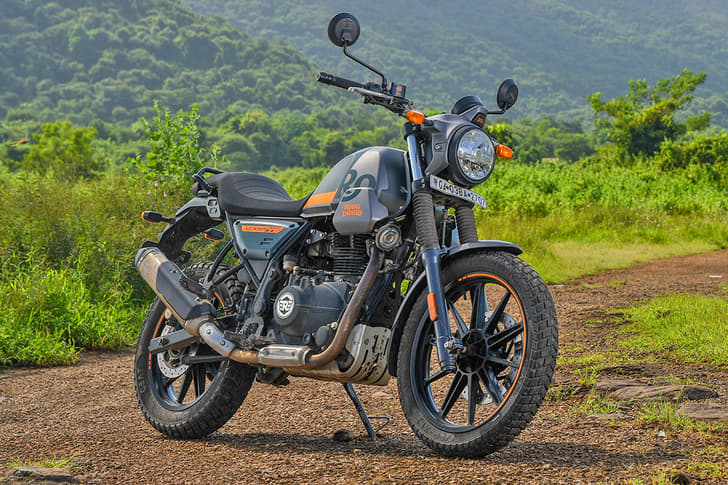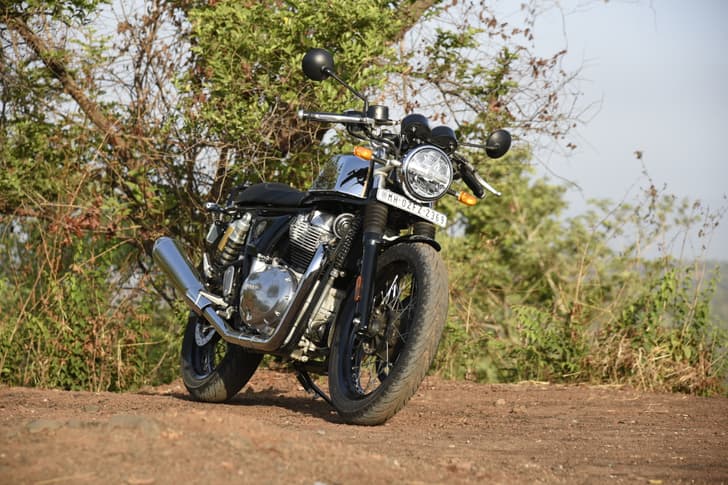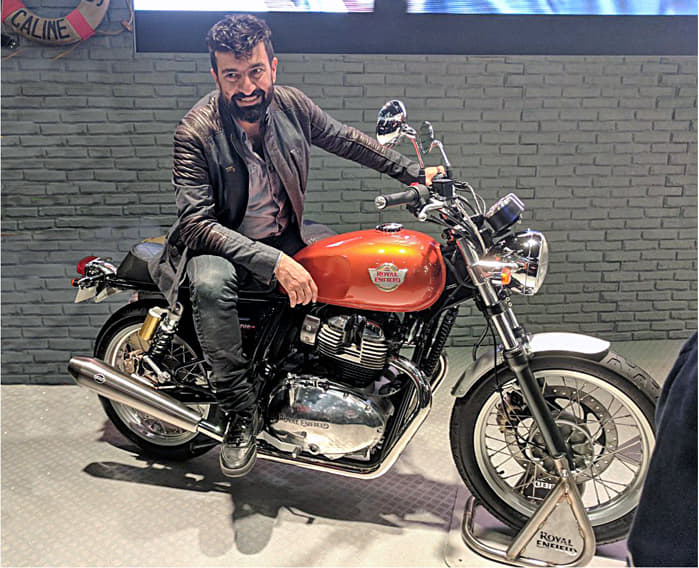
Royal Enfield made headlines at EICMA 2017 in Milan with its new Interceptor 650 INT and Continental GT 650, both powered by the new 648cc, four-stroke, air-cooled, SOHC, parallel twin-cylinder engine developed by the UK Technology Centre and Chennai teams. CEO Siddhartha Lal tells us what went into developing the new platform, the heightened focus on quality, learnings from the Himalayan, and why you shouldn’t think an electric motorcycle is beyond the company.
How vital is the UK Technology Centre to Royal Enfield?
It is very important with regard to getting what we want from the brand. The centre was not set up to create a halo around the brand. If it does, that's brilliant and we'd be delighted, but that's not the purpose. The purpose is that we make awesome motorcycles through this facility.
We needed the competencies t we weren't getting in India. We do have superb capabilities in India but we don't have it all. There are very few people who understand the design and development of, let's say, a higher-powered (not high-powered, but higher-powered) motorcycle. That's not just in terms of the engine but things like chassis dynamics, design and sophistication and, to some extent, maybe even industrial design. So, it's really important.
There's a tech centre coming up in India too. How do you strike the balance between the UK and home?
What we're doing in India is building physical infrastructure and bringing together all our engineers who were housed in various buildings around Chennai. The balance between the UK and India already exists. The core team was always based out of India and all the products we've developed have come from India. Then, we hired a UK team and have been building it.
As it happens, the global product heads sit in the UK but they all have teams back in India and are working seamlessly with them.
The UK team can't do much independently because they rely tremendously on India for design, detail design, validation and all the long hours on the dynos that happen in India. There's a lot of back and forth, so we travel a lot between the two countries.
How will the Tech Centre impact the existing model line-up and how long will it take?
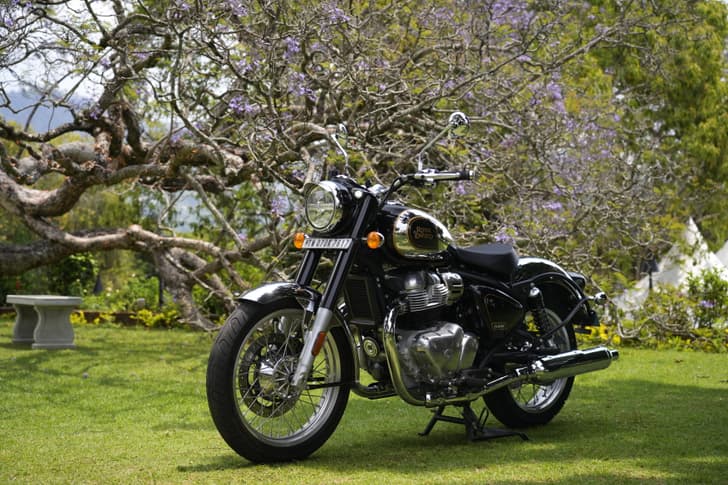
Now that we're working with the best in the world, we understand that every new product from every company in the world starts off at a much higher level of fault frequency than a stable product. At present, our most stable product – the Classic 350 – has very low fault frequencies. Faults like warranty failures, for example, are extremely low and are predominantly minor in nature.
Our stable products, which constitute 95 percent of our portfolio, are doing well and we are seeing a drastic improvement in numbers. It's always the new products in any organisation that cause the bubbles and upheavals. Even there, we learned how to dramatically limit the extent of faults and their duration. That's the learning and a lot of it is from the early testing of fully tooled-up motorcycles. That's on the design side, and our testing protocol has gone up immensely as well.
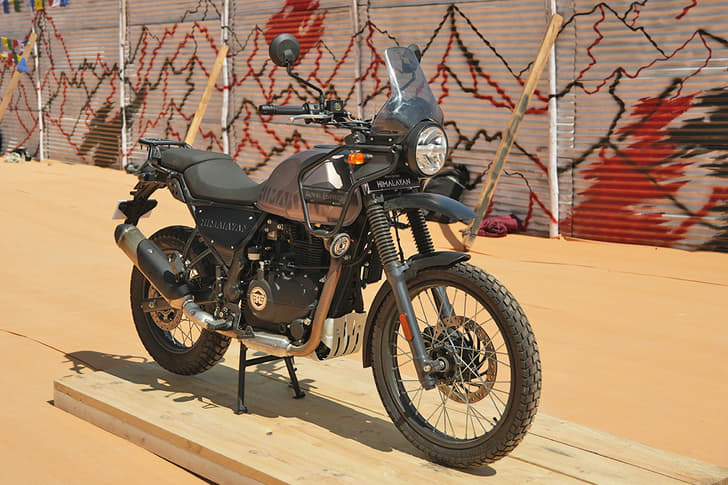
Speaking of learnings, what are the lessons from your last project – the Himalayan adventure motorcycle?
The first learning is to anticipate markets better. We developed the Himalayan for India, but markets like the UK, USA, and Europe all asked for it. We said it's a bit underpowered for you, but they still wanted it. Then we started to make Euro specs, which took time and effort. Therefore, on the new 650 twins, we've got the product in the highest spec that's required anywhere in the world and the same spec will be available in all markets.
The other huge learning is in the product introduction and new product development processes. With the Himalayan, we were fine-tuning parts much later in the programme, but this time, the freeze on parts is much earlier in the process.
The next learning is about the availability of products in the market, which is now going to take us a lot more time because we will do it in small steps. My job now as CEO is to make sure we do the right thing. Thus, even after production we still don't have to start delivery. This means if we produce 10,000 motorcycles but, for some reason, I'm not satisfied with them, I will make sure I will not deliver motorcycles until the problems are sorted out. Twenty years out, nobody is going to say, “Look, they delayed the 650 twins from April to May, or April to July, or even April to December.”
Royal Enfields have a certain flavour and have stuck to their heritage for over a century now. Is that identity enough on the world stage or do you have to reinvent yourself?
I'm not sure I know the answer to that right now. Obviously, we have to keep evolving ourselves, but we have to keep some things constant as well. Again, the fact that we're restricting ourselves to middle-weights is self-imposed. This is the absolute belief right now, but it doesn't mean that it won't change.
Of course, we will evolve, learn and understand the market. There are seismic shifts which are going to happen. Cities are bursting, mobility is changing, connectivity of vehicles and internet of things is happening, and electrification is on the anvil. We would be fools to just put our heads in the sand and say, "Look this is all that Royal Enfield is about".
Royal Enfield, therefore, has to evolve what it's about – what we now call ‘keeping riding pure’. If that means an electric vehicle, we will, when the time comes. But for now, and the foreseeable future, for this brand and this style of vehicle, we do believe that it is this simple, pared-back, heritage-driven, accessible motorcycling that's missing in the world. This is the path that we're on right now. You are not going to see the likes of a supersport from us for the next five to seven years.
To put it simply, is the brand open to diverging from what you are in terms of identity?
I think we want to extend our identity. I'll tell you how we've already done that. When I first joined Royal Enfield, nobody knew the brand, but everyone knew Bullet. We decided then that the Bullet (brand) is really strong. It's gorgeous and we love it, but we had to break the equation that Bullet was equal to Enfield was equal to Bullet. We said Bullet must retain all its character, but Enfield must go beyond Bullet. And that's the strategy we took.
We introduced the Thunderbird, the Electra, and other motorcycles because we wanted Royal Enfield to be a broader spectrum. We always wanted to push Royal Enfield to a slightly broader plain and the Himalayan helped us do that. This was not a heritage-driven product for the first time in the history of Royal Enfield.
So yes, I think it will evolve, but it will still stay within a certain realm of, let's say, a type of motorcycle which is still not extreme, one which is accessible and great for daily riding.
We have two, three new platforms under development, but some of them will replace existing ones, for instance, when stricter emission norms come in.
 Ved Janve
 Vishal Venugopal
 Stephen Raj Antony