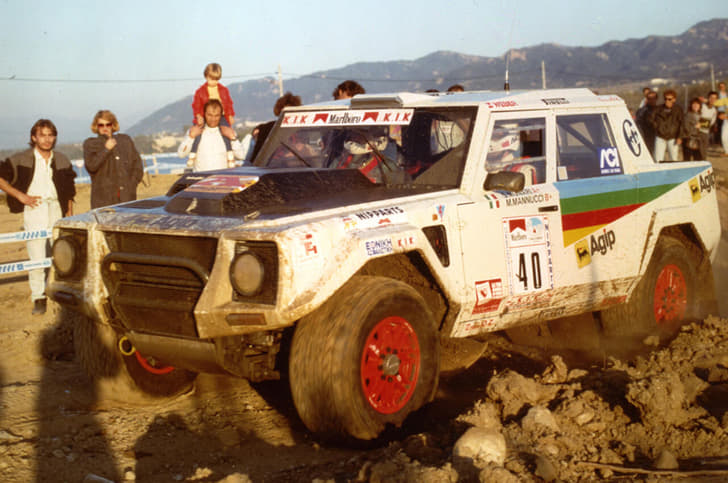
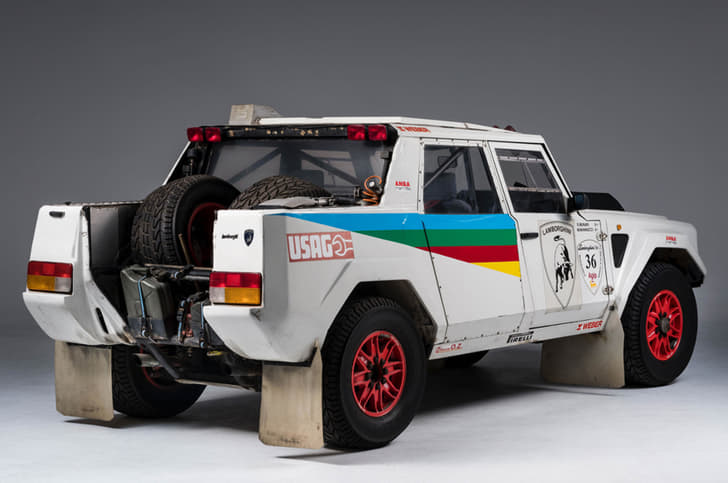
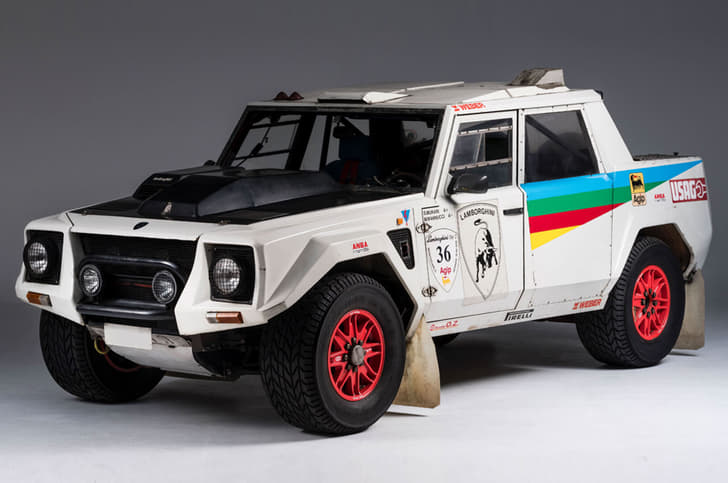
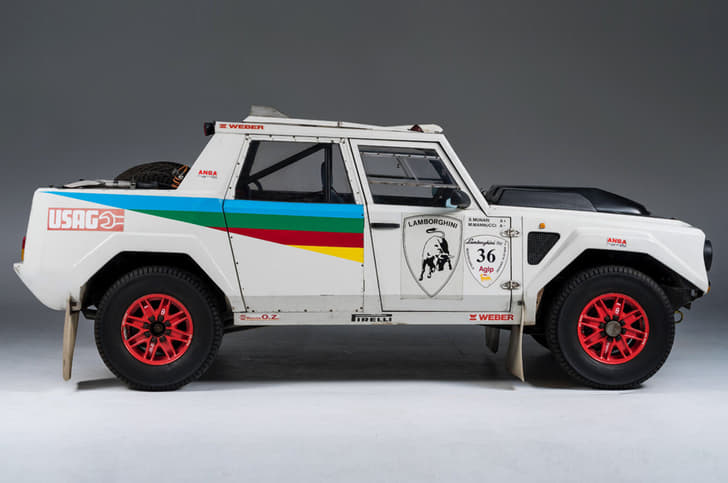
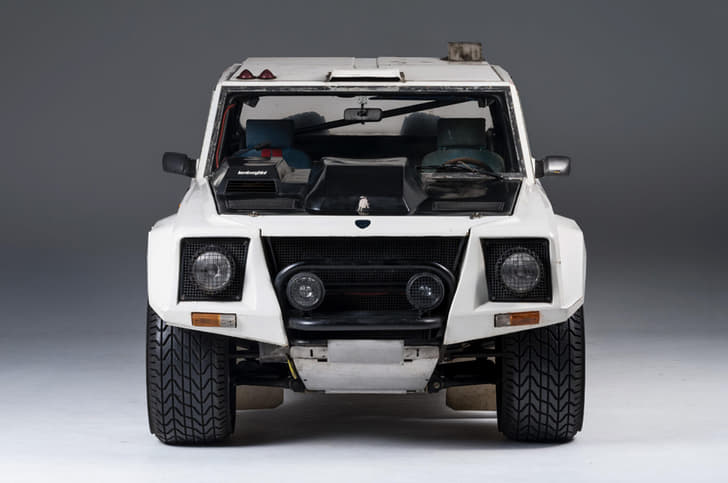
Long, long before the Urus, and the shock associated with a Lamborghini SUV, there was the LM002 – a hulking brute of an SUV that was, at its roots, designed to be a military vehicle, but went on to become a rather expensive toy for oligarchs and moneyed car collectors. Its existence was brief but colourful, and – you may find this hard to believe – it was primed to race at the Dakar.
When it was unveiled in 1986, the 'Rambo Lambo' was unlike anything the world had ever seen: with a 5.2-litre V12 borrowed from the Countach, the LM002 was powerful and fast like no other SUV before it. It caught the eye of former F1 driver Henri Pescarolo, who, knowing the LM002 was originally meant to do serious off-roading, could see the potential for it to be developed into an explosive rally racer. He proposed the idea to Swiss brothers Jean-Claude and Patrick Mimran, the businessman duo that had bought Lamborghini out of bankruptcy in 1984. While the partnership never formalised, the Mimrans, unlike Ferruccio Lamborghini, were open to dabbling with motorsport, and decided to go rallying with the freakish SUV they'd put into mass production.
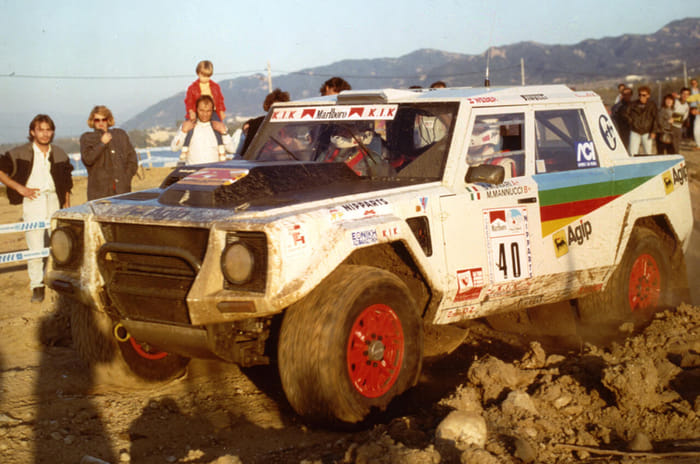
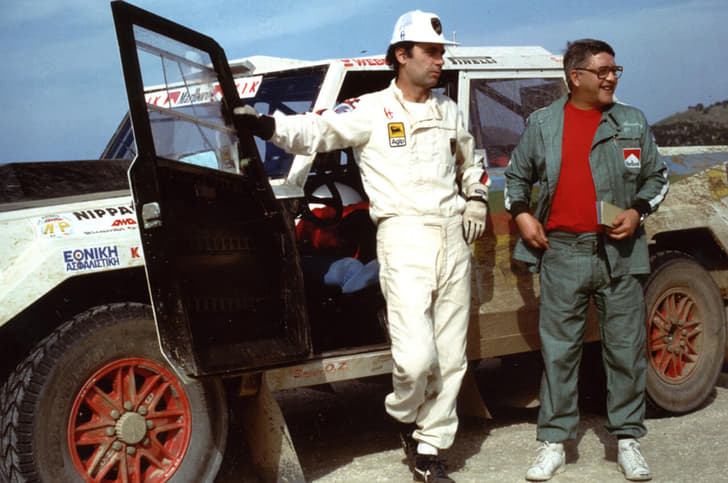
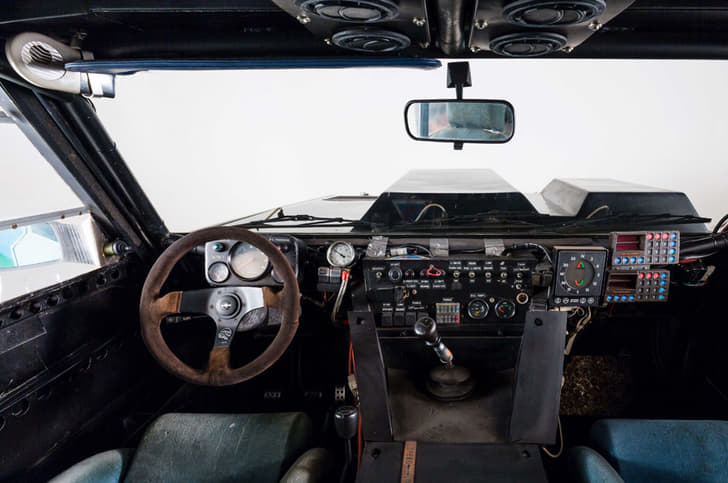
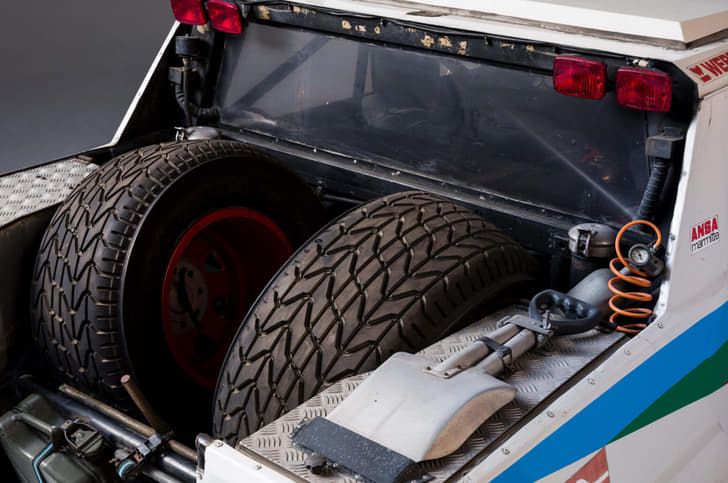
Stripped of all its extravagance, the rally-spec LM002 was fitted with racing seats (replete with five-point belts), an advanced navigation system, Plexiglas windows, a roll cage, and the 455hp V12 was retuned to put out 600hp. The suspension and braking systems were upgraded, and a larger 600-litre fuel tank was added. And just like that, the LM002 became the first factory racer from Lamborghini. 1977 World Rally Champion Sandro Munari was assigned the duty of piloting the race-ready LM002, but even after all the work put into the project, it never took off.
In 1987, Lamborghini was to participate in the Rallye des Pharaons, in Egypt but pulled out after losing one of its biggest sponsors right before the rally. The following year, it was raced by Mario Mannucci at a rally in Greece but broke down miles from the finish. By the time the next Paris-Dakar rolled around, Chrysler had taken over from the Mimrans, and the project was shelved. Interestingly, a few privateers tried taking on the Dakar in their own LM002s, but all of them faced breakdowns in competition, and none of them ever made it to the finish. It seems the LM002's run was jinxed right from the start.

Now, as Lamborghini turns a new page with the Urus, there exists the remote possibility of it chasing a dream unfulfilled. Hopefully, it'll do much, much better this time around.

 Uday Singh

 Dipan Sur


 Glenn Noronha