Audi’s Quattro system, first introduced 40 years ago, has proved to be a technical milestone and a huge success. It is so successful, Audi has, over the years, sold over 10 million cars equipped with the system. A lightweight and efficient four-wheel-drive system designed for cars and not heavy off-roaders, it was very different from a regular four-wheel-drive system.
Development began in the winter of 1976, when Audi chassis engineer Jörg Bensinger saw a four-wheel-drive military off-roader from VW go faster on snow and ice than one of Audi’s modern sedans. This was a real head scratcher. So just how much could four-wheel-drive traction help a car with a lot of power and limited grip? A lot, as it turned out, and that is basically why Quattro was born. Interestingly, Quattro means ‘four’ in Italian.
Development wasn’t easy, and nor was persuading Audi’s management to invest. If it had to be suitable for use in a car, the four-wheel-drive transmission would have to be made lighter and more efficient than anything seen before. So, an Audi 80-based prototype was built with a four-wheel-drive system and showcased by Ferdinand Piëch, who was looking for an advantage for Audi, both in racing and road cars.
The configuration used on the first car was traditional – longitudinally mounted front engine and gearbox, with a long driveshaft running through to the rear wheels. However, in an effort to shave off weight, it had no transfer box; normally used to send power to the front wheels. Instead, all the mechanical bits were housed in the main gearbox casing, with a driveshaft famously running through another hollow shaft, to allow it to take drive to the front differential.
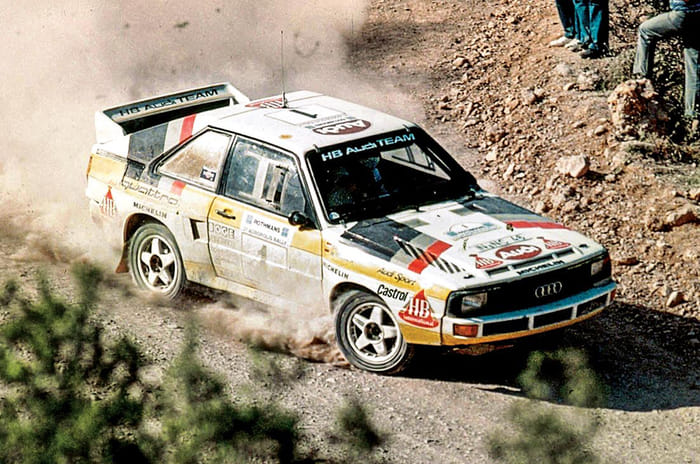
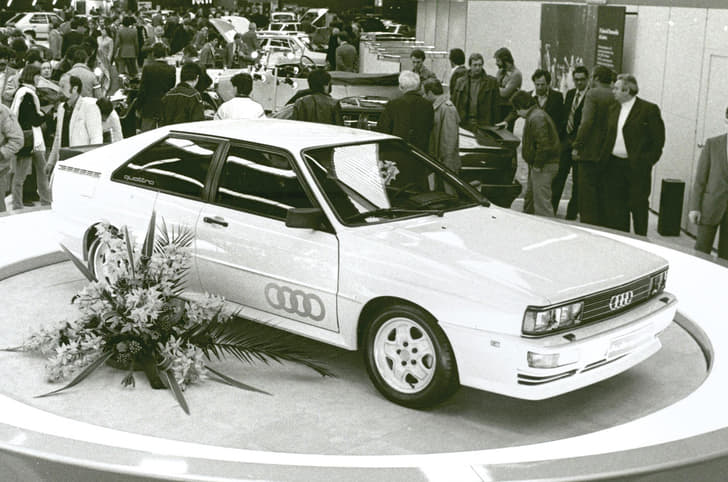
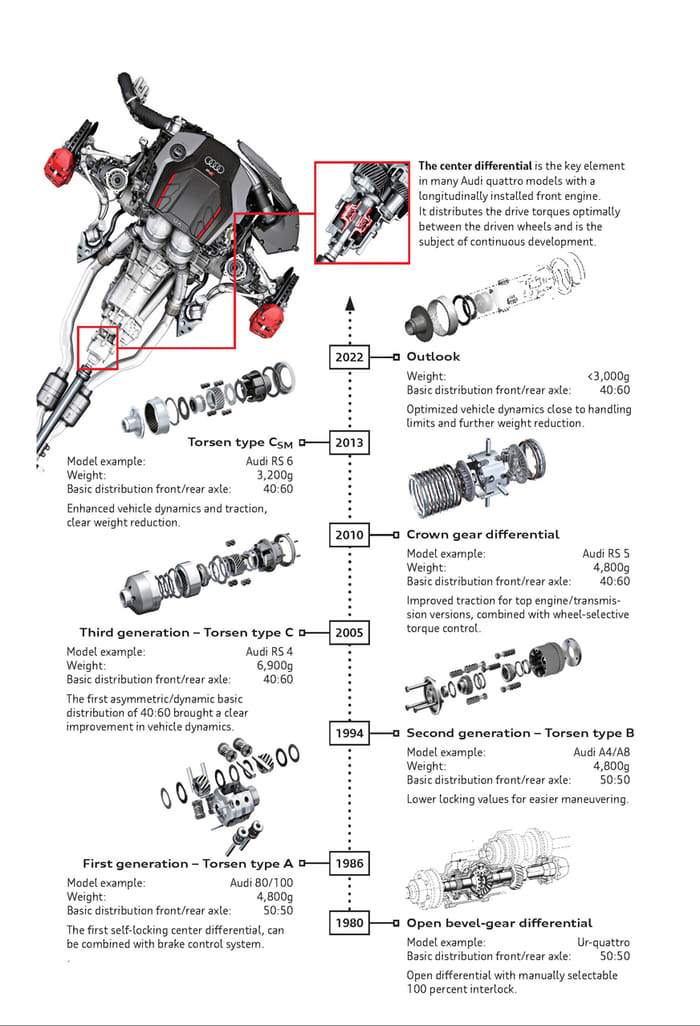
The first road-going Quattro made its debut at the 1980 Geneva Motor Show. Soon after, the Quattro also went on to dominate the World Rally Championship, where four-wheel-drive cars had only just been allowed. The road cars also saw the introduction of the 200-plus horsepower, five-cylinder turbo engines, and the combo was unbeatable. On the first cars, a manually operated lockable centre diff was incorporated, as an open differential wasn’t ideal (it transferred power to the wheel with the least traction).
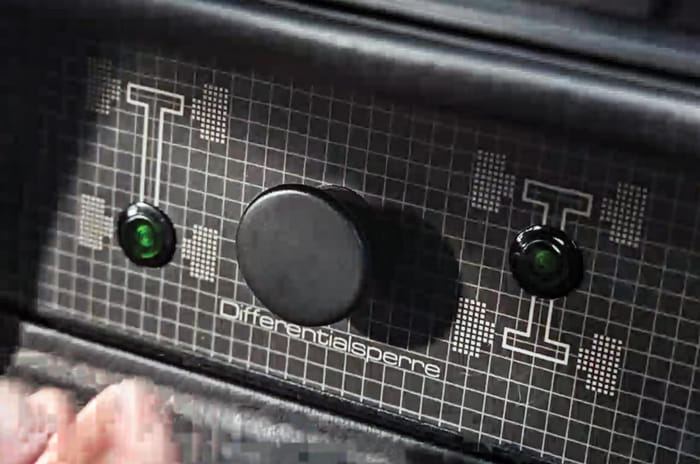
While the name ‘Quattro’ has remained the same, the system has been constantly evolved and expanded by Audi.
In 1987, Audi introduced Torsen. Short for TORque-SENsing, it refers to the new centre differential. The Torsen diff could send up to 80 percent of the available torque to the axle with the most grip. Then, in 2005, to help reduce understeer, Audi installed a new planetary-gearset-type Torsen differential that allowed for a 40:60 front-rear split for reduced understeer and better overall balance.
At the turn of the century, Audi created a new type of Quattro for transverse-engine, front-wheel-drive cars as well. This was done with the introduction of a Haldex system that used an electronically controlled multi-plate clutch to transfer power to the rear axle.
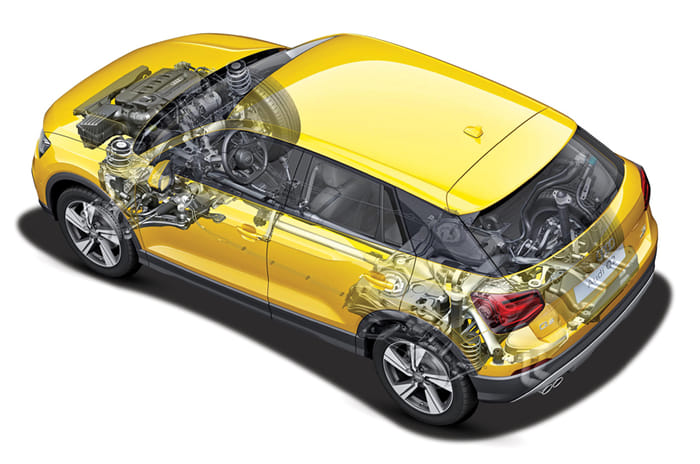
While grip was amazing, Audi always wanted to dial down the understeer and make Quattro more fun, and in 2008 came the Active Sport differential (first used on the S4). This featured a clutch pack on each driveshaft to vary the torque sent to each outside rear wheel; often to promote oversteer.
Then, in 2011, came the crown gear centre differential that could, in effect, send up to 80 percent of torque to the rear wheels for an even more rear-biased feel. While the system remained purely mechanical, electronic add-ons were used to make features like torque vectoring possible.
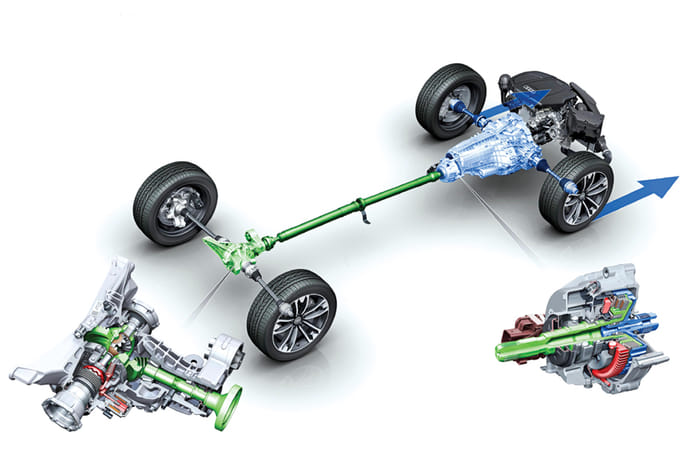
Then, in 2016, came Ultra. Fitted to the second-gen Q5, the system ran in front-wheel-drive mode for the most part and only engaged the rear wheels as and when needed.
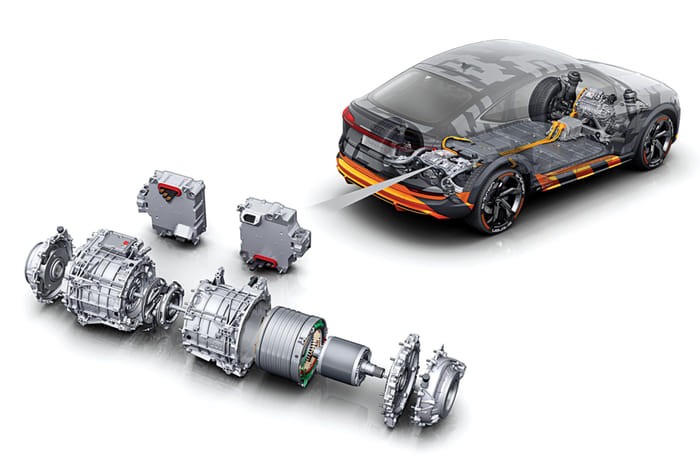
Today, with the E-tron S, Audi has taken the concept further and built a new system for electric cars only. Its past experience proved to be priceless. While the system itself is simpler, getting the instant and massive amount of electric torque to the road seamlessly remains a huge challenge. And no one has more experience in this area than Audi.

 Uday Singh
 Dipan Sur


 Glenn Noronha