The quirky Facebook relationship status ‘It’s complicated’ would actually be quite apt to describe the recent spate of automotive partnerships. We’ve had VW and Suzuki, VW and Tata, Toyota and Suzuki, and, now, Mahindra and Ford are getting back together. But with the first two arrangements ending even before a wheel turned, what gives the latter two any hope?
Back in 2009, Volkswagen and Suzuki had planned an alliance that, besides the global synergies for the two companies, would also greatly benefit VW operations in India. However, trouble began from the get-go, and in less than two years, with not a single project to show, the two companies had a rather acrimonious split. Most industry sources put it down to management and personal conflicts rather than a weak business case.
Last year, Tata and VW had a go at an alliance – one that was deeply rooted in India. Struggling to gain a foothold in our market, the plan was for VW and Skoda to use Tata’s low-cost Advanced Modular Platform (AMP) to develop their own line of small cars. And for Tata, it would have meant substantial income for the continuous development of the new platform. However, just months after the announcement, the project was called off. A joint technical feasibility study and a commercial evaluation revealed that the partnership may not lead to desired results. The Germans were of the opinion that the estimated 140 million Euros (Rs 1,000 crore) required to develop cars on the AMP could be better spent re-engineering a low-cost version of VW’s own MQB-A global small car platform.
This year, it’s the turn of Mahindra and Ford, and Suzuki and Toyota. Mahindra and Ford are no strangers to each other. In 1995, the two had a 50-50 joint venture that gave the Indian market the US carmaker's Escort sedan. The car found moderate success but the alliance ended with Ford deciding to go solo in India. Now the two are back together, and, this time around, they have their sights set on vehicle technology, electrification, and product development.
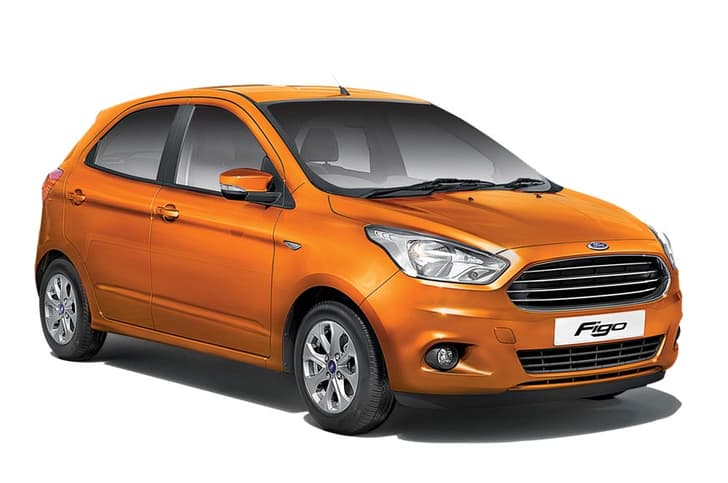
From what is known of the plan, it does have some meat on the bone. Ford lacks a cost-effective platform for SUVs between the EcoSport and the Endeavour, and with the XUV500 and the Ssangyong Tivoli, Mahindra has just the thing. In camp Mahindra, the Verito and e-Verito (erstwhile Renault Logan) could use an update, and Ford has the piece to that puzzle with the Aspire. An electrified version will be sold initially as a Mahindra, using the Indian carmaker's electric drivetrain; there could even be a Ford version at a later stage. Another benefit for Mahindra would be the key to the US – a market it has unsuccessfully tried very hard to enter.
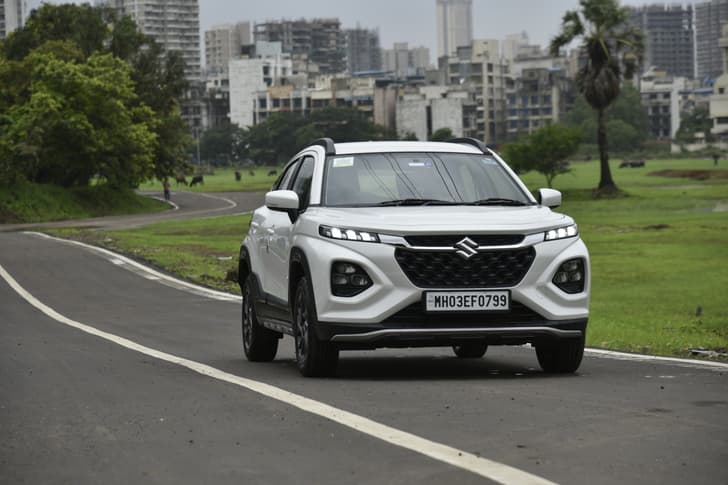
Coming to the Toyota-Suzuki tie-up, it’s safe to say no announcement has created the stir this one has. After all, it’s an alliance between the domestic leader and the world’s automotive giant. Great things are naturally expected.
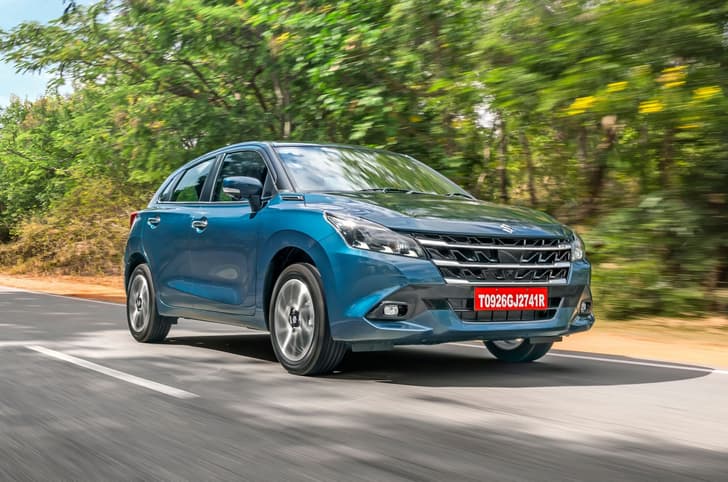
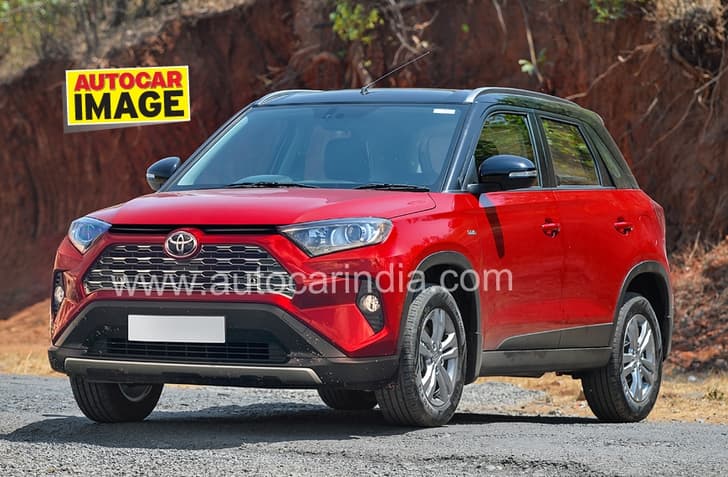
Toyota plans to use the Baleno and Brezza to enter the lower end of the market – a segment it has failed to crack, despite a concerted effort with the Etios. Meanwhile, Suzuki, which had a terrible time with the Kizashi, will now have a stab at the executive sedan market with the Corolla. In the longer run, Suzuki will also tap into Toyota EV knowledge pool – an area in which it is relatively weak. Thus, the plan is simple enough and very symbiotic in nature; each carmaker is to provide cars in a segment that the other is weak in. However, it isn’t as easy as it seems.
The coming together of two different companies and two different cultures may pose a small challenge; remember Suzuki is quite Indian and Toyota is probably more Japanese than Japanese itself. However, most industry sources agree that Suzuki, having only recently exited a rather messy partnership attempt with VW, will be keenly invested in making this one work. For Toyota, it’s really a matter of survival in what is soon to be the world’s third-largest auto market, where it’s heavily invested but has earned little success in the densest segments. Plus – if the statements from both sides are any indication – they both seem to share a mutual respect for each other. Thus, the two working together isn’t likely to be that big a challenge.
What could be a challenge is us, the consumers. For one, our market hasn’t really taken to the badge-engineering concept. While it may be an accepted practice abroad, where it’s literally just the badge that's being swapped in many cases, in India, even changing ‘soft’ parts, like the grille, bumper and headlights (the plan right now), doesn't go down well with buyers. Case in point, the Renault Scala, Renault Pulse and Nissan Terrano haven't done as well as the originals (Sunny, Micra and Duster, respectively).
The next issue for consumers will be brand values. Let’s face it, regardless of segment, the overriding reasons why people buy a Maruti are ease of service and cost of ownership. In our 2016 spare parts study, the Corolla had the most expensive parts bin; yes, ahead of the VW Jetta, the Skoda Octavia and the Hyundai Elantra. Would this work for a Maruti?
For Toyota, a company that’s been able to hold a premium mind space (thanks to the Innova Crysta and Fortuner) with the Indian consumer, selling products from what is seen as a mass-market brand could be a challenge.
Another challenge will be setting up the service network. Unlike Renault-Nissan or other partnerships, Maruti and Toyota use different platforms and architectures; this means the service network needs to be ready for these differences. On both sides, service personnel will have to be trained on new car technologies, new service procedures and the use of a few new tools too. Parts supply logistics will also need a lot of work, and both companies will have to manage the supply chain with new vendors and warehouses.
The car-sharing arrangement, however, is just the tip of the iceberg, aimed only at the short term. In the long run, the two companies have global symbiotic targets in areas like frugal engineering, alternate propulsion vehicles and autonomous drive systems.
And just like the earlier alliances, there is certainly a lot to show for in the Mahindra-Ford and Suzuki-Toyota deals, but it remains to be seen if the partners will walk the talk or end up going their separate ways.
What do you make of Toyota and Suzuki's partnership in India? Let us know in the comments section below.

 Uday Singh
 Glenn Noronha
 Dipan Sur