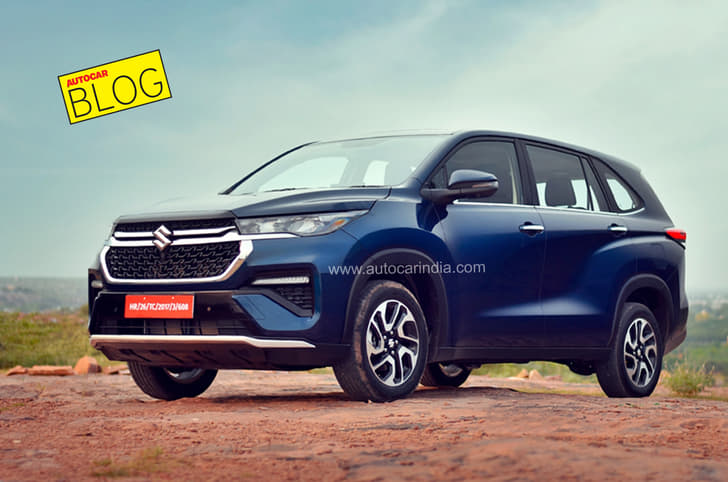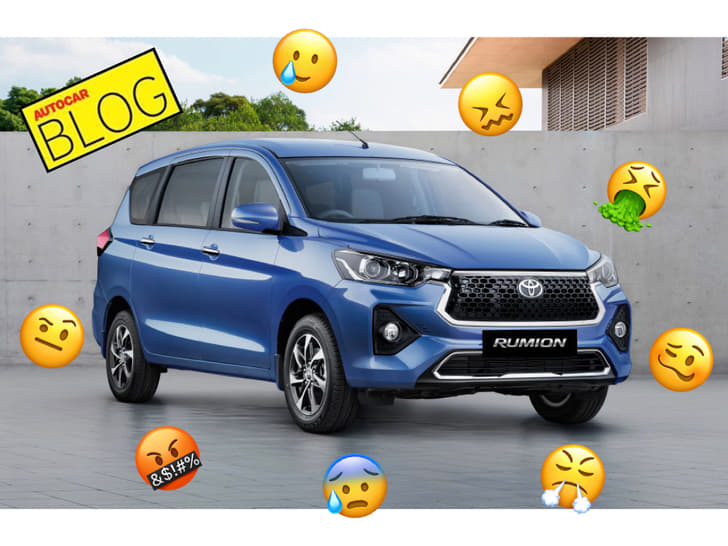
No sooner did we break our exclusive news on the Rumion – the Toyota-badged Ertiga – than memes, captions and posts started to pop up about Maruti and Toyota’s newest badge swap. Some were certainly funny, while some were thought-provoking. Was this one shared product too many, and should there have been a greater differentiation between the two?
After all, at their first collaboration – a badge swap of the previous Baleno – they said subsequent models would see greater differentiation, and with the Grand Vitara and Hyryder, we did see a differentiated front and rear design. So then a completely separate top hat would seem like the logical next step. Except it wasn’t.
That will still happen; the Rumion is certainly no indication of how future shared products would shape up. But should there have been greater differentiation between the Ertiga and Rumion? In a perfect world, yes, but there’s costs and product lifecycle to consider. At this point – five years into the second-generation Ertiga – investing heavily into a differentiated Toyota offering would make no financial sense. So why then is Toyota bothering with its launch?
Why not? Sure, badge swaps and light makeovers haven’t gone down well in India: case in point, the Nissan Micra and Renault Pulse. But Toyota and Maruti have made their efforts work. The Baleno/Glanza combine has worked; Toyota got access to a new market segment, and while there is customer overlap, on the whole, numbers have increased for the model. So Suzuki wins too.
And with the Ertiga/Rumion duo, once again, Toyota enters a new segment, and Suzuki can be confident of overall volumes. The Rumion also nicely complements the Crysta and Hycross (and Vellfire), and builds a neat MPV line-up for Toyota. And speaking of complements, the reason why this product-sharing approach works for Maruti and Toyota is because the two have a very similar brand image. Sure, there are differences, but it’s not like chalk and cheese or Renault and Nissan. Suzuki and Toyota are both Japanese brands, generally known for their reliable products and efficient engines. Both don’t have that flashy image, nor are they held in high regard for sharp handling or driver-focused vehicles. So it’s easy for most of their products to fill each other’s shoes. They really do come off as siblings and not in-laws. Oh, and I gel very well with my in-laws; just saying.
So just as I’m excited about a completely different top-hat approach, like the Creta/Seltos, I’m also all for grille and badge swaps done by the right partners. They gel well and strengthen the business for the brands and their dealers, and this means a strong foundation for more of each one’s own products. So Suzuki, Toyota, go ahead: share a few more models too, but just keep your other vehicles coming in. Swift Sport, please!
 Rishaad Mody
 Avik Chattopadhyay